Climate Change Impact on Small Island Developing States - UPSC Environment And Ecology
What is Climate Change Impact on Small Island Developing States in UPSC Environment And Ecology?
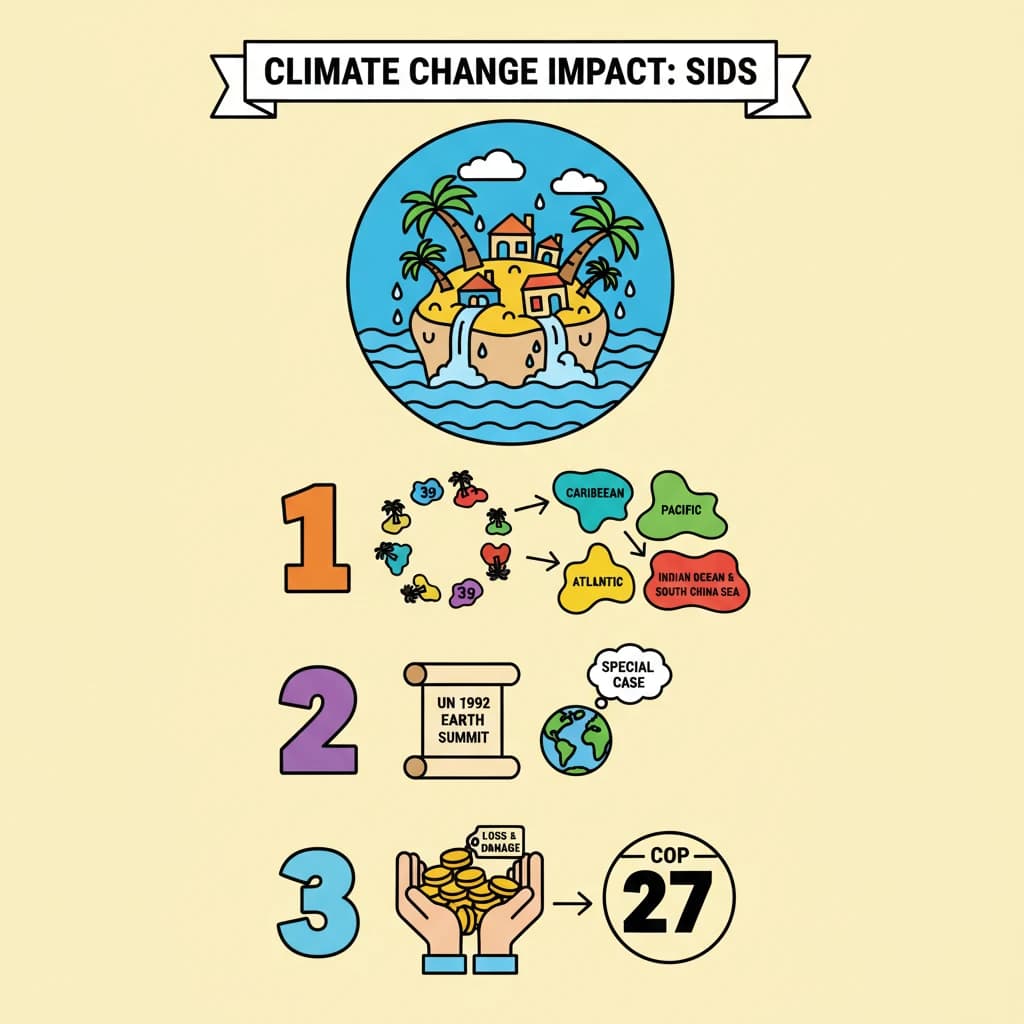
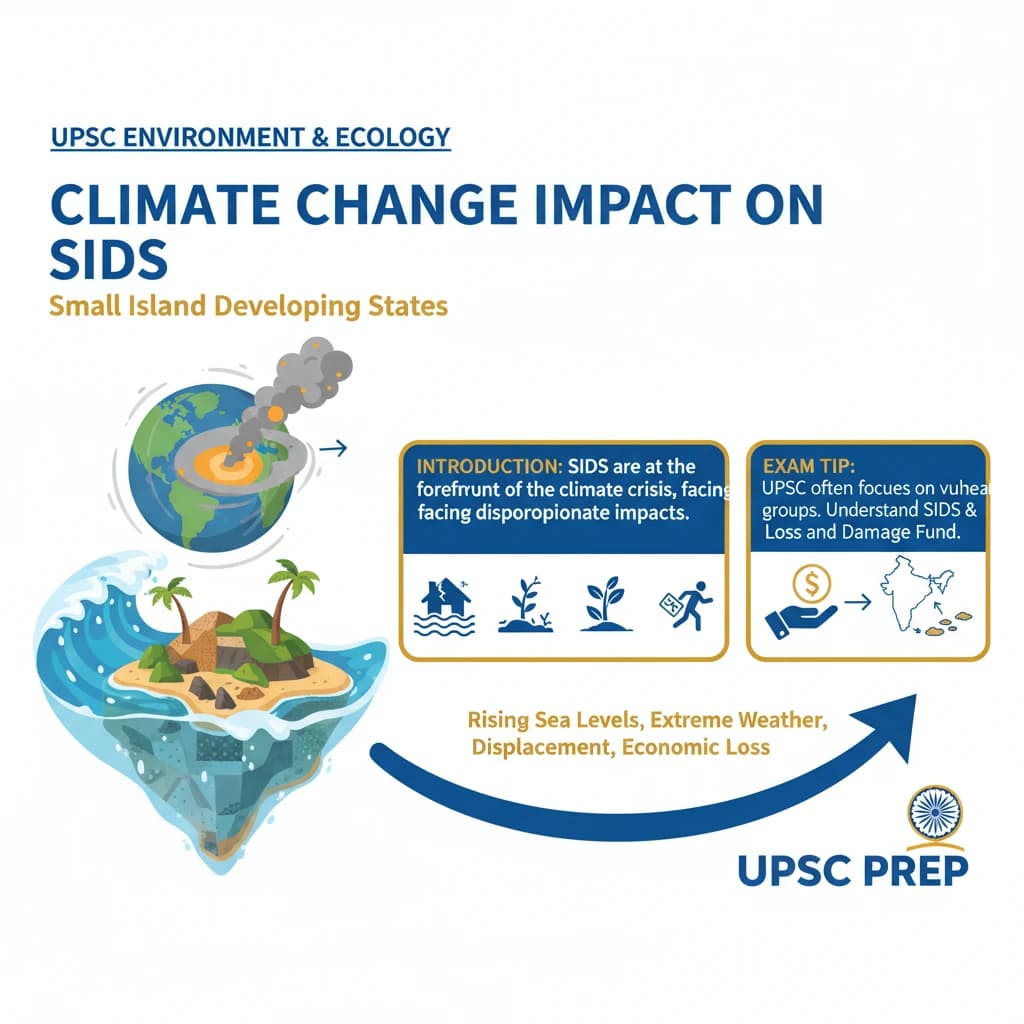
Climate Change Impact on Small Island Developing States is a key topic under Environment And Ecology for UPSC Civil Services Examination. Key points include: SIDS are 39 small island nations facing severe environmental, social, and economic vulnerabilities, particularly to climate change.. They are located primarily in the Caribbean, Pacific, and Atlantic, Indian Ocean & South China Sea regions.. SIDS were formally recognized as a 'special case' at the 1992 UN Conference on Environment and Development.. Understanding this topic is essential for both UPSC Prelims and Mains preparation.
Why is Climate Change Impact on Small Island Developing States important for UPSC exam?
Climate Change Impact on Small Island Developing States is a Medium-level topic in UPSC Environment And Ecology. It is tested in both Prelims (factual MCQs) and Mains (analytical answer writing). Previous year UPSC questions have frequently covered aspects of Climate Change Impact on Small Island Developing States, making it essential for comprehensive IAS preparation.
How to prepare Climate Change Impact on Small Island Developing States for UPSC?
To prepare Climate Change Impact on Small Island Developing States for UPSC: (1) Study the comprehensive notes covering all key concepts on Vaidra. (2) Practice previous year questions on this topic. (3) Connect it with current affairs using daily updates. (4) Revise using key takeaways and mind maps available for Environment And Ecology. (5) Write practice answers linking Climate Change Impact on Small Island Developing States to related GS Paper topics.
Key takeaways of Climate Change Impact on Small Island Developing States for UPSC
- SIDS are 39 small island nations facing severe environmental, social, and economic vulnerabilities, particularly to climate change.
- They are located primarily in the Caribbean, Pacific, and Atlantic, Indian Ocean & South China Sea regions.
- SIDS were formally recognized as a 'special case' at the 1992 UN Conference on Environment and Development.
- UNFCCC COP27 (2022) established a 'Loss and Damage Fund' to aid climate-vulnerable nations, especially SIDS.
- The Alliance of Small Island States (AOSIS) is a key intergovernmental organization advocating for SIDS' interests in climate policy.
- Wealthier nations' failure to fulfill financial commitments remains a major hurdle for SIDS' adaptation and mitigation efforts.
Climate Change Impact on Small Island Developing States
📖 Introduction
💡 Key Takeaways
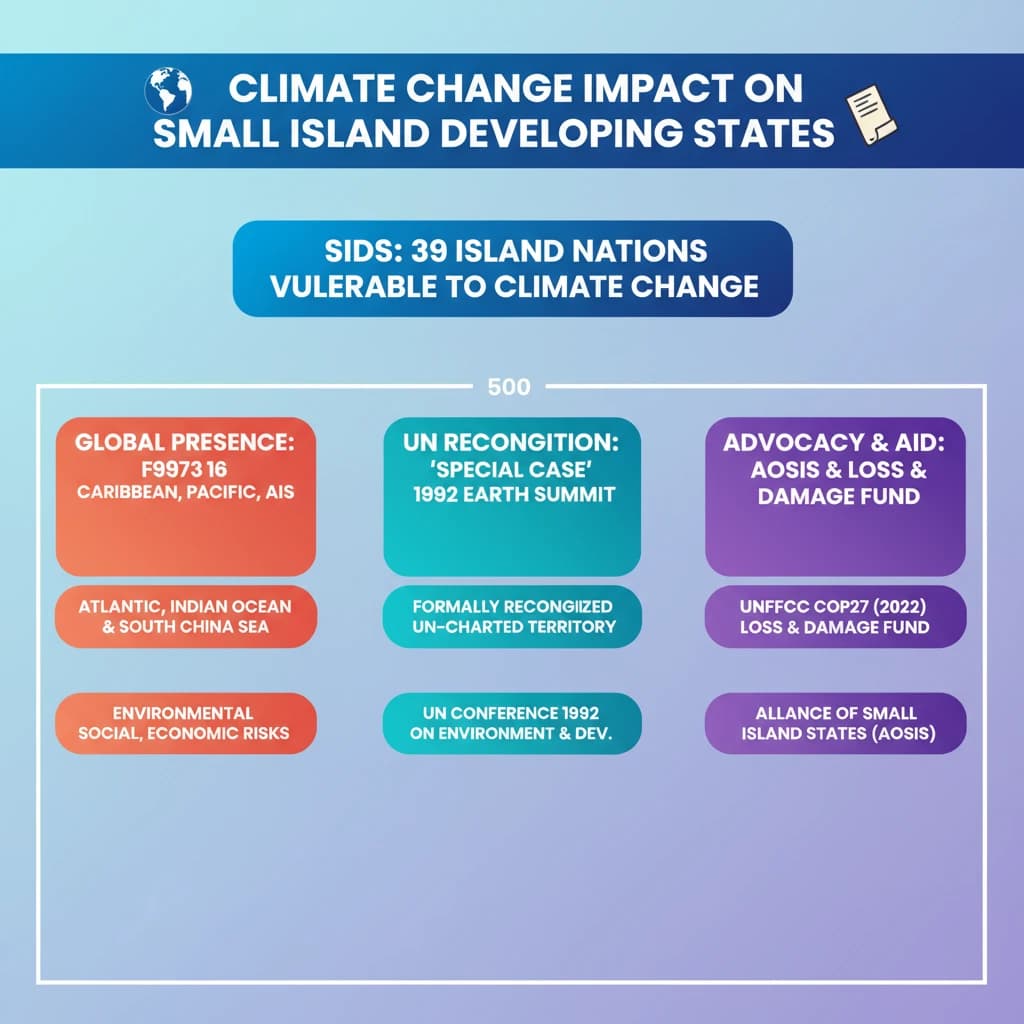
- •SIDS are 39 small island nations facing severe environmental, social, and economic vulnerabilities, particularly to climate change.
- •They are located primarily in the Caribbean, Pacific, and Atlantic, Indian Ocean & South China Sea regions.
- •SIDS were formally recognized as a 'special case' at the 1992 UN Conference on Environment and Development.
- •UNFCCC COP27 (2022) established a 'Loss and Damage Fund' to aid climate-vulnerable nations, especially SIDS.
- •The Alliance of Small Island States (AOSIS) is a key intergovernmental organization advocating for SIDS' interests in climate policy.
- •Wealthier nations' failure to fulfill financial commitments remains a major hurdle for SIDS' adaptation and mitigation efforts.
🧠 Memory Techniques