Loading page, please wait…
Vaidra Logo
Vaidra

Top 4 items + smart groups

UPSC GPT
New
Current Affairs
Daily Solutions
Daily Puzzle
Mains Evaluator

Version 2.0.0 • Built with ❤️ for UPSC aspirants

Loading...
Loading...
Loading...
Loading...
Loading...
Loading...
Loading...
Loading...
Loading...
Loading...
Loading...
Loading...
Loading...
Back
All Subjects

Topics

0 topics • 0 completed

Loading topics...
Loading...
Loading...
Loading...
Loading...
Loading...
Overall Progress0%

What are the Key Findings of the Report? - UPSC Environment And Ecology

What is What are the Key Findings of the Report? in UPSC Environment And Ecology?

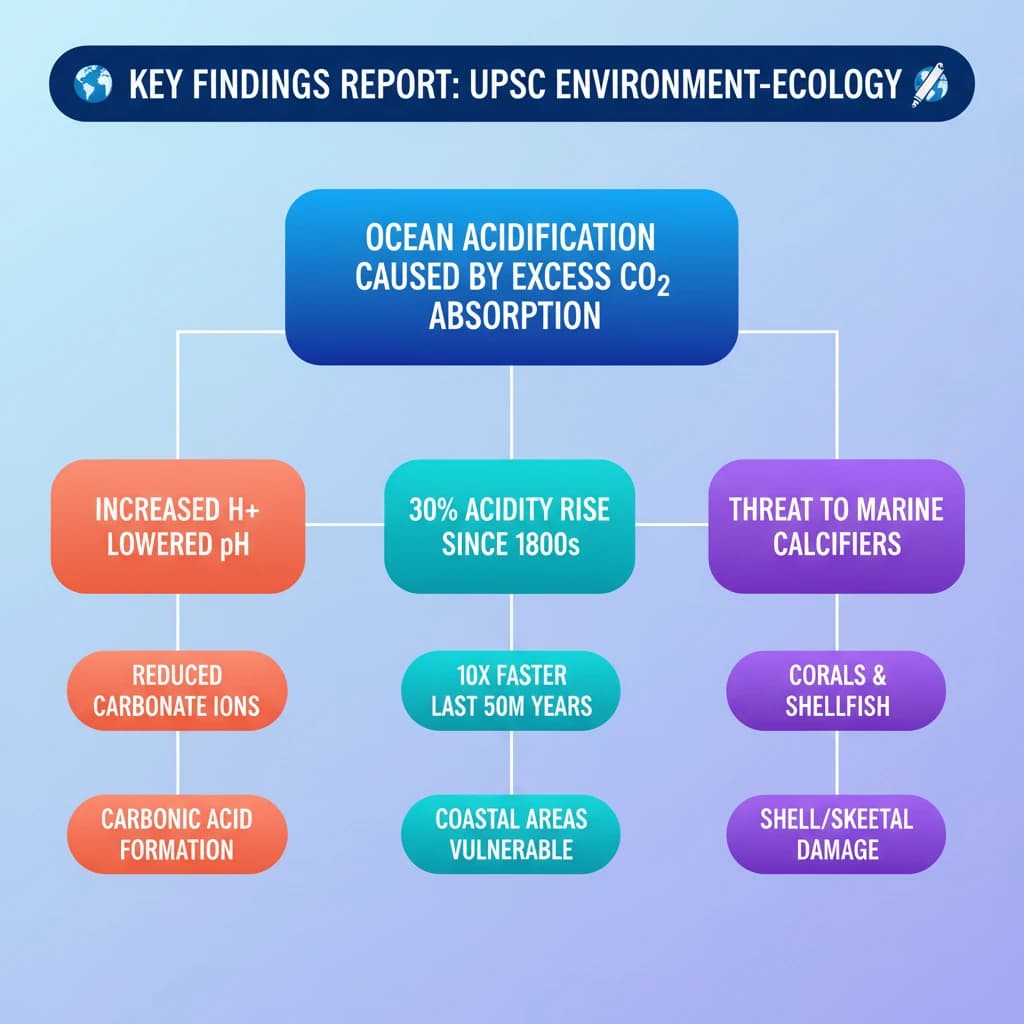
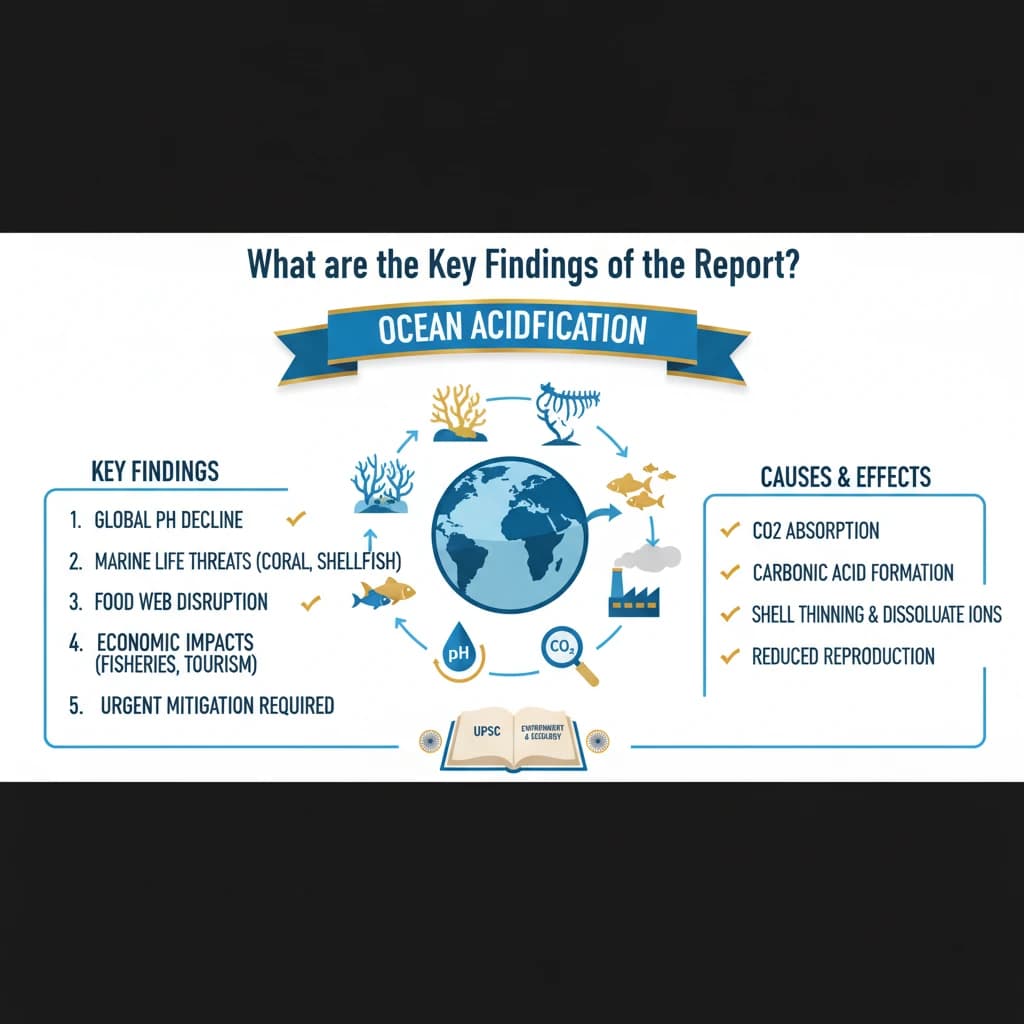
What are the Key Findings of the Report? is a key topic under Environment And Ecology for UPSC Civil Services Examination. Key points include: Ocean acidification is caused by oceans absorbing excess CO2, forming carbonic acid.. This increases hydrogen ions (H+), lowering ocean pH and reducing vital carbonate ions.. Acidity has increased 30% since the 1800s, 10 times faster than in the last 50 million years.. Understanding this topic is essential for both UPSC Prelims and Mains preparation.

Why is What are the Key Findings of the Report? important for UPSC exam?

What are the Key Findings of the Report? is a Medium-level topic in UPSC Environment And Ecology. It is tested in both Prelims (factual MCQs) and Mains (analytical answer writing). Previous year UPSC questions have frequently covered aspects of What are the Key Findings of the Report?, making it essential for comprehensive IAS preparation.

How to prepare What are the Key Findings of the Report? for UPSC?

To prepare What are the Key Findings of the Report? for UPSC: (1) Study the comprehensive notes covering all key concepts on Vaidra. (2) Practice previous year questions on this topic. (3) Connect it with current affairs using daily updates. (4) Revise using key takeaways and mind maps available for Environment And Ecology. (5) Write practice answers linking What are the Key Findings of the Report? to related GS Paper topics.

Key takeaways of What are the Key Findings of the Report? for UPSC

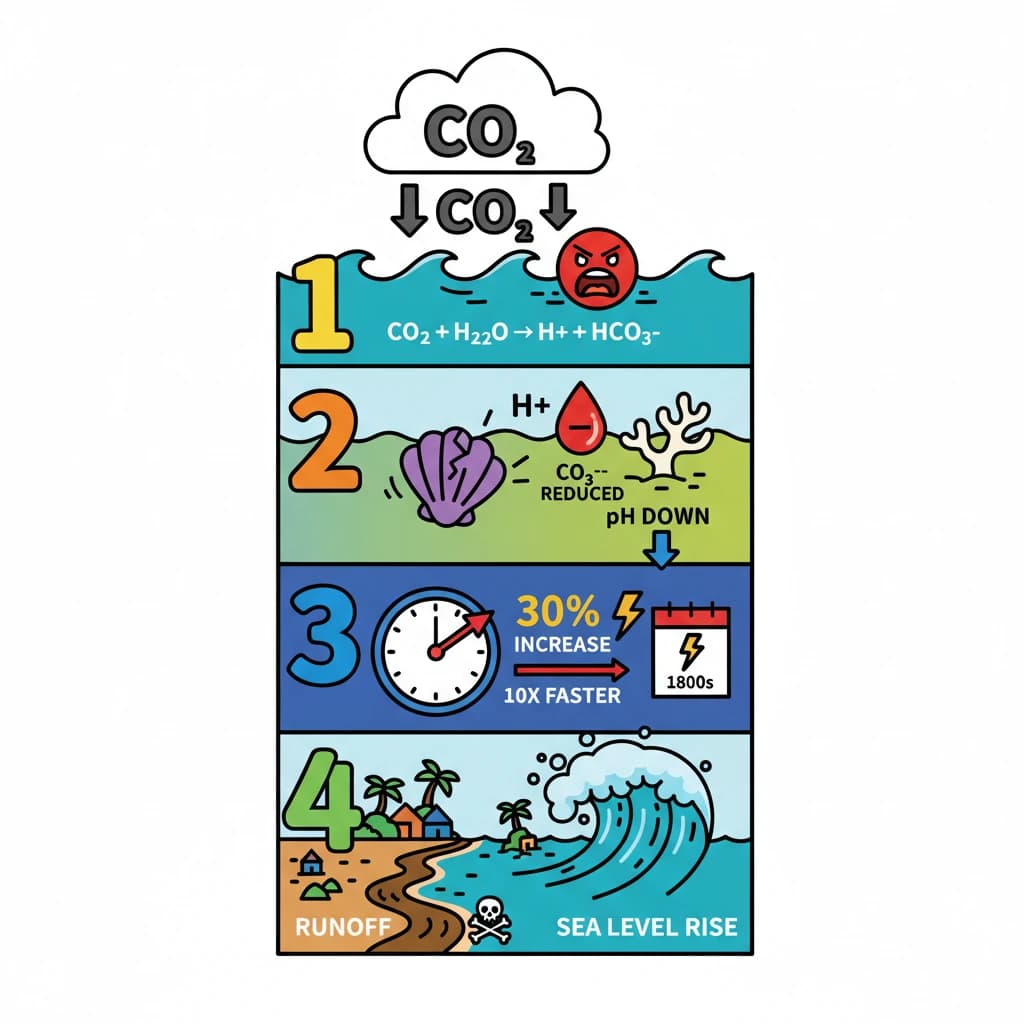
  • Ocean acidification is caused by oceans absorbing excess CO2, forming carbonic acid.
  • This increases hydrogen ions (H+), lowering ocean pH and reducing vital carbonate ions.
  • Acidity has increased 30% since the 1800s, 10 times faster than in the last 50 million years.
  • Coastal areas are highly vulnerable due to runoff and sea level rise.
  • It severely impacts marine organisms, especially those with calcium carbonate shells/skeletons like corals and shellfish.
What are the Key Findings of the Report?

What are the Key Findings of the Report?

Medium⏱️ 6 min read✓ 95% Verified
environment and ecology

📖 Introduction

<h4>The Chemical Process of Ocean Acidification</h4><p>When <strong>carbon dioxide (CO2)</strong> is absorbed by seawater, it initiates a series of <strong>chemical reactions</strong>. These reactions lead to an increase in the concentration of <strong>hydrogen ions (H+)</strong> in the water.</p><p>Initially, <strong>CO2</strong> dissolves in water to form <strong>carbonic acid (H2CO3)</strong>. This acid is unstable and quickly dissociates into <strong>hydrogen ions (H+)</strong> and <strong>bicarbonate ions (HCO3−)</strong>.</p><div class='key-point-box'><p>The elevated presence of <strong>hydrogen ions (H+)</strong> directly contributes to an increase in the <strong>acidity</strong> of seawater. This process is known as <strong>ocean acidification</strong>.</p></div><p>A crucial consequence of this increased acidity is the reduction in the availability of <strong>carbonate ions</strong>. These ions are vital building blocks for many marine organisms.</p><h4>Accelerated Acidification due to Climate Change</h4><p>Oceans naturally play a critical role in absorbing <strong>atmospheric carbon dioxide</strong>. However, the unprecedented rise in anthropogenic <strong>CO2 emissions</strong> has led to oceans absorbing excessive amounts of this gas.</p><div class='info-box'><p>Since the <strong>1800s</strong>, the acidity of the oceans has increased by nearly <strong>30%</strong>. This rate of acidification is approximately <strong>10 times faster</strong> than any observed change over the last <strong>50 million years</strong>.</p></div><p>Projections indicate that if current emission trends persist, the <strong>surface ocean pH</strong> could significantly drop from its current average of <strong>8.1 to 7.7</strong> within the next <strong>100 years</strong>.</p><p><strong>Coastal areas</strong> face particular vulnerability. Factors like <strong>acid sulphate runoff</strong> from land and the exacerbating effects of <strong>climate change-related sea level rise</strong> intensify acidification impacts in these regions.</p><h4>Detrimental Impacts on Marine Organisms</h4><p>The fundamental change in seawater <strong>acidity</strong> poses severe threats to a wide array of <strong>marine organisms</strong>. Its effects are particularly detrimental to species that rely on <strong>calcium carbonate</strong> for their structural integrity.</p><ul><li><strong>Corals:</strong> Acidification hinders the ability of corals to form and maintain their <strong>calcium carbonate skeletons</strong>, leading to coral bleaching and degradation of entire reef ecosystems.</li><li><strong>Shellfish:</strong> Organisms such as oysters, clams, and mussels struggle to build and repair their protective <strong>calcium carbonate shells</strong> in more acidic waters, impacting their survival and reproduction.</li></ul><div class='exam-tip-box'><p>Understanding the specific impacts on <strong>keystone species</strong> like corals and shellfish is crucial for Mains answers on <strong>marine biodiversity</strong> and <strong>ecosystem health</strong> (<strong>GS Paper 3</strong>).</p></div>
Concept Diagram

💡 Key Takeaways

  • •Ocean acidification is caused by oceans absorbing excess CO2, forming carbonic acid.
  • •This increases hydrogen ions (H+), lowering ocean pH and reducing vital carbonate ions.
  • •Acidity has increased 30% since the 1800s, 10 times faster than in the last 50 million years.
  • •Coastal areas are highly vulnerable due to runoff and sea level rise.
  • •It severely impacts marine organisms, especially those with calcium carbonate shells/skeletons like corals and shellfish.

🧠 Memory Techniques
Memory Aid
95% Verified Content

Related Topics

Loading related topics...
Explore:Environment And Ecology Topics·All Subjects·Daily Current Affairs·Editorial Analysis·Previous Year Questions·UPSC GPT
What are the Key Findings of the Report? - UPSC Environment And Ecology