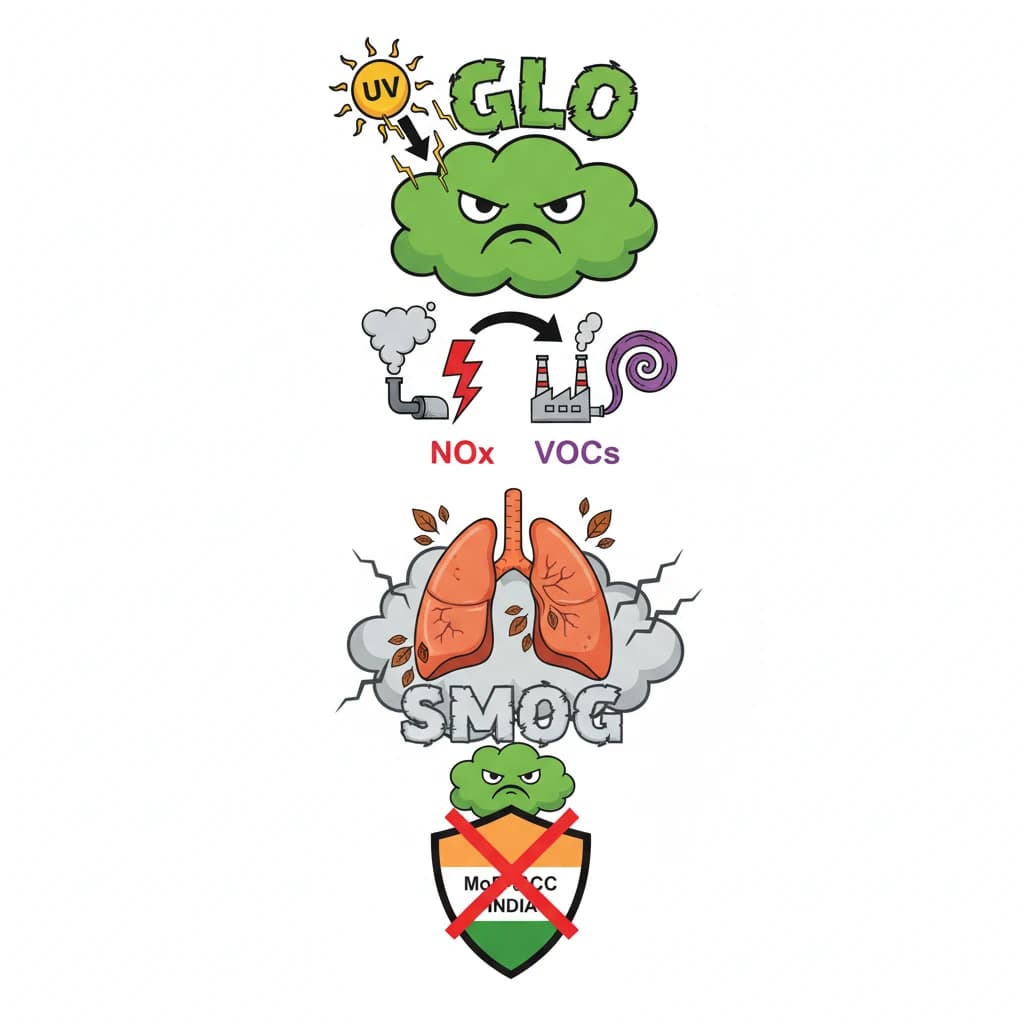
Ground Level Ozone Pollution - UPSC Environment And Ecology
What is Ground Level Ozone Pollution in UPSC Environment And Ecology?
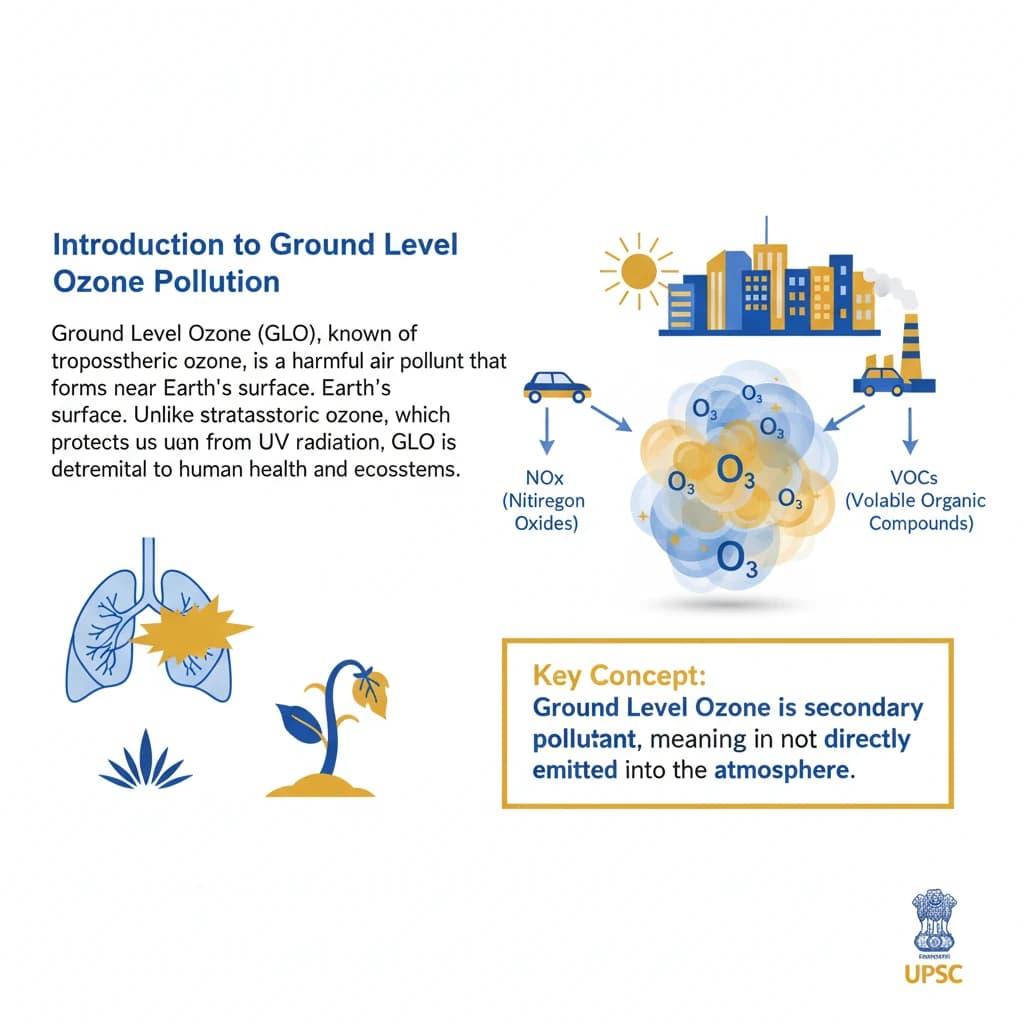
Ground Level Ozone Pollution is a key topic under Environment And Ecology for UPSC Civil Services Examination. Key points include: Ground Level Ozone (GLO) is a harmful secondary air pollutant, distinct from beneficial stratospheric ozone.. GLO forms from precursor pollutants (NOx, VOCs) reacting in sunlight, primarily from human activities.. It causes severe respiratory issues, damages crops, and contributes to photochemical smog.. Understanding this topic is essential for both UPSC Prelims and Mains preparation.
Why is Ground Level Ozone Pollution important for UPSC exam?
Ground Level Ozone Pollution is a Medium-level topic in UPSC Environment And Ecology. It is tested in both Prelims (factual MCQs) and Mains (analytical answer writing). Previous year UPSC questions have frequently covered aspects of Ground Level Ozone Pollution, making it essential for comprehensive IAS preparation.
How to prepare Ground Level Ozone Pollution for UPSC?
To prepare Ground Level Ozone Pollution for UPSC: (1) Study the comprehensive notes covering all key concepts on Vaidra. (2) Practice previous year questions on this topic. (3) Connect it with current affairs using daily updates. (4) Revise using key takeaways and mind maps available for Environment And Ecology. (5) Write practice answers linking Ground Level Ozone Pollution to related GS Paper topics.
Key takeaways of Ground Level Ozone Pollution for UPSC
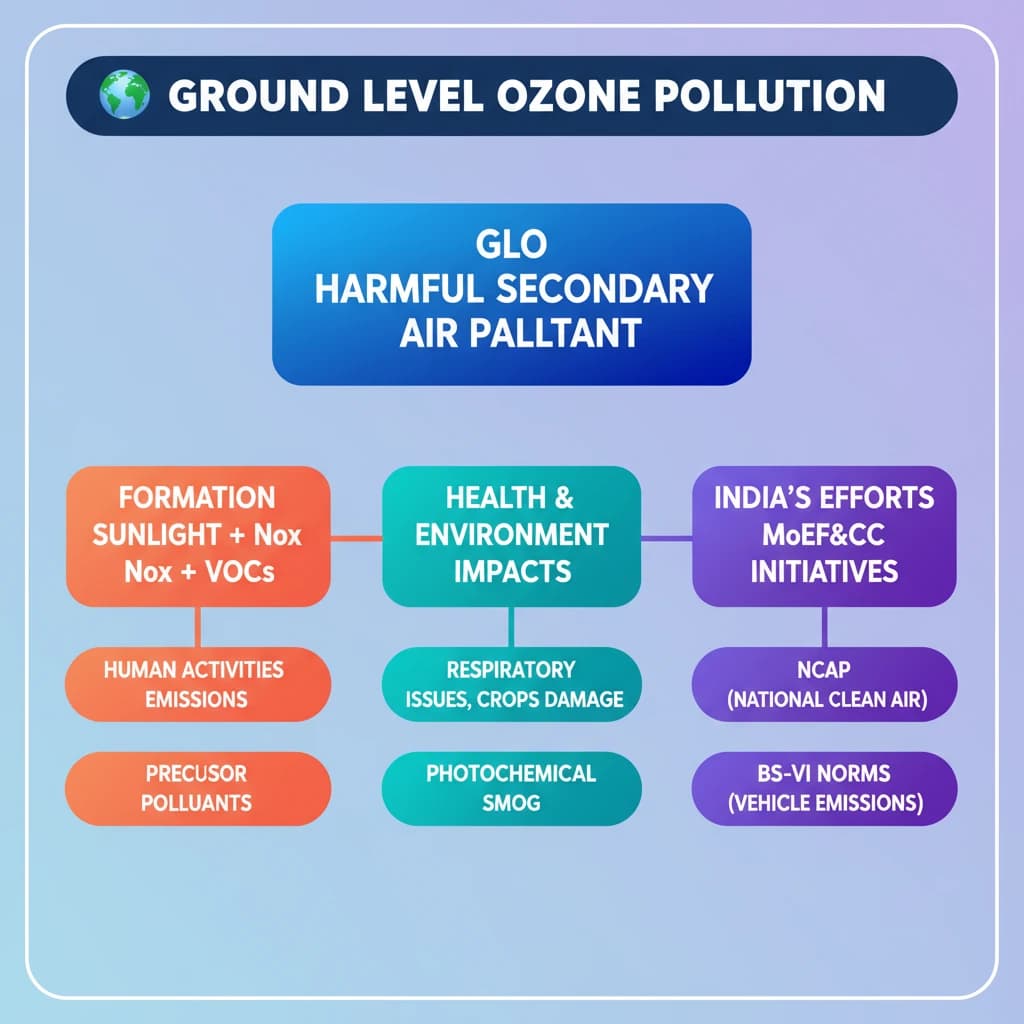
- Ground Level Ozone (GLO) is a harmful secondary air pollutant, distinct from beneficial stratospheric ozone.
- GLO forms from precursor pollutants (NOx, VOCs) reacting in sunlight, primarily from human activities.
- It causes severe respiratory issues, damages crops, and contributes to photochemical smog.
- The MoEF&CC is actively addressing GLO pollution in India.
- India's efforts like NCAP and BS-VI norms aim to control GLO precursors.
- Understanding GLO is crucial for UPSC, especially for environment, health, and agriculture topics.
Ground Level Ozone Pollution
📖 Introduction
💡 Key Takeaways
- •Ground Level Ozone (GLO) is a harmful secondary air pollutant, distinct from beneficial stratospheric ozone.
- •GLO forms from precursor pollutants (NOx, VOCs) reacting in sunlight, primarily from human activities.
- •It causes severe respiratory issues, damages crops, and contributes to photochemical smog.
- •The MoEF&CC is actively addressing GLO pollution in India.
- •India's efforts like NCAP and BS-VI norms aim to control GLO precursors.
- •Understanding GLO is crucial for UPSC, especially for environment, health, and agriculture topics.
🧠 Memory Techniques