Loading page, please wait…
Vaidra Logo
Vaidra

Top 4 items + smart groups

UPSC GPT
New
Current Affairs
Daily Solutions
Daily Puzzle
Mains Evaluator

Version 2.0.0 • Built with ❤️ for UPSC aspirants

Loading...
Loading...
Loading...
Loading...
Loading...
Loading...
Loading...
Loading...
Loading...
Loading...
Loading...
Loading...
Loading...
Back
All Subjects

Topics

0 topics • 0 completed

Loading topics...
Loading...
Loading...
Loading...
Loading...
Loading...
Overall Progress0%

What is the Namami Gange Programme? - UPSC Environment And Ecology

What is What is the Namami Gange Programme? in UPSC Environment And Ecology?

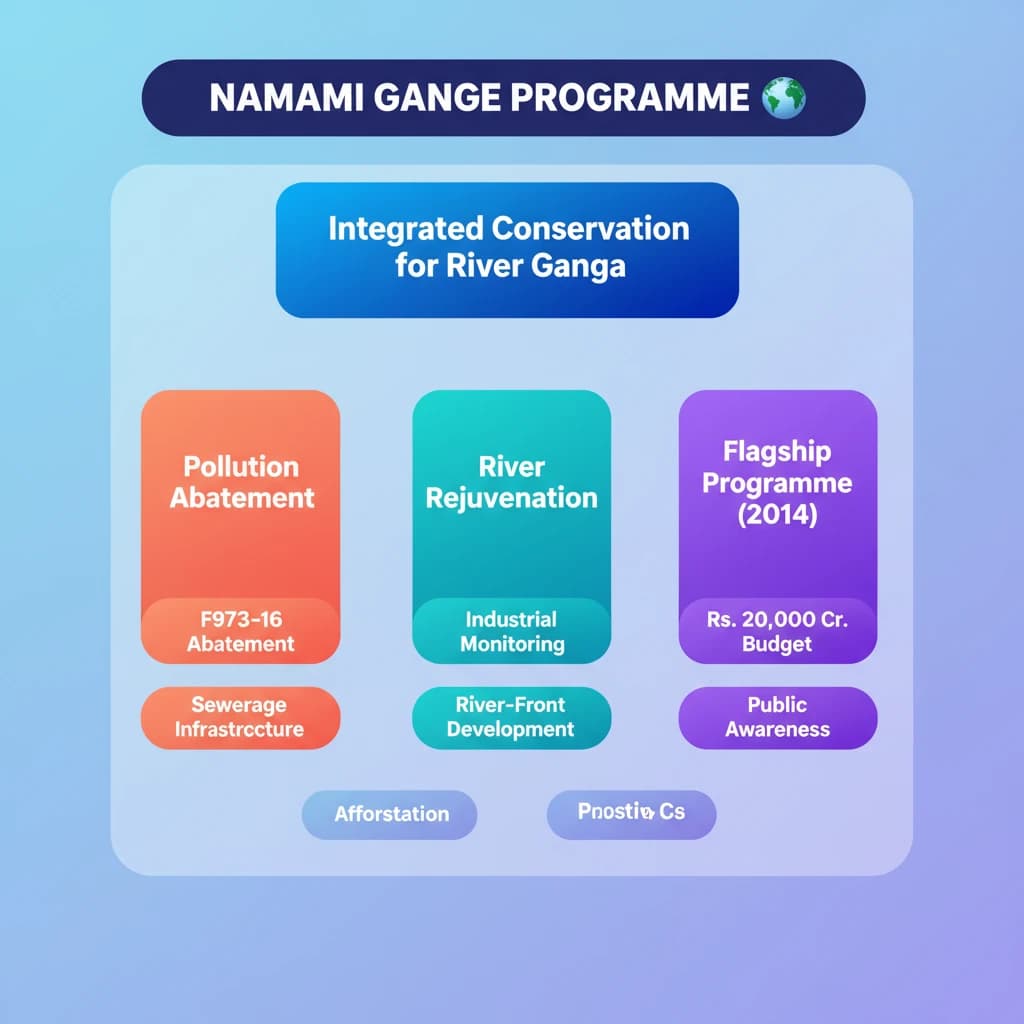
What is the Namami Gange Programme? is a key topic under Environment And Ecology for UPSC Civil Services Examination. Key points include: Namami Gange is an Integrated Conservation Mission for River Ganga.. Approved in June 2014 as a Flagship Programme with a Rs. 20,000 Crore budget.. Twin objectives: pollution abatement and river rejuvenation.. Understanding this topic is essential for both UPSC Prelims and Mains preparation.

Why is What is the Namami Gange Programme? important for UPSC exam?

What is the Namami Gange Programme? is a Medium-level topic in UPSC Environment And Ecology. It is tested in both Prelims (factual MCQs) and Mains (analytical answer writing). Previous year UPSC questions have frequently covered aspects of What is the Namami Gange Programme?, making it essential for comprehensive IAS preparation.

How to prepare What is the Namami Gange Programme? for UPSC?

To prepare What is the Namami Gange Programme? for UPSC: (1) Study the comprehensive notes covering all key concepts on Vaidra. (2) Practice previous year questions on this topic. (3) Connect it with current affairs using daily updates. (4) Revise using key takeaways and mind maps available for Environment And Ecology. (5) Write practice answers linking What is the Namami Gange Programme? to related GS Paper topics.

Key takeaways of What is the Namami Gange Programme? for UPSC

  • Namami Gange is an Integrated Conservation Mission for River Ganga.
  • Approved in June 2014 as a Flagship Programme with a Rs. 20,000 Crore budget.
  • Twin objectives: pollution abatement and river rejuvenation.
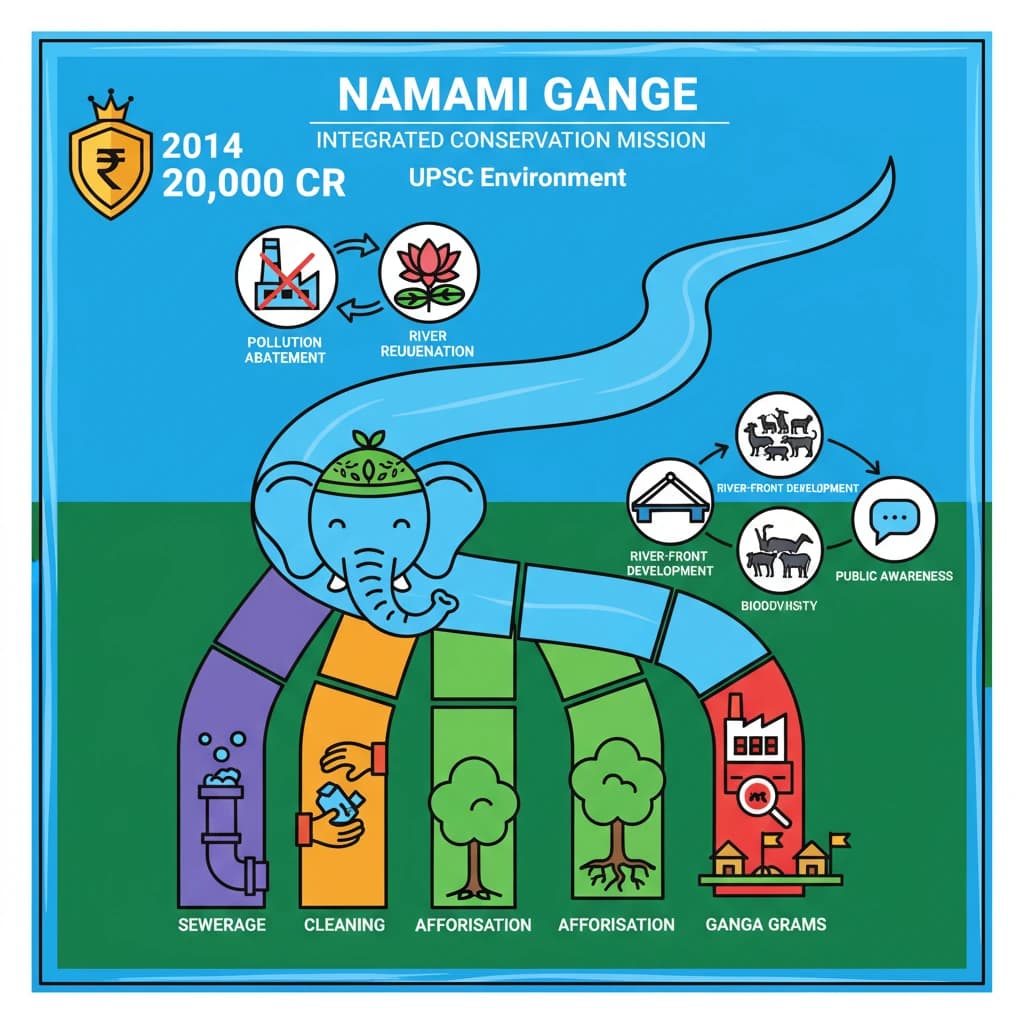
  • Key pillars include sewerage infrastructure, river surface cleaning, afforestation, industrial monitoring, river-front development, biodiversity, public awareness, and Ganga Grams.
  • Emphasizes an Integrated Mission Approach linking economic development with ecological improvement.
  • Priority areas are clean energy, waterways, biodiversity, and wetland development.
What is the Namami Gange Programme?

What is the Namami Gange Programme?

Medium⏱️ 8 min read✓ 95% Verified
environment and ecology

📖 Introduction

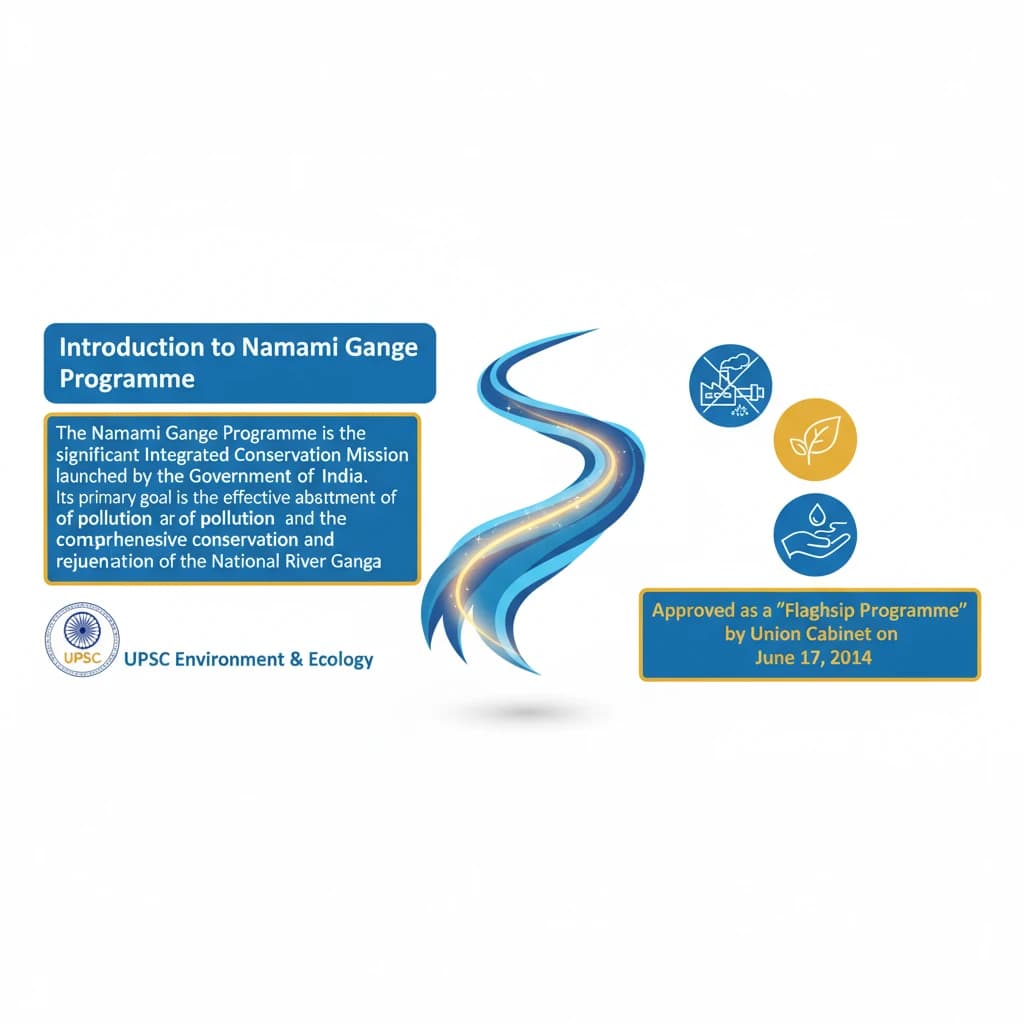
<h4>Introduction to Namami Gange Programme</h4><p>The <strong>Namami Gange Programme</strong> is a significant <strong>Integrated Conservation Mission</strong> launched by the Government of India. Its primary goal is the effective abatement of <strong>pollution</strong> and the comprehensive <strong>conservation and rejuvenation</strong> of the <strong>National River Ganga</strong>.</p><div class='info-box'><p>The programme was approved as a <strong>'Flagship Programme'</strong> by the <strong>Union Government</strong> in <strong>June 2014</strong>. It was allocated a substantial budget outlay of <strong>Rs. 20,000 Crore</strong> to achieve its twin objectives.</p></div><div class='key-point-box'><p>A <strong>Flagship Programme</strong> is a major national initiative designed to address critical concerns. These concerns often span vital sectors such as <strong>health, education, environment, irrigation, urban development</strong>, and <strong>rural development</strong>, reflecting broad national priorities.</p></div><h4>Key Pillars of Namami Gange Programme</h4><p>The success of the <strong>Namami Gange Programme</strong> is built upon several interconnected pillars, each addressing a specific aspect of river conservation and rejuvenation.</p><ul><li><strong>Sewerage Treatment Infrastructure:</strong> This pillar focuses on developing and upgrading infrastructure to manage <strong>wastewater</strong> effectively, preventing untreated sewage from entering the river.</li><li><strong>River-Surface Cleaning:</strong> Initiatives under this pillar are dedicated to removing <strong>solid waste</strong> and visible pollution from the river's surface, improving its aesthetic and ecological health.</li><li><strong>Afforestation:</strong> This involves extensive tree planting and restoring green cover along the river banks. It helps in soil conservation, improving water quality, and enhancing biodiversity.</li><li><strong>Industrial Effluent Monitoring:</strong> Strict monitoring mechanisms are put in place to control and prevent the discharge of harmful <strong>industrial effluents</strong> into the river, safeguarding its water quality.</li><li><strong>River-Front Development:</strong> This pillar aims to create and improve public spaces along the river. These developments promote <strong>community engagement</strong>, enhance <strong>tourism</strong>, and connect people with the river.</li><li><strong>Biodiversity:</strong> Efforts are made to enhance the river's overall <strong>ecological health</strong>. This includes supporting and conserving diverse <strong>biological communities</strong> that depend on the Ganga ecosystem.</li><li><strong>Public Awareness:</strong> This crucial pillar focuses on educating citizens about the immense importance of <strong>river conservation</strong>. It encourages community participation and responsible behavior towards the river.</li><li><strong>Ganga Gram:</strong> This initiative aims to develop villages situated along the main stem of <strong>River Ganga</strong> into <strong>model villages</strong>. These villages serve as examples of sustainable living and river-friendly practices.</li></ul><h4>Integrated Mission Approach and Priority Areas</h4><p>The <strong>Namami Gange Programme</strong> adopts an <strong>Integrated Mission Approach</strong>. This approach significantly emphasizes the crucial linkage between <strong>economic development</strong> and <strong>ecological improvement</strong>.</p><p>It showcases a strong commitment to achieving <strong>sustainable growth</strong> by ensuring that developmental activities do not compromise the river's health.</p><div class='key-point-box'><p>Identified <strong>priority areas</strong> for ongoing and future initiatives include <strong>clean energy, waterways development, biodiversity conservation,</strong> and <strong>wetland development</strong>. These areas are crucial for the holistic rejuvenation of the Ganga basin.</p></div>
Concept Diagram

💡 Key Takeaways

  • •Namami Gange is an Integrated Conservation Mission for River Ganga.
  • •Approved in June 2014 as a Flagship Programme with a Rs. 20,000 Crore budget.
  • •Twin objectives: pollution abatement and river rejuvenation.
  • •Key pillars include sewerage infrastructure, river surface cleaning, afforestation, industrial monitoring, river-front development, biodiversity, public awareness, and Ganga Grams.
  • •Emphasizes an Integrated Mission Approach linking economic development with ecological improvement.
  • •Priority areas are clean energy, waterways, biodiversity, and wetland development.

🧠 Memory Techniques
Memory Aid
95% Verified Content

Related Topics

Loading related topics...
Explore:Environment And Ecology Topics·All Subjects·Daily Current Affairs·Editorial Analysis·Previous Year Questions·UPSC GPT
What is the Namami Gange Programme? - UPSC Environment And Ecology