Loading page, please wait…
Vaidra Logo
Vaidra

Top 4 items + smart groups

UPSC GPT
New
Current Affairs
Daily Solutions
Daily Puzzle
Mains Evaluator

Version 2.0.0 • Built with ❤️ for UPSC aspirants

Loading...
Loading...
Loading...
Loading...
Loading...
Loading...
Loading...
Loading...
Loading...
Loading...
Loading...
Loading...
Loading...
Back
All Subjects

Topics

0 topics • 0 completed

Loading topics...
Loading...
Loading...
Loading...
Loading...
Loading...
Overall Progress0%

What are India Specific Findings in Air Quality Life Index (AQLI) 2024? - UPSC Environment And Ecology

What is What are India Specific Findings in Air Quality Life Index (AQLI) 2024? in UPSC Environment And Ecology?

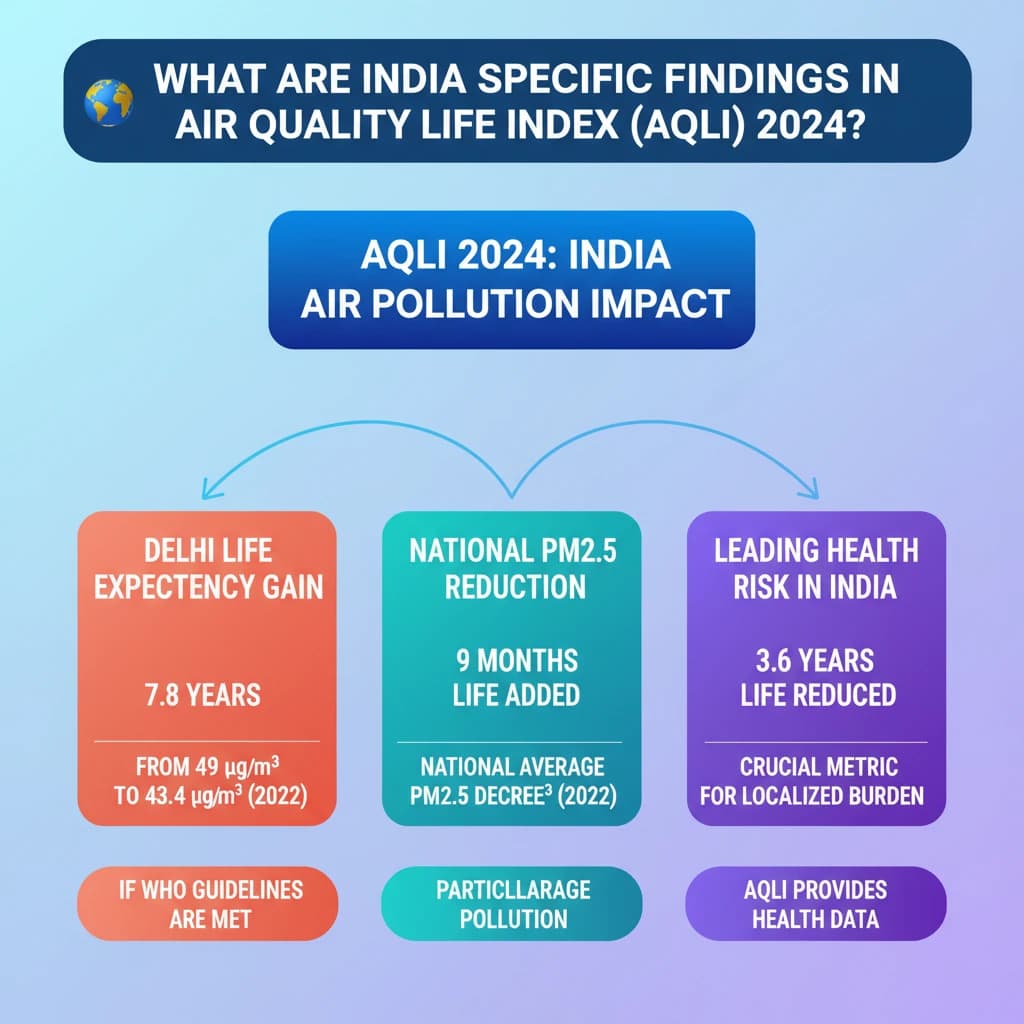
What are India Specific Findings in Air Quality Life Index (AQLI) 2024? is a key topic under Environment And Ecology for UPSC Civil Services Examination. Key points include: Delhi could gain 7.8 years in life expectancy if WHO air quality guidelines are met.. India's national average PM2.5 decreased from 49 µg/m³ to 43.4 µg/m³ in 2022.. This national improvement could add 9 months to the average Indian's life.. Understanding this topic is essential for both UPSC Prelims and Mains preparation.

Why is What are India Specific Findings in Air Quality Life Index (AQLI) 2024? important for UPSC exam?

What are India Specific Findings in Air Quality Life Index (AQLI) 2024? is a Medium-level topic in UPSC Environment And Ecology. It is tested in both Prelims (factual MCQs) and Mains (analytical answer writing). Previous year UPSC questions have frequently covered aspects of What are India Specific Findings in Air Quality Life Index (AQLI) 2024?, making it essential for comprehensive IAS preparation.

How to prepare What are India Specific Findings in Air Quality Life Index (AQLI) 2024? for UPSC?

To prepare What are India Specific Findings in Air Quality Life Index (AQLI) 2024? for UPSC: (1) Study the comprehensive notes covering all key concepts on Vaidra. (2) Practice previous year questions on this topic. (3) Connect it with current affairs using daily updates. (4) Revise using key takeaways and mind maps available for Environment And Ecology. (5) Write practice answers linking What are India Specific Findings in Air Quality Life Index (AQLI) 2024? to related GS Paper topics.

Key takeaways of What are India Specific Findings in Air Quality Life Index (AQLI) 2024? for UPSC

  • Delhi could gain 7.8 years in life expectancy if WHO air quality guidelines are met.
  • India's national average PM2.5 decreased from 49 µg/m³ to 43.4 µg/m³ in 2022.
  • This national improvement could add 9 months to the average Indian's life.
  • Particulate pollution is the leading external health risk in India, reducing life expectancy by 3.6 years.
  • AQLI provides a crucial metric for understanding the localized health burden of air pollution.
What are India Specific Findings in Air Quality Life Index (AQLI) 2024?

What are India Specific Findings in Air Quality Life Index (AQLI) 2024?

Medium⏱️ 8 min read✓ 98% Verified
environment and ecology

📖 Introduction

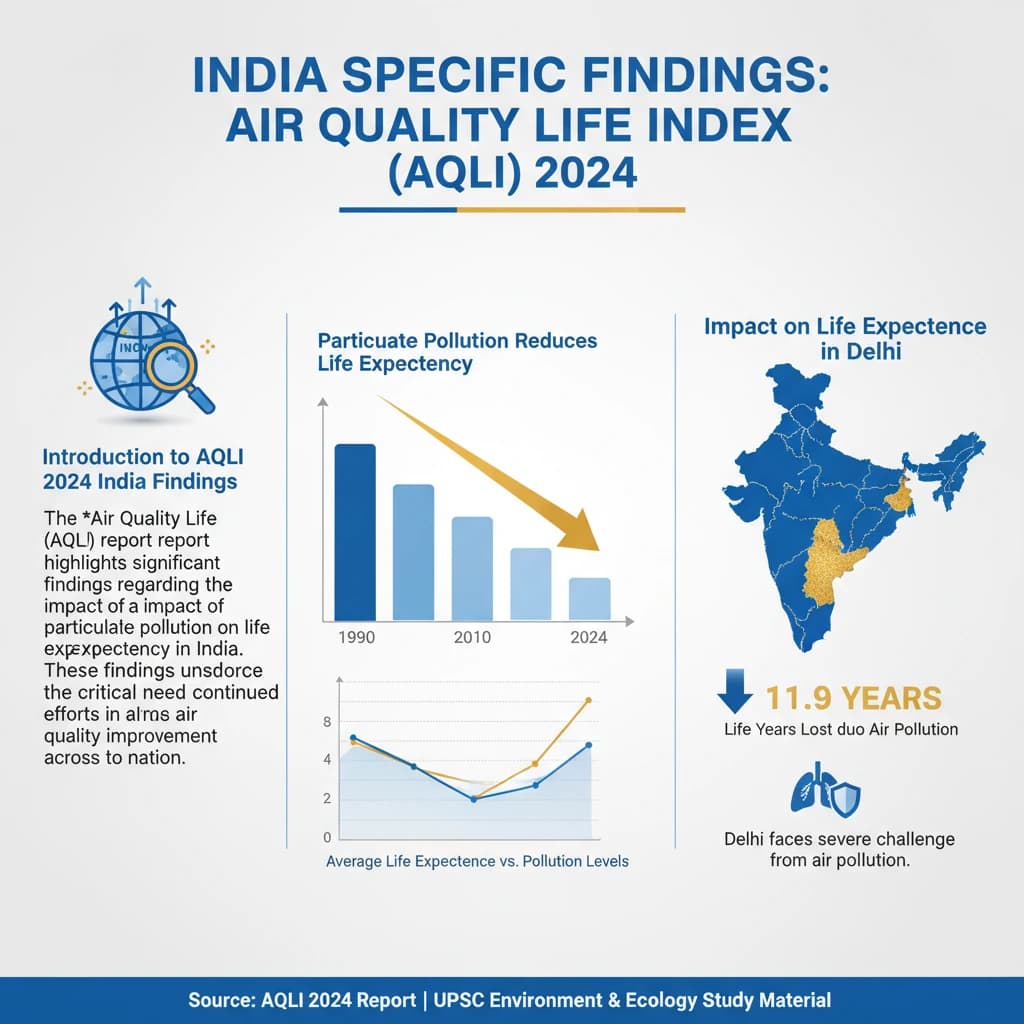
<h4>Introduction to AQLI 2024 India Findings</h4><p>The <strong>Air Quality Life Index (AQLI) 2024</strong> report highlights significant findings regarding the impact of <strong>particulate pollution</strong> on life expectancy in India.</p><p>These findings underscore the critical need for continued efforts in <strong>air quality improvement</strong> across the nation.</p><h4>Impact on Life Expectancy in Delhi</h4><p><strong>Delhi</strong>, India's capital, faces a severe challenge from air pollution, making it the <strong>most polluted city</strong> in the country.</p><p>The AQLI 2024 report projects a substantial increase in <strong>life expectancy</strong> if air quality targets are met.</p><div class='info-box'><ul><li>Meeting <strong>WHO guidelines</strong> (<strong>5 µg/m³</strong> PM2.5) could increase life expectancy for Delhi's <strong>18.7 million residents</strong> by <strong>7.8 years</strong>.</li><li>Achieving <strong>India’s national air quality standard</strong> (<strong>40 µg/m³</strong> PM2.5) could extend life expectancy by <strong>4.3 years</strong>.</li></ul></div><h4>Current Air Quality and Trends in Delhi</h4><p>In <strong>2022</strong>, Delhi recorded an average <strong>PM2.5 level</strong> of <strong>84.3 µg/m³</strong>.</p><p>Despite being the most polluted, this figure represents a <strong>significant improvement</strong> compared to previous years, indicating positive trends.</p><div class='info-box'><p><strong>Delhi's average annual PM2.5 concentration in 2022:</strong> <strong>84.3 µg/m³</strong>.</p></div><h4>Improvement in Air Quality Across India</h4><p>India as a whole has witnessed a noticeable decrease in <strong>particulate pollution</strong> over the past decade.</p><p>This national trend suggests that concerted efforts to improve air quality are yielding positive results.</p><div class='info-box'><ul><li>Average particulate pollution over the <strong>last decade</strong>: <strong>49 µg/m³</strong>.</li><li>Average particulate pollution in <strong>2022</strong>: <strong>43.4 µg/m³</strong>.</li></ul></div><p>If this downward trend continues, the average Indian resident could experience an increase of <strong>9 months</strong> in their life expectancy.</p><div class='key-point-box'><p>This <strong>9-month gain</strong> is projected relative to exposure to the pollution levels of the previous decade.</p></div><h4>Comparison with Other Health Risks</h4><p>The AQLI report also contextualizes the impact of air pollution by comparing it with other major health risks in India.</p><p>This comparison highlights the significant burden that particulate pollution places on public health.</p><div class='info-box'><table class='info-table'><tr><th>Health Risk</th><th>Life Expectancy Reduction (Years)</th></tr><tr><td><strong>Particulate Pollution</strong></td><td><strong>3.6 years</strong></td></tr><tr><td><strong>Malnutrition</strong></td><td><strong>1.6 years</strong></td></tr><tr><td><strong>Tobacco</strong></td><td><strong>1.5 years</strong></td></tr><tr><td><strong>Unsafe Water and Sanitation</strong></td><td><strong>0.7 years</strong> (8.4 months)</td></tr></table></div><div class='key-point-box'><p><strong>Particulate pollution</strong> remains the <strong>largest external threat</strong> to life expectancy in India, surpassing other critical health concerns.</p></div>
Concept Diagram

💡 Key Takeaways

  • •Delhi could gain 7.8 years in life expectancy if WHO air quality guidelines are met.
  • •India's national average PM2.5 decreased from 49 µg/m³ to 43.4 µg/m³ in 2022.
  • •This national improvement could add 9 months to the average Indian's life.
  • •Particulate pollution is the leading external health risk in India, reducing life expectancy by 3.6 years.
  • •AQLI provides a crucial metric for understanding the localized health burden of air pollution.

🧠 Memory Techniques

Memory Aid
98% Verified Content

📚 Reference Sources

•Air Quality Life Index (AQLI) 2024 Report by Energy Policy Institute at the University of Chicago (EPIC)

Related Topics

Loading related topics...
Explore:Environment And Ecology Topics·All Subjects·Daily Current Affairs·Editorial Analysis·Previous Year Questions·UPSC GPT
What are India Specific Findings in Air Quality Life Index (AQLI) 2024? - UPSC Environment And Ecology