Loading page, please wait…
Vaidra Logo
Vaidra

Top 4 items + smart groups

UPSC GPT
New
Current Affairs
Daily Solutions
Daily Puzzle
Mains Evaluator

Version 2.0.0 • Built with ❤️ for UPSC aspirants

Loading...
Loading...
Loading...
Loading...
Loading...
Loading...
Loading...
Loading...
Loading...
Loading...
Loading...
Loading...
Loading...
What is Geoengineering? - UPSC Environment And Ecology
Back
All Subjects

Topics

0 topics • 0 completed

Loading topics...
Loading...
Loading...
Loading...
Loading...
Loading...
Overall Progress0%

What is Geoengineering? - UPSC Environment And Ecology

What is What is Geoengineering? in UPSC Environment And Ecology?

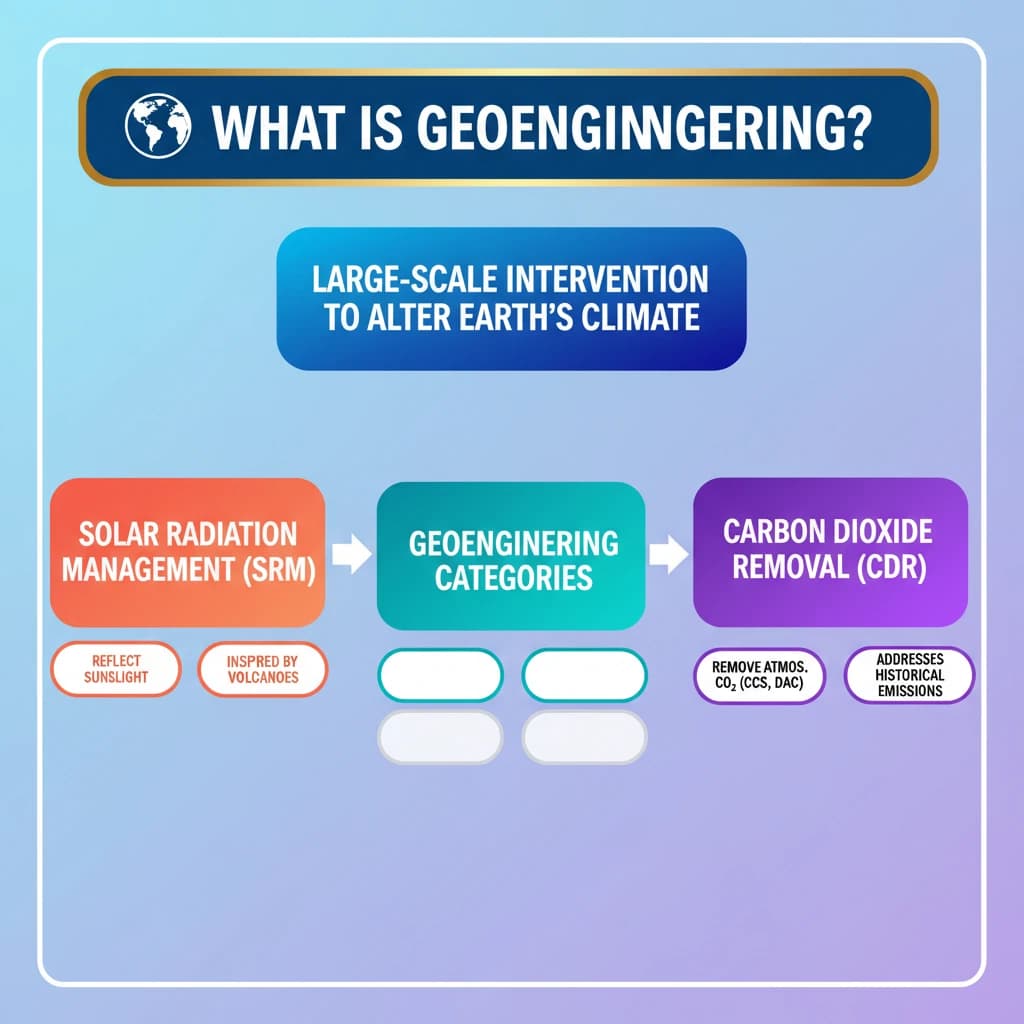
What is Geoengineering? is a key topic under Environment And Ecology for UPSC Civil Services Examination. Key points include: Geoengineering involves large-scale interventions to alter Earth's climate.. It has two main categories: Solar Radiation Management (SRM) and Carbon Dioxide Removal (CDR).. SRM aims to reflect sunlight, inspired by volcanic eruptions like Mount Pinatubo.. Understanding this topic is essential for both UPSC Prelims and Mains preparation.

Why is What is Geoengineering? important for UPSC exam?

What is Geoengineering? is a Medium-level topic in UPSC Environment And Ecology. It is tested in both Prelims (factual MCQs) and Mains (analytical answer writing). Previous year UPSC questions have frequently covered aspects of What is Geoengineering?, making it essential for comprehensive IAS preparation.

How to prepare What is Geoengineering? for UPSC?

To prepare What is Geoengineering? for UPSC: (1) Study the comprehensive notes covering all key concepts on Vaidra. (2) Practice previous year questions on this topic. (3) Connect it with current affairs using daily updates. (4) Revise using key takeaways and mind maps available for Environment And Ecology. (5) Write practice answers linking What is Geoengineering? to related GS Paper topics.

Key takeaways of What is Geoengineering? for UPSC

  • Geoengineering involves large-scale interventions to alter Earth's climate.
  • It has two main categories: Solar Radiation Management (SRM) and Carbon Dioxide Removal (CDR).
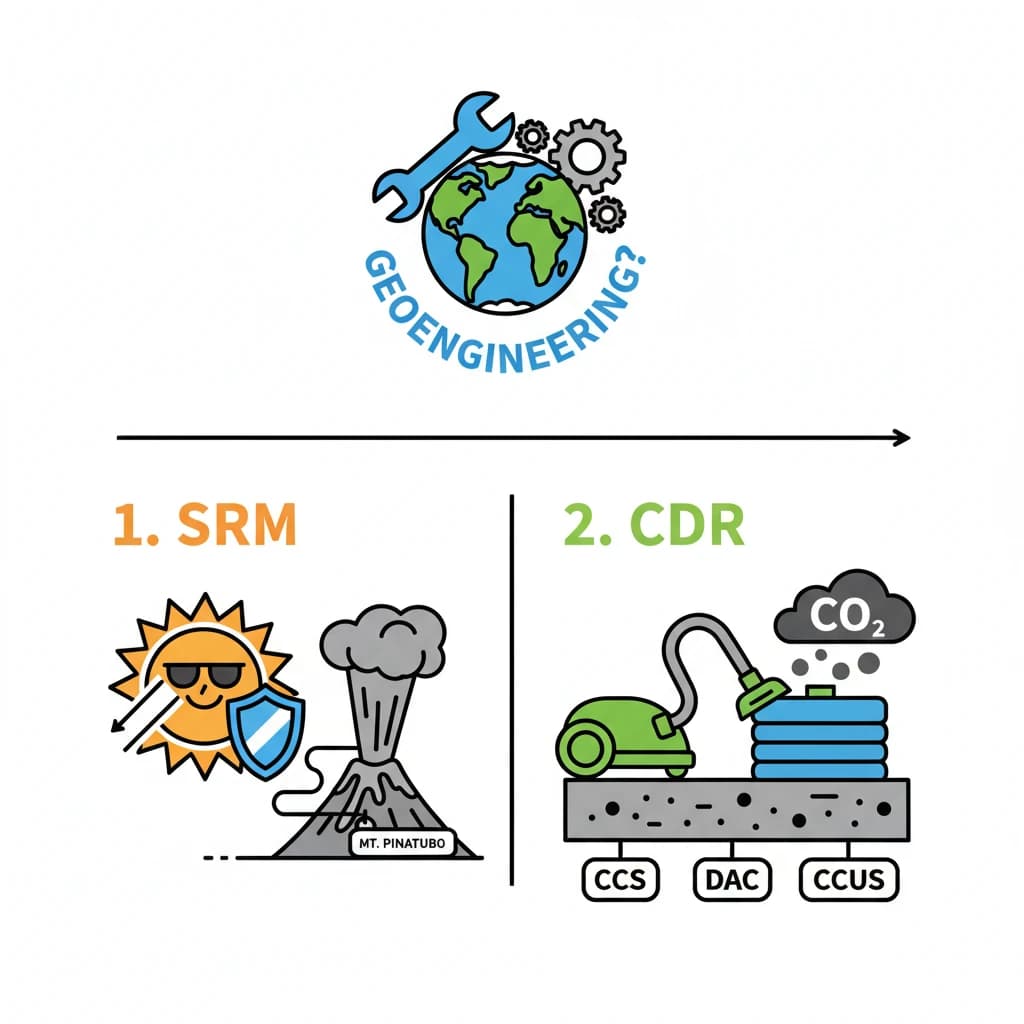
  • SRM aims to reflect sunlight, inspired by volcanic eruptions like Mount Pinatubo.
  • CDR focuses on removing atmospheric CO2, using techniques like CCS, DAC, and CCUS.
  • DAC can address historical emissions but faces significant challenges.
  • Geoengineering is a complementary, not replacement, strategy for emissions reduction.
What is Geoengineering?

What is Geoengineering?

Medium⏱️ 7 min read✓ 98% Verified
environment and ecology

📖 Introduction

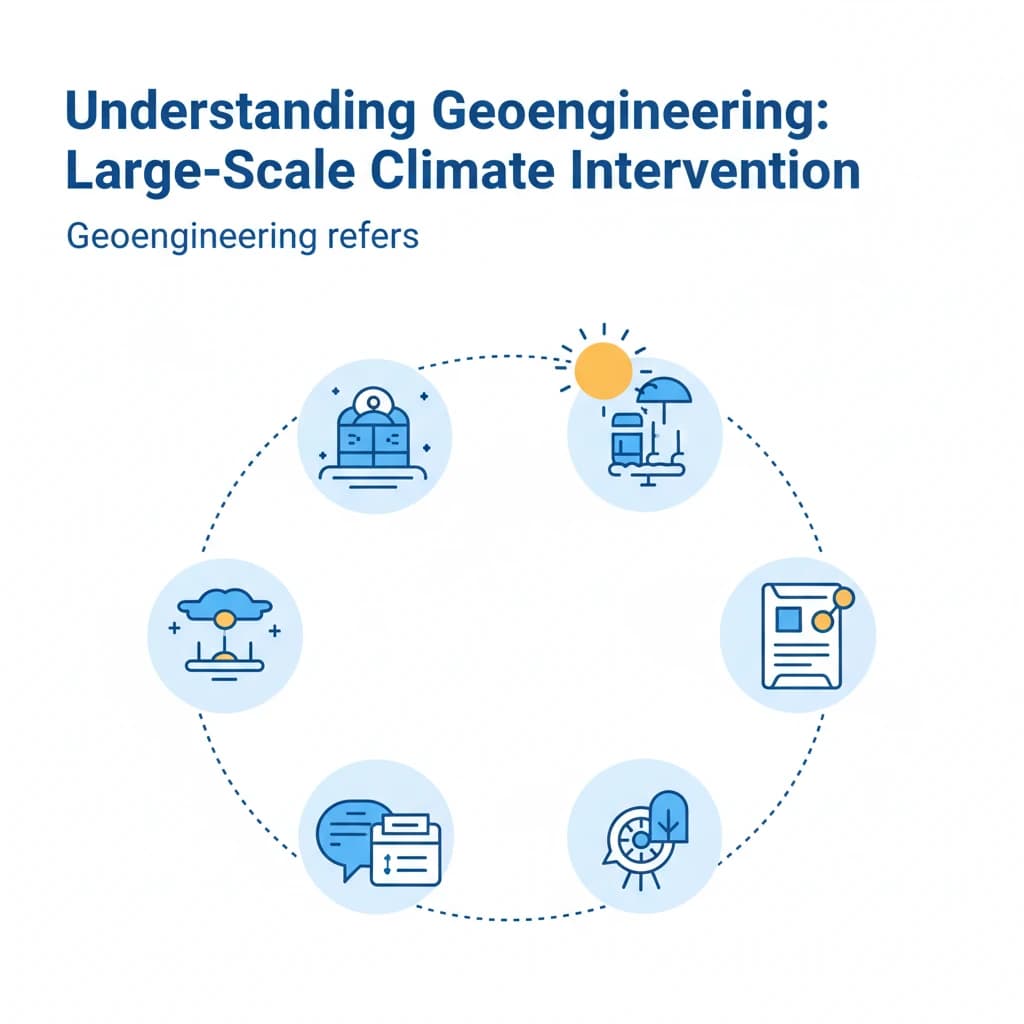
<h4>Understanding Geoengineering: Large-Scale Climate Intervention</h4><p><strong>Geoengineering</strong> refers to large-scale interventions designed to deliberately alter the <strong>Earth’s climate system</strong>. The primary goal is to counteract the adverse effects of <strong>global warming</strong>.</p><p>More specifically, it often focuses on managing <strong>solar radiation</strong> or removing <strong>carbon dioxide</strong> from the atmosphere.</p><h4>Classification of Geoengineering Approaches</h4><p>Geoengineering primarily involves two distinct approaches, each targeting different aspects of the climate system:</p><ul> <li><strong>Solar Radiation Management (SRM)</strong></li> <li><strong>Carbon Dioxide Removal (CDR)</strong></li></ul><h4>Solar Radiation Management (SRM)</h4><p><strong>SRM</strong> techniques aim to reflect a small percentage of the <strong>sun's rays</strong> back into space, thereby reducing the amount of solar energy absorbed by Earth.</p><div class='info-box'> <p><strong>Mechanism:</strong> SRM involves deploying materials or altering atmospheric properties to increase the Earth's <strong>albedo</strong> (reflectivity).</p> <p><strong>Inspiration:</strong> This method draws inspiration from natural phenomena, such as large <strong>volcanic eruptions</strong>, which release aerosols into the stratosphere, temporarily cooling the planet.</p></div><p>A notable example is the <strong>1991 eruption of Mount Pinatubo</strong> in the Philippines, which reportedly reduced Earth's average temperature by approximately <strong>0.5°C</strong> that year.</p><div class='key-point-box'> <p><strong>Key Point:</strong> SRM is considered a rapid-acting approach but does not address the root cause of climate change, which is increased <strong>greenhouse gas concentrations</strong>.</p></div><h4>Carbon Dioxide Removal (CDR)</h4><p><strong>CDR</strong> techniques focus on actively removing <strong>carbon dioxide (CO2)</strong> from the atmosphere and storing it away for long periods. The aim is to reduce the overall concentration of this primary greenhouse gas.</p><div class='info-box'> <p><strong>Objective:</strong> CDR methods are designed for the <strong>long-term reduction</strong> of atmospheric CO2 levels, directly tackling the cause of global warming.</p></div><h4>Carbon Capture and Sequestration (CCS)</h4><p><strong>CCS</strong> is currently the most practiced <strong>CDR method</strong>. It involves capturing CO2 emissions from large industrial sources and preventing them from entering the atmosphere.</p><div class='info-box'> <p><strong>Process:</strong> CO2 is captured from industrial exhaust streams (e.g., power plants, cement factories) and then transported for storage deep underground in suitable <strong>geological formations</strong>.</p></div><p>This process effectively reduces direct industrial <strong>CO2 emissions</strong>.</p><h4>Direct Air Capture (DAC)</h4><p><strong>DAC</strong> is a technology that extracts <strong>CO2 directly from ambient air</strong>, rather than from a concentrated emission source.</p><div class='info-box'> <p><strong>Mechanism:</strong> Large devices, sometimes referred to as "artificial trees," are used to chemically filter CO2 from the air. The captured CO2 can then be stored or utilized.</p></div><div class='key-point-box'> <p><strong>Potential and Challenges:</strong> DAC holds significant potential as it can address <strong>historical CO2 emissions</strong> already in the atmosphere. However, it faces more substantial technological and economic challenges compared to CCS.</p></div><h4>Carbon Capture, Utilization and Storage (CCUS)</h4><p><strong>CCUS</strong> is an integrated approach that goes beyond just storage. It involves capturing CO2, then either utilizing it in various industrial processes or storing it permanently.</p><div class='info-box'> <p><strong>Utilization:</strong> Some captured <strong>CO2</strong> is repurposed for applications like enhanced oil recovery, production of fuels, or manufacturing of building materials. The remainder is stored permanently.</p></div>
Concept Diagram

💡 Key Takeaways

  • •Geoengineering involves large-scale interventions to alter Earth's climate.
  • •It has two main categories: Solar Radiation Management (SRM) and Carbon Dioxide Removal (CDR).
  • •SRM aims to reflect sunlight, inspired by volcanic eruptions like Mount Pinatubo.
  • •CDR focuses on removing atmospheric CO2, using techniques like CCS, DAC, and CCUS.
  • •DAC can address historical emissions but faces significant challenges.
  • •Geoengineering is a complementary, not replacement, strategy for emissions reduction.

🧠 Memory Techniques
Memory Aid
98% Verified Content

Related Topics

Loading related topics...
Explore:Environment And Ecology Topics·All Subjects·Daily Current Affairs·Editorial Analysis·Previous Year Questions·UPSC GPT