Loading page, please wait…
Vaidra Logo
Vaidra

Top 4 items + smart groups

UPSC GPT
New
Current Affairs
Daily Solutions
Daily Puzzle
Mains Evaluator

Version 2.0.0 • Built with ❤️ for UPSC aspirants

Loading...
Loading...
Loading...
Loading...
Loading...
Loading...
Loading...
Loading...
Loading...
Loading...
Loading...
Loading...
Loading...
What is Snow Leopard? - UPSC Environment And Ecology
Back
All Subjects

Topics

0 topics • 0 completed

Loading topics...
Loading...
Loading...
Loading...
Loading...
Loading...
Overall Progress0%

What is Snow Leopard? - UPSC Environment And Ecology

What is What is Snow Leopard? in UPSC Environment And Ecology?

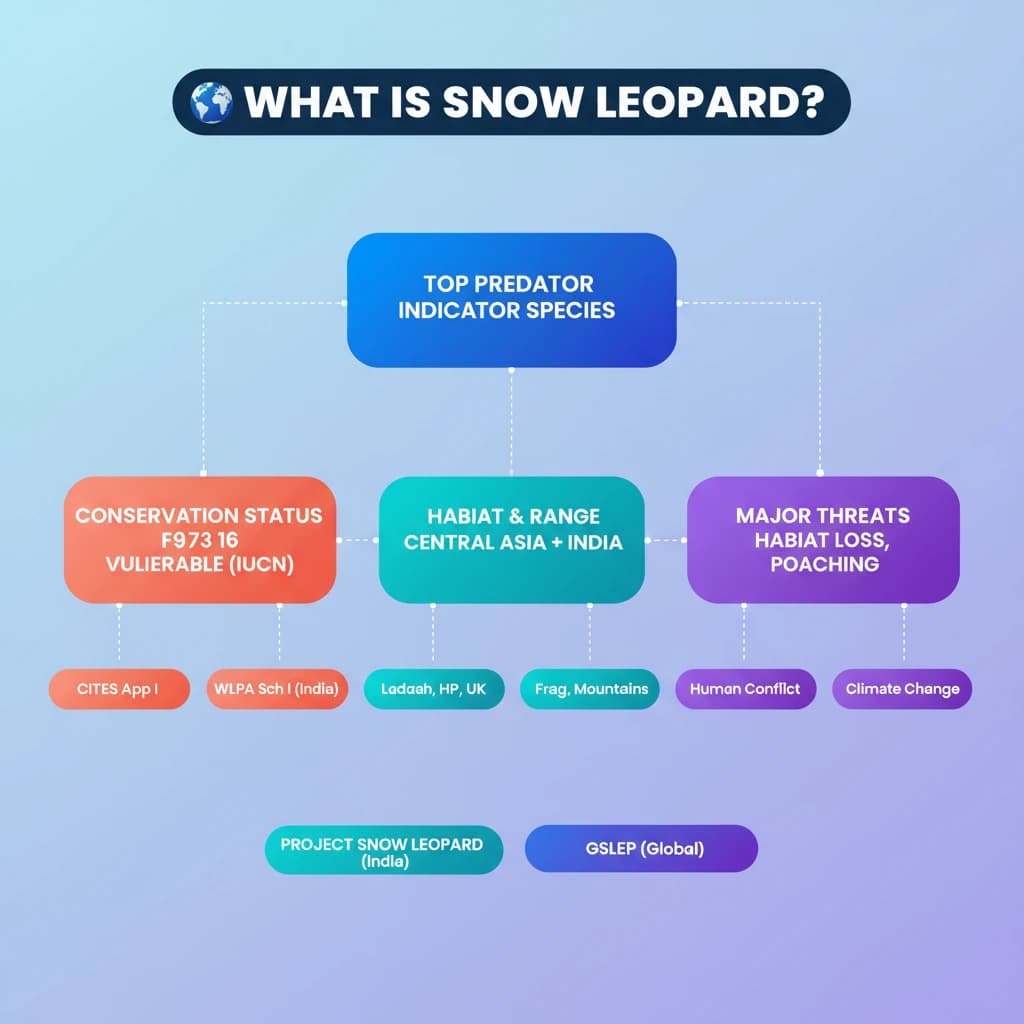
What is Snow Leopard? is a key topic under Environment And Ecology for UPSC Civil Services Examination. Key points include: Snow Leopard (Panthera uncia) is a top predator and indicator species for mountain ecosystem health.. It is classified as Vulnerable by IUCN, Appendix I by CITES, and Schedule-I under India's Wildlife (Protection) Act, 1972.. Its habitat is vast but fragmented across Central Asian mountains, including Ladakh, Himachal Pradesh, Uttarakhand, and Sikkim in India.. Understanding this topic is essential for both UPSC Prelims and Mains preparation.

Why is What is Snow Leopard? important for UPSC exam?

What is Snow Leopard? is a Easy-level topic in UPSC Environment And Ecology. It is tested in both Prelims (factual MCQs) and Mains (analytical answer writing). Previous year UPSC questions have frequently covered aspects of What is Snow Leopard?, making it essential for comprehensive IAS preparation.

How to prepare What is Snow Leopard? for UPSC?

To prepare What is Snow Leopard? for UPSC: (1) Study the comprehensive notes covering all key concepts on Vaidra. (2) Practice previous year questions on this topic. (3) Connect it with current affairs using daily updates. (4) Revise using key takeaways and mind maps available for Environment And Ecology. (5) Write practice answers linking What is Snow Leopard? to related GS Paper topics.

Key takeaways of What is Snow Leopard? for UPSC

  • Snow Leopard (Panthera uncia) is a top predator and indicator species for mountain ecosystem health.
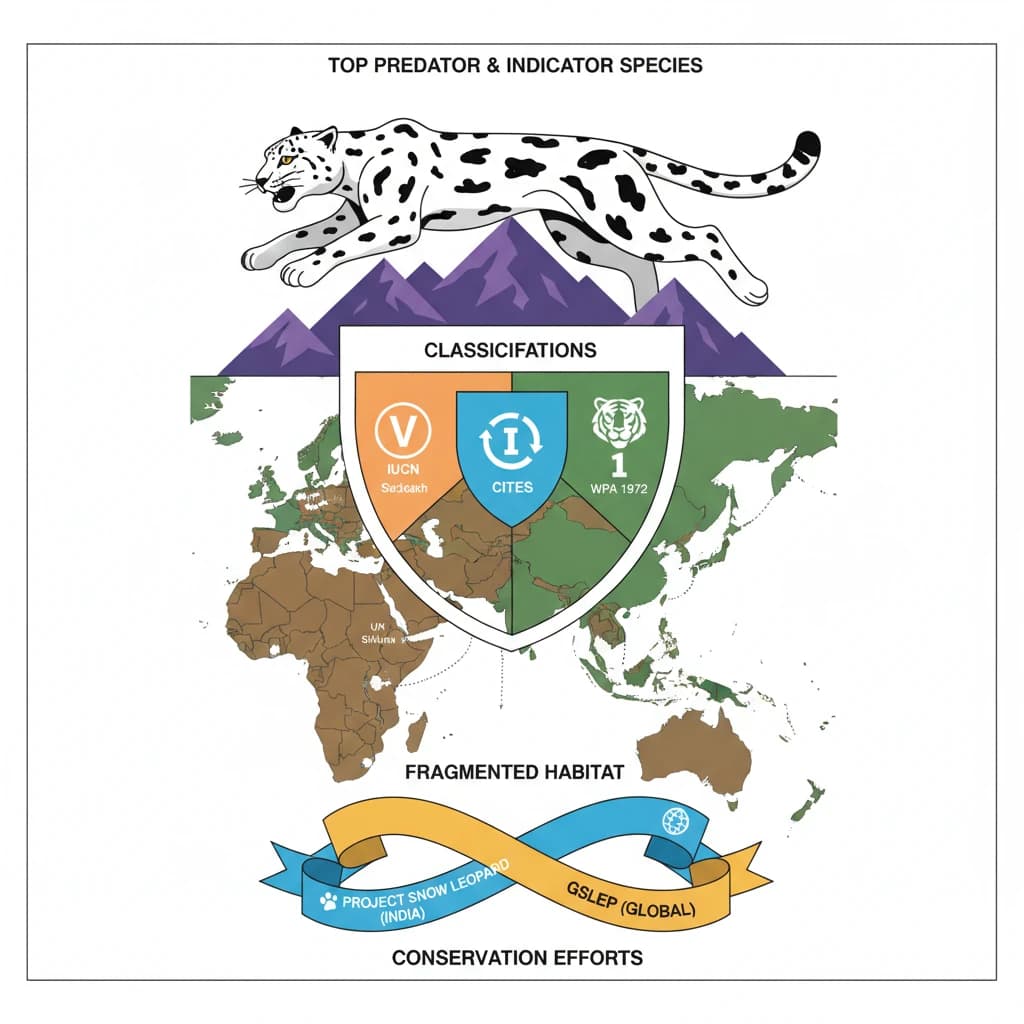
  • It is classified as Vulnerable by IUCN, Appendix I by CITES, and Schedule-I under India's Wildlife (Protection) Act, 1972.
  • Its habitat is vast but fragmented across Central Asian mountains, including Ladakh, Himachal Pradesh, Uttarakhand, and Sikkim in India.
  • Conservation efforts include India's Project Snow Leopard and the international GSLEP program.
  • Threats include habitat loss, poaching, human-wildlife conflict, and climate change impacts on its high-altitude habitat.
What is Snow Leopard?

What is Snow Leopard?

Easy⏱️ 6 min read✓ 100% Verified
environment and ecology

📖 Introduction

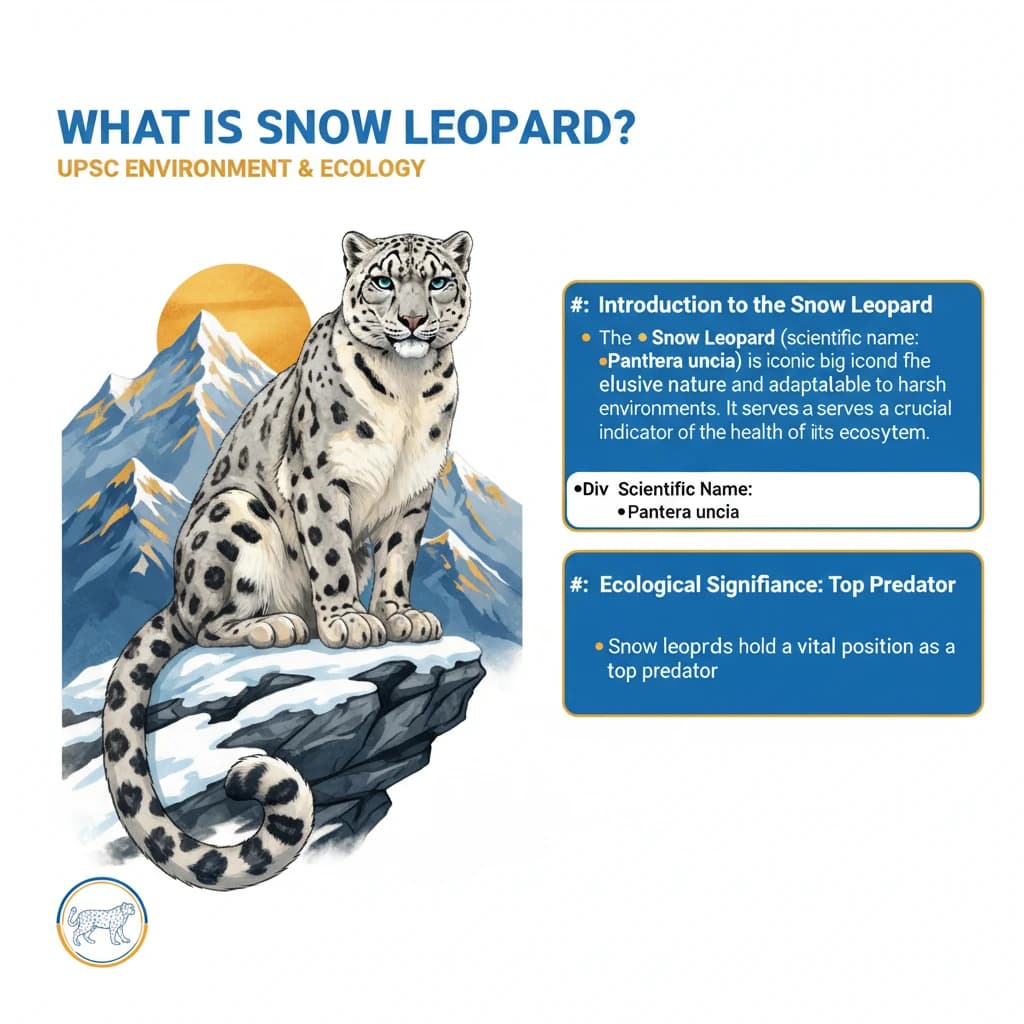
<h4>Introduction to the Snow Leopard</h4><p>The <strong>Snow Leopard</strong> (scientific name: <strong>Panthera uncia</strong>) is an iconic big cat renowned for its elusive nature and adaptability to harsh mountain environments. It serves as a crucial indicator of the health of its ecosystem.</p><div class='info-box'><p><strong>Scientific Name:</strong> <strong>Panthera uncia</strong></p></div><h4>Ecological Significance: Top Predator</h4><p>Snow leopards hold a vital position as the <strong>top predator</strong> in the mountain food web. Their presence signifies a healthy and balanced ecosystem, as they regulate prey populations and maintain ecological stability.</p><div class='key-point-box'><p>As a <strong>top predator</strong>, the <strong>Snow Leopard</strong> acts as an <strong>indicator species</strong> for the overall health and biodiversity of the high-altitude mountain ecosystems it inhabits.</p></div><h4>Protection Status</h4><p>Due to various threats, the <strong>Snow Leopard</strong> is afforded significant protection under national and international conservation laws and agreements. Its status reflects ongoing efforts to safeguard its future.</p><ul><li><strong>IUCN List of Threatened Species:</strong> Classified as <strong>Vulnerable</strong>.</li><li><strong>CITES (Convention on International Trade in Endangered Species of Wild Fauna and Flora):</strong> Listed under <strong>Appendix I</strong>, prohibiting international commercial trade.</li><li><strong>Indian Wildlife (Protection) Act, 1972:</strong> Included in <strong>Schedule-I</strong>, granting it the highest level of legal protection in India.</li></ul><h4>Habitat and Distribution</h4><p>Snow leopards inhabit a vast, yet geographically fragmented, range across the mountainous regions of Central and South Asia. This fragmentation poses challenges for their long-term survival and genetic diversity.</p><p>In India, their habitat primarily extends across the higher reaches of the <strong>Himalayas</strong>. Key states and regions include <strong>Ladakh</strong>, <strong>Himachal Pradesh</strong>, <strong>Uttarakhand</strong>, and <strong>Sikkim</strong>, reflecting their preference for cold, arid, and rocky terrains.</p>
Concept Diagram

💡 Key Takeaways

  • •Snow Leopard (Panthera uncia) is a top predator and indicator species for mountain ecosystem health.
  • •It is classified as Vulnerable by IUCN, Appendix I by CITES, and Schedule-I under India's Wildlife (Protection) Act, 1972.
  • •Its habitat is vast but fragmented across Central Asian mountains, including Ladakh, Himachal Pradesh, Uttarakhand, and Sikkim in India.
  • •Conservation efforts include India's Project Snow Leopard and the international GSLEP program.
  • •Threats include habitat loss, poaching, human-wildlife conflict, and climate change impacts on its high-altitude habitat.

🧠 Memory Techniques
Memory Aid
100% Verified Content

📚 Reference Sources

•CITES Appendices (Panthera uncia)
•The Wildlife (Protection) Act, 1972 (India)
•Ministry of Environment, Forest and Climate Change (MoEFCC), Government of India - Project Snow Leopard documentation
•Global Snow Leopard and Ecosystem Protection Program (GSLEP) official website

Related Topics

Loading related topics...
Explore:Environment And Ecology Topics·All Subjects·Daily Current Affairs·Editorial Analysis·Previous Year Questions·UPSC GPT