What are the Key Facts About Aravallis? - UPSC Environment And Ecology
What is What are the Key Facts About Aravallis? in UPSC Environment And Ecology?
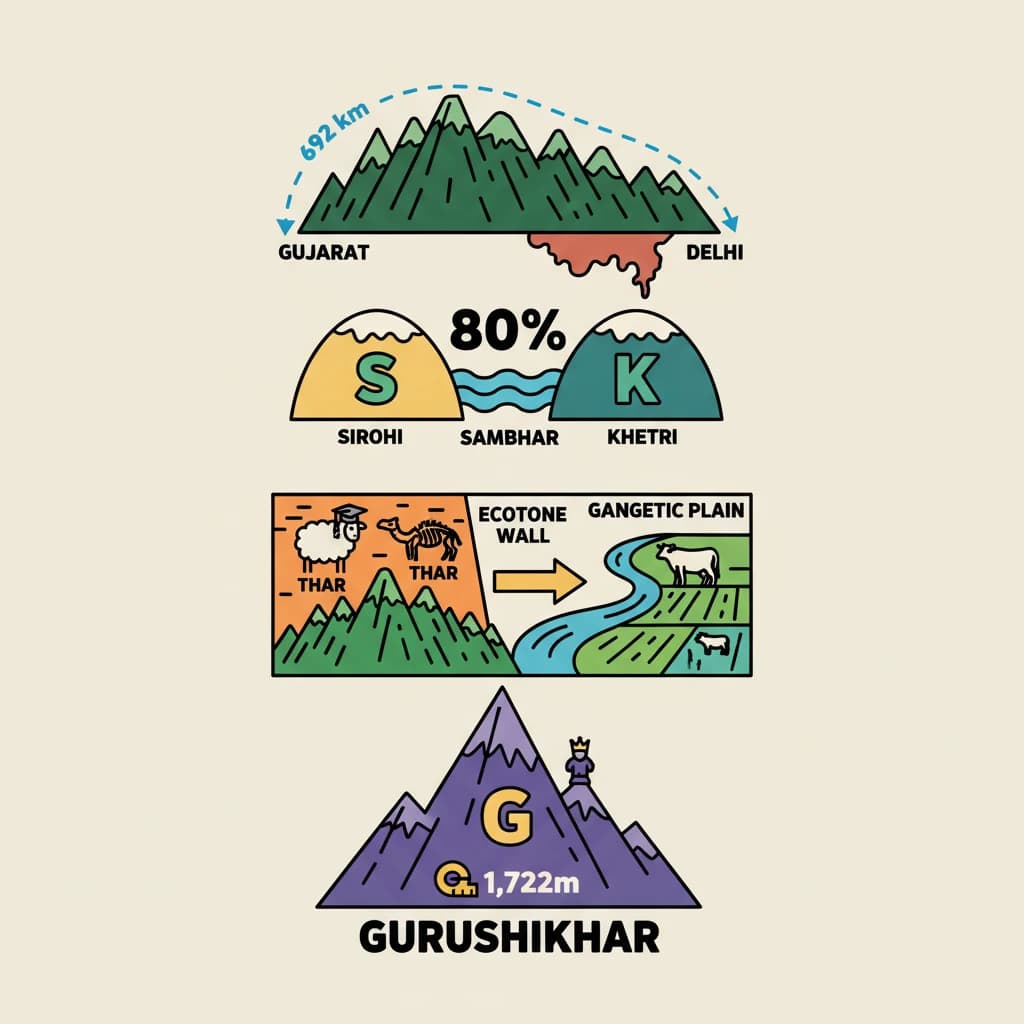
What are the Key Facts About Aravallis? is a key topic under Environment And Ecology for UPSC Civil Services Examination. Key points include: The Aravalli Range is an ancient fold mountain system, 692 km long, extending from Gujarat to Delhi, with 80% in Rajasthan.. It is divided into Sambhar Sirohi and Sambhar Khetri Ranges in Rajasthan.. Functions as a natural green wall and an ecotone between the Thar Desert and Gangetic Plain.. Understanding this topic is essential for both UPSC Prelims and Mains preparation.
Why is What are the Key Facts About Aravallis? important for UPSC exam?
What are the Key Facts About Aravallis? is a Medium-level topic in UPSC Environment And Ecology. It is tested in both Prelims (factual MCQs) and Mains (analytical answer writing). Previous year UPSC questions have frequently covered aspects of What are the Key Facts About Aravallis?, making it essential for comprehensive IAS preparation.
How to prepare What are the Key Facts About Aravallis? for UPSC?
To prepare What are the Key Facts About Aravallis? for UPSC: (1) Study the comprehensive notes covering all key concepts on Vaidra. (2) Practice previous year questions on this topic. (3) Connect it with current affairs using daily updates. (4) Revise using key takeaways and mind maps available for Environment And Ecology. (5) Write practice answers linking What are the Key Facts About Aravallis? to related GS Paper topics.
Key takeaways of What are the Key Facts About Aravallis? for UPSC
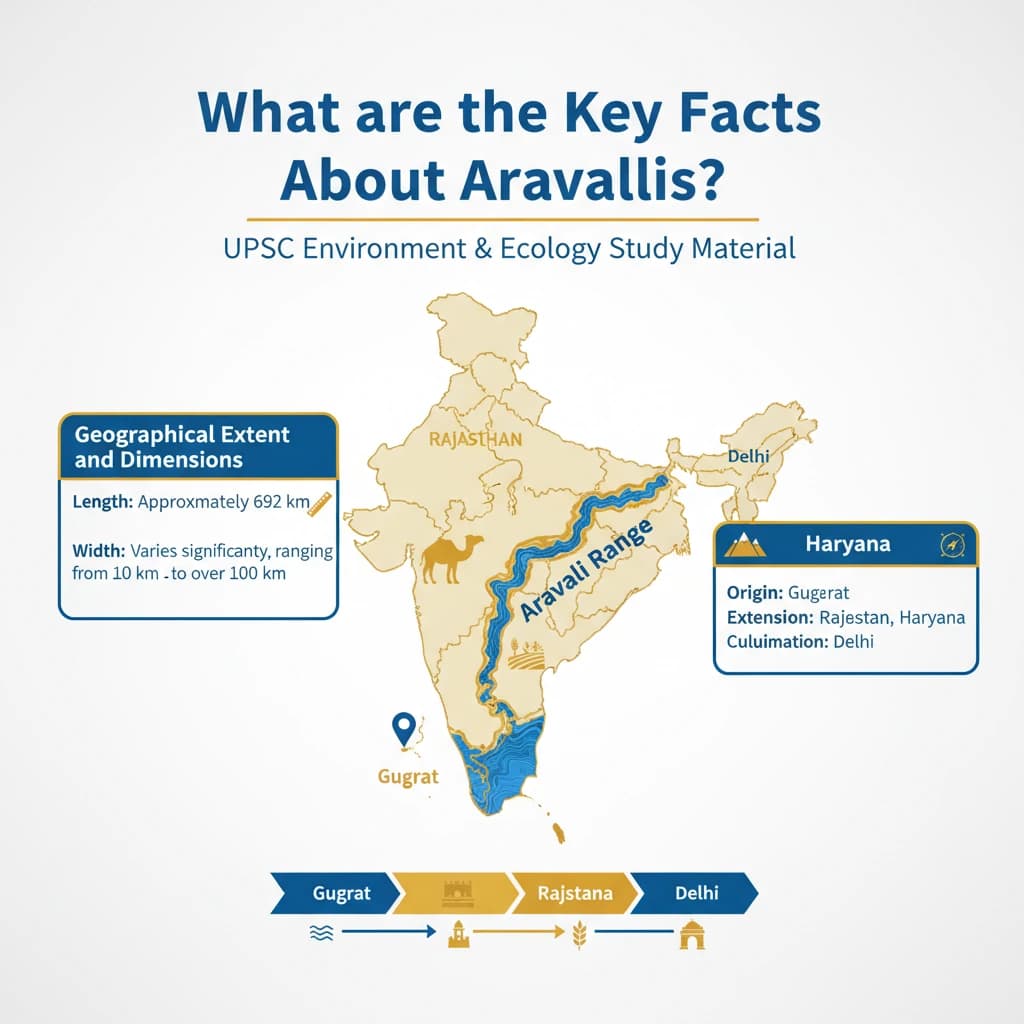
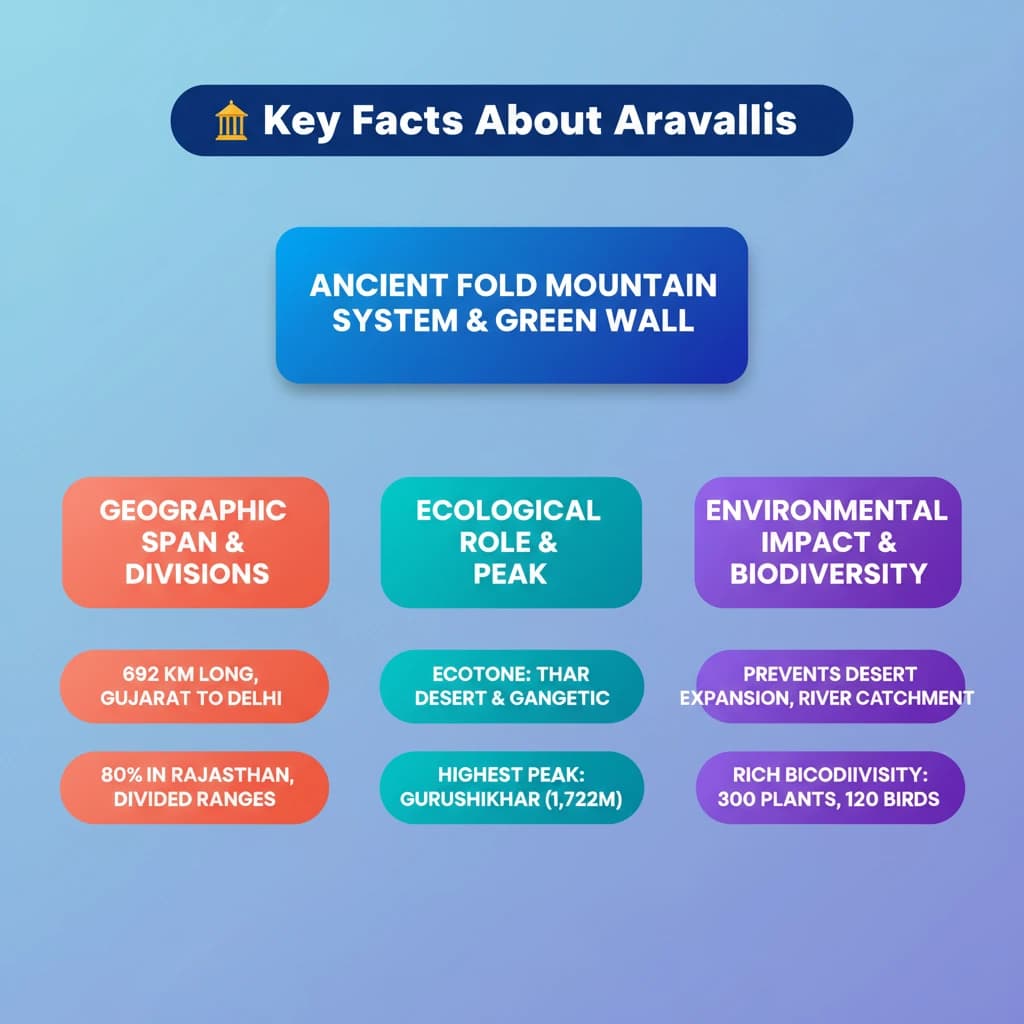
- The Aravalli Range is an ancient fold mountain system, 692 km long, extending from Gujarat to Delhi, with 80% in Rajasthan.
- It is divided into Sambhar Sirohi and Sambhar Khetri Ranges in Rajasthan.
- Functions as a natural green wall and an ecotone between the Thar Desert and Gangetic Plain.
- Gurushikhar (1,722m) in Rajasthan is its highest peak.
- Prevents Thar Desert expansion, acts as a historical river catchment, and supports rich biodiversity (300 plant, 120 bird species, jackals, mongooses).
- Faces threats from mining and encroachment; crucial for regional water security and ecological balance.
What are the Key Facts About Aravallis?
📖 Introduction
💡 Key Takeaways
- •The Aravalli Range is an ancient fold mountain system, 692 km long, extending from Gujarat to Delhi, with 80% in Rajasthan.
- •It is divided into Sambhar Sirohi and Sambhar Khetri Ranges in Rajasthan.
- •Functions as a natural green wall and an ecotone between the Thar Desert and Gangetic Plain.
- •Gurushikhar (1,722m) in Rajasthan is its highest peak.
- •Prevents Thar Desert expansion, acts as a historical river catchment, and supports rich biodiversity (300 plant, 120 bird species, jackals, mongooses).
- •Faces threats from mining and encroachment; crucial for regional water security and ecological balance.
🧠 Memory Techniques