What is the Great Indian Bustard? - UPSC Environment And Ecology
What is What is the Great Indian Bustard? in UPSC Environment And Ecology?
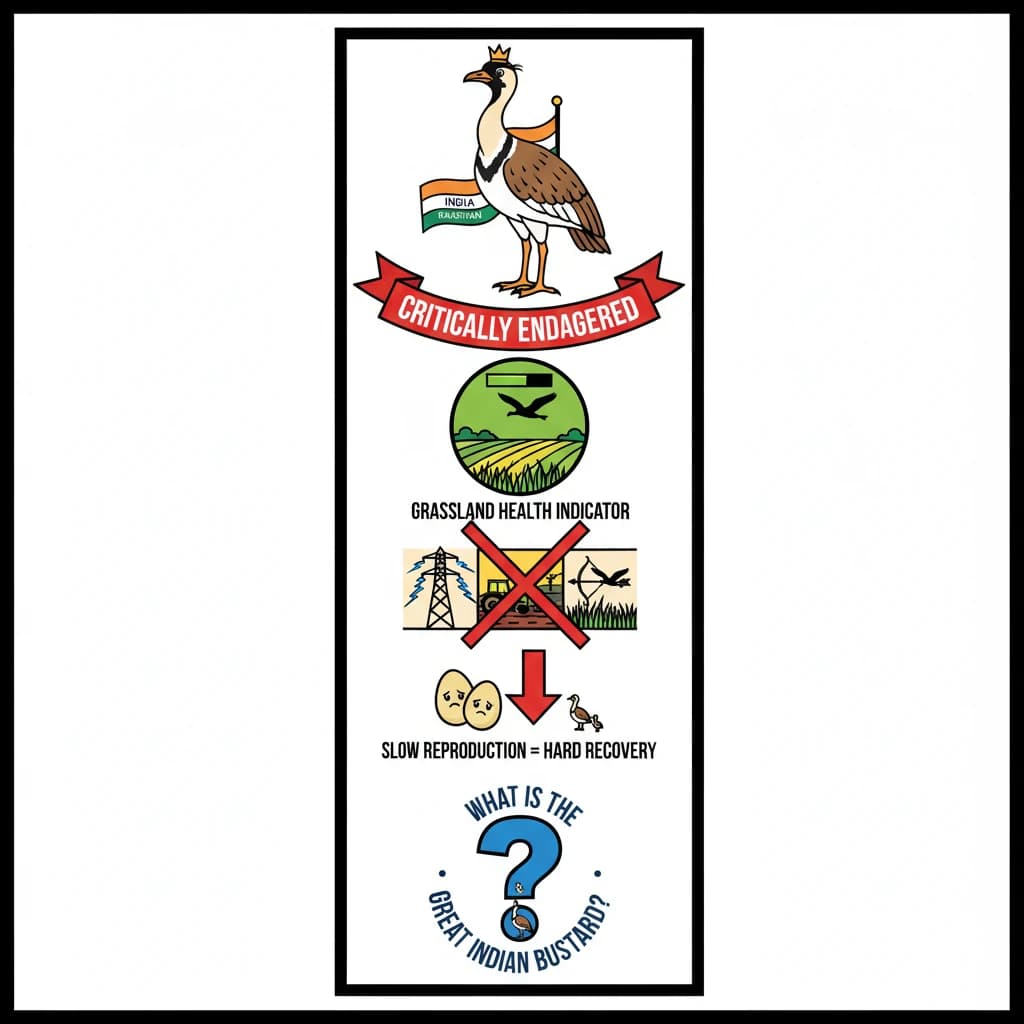
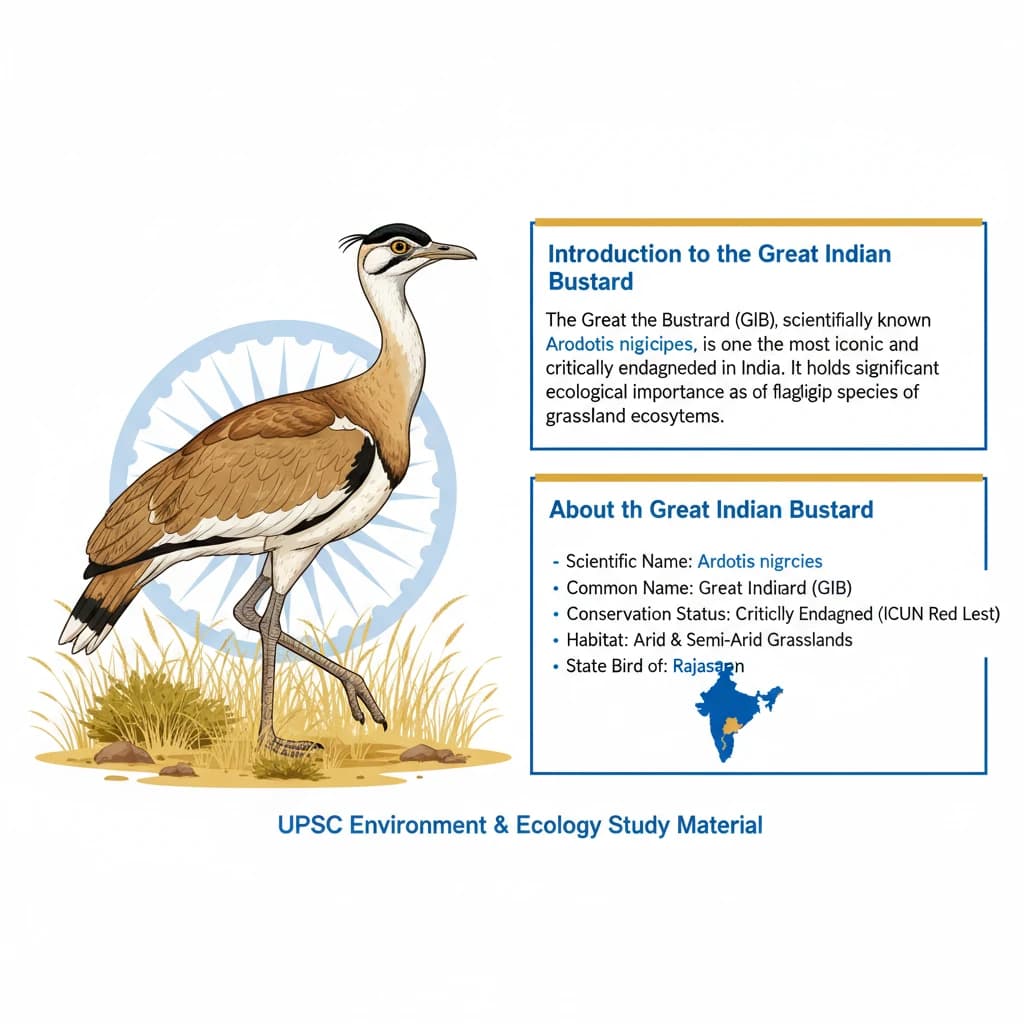
What is the Great Indian Bustard? is a key topic under Environment And Ecology for UPSC Civil Services Examination. Key points include: The Great Indian Bustard (GIB) is India's critically endangered state bird of Rajasthan.. It serves as a flagship species for grassland ecosystems, indicating their health.. Major threats include power line collisions, habitat loss from agriculture, and hunting.. Understanding this topic is essential for both UPSC Prelims and Mains preparation.
Why is What is the Great Indian Bustard? important for UPSC exam?
What is the Great Indian Bustard? is a Medium-level topic in UPSC Environment And Ecology. It is tested in both Prelims (factual MCQs) and Mains (analytical answer writing). Previous year UPSC questions have frequently covered aspects of What is the Great Indian Bustard?, making it essential for comprehensive IAS preparation.
How to prepare What is the Great Indian Bustard? for UPSC?
To prepare What is the Great Indian Bustard? for UPSC: (1) Study the comprehensive notes covering all key concepts on Vaidra. (2) Practice previous year questions on this topic. (3) Connect it with current affairs using daily updates. (4) Revise using key takeaways and mind maps available for Environment And Ecology. (5) Write practice answers linking What is the Great Indian Bustard? to related GS Paper topics.
Key takeaways of What is the Great Indian Bustard? for UPSC
- The Great Indian Bustard (GIB) is India's critically endangered state bird of Rajasthan.
- It serves as a flagship species for grassland ecosystems, indicating their health.
- Major threats include power line collisions, habitat loss from agriculture, and hunting.
- GIBs are slow-reproducing, making population recovery extremely challenging.
- Conservation efforts include Project GIB, breeding programs, and Supreme Court directives for power line mitigation.
What is the Great Indian Bustard?
📖 Introduction
💡 Key Takeaways
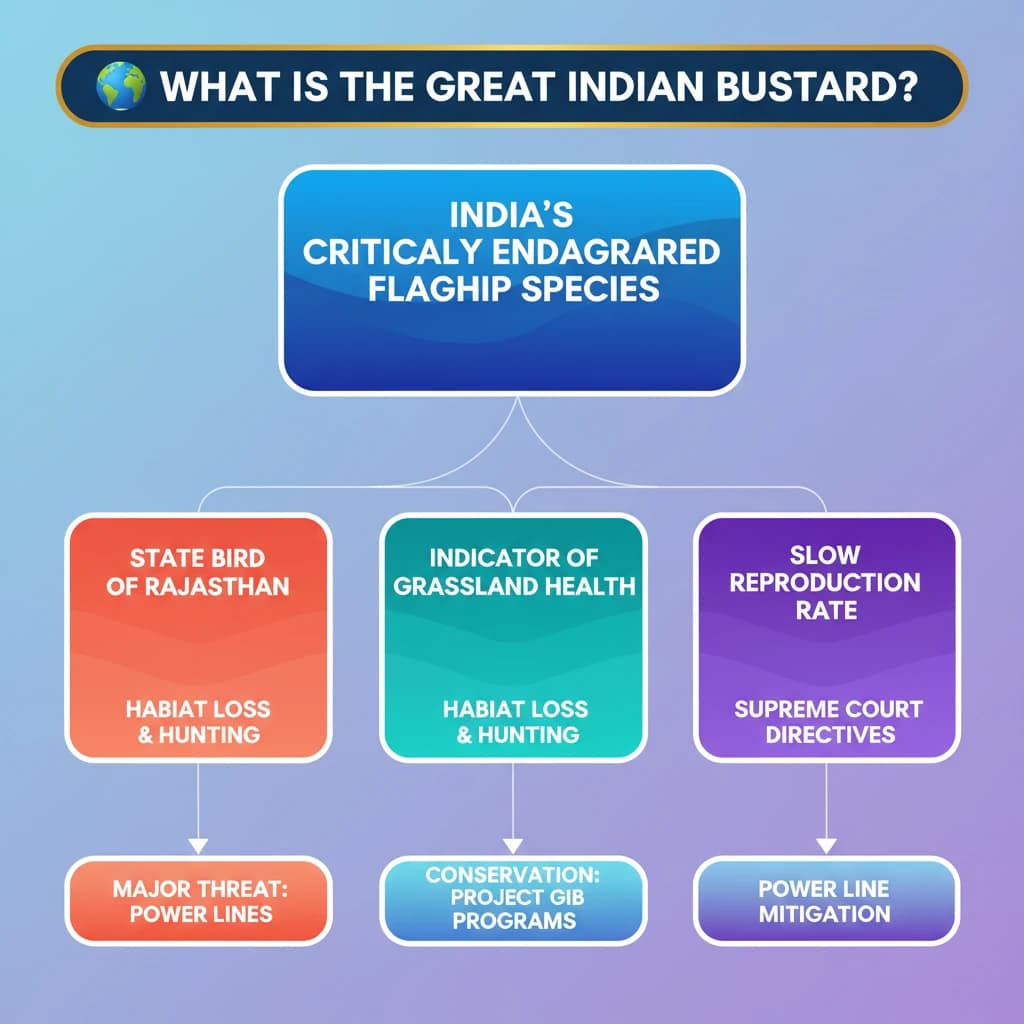
- •The Great Indian Bustard (GIB) is India's critically endangered state bird of Rajasthan.
- •It serves as a flagship species for grassland ecosystems, indicating their health.
- •Major threats include power line collisions, habitat loss from agriculture, and hunting.
- •GIBs are slow-reproducing, making population recovery extremely challenging.
- •Conservation efforts include Project GIB, breeding programs, and Supreme Court directives for power line mitigation.
🧠 Memory Techniques