Loading page, please wait…
Vaidra Logo
Vaidra

Top 4 items + smart groups

UPSC GPT
New
Current Affairs
Daily Solutions
Daily Puzzle
Mains Evaluator

Version 2.0.0 • Built with ❤️ for UPSC aspirants

Loading...
Loading...
Loading...
Loading...
Loading...
Loading...
Loading...
Loading...
Loading...
Loading...
Loading...
Loading...
Loading...
Back
All Subjects

Topics

0 topics • 0 completed

Loading topics...
Loading...
Loading...
Loading...
Loading...
Loading...
Overall Progress0%

What Are the Key Facts Regarding Oysters’ Antimicrobial Properties? - UPSC Environment And Ecology

What is What Are the Key Facts Regarding Oysters’ Antimicrobial Properties? in UPSC Environment And Ecology?

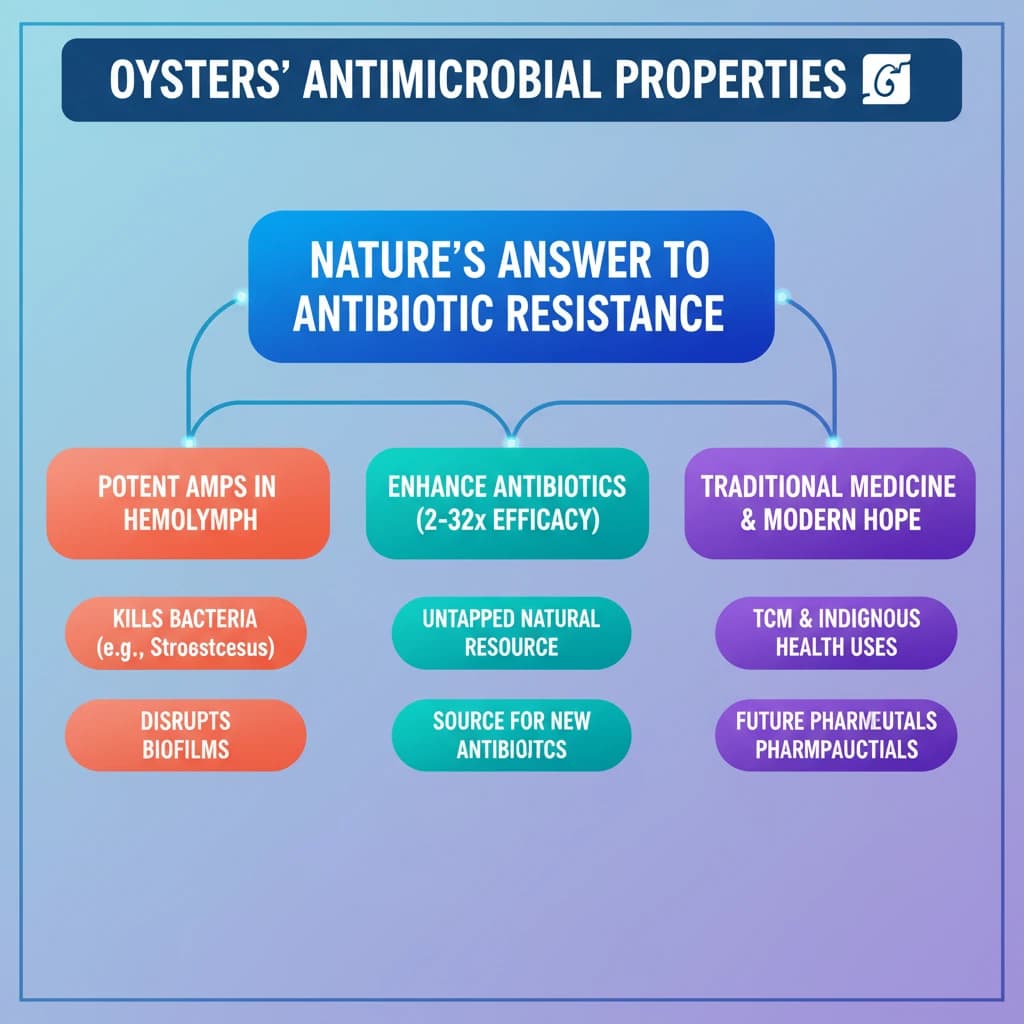
What Are the Key Facts Regarding Oysters’ Antimicrobial Properties? is a key topic under Environment And Ecology for UPSC Civil Services Examination. Key points include: Oysters produce potent antimicrobial proteins and peptides (AMPs) in their hemolymph.. These AMPs kill bacteria like Streptococcus spp. and disrupt protective biofilms.. Oyster compounds can enhance conventional antibiotic efficacy by 2 to 32 times.. Understanding this topic is essential for both UPSC Prelims and Mains preparation.

Why is What Are the Key Facts Regarding Oysters’ Antimicrobial Properties? important for UPSC exam?

What Are the Key Facts Regarding Oysters’ Antimicrobial Properties? is a Medium-level topic in UPSC Environment And Ecology. It is tested in both Prelims (factual MCQs) and Mains (analytical answer writing). Previous year UPSC questions have frequently covered aspects of What Are the Key Facts Regarding Oysters’ Antimicrobial Properties?, making it essential for comprehensive IAS preparation.

How to prepare What Are the Key Facts Regarding Oysters’ Antimicrobial Properties? for UPSC?

To prepare What Are the Key Facts Regarding Oysters’ Antimicrobial Properties? for UPSC: (1) Study the comprehensive notes covering all key concepts on Vaidra. (2) Practice previous year questions on this topic. (3) Connect it with current affairs using daily updates. (4) Revise using key takeaways and mind maps available for Environment And Ecology. (5) Write practice answers linking What Are the Key Facts Regarding Oysters’ Antimicrobial Properties? to related GS Paper topics.

Key takeaways of What Are the Key Facts Regarding Oysters’ Antimicrobial Properties? for UPSC

  • Oysters produce potent antimicrobial proteins and peptides (AMPs) in their hemolymph.
  • These AMPs kill bacteria like Streptococcus spp. and disrupt protective biofilms.
  • Oyster compounds can enhance conventional antibiotic efficacy by 2 to 32 times.
  • Nature is a primary source for new antibiotics, and oysters represent a vital untapped resource.
  • Traditional Chinese Medicine and Indigenous Australians have historically used oysters for health.
  • Oysters offer a promising avenue in the global fight against the escalating Antimicrobial Resistance (AMR) crisis.
What Are the Key Facts Regarding Oysters’ Antimicrobial Properties?

What Are the Key Facts Regarding Oysters’ Antimicrobial Properties?

Medium⏱️ 8 min read✓ 95% Verified
environment and ecology

📖 Introduction

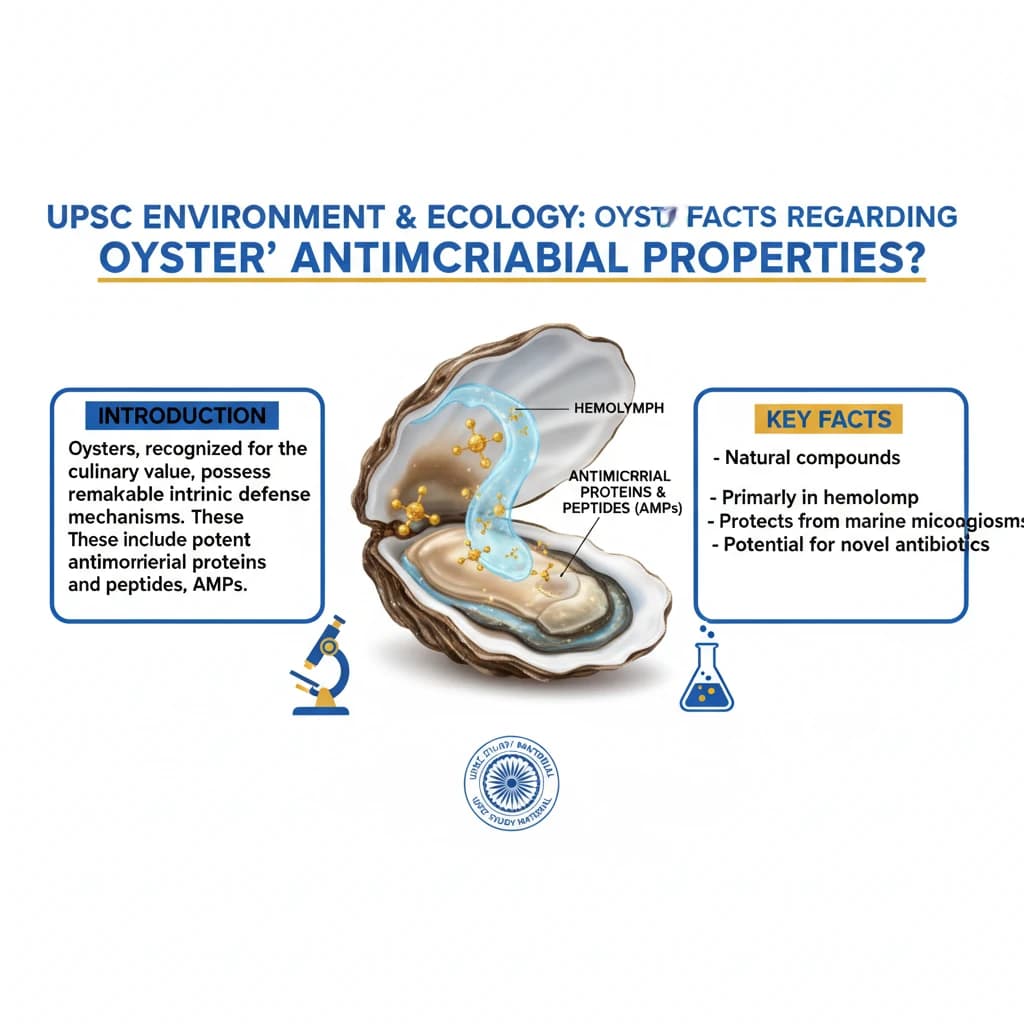
<h4>Introduction to Oyster Antimicrobial Properties</h4><p><strong>Oysters</strong>, often recognized for their culinary value, possess remarkable intrinsic defense mechanisms. These mechanisms include the production of potent <strong>antimicrobial proteins and peptides (AMPs)</strong>.</p><p>These natural compounds are found primarily in the <strong>hemolymph</strong>, which is the circulatory fluid of oysters. They play a crucial role in protecting oysters from a wide array of marine microorganisms.</p><h4>Mechanism of Action and Efficacy</h4><p>The <strong>antimicrobial proteins and peptides</strong> derived from oyster hemolymph exhibit several powerful actions against harmful bacteria and their protective structures.</p><ul><li>They can effectively <strong>kill bacteria</strong>, including significant human pathogens like <strong>Streptococcus spp.</strong>, which are responsible for illnesses such as pneumonia, tonsillitis, and rheumatic fever.</li><li>These compounds possess the ability to <strong>inhibit and penetrate biofilms</strong>. Biofilms are complex communities of bacteria encased in a protective matrix, making them highly resistant to conventional antibiotics and immune responses.</li><li>Beyond direct action, oyster AMPs can significantly <strong>enhance the efficacy of conventional antibiotics</strong>. Studies indicate they can boost antibiotic effectiveness by a remarkable <strong>2 to 32 times</strong>.</li></ul><div class='key-point-box'><p>The dual action of directly killing pathogens and disrupting protective biofilms makes oyster AMPs a promising area for developing new therapeutic agents against drug-resistant infections.</p></div><h4>Oyster Immune Defenses</h4><p>Oysters thrive in marine environments teeming with diverse microorganisms. This constant exposure has led to the evolution of robust and sophisticated <strong>immune defenses</strong> within these bivalves.</p><p>Their <strong>hemolymph</strong> is a rich source of various <strong>antiviral and antibacterial proteins and peptides</strong>. These compounds are effective against a broad spectrum of both human and marine pathogens, highlighting their broad-spectrum activity.</p><h4>Significance for New Antimicrobial Agents</h4><p>The global fight against <strong>antimicrobial resistance (AMR)</strong> urgently requires the discovery of novel therapeutic compounds. Nature has historically been the primary source for such discoveries.</p><div class='info-box'><p>Currently, <strong>over 90% of antibiotics</strong> used by humans are derived from natural sources. Similarly, <strong>over 65% of antibiotics</strong> under recent development also originate from nature.</p></div><p>Oysters, with their potent and diverse AMPs, represent a significant, largely untapped natural resource for the development of the <strong>next generation of antimicrobial agents</strong>.</p><h4>Traditional Relevance</h4><p>The medicinal properties of oysters have been recognized and utilized in various traditional health systems for centuries.</p><ul><li>In <strong>Traditional Chinese Medicine (TCM)</strong>, oyster extracts have been historically employed to treat various <strong>respiratory and inflammatory conditions</strong>.</li><li>Oysters are also an integral component of the health practices and traditional knowledge systems of <strong>Indigenous Australians</strong>, showcasing their long-standing cultural and medicinal significance.</li></ul><div class='exam-tip-box'><p>Understanding the role of natural sources like oysters in combating <strong>Antimicrobial Resistance (AMR)</strong> is crucial for UPSC. This topic can be linked to <strong>GS-III Science & Technology</strong> (biotechnology, health), <strong>Environment & Ecology</strong> (marine biodiversity), and even <strong>Ethics</strong> (traditional knowledge, public health responsibility).</p></div>
Concept Diagram

💡 Key Takeaways

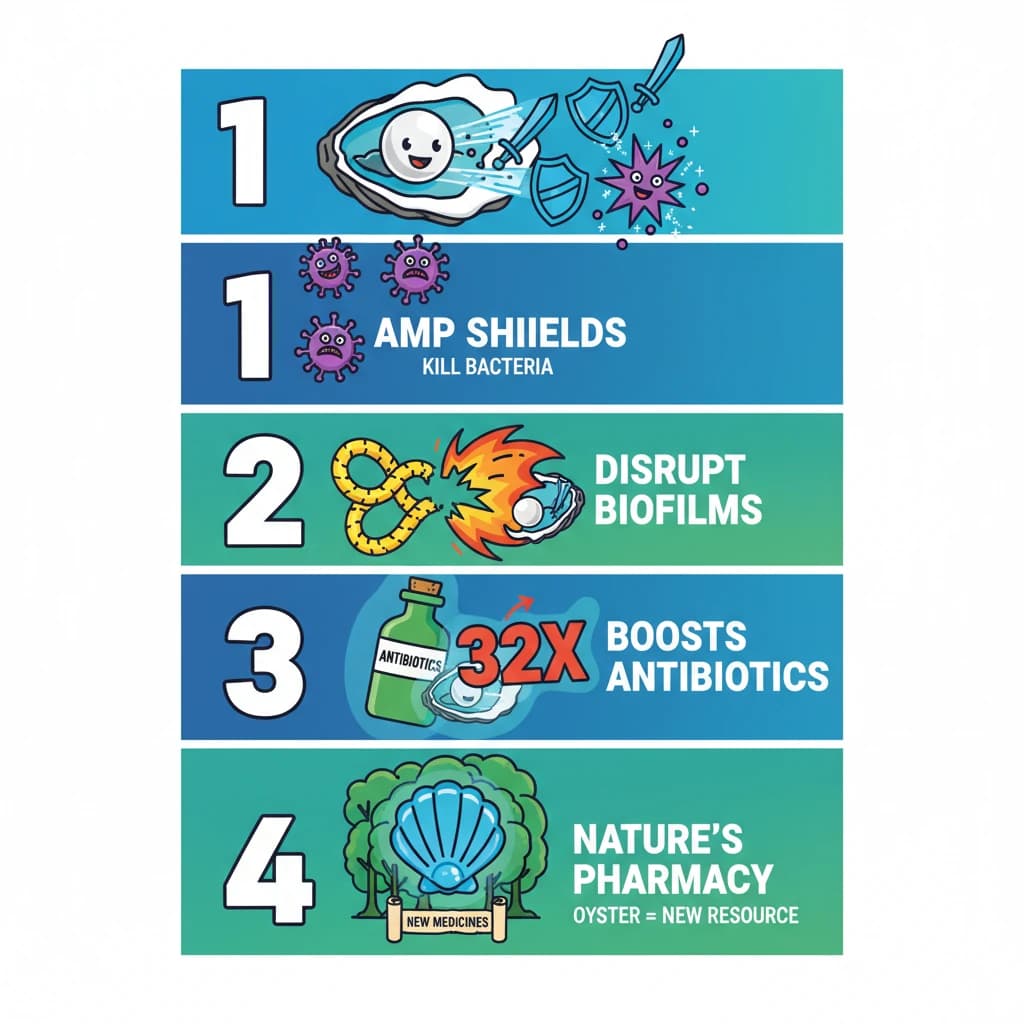
  • •Oysters produce potent antimicrobial proteins and peptides (AMPs) in their hemolymph.
  • •These AMPs kill bacteria like Streptococcus spp. and disrupt protective biofilms.
  • •Oyster compounds can enhance conventional antibiotic efficacy by 2 to 32 times.
  • •Nature is a primary source for new antibiotics, and oysters represent a vital untapped resource.
  • •Traditional Chinese Medicine and Indigenous Australians have historically used oysters for health.
  • •Oysters offer a promising avenue in the global fight against the escalating Antimicrobial Resistance (AMR) crisis.

🧠 Memory Techniques
Memory Aid
95% Verified Content

Related Topics

Loading related topics...
Explore:Environment And Ecology Topics·All Subjects·Daily Current Affairs·Editorial Analysis·Previous Year Questions·UPSC GPT
What Are the Key Facts Regarding Oysters’ Antimicrobial Properties? - UPSC Environment And Ecology