Loading page, please wait…
Vaidra Logo
Vaidra

Top 4 items + smart groups

UPSC GPT
New
Current Affairs
Daily Solutions
Daily Puzzle
Mains Evaluator

Version 2.0.0 • Built with ❤️ for UPSC aspirants

Loading...
Loading...
Loading...
Loading...
Loading...
Loading...
Loading...
Loading...
Loading...
Loading...
Loading...
Loading...
Loading...
Back
All Subjects

Topics

0 topics • 0 completed

Loading topics...
Loading...
Loading...
Loading...
Loading...
Loading...
Overall Progress0%

What is Global Atmosphere Watch? - UPSC Environment And Ecology

What is What is Global Atmosphere Watch? in UPSC Environment And Ecology?

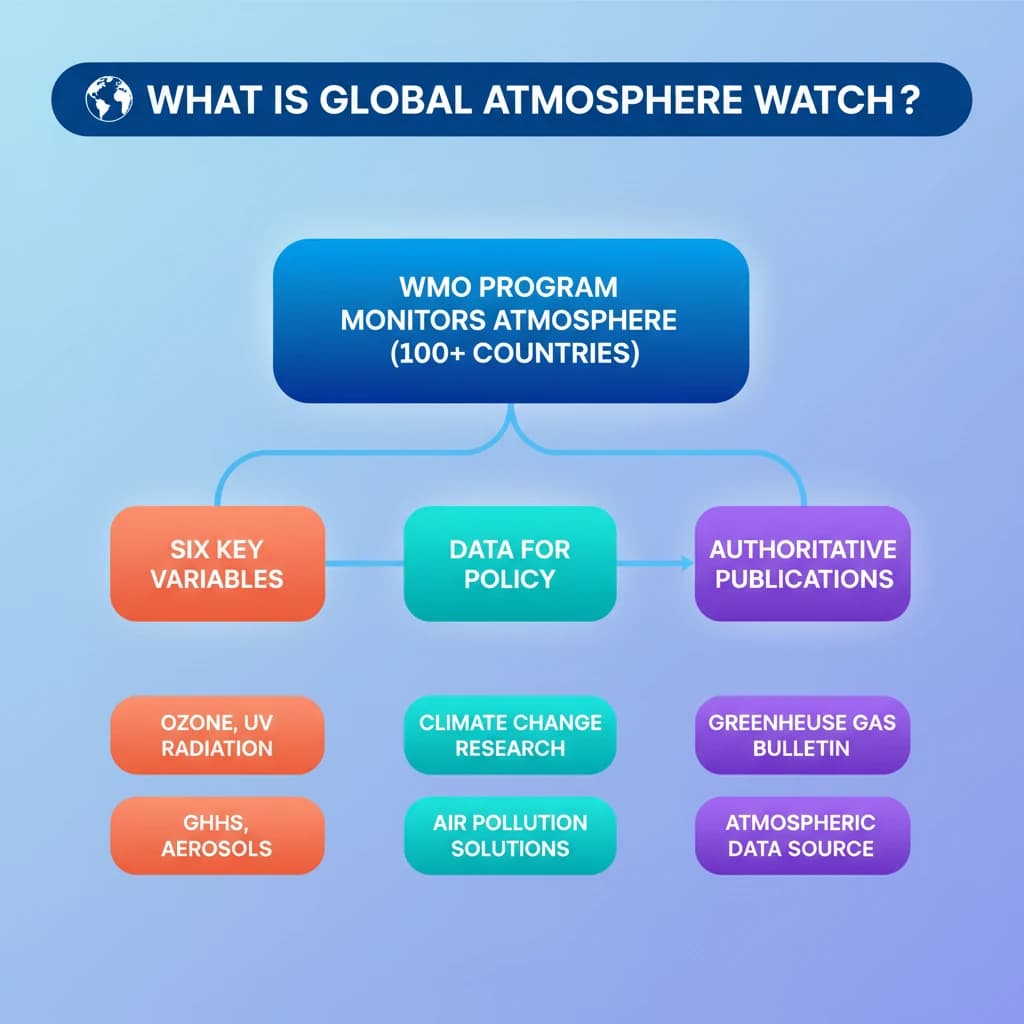
What is Global Atmosphere Watch? is a key topic under Environment And Ecology for UPSC Civil Services Examination. Key points include: Global Atmosphere Watch (GAW) is a WMO program involving 100+ countries.. Its purpose is to monitor atmospheric composition changes due to natural and human influences.. GAW monitors six key variables: ozone, UV radiation, GHGs, aerosols, reactive gases, and precipitation chemistry.. Understanding this topic is essential for both UPSC Prelims and Mains preparation.

Why is What is Global Atmosphere Watch? important for UPSC exam?

What is Global Atmosphere Watch? is a Medium-level topic in UPSC Environment And Ecology. It is tested in both Prelims (factual MCQs) and Mains (analytical answer writing). Previous year UPSC questions have frequently covered aspects of What is Global Atmosphere Watch?, making it essential for comprehensive IAS preparation.

How to prepare What is Global Atmosphere Watch? for UPSC?

To prepare What is Global Atmosphere Watch? for UPSC: (1) Study the comprehensive notes covering all key concepts on Vaidra. (2) Practice previous year questions on this topic. (3) Connect it with current affairs using daily updates. (4) Revise using key takeaways and mind maps available for Environment And Ecology. (5) Write practice answers linking What is Global Atmosphere Watch? to related GS Paper topics.

Key takeaways of What is Global Atmosphere Watch? for UPSC

  • Global Atmosphere Watch (GAW) is a WMO program involving 100+ countries.
  • Its purpose is to monitor atmospheric composition changes due to natural and human influences.
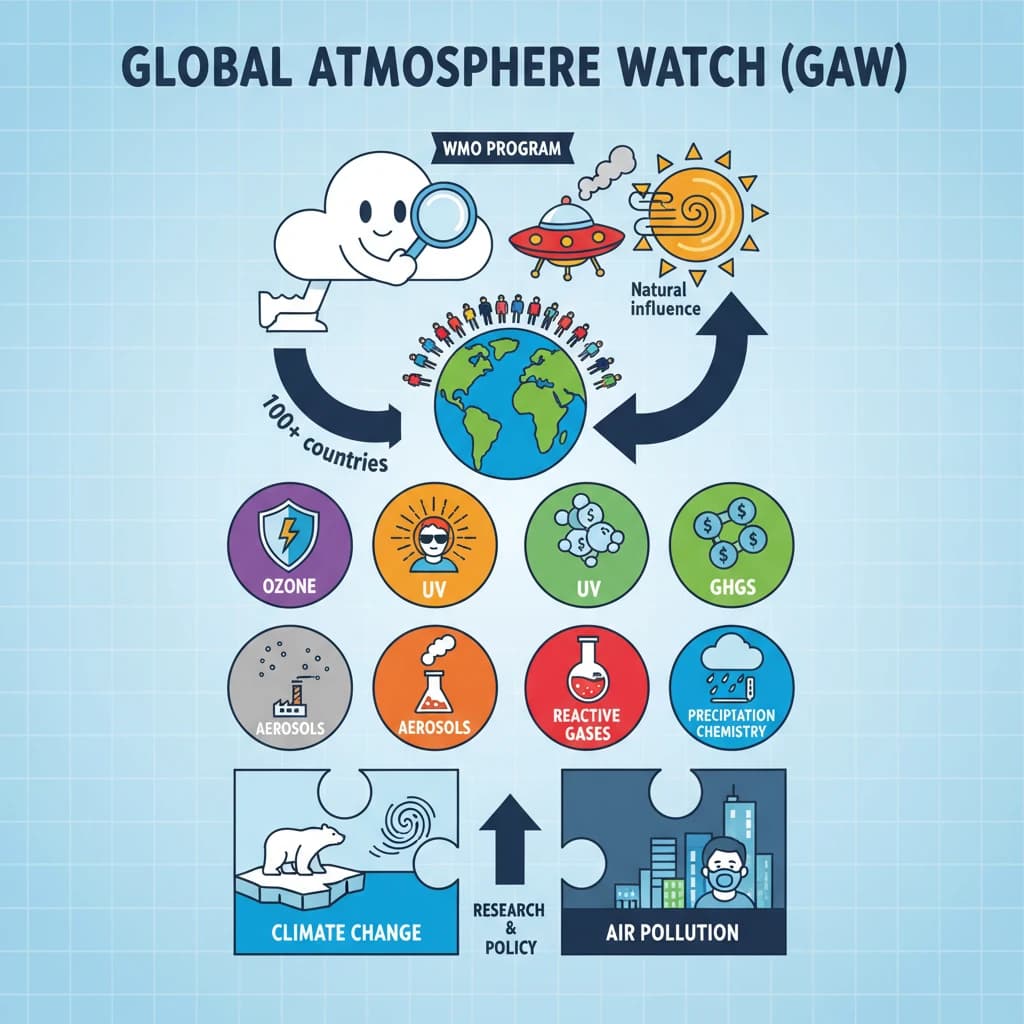
  • GAW monitors six key variables: ozone, UV radiation, GHGs, aerosols, reactive gases, and precipitation chemistry.
  • It provides critical data for climate change and air pollution research and policy-making.
  • GAW publications like the Greenhouse Gas Bulletin are authoritative sources of atmospheric data.
What is Global Atmosphere Watch?

What is Global Atmosphere Watch?

Medium⏱️ 6 min read✓ 98% Verified
environment and ecology

📖 Introduction

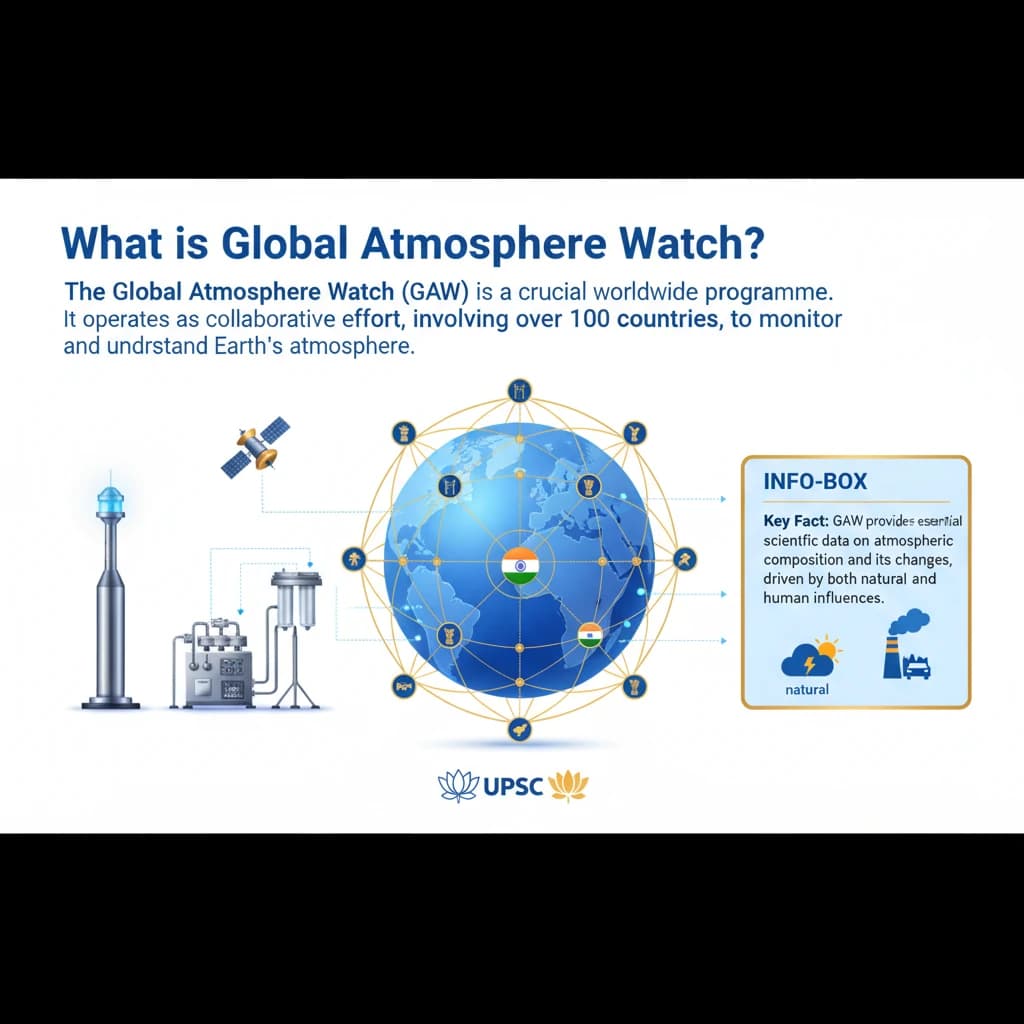
<h4>What is Global Atmosphere Watch (GAW)?</h4><p>The <strong>Global Atmosphere Watch (GAW)</strong> is a crucial worldwide programme. It operates as a collaborative effort, involving over <strong>100 countries</strong>, to monitor and understand the Earth's atmosphere.</p><div class='info-box'><p><strong>Key Fact:</strong> GAW provides essential scientific data on <strong>atmospheric composition</strong> and its changes, driven by both <strong>natural</strong> and <strong>human influences</strong>.</p></div><h4>Purpose of GAW</h4><p>The primary goal of GAW is to deepen our understanding of the complex interactions occurring between the <strong>atmosphere</strong>, <strong>oceans</strong>, and <strong>biosphere</strong>. This holistic approach is vital for environmental research.</p><p>Furthermore, GAW actively supports the collection of high-quality data. This data is indispensable for informing critical research into <strong>air pollution</strong> and <strong>climate change</strong>, aiding global efforts to address these challenges.</p><h4>Core Monitoring Targets</h4><p>The GAW programme focuses its monitoring efforts on six key atmospheric variables. These targets are selected for their significant impact on climate and air quality.</p><ul><li><strong>Ozone:</strong> Monitoring both stratospheric and tropospheric ozone levels.</li><li><strong>UV Radiation:</strong> Tracking ultraviolet radiation reaching the Earth's surface.</li><li><strong>Greenhouse Gases (GHGs):</strong> Measuring concentrations of major GHGs like CO2, CH4, N2O.</li><li><strong>Aerosols:</strong> Studying atmospheric particulate matter and its properties.</li><li><strong>Selected Reactive Gases:</strong> Monitoring gases involved in atmospheric chemical reactions.</li><li><strong>Precipitation Chemistry:</strong> Analyzing the chemical composition of rain and snow.</li></ul><div class='key-point-box'><p><strong>Important Concept:</strong> These six variables are critical indicators for assessing global atmospheric health and predicting future environmental changes.</p></div><h4>Governance and Oversight</h4><p>Leadership and coordination within the GAW programme are provided by various <strong>GAW expert groups</strong>. These groups comprise leading scientists and specialists in atmospheric science.</p><p>The GAW expert groups are ultimately overseen by the <strong>World Meteorological Organization (WMO) Research Board</strong>. Further guidance comes from its specialized <strong>Environmental Pollution and Atmospheric Chemistry Scientific Steering Committee (EPAC SSC)</strong>.</p><div class='exam-tip-box'><p><strong>UPSC Insight:</strong> Understanding the governance structure (WMO, Research Board, EPAC SSC) helps in linking GAW to broader international organizations and their roles in environmental governance (GS-II & GS-III).</p></div><h4>Key Publications</h4><p>GAW contributes significantly to scientific dissemination through several regular publications. These reports provide crucial data and analysis to the global community.</p><ul><li><strong>State of the Global Climate:</strong> A comprehensive annual report on climate indicators.</li><li><strong>Greenhouse Gas Bulletin:</strong> Provides updates on the concentrations of major greenhouse gases.</li><li><strong>GAW Reports:</strong> Technical reports detailing specific findings and methodologies.</li><li><strong>Ozone Bulletins:</strong> Regular updates on the state of the ozone layer.</li></ul>
Concept Diagram

💡 Key Takeaways

  • •Global Atmosphere Watch (GAW) is a WMO program involving 100+ countries.
  • •Its purpose is to monitor atmospheric composition changes due to natural and human influences.
  • •GAW monitors six key variables: ozone, UV radiation, GHGs, aerosols, reactive gases, and precipitation chemistry.
  • •It provides critical data for climate change and air pollution research and policy-making.
  • •GAW publications like the Greenhouse Gas Bulletin are authoritative sources of atmospheric data.

🧠 Memory Techniques
Memory Aid
98% Verified Content

📚 Reference Sources

•World Meteorological Organization (WMO) Official Website - Global Atmosphere Watch (GAW) Programme

Related Topics

Loading related topics...
Explore:Environment And Ecology Topics·All Subjects·Daily Current Affairs·Editorial Analysis·Previous Year Questions·UPSC GPT
What is Global Atmosphere Watch? - UPSC Environment And Ecology