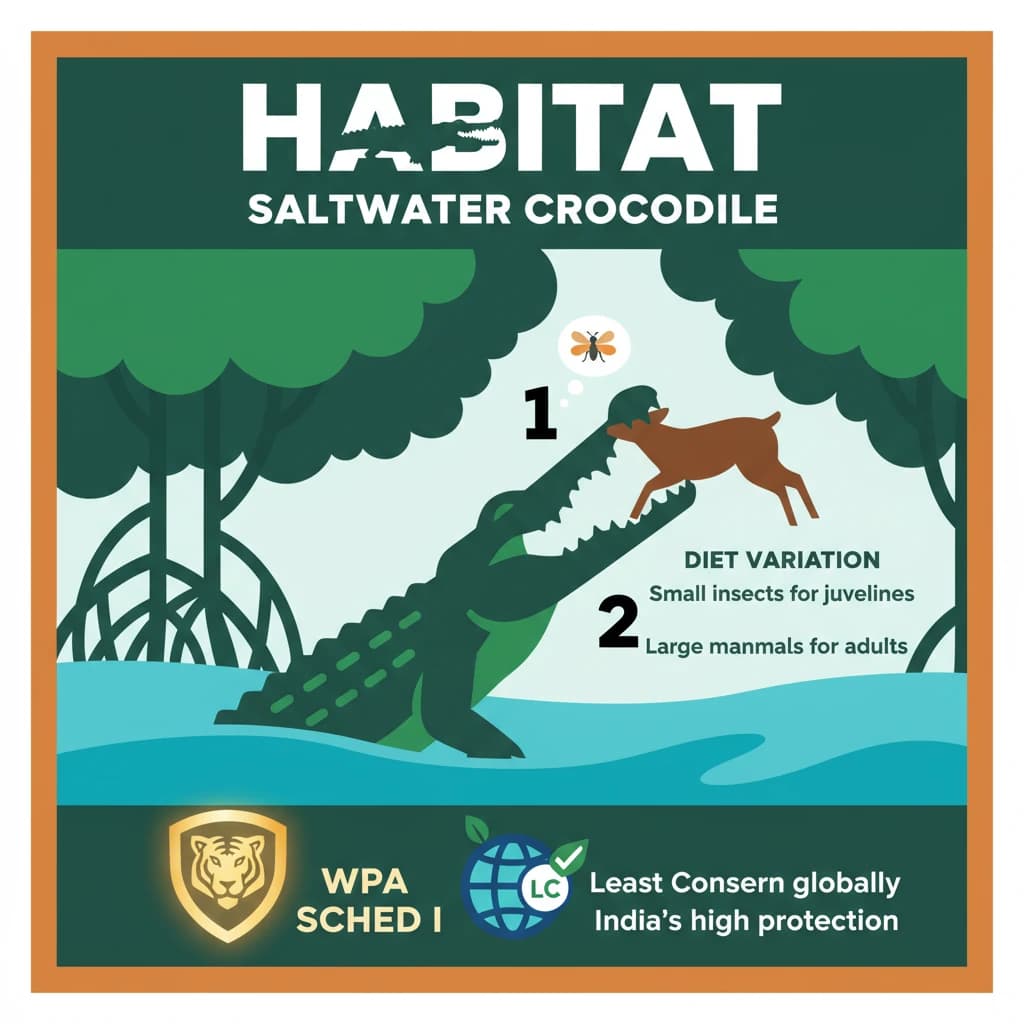
Saltwater Crocodiles: Habitat, Diet, & Conservation Status - UPSC Environment And Ecology
What is Saltwater Crocodiles: Habitat, Diet, & Conservation Status in UPSC Environment And Ecology?
Saltwater Crocodiles: Habitat, Diet, & Conservation Status is a key topic under Environment And Ecology for UPSC Civil Services Examination. Key points include: Saltwater crocodiles are apex predators found in mangrove and coastal habitats.. Their diet varies significantly from small insects for juveniles to large mammals for adults.. They employ an ambush hunting strategy, often dragging prey underwater.. Understanding this topic is essential for both UPSC Prelims and Mains preparation.
Why is Saltwater Crocodiles: Habitat, Diet, & Conservation Status important for UPSC exam?
Saltwater Crocodiles: Habitat, Diet, & Conservation Status is a Medium-level topic in UPSC Environment And Ecology. It is tested in both Prelims (factual MCQs) and Mains (analytical answer writing). Previous year UPSC questions have frequently covered aspects of Saltwater Crocodiles: Habitat, Diet, & Conservation Status, making it essential for comprehensive IAS preparation.
How to prepare Saltwater Crocodiles: Habitat, Diet, & Conservation Status for UPSC?
To prepare Saltwater Crocodiles: Habitat, Diet, & Conservation Status for UPSC: (1) Study the comprehensive notes covering all key concepts on Vaidra. (2) Practice previous year questions on this topic. (3) Connect it with current affairs using daily updates. (4) Revise using key takeaways and mind maps available for Environment And Ecology. (5) Write practice answers linking Saltwater Crocodiles: Habitat, Diet, & Conservation Status to related GS Paper topics.
Key takeaways of Saltwater Crocodiles: Habitat, Diet, & Conservation Status for UPSC
- Saltwater crocodiles are apex predators found in mangrove and coastal habitats.
- Their diet varies significantly from small insects for juveniles to large mammals for adults.
- They employ an ambush hunting strategy, often dragging prey underwater.
- Globally, they are IUCN 'Least Concern,' but in India, they are WPA Schedule I, indicating high protection.
- CITES lists them in Appendix I or II, regulating international trade.
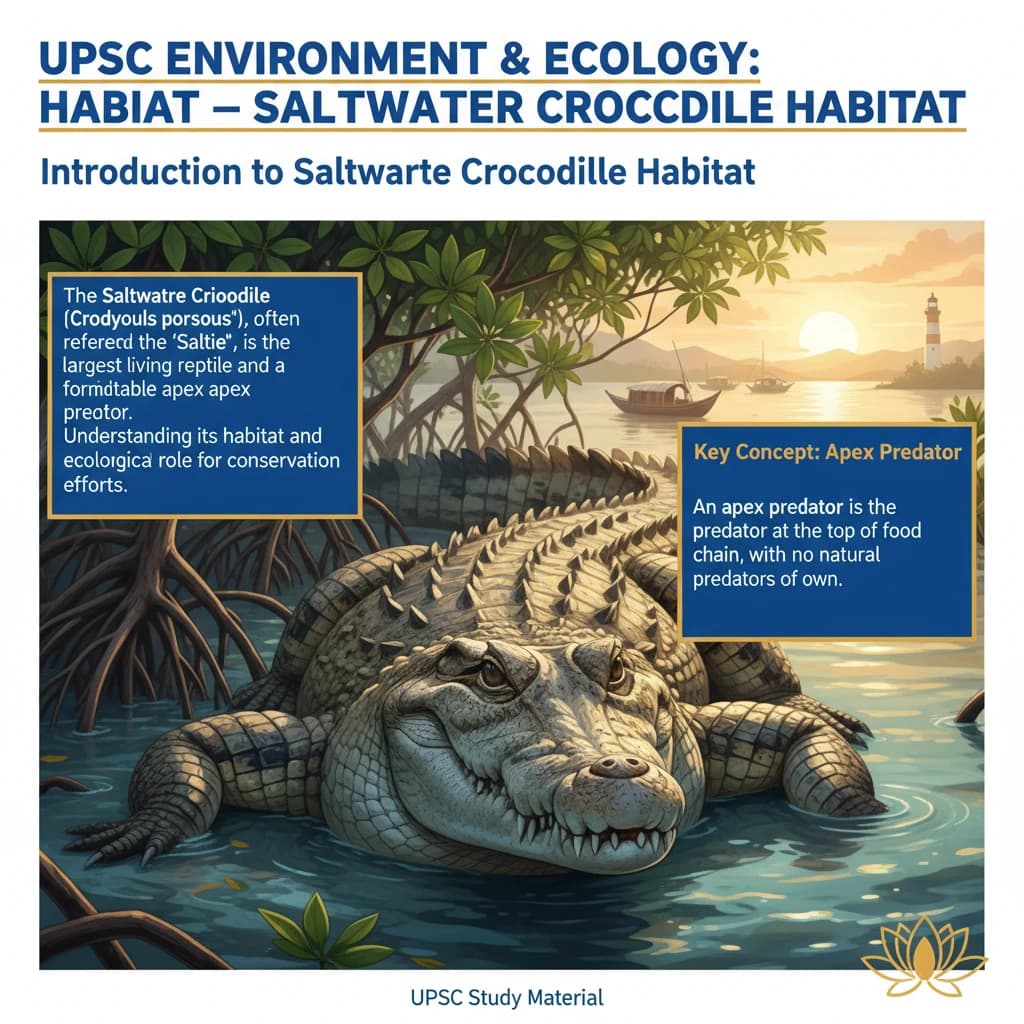
Saltwater Crocodiles: Habitat, Diet, & Conservation Status
📖 Introduction
💡 Key Takeaways
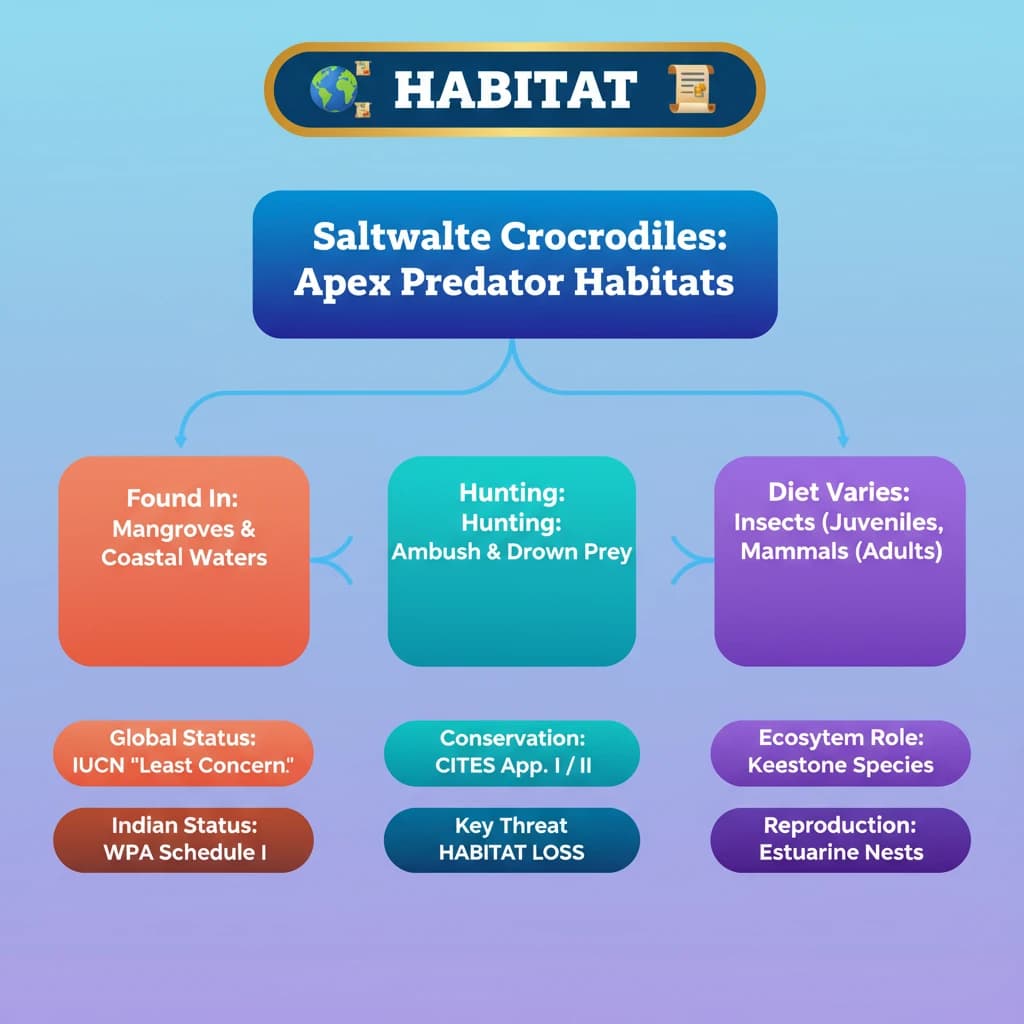
- •Saltwater crocodiles are apex predators found in mangrove and coastal habitats.
- •Their diet varies significantly from small insects for juveniles to large mammals for adults.
- •They employ an ambush hunting strategy, often dragging prey underwater.
- •Globally, they are IUCN 'Least Concern,' but in India, they are WPA Schedule I, indicating high protection.
- •CITES lists them in Appendix I or II, regulating international trade.
🧠 Memory Techniques