Loading page, please wait…
Acid Rain: Formation, Causes, and Environmental Impacts - UPSC Environment And Ecology
What is Acid Rain: Formation, Causes, and Environmental Impacts in UPSC Environment And Ecology?
Acid Rain: Formation, Causes, and Environmental Impacts is a key topic under Environment And Ecology for UPSC Civil Services Examination. Key points include: Acid rain is precipitation (wet or dry) with high levels of sulfuric and nitric acids, having a pH of 4.2-4.4.. It forms when Sulphur Dioxide (SO2) and Nitrogen Oxides (NOx) react with atmospheric water and oxygen.. Primary causes include burning fossil fuels (vehicles, power plants, industries) and natural sources like volcanic eruptions and lightning.. Understanding this topic is essential for both UPSC Prelims and Mains preparation.
Why is Acid Rain: Formation, Causes, and Environmental Impacts important for UPSC exam?
Acid Rain: Formation, Causes, and Environmental Impacts is a Medium-level topic in UPSC Environment And Ecology. It is tested in both Prelims (factual MCQs) and Mains (analytical answer writing). Previous year UPSC questions have frequently covered aspects of Acid Rain: Formation, Causes, and Environmental Impacts, making it essential for comprehensive IAS preparation.
How to prepare Acid Rain: Formation, Causes, and Environmental Impacts for UPSC?
To prepare Acid Rain: Formation, Causes, and Environmental Impacts for UPSC: (1) Study the comprehensive notes covering all key concepts on Vaidra. (2) Practice previous year questions on this topic. (3) Connect it with current affairs using daily updates. (4) Revise using key takeaways and mind maps available for Environment And Ecology. (5) Write practice answers linking Acid Rain: Formation, Causes, and Environmental Impacts to related GS Paper topics.
Key takeaways of Acid Rain: Formation, Causes, and Environmental Impacts for UPSC
- Acid rain is precipitation (wet or dry) with high levels of sulfuric and nitric acids, having a pH of 4.2-4.4.
- It forms when Sulphur Dioxide (SO2) and Nitrogen Oxides (NOx) react with atmospheric water and oxygen.
- Primary causes include burning fossil fuels (vehicles, power plants, industries) and natural sources like volcanic eruptions and lightning.
- Acid deposition occurs as wet deposition (rain, snow, fog) or dry deposition (acidic particles/gases).
- It causes significant damage to ecosystems (forests, aquatic life), infrastructure (historical monuments), and poses risks to human health.
Acid Rain: Formation, Causes, and Environmental Impacts
Medium⏱️ 8 min read
environment and ecology
📖 Introduction
Understanding Acid Rain
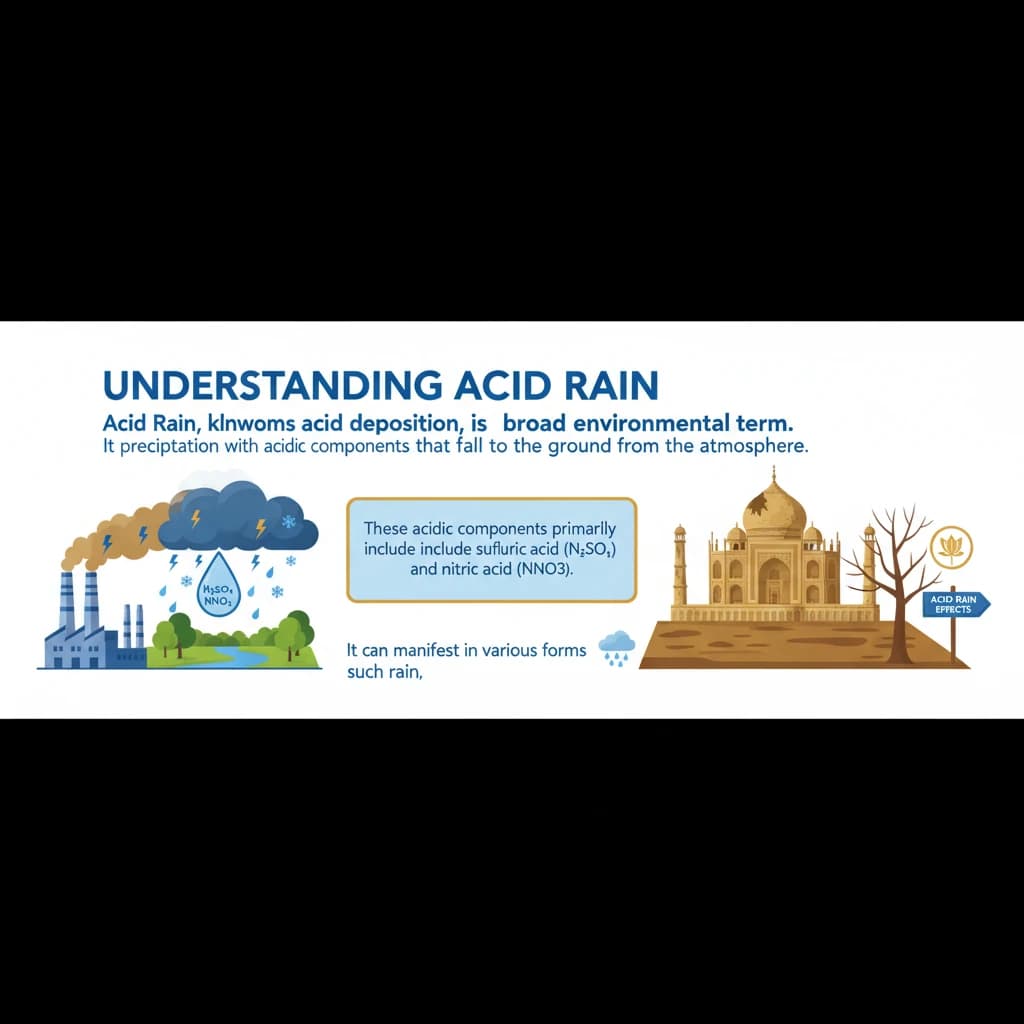
Acid Rain, also known as acid deposition, is a broad environmental term.
It encompasses any form of precipitation with acidic components that fall to the ground from the atmosphere.
These acidic components primarily include sulfuric acid (H2SO4) and nitric acid (HNO3).
It can manifest in various forms such as rain, snow, fog, hail, or even acidic dust.
Formation Process of Acid Rain
The formation of acid rain begins with the release of specific atmospheric pollutants.
Key pollutants are Sulphur Dioxide (SO2) and Nitrogen Oxide (NOx).
When SO2 and NOx combine with water and oxygen in the atmosphere, they undergo chemical reactions.
These reactions lead to the formation of sulfuric acid (H2SO4) from SO2 and nitric acid (HNO3) from NOx.
These newly formed acids then dissolve into atmospheric water droplets.
This dissolution results in the creation of acid rain, acid snow, or acid fog.
The typical pH (Potential of Hydrogen) of acid rain ranges from 4.2–4.4.
This pH value signifies it is considerably more acidic than normal rain, which typically has a pH of around 5.6.
Primary Causes of Acid Rain
Acid rain primarily originates from both anthropogenic (human-induced) and natural sources.
Anthropogenic Causes: Fossil Fuel Combustion
The burning of Fossil Fuels is a major contributor, especially those rich in sulfur.
This process releases large quantities of sulfur dioxide (SO2) and, at higher temperatures, nitrogen oxides (NOx).
Fossil fuel combustion is widespread in vehicles like automobiles, making them a primary source of these pollutants.
The combustion of coal in power plants and various industrial processes also significantly releases these harmful substances into the atmosphere.
Natural Sources
Certain natural phenomena also contribute to atmospheric SO2 and NOx.
These include Volcanic Eruptions, which release sulfur compounds, and Lightning, which can fix atmospheric nitrogen into nitrogen oxides.
Atmospheric Air Pollution
Once released, SO2 and NOx pollutants undergo complex chemical reactions in the atmosphere.
These reactions transform them into sulfuric and nitric acids.
When these acids combine with water vapor, they lead to acid rain during precipitation events.
Forms of Acid Deposition
Acid deposition occurs in two primary forms, depending on the presence of moisture.
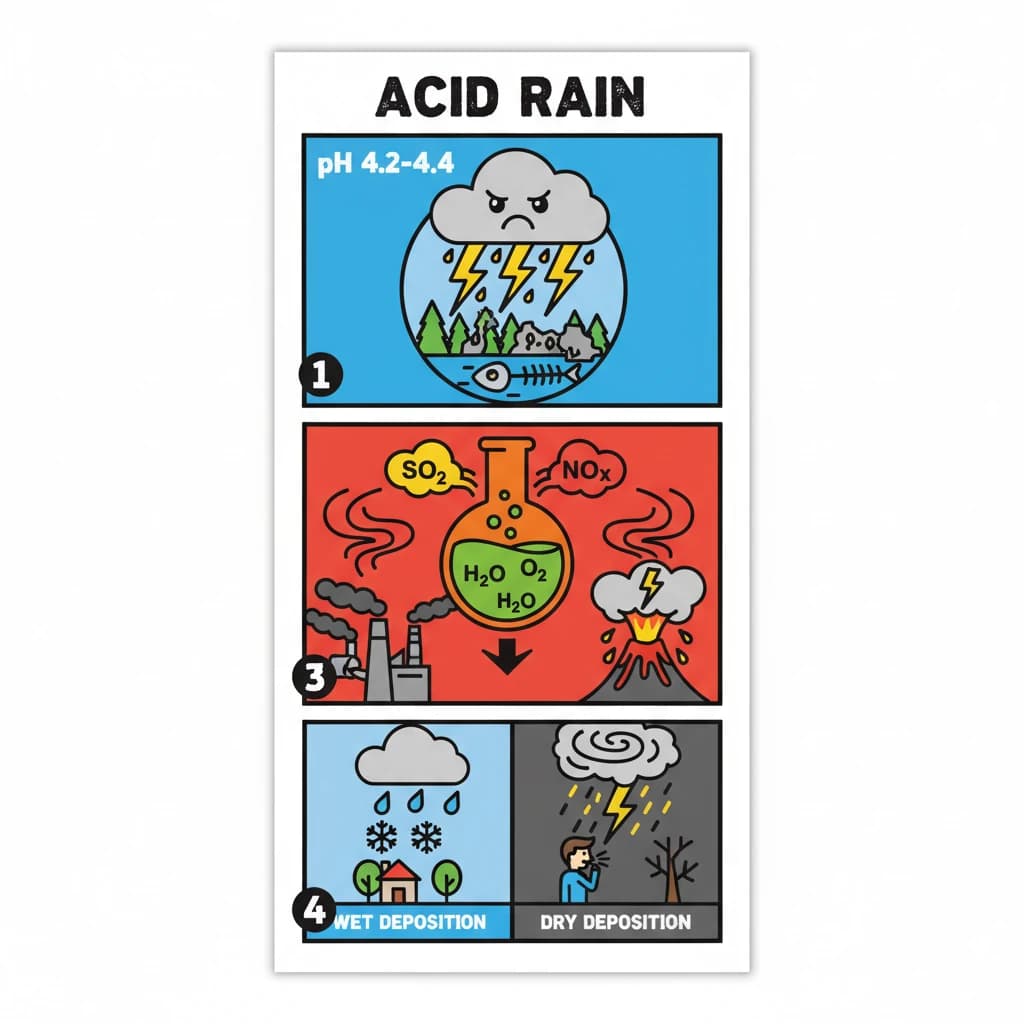
Wet Deposition
In wet deposition, the sulfuric and nitric acids formed in the atmosphere fall to the ground.
They are mixed with various forms of precipitation, including rain, snow, fog, or hail.
Dry Deposition
Dry deposition involves acidic particles and gases settling from the atmosphere without the presence of moisture.
These acidic particles and gases can deposit directly onto surfaces such as water bodies, vegetation, and buildings.
Alternatively, they may react during atmospheric transport to form larger particles that can pose risks to human health.
UPSC often asks about the distinction between wet and dry deposition. Understand both forms and their implications for environmental damage.
💡 Key Takeaways
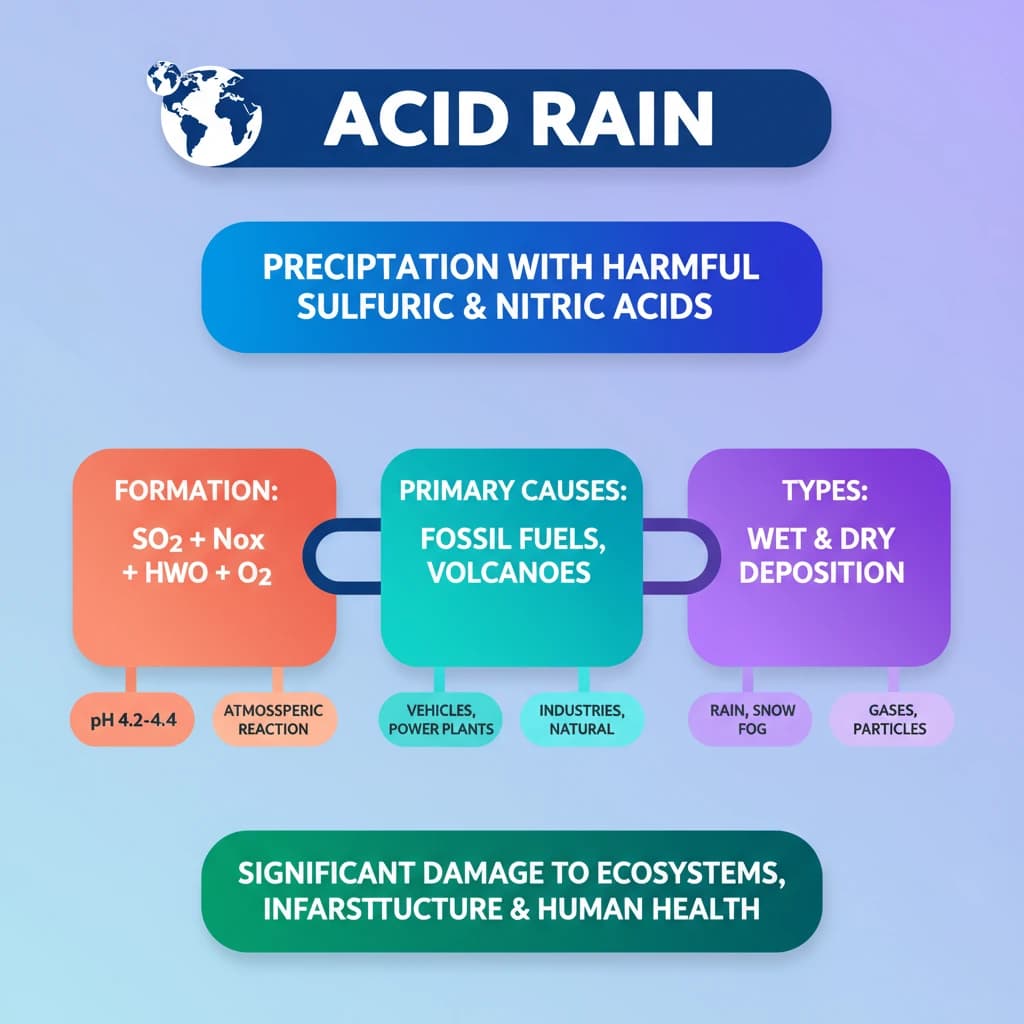
- •Acid rain is precipitation (wet or dry) with high levels of sulfuric and nitric acids, having a pH of 4.2-4.4.
- •It forms when Sulphur Dioxide (SO2) and Nitrogen Oxides (NOx) react with atmospheric water and oxygen.
- •Primary causes include burning fossil fuels (vehicles, power plants, industries) and natural sources like volcanic eruptions and lightning.
- •Acid deposition occurs as wet deposition (rain, snow, fog) or dry deposition (acidic particles/gases).
- •It causes significant damage to ecosystems (forests, aquatic life), infrastructure (historical monuments), and poses risks to human health.
🧠 Memory Techniques
95% Verified Content