Loading page, please wait…
Vaidra Logo
Vaidra

Top 4 items + smart groups

UPSC GPT
New
Current Affairs
Daily Solutions
Daily Puzzle
Mains Evaluator

Version 2.0.0 • Built with ❤️ for UPSC aspirants

Loading...
Loading...
Loading...
Loading...
Loading...
Loading...
Loading...
Loading...
Loading...
Loading...
Loading...
Loading...
Loading...
Back
All Subjects

Topics

0 topics • 0 completed

Loading topics...
Loading...
Loading...
Loading...
Loading...
Loading...
Overall Progress0%

What are Some Key Facts About Ratanpani Tiger Reserve? - UPSC Environment And Ecology

What is What are Some Key Facts About Ratanpani Tiger Reserve? in UPSC Environment And Ecology?

What are Some Key Facts About Ratanpani Tiger Reserve? is a key topic under Environment And Ecology for UPSC Civil Services Examination. Key points include: Ratanpani Tiger Reserve, approved by MoEF&CC and NTCA, is in Madhya Pradesh near the Vindhya hills.. It encompasses the Bhimbetka Rock Shelters, a UNESCO World Heritage Site.. Total area is 1,271.4 sq km, with a 763.8 sq km core and 507.6 sq km buffer.. Understanding this topic is essential for both UPSC Prelims and Mains preparation.

Why is What are Some Key Facts About Ratanpani Tiger Reserve? important for UPSC exam?

What are Some Key Facts About Ratanpani Tiger Reserve? is a Medium-level topic in UPSC Environment And Ecology. It is tested in both Prelims (factual MCQs) and Mains (analytical answer writing). Previous year UPSC questions have frequently covered aspects of What are Some Key Facts About Ratanpani Tiger Reserve?, making it essential for comprehensive IAS preparation.

How to prepare What are Some Key Facts About Ratanpani Tiger Reserve? for UPSC?

To prepare What are Some Key Facts About Ratanpani Tiger Reserve? for UPSC: (1) Study the comprehensive notes covering all key concepts on Vaidra. (2) Practice previous year questions on this topic. (3) Connect it with current affairs using daily updates. (4) Revise using key takeaways and mind maps available for Environment And Ecology. (5) Write practice answers linking What are Some Key Facts About Ratanpani Tiger Reserve? to related GS Paper topics.

Key takeaways of What are Some Key Facts About Ratanpani Tiger Reserve? for UPSC

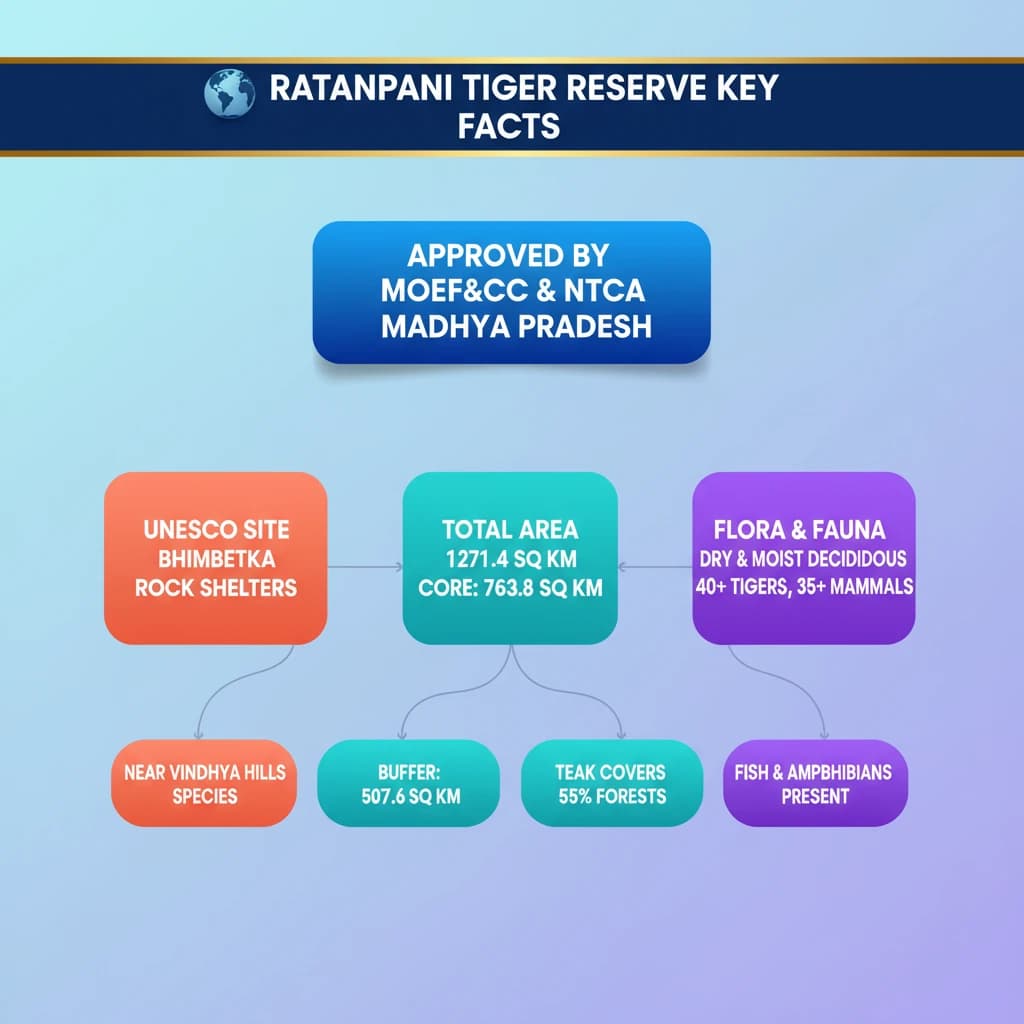
  • Ratanpani Tiger Reserve, approved by MoEF&CC and NTCA, is in Madhya Pradesh near the Vindhya hills.
  • It encompasses the Bhimbetka Rock Shelters, a UNESCO World Heritage Site.
  • Total area is 1,271.4 sq km, with a 763.8 sq km core and 507.6 sq km buffer.
  • Flora is dominated by dry and moist deciduous forests, with teak covering 55% of the area.
  • Rich fauna includes over 40 tigers, 35+ mammal species, 33 reptile species, and various fish and amphibians.
What are Some Key Facts About Ratanpani Tiger Reserve?

What are Some Key Facts About Ratanpani Tiger Reserve?

Medium⏱️ 8 min read✓ 98% Verified
environment and ecology

📖 Introduction

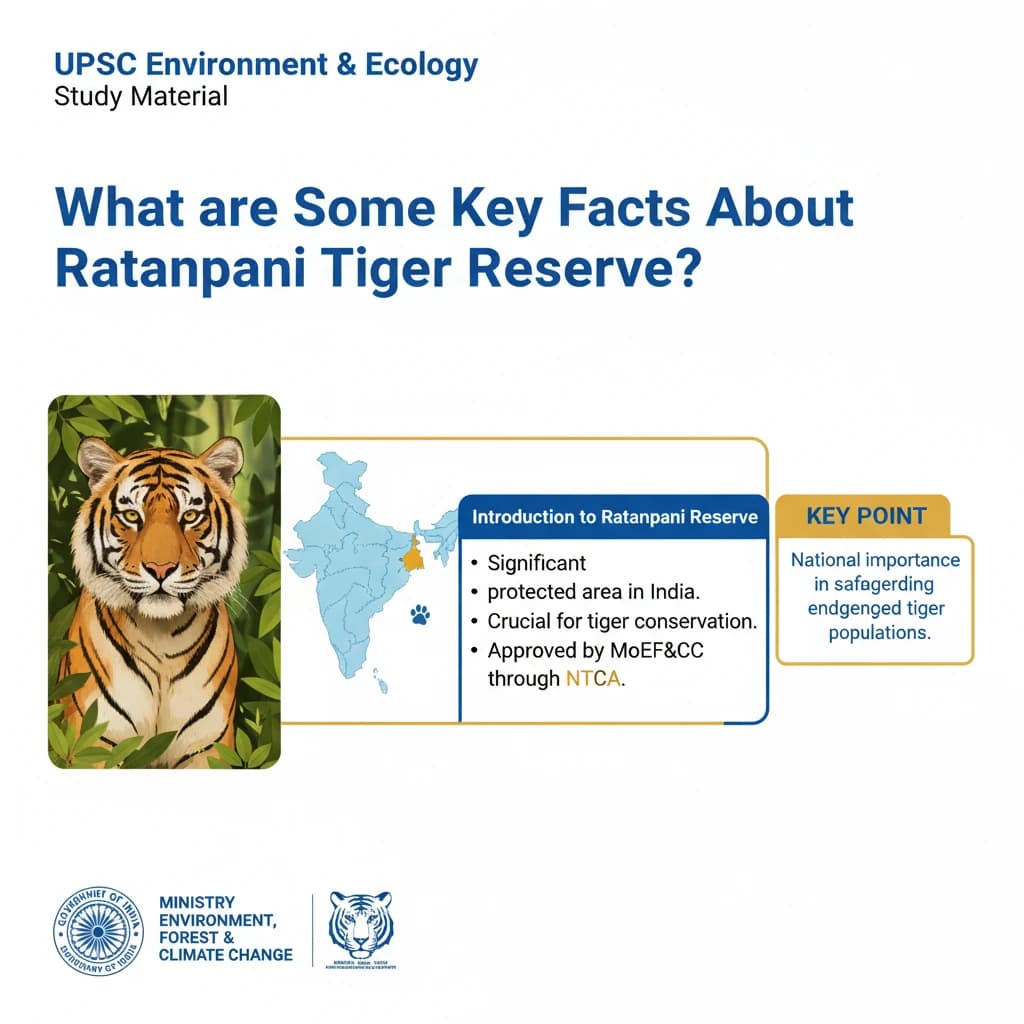
<h4>Introduction to Ratanpani Tiger Reserve</h4><p>The <strong>Ratanpani Tiger Reserve</strong> is a significant protected area in India, crucial for tiger conservation. Its establishment was officially approved by the <strong>Ministry of Environment, Forest, and Climate Change (MoEF&CC)</strong> through the <strong>National Tiger Conservation Authority (NTCA)</strong>.</p><div class='key-point-box'><p>This approval underscores its national importance in safeguarding the endangered tiger population and its habitat.</p></div><h4>Geographical Location and Significance</h4><p>The reserve is strategically located near the historic <strong>Vindhya hills</strong>, a prominent mountain range in central India. Its geographical position contributes to its rich biodiversity and ecological importance.</p><p>Notably, the sanctuary within the reserve encompasses the renowned <strong>Bhimbetka Rock Shelters</strong>, a designated <strong>UNESCO World Heritage Site</strong>. This integration highlights the reserve's dual significance for both natural and cultural heritage.</p><h4>Area and Zoning</h4><p>The <strong>Ratanpani Tiger Reserve</strong> spans a substantial total area of <strong>1,271.4 square kilometers</strong>. This vast expanse is meticulously divided into distinct zones to ensure effective conservation and management.</p><div class='info-box'><p>The reserve comprises a <strong>core area</strong> of <strong>763.8 square kilometers</strong>, dedicated to strict conservation, and a <strong>buffer area</strong> of <strong>507.6 square kilometers</strong>, which allows for some regulated human activity and serves as a protective zone.</p></div><h4>Flora: Dominant Vegetation</h4><p>The vegetation within <strong>Ratanpani Tiger Reserve</strong> is characterized by a mix of <strong>dry and moist deciduous forests</strong>. This diverse forest type supports a wide array of plant species.</p><ul><li><strong>Teak (<em>Tectona grandis</em>)</strong> is the most dominant tree species, covering approximately <strong>55%</strong> of the total area.</li><li>The presence of extensive <strong>bamboo</strong> patches further enriches the forest ecosystem.</li><li><strong>Evergreen Saja forests</strong> also contribute to the reserve's green cover, enhancing its scenic beauty and ecological value, which in turn boosts its appeal for tourism.</li></ul><h4>Fauna: Rich Biodiversity</h4><p>The reserve is a vibrant hub of wildlife, boasting a remarkable diversity of animal species. It provides a critical habitat for numerous mammals, reptiles, fish, and amphibians.</p><div class='info-box'><ul><li>Home to more than <strong>35 species of mammals</strong>.</li><li>Supports <strong>33 species of reptiles</strong>.</li><li>Contains <strong>14 species of fishes</strong>.</li><li>Houses <strong>10 species of amphibians</strong>.</li><li>Crucially, the reserve is home to over <strong>40 Tigers</strong>, making it a vital area for tiger population growth and conservation efforts.</li></ul></div><div class='exam-tip-box'><p><strong>UPSC Insight:</strong> Questions on Tiger Reserves often focus on their <strong>location, unique features (like UNESCO sites), dominant flora/fauna, and conservation significance</strong>. Remember the core and buffer area concept, and the role of bodies like <strong>NTCA</strong> and <strong>MoEF&CC</strong>.</p></div>
Concept Diagram

💡 Key Takeaways

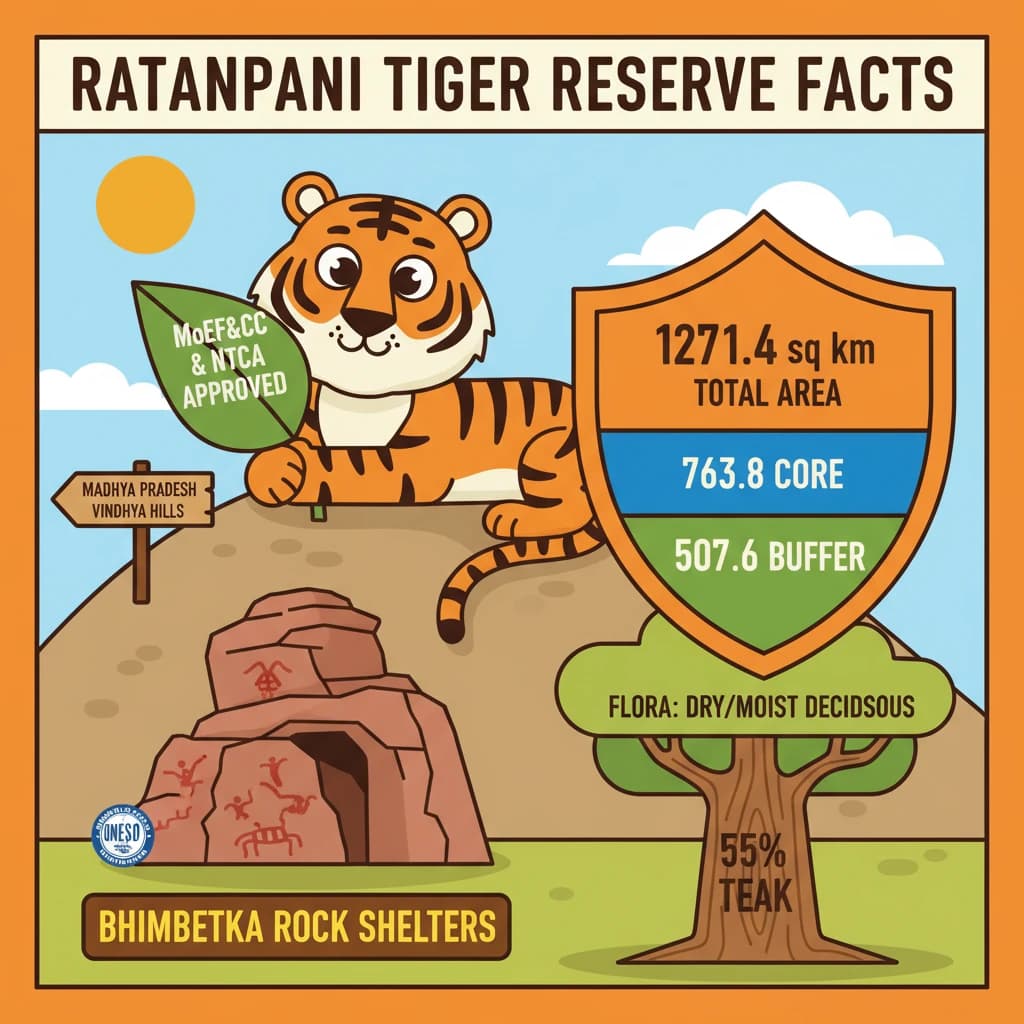
  • •Ratanpani Tiger Reserve, approved by MoEF&CC and NTCA, is in Madhya Pradesh near the Vindhya hills.
  • •It encompasses the Bhimbetka Rock Shelters, a UNESCO World Heritage Site.
  • •Total area is 1,271.4 sq km, with a 763.8 sq km core and 507.6 sq km buffer.
  • •Flora is dominated by dry and moist deciduous forests, with teak covering 55% of the area.
  • •Rich fauna includes over 40 tigers, 35+ mammal species, 33 reptile species, and various fish and amphibians.

🧠 Memory Techniques
Memory Aid
98% Verified Content

📚 Reference Sources

•Ministry of Environment, Forest and Climate Change (MoEF&CC) official reports
•National Tiger Conservation Authority (NTCA) website
•UNESCO World Heritage Centre: Bhimbetka Rock Shelters information

Related Topics

Loading related topics...
Explore:Environment And Ecology Topics·All Subjects·Daily Current Affairs·Editorial Analysis·Previous Year Questions·UPSC GPT
What are Some Key Facts About Ratanpani Tiger Reserve? - UPSC Environment And Ecology