What are Key Facts About the Western Ghats? - UPSC Environment And Ecology
What is What are Key Facts About the Western Ghats? in UPSC Environment And Ecology?
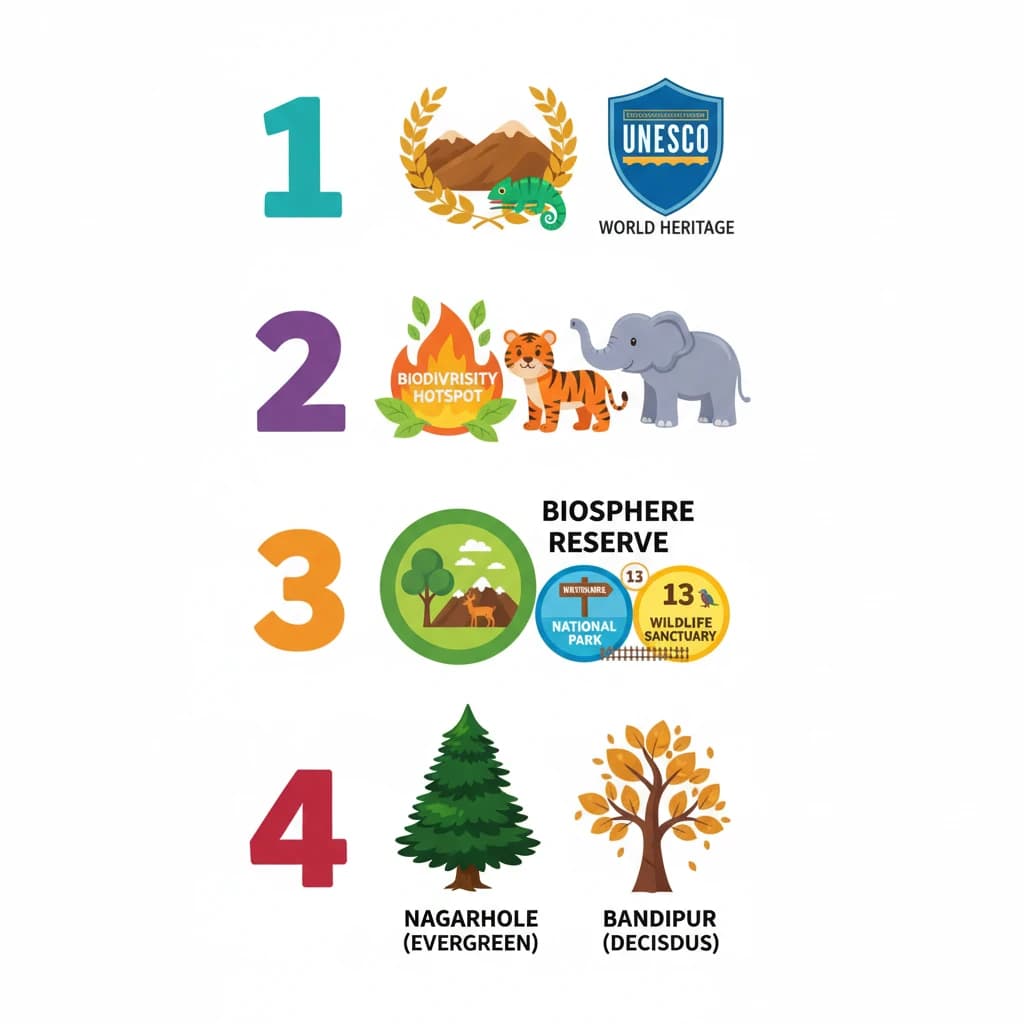
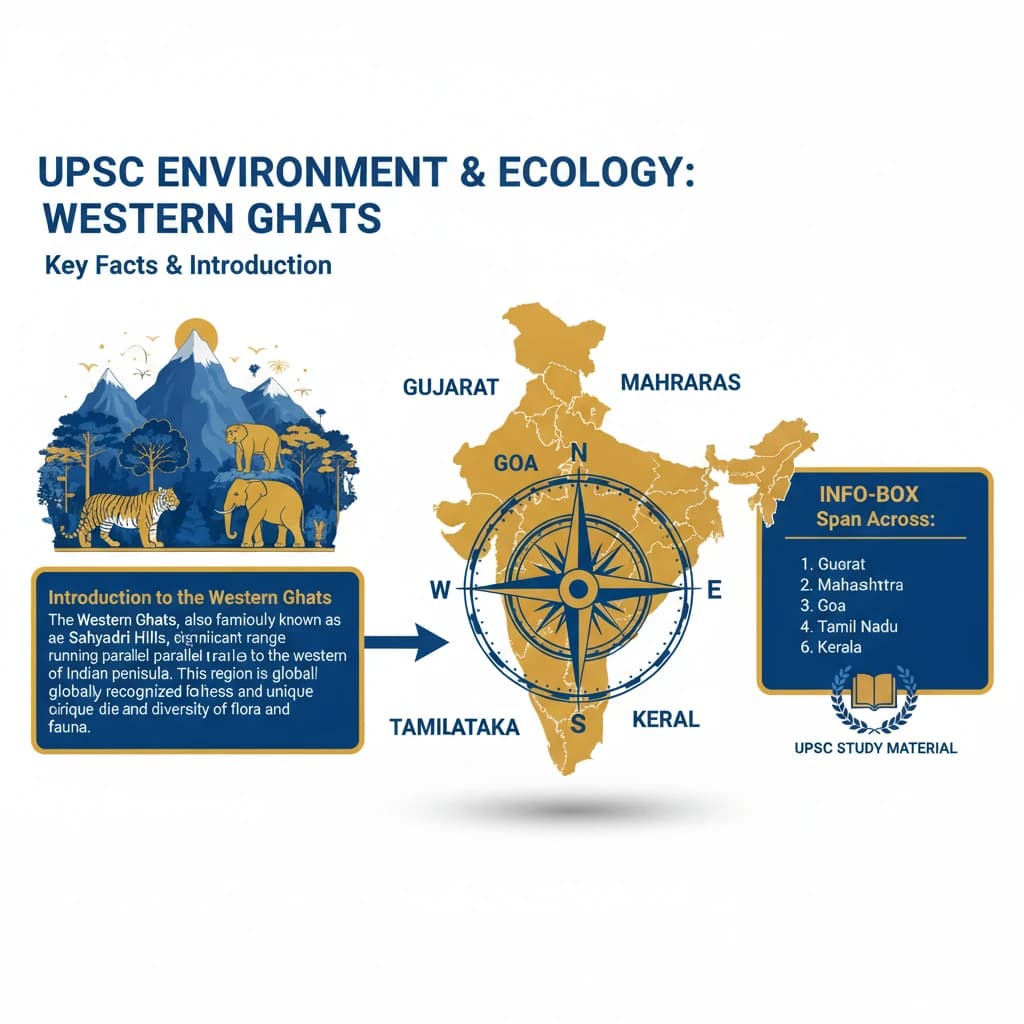
What are Key Facts About the Western Ghats? is a key topic under Environment And Ecology for UPSC Civil Services Examination. Key points include: Western Ghats, or Sahyadri Hills, are a UNESCO World Heritage Site.. They are one of India's four biodiversity hotspots, rich in endemic species.. Home to 2 biosphere reserves, 13 National Parks, and many wildlife sanctuaries.. Understanding this topic is essential for both UPSC Prelims and Mains preparation.
Why is What are Key Facts About the Western Ghats? important for UPSC exam?
What are Key Facts About the Western Ghats? is a Medium-level topic in UPSC Environment And Ecology. It is tested in both Prelims (factual MCQs) and Mains (analytical answer writing). Previous year UPSC questions have frequently covered aspects of What are Key Facts About the Western Ghats?, making it essential for comprehensive IAS preparation.
How to prepare What are Key Facts About the Western Ghats? for UPSC?
To prepare What are Key Facts About the Western Ghats? for UPSC: (1) Study the comprehensive notes covering all key concepts on Vaidra. (2) Practice previous year questions on this topic. (3) Connect it with current affairs using daily updates. (4) Revise using key takeaways and mind maps available for Environment And Ecology. (5) Write practice answers linking What are Key Facts About the Western Ghats? to related GS Paper topics.
Key takeaways of What are Key Facts About the Western Ghats? for UPSC
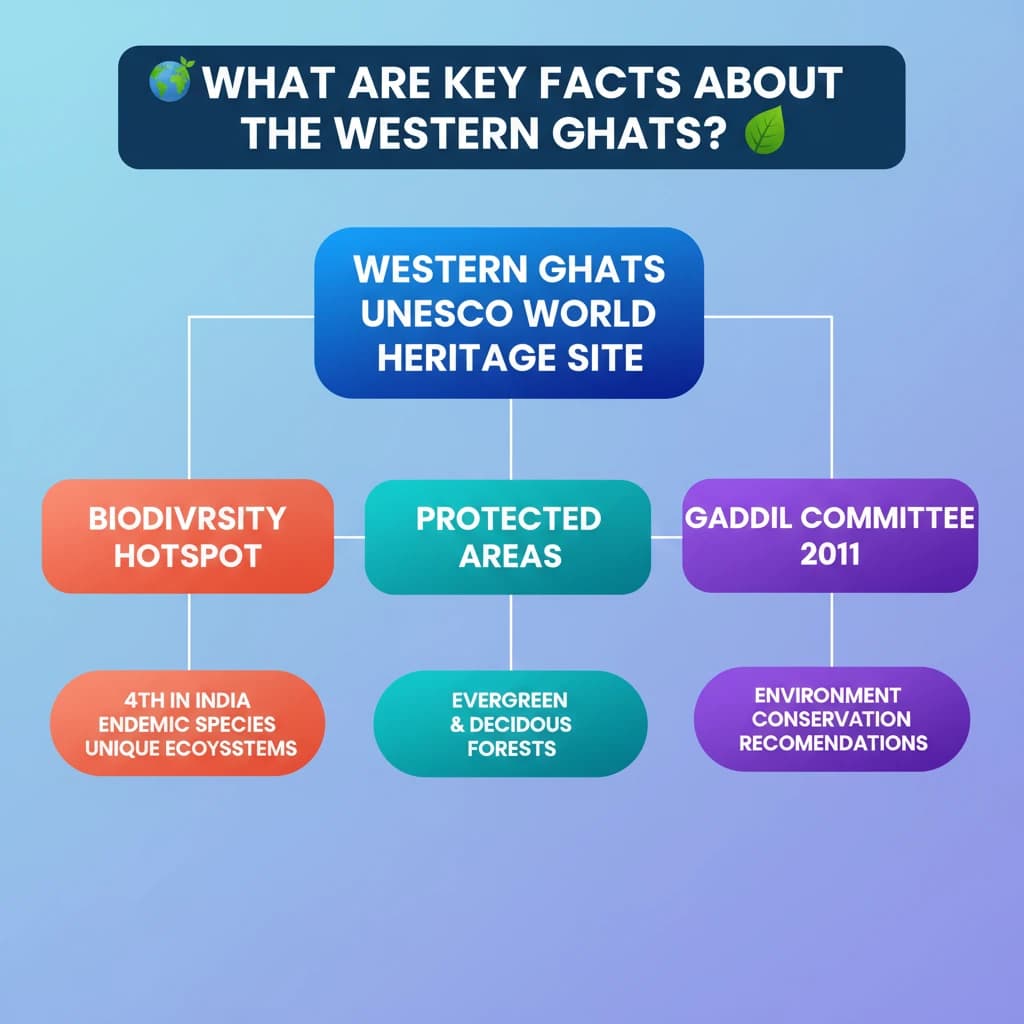
- Western Ghats, or Sahyadri Hills, are a UNESCO World Heritage Site.
- They are one of India's four biodiversity hotspots, rich in endemic species.
- Home to 2 biosphere reserves, 13 National Parks, and many wildlife sanctuaries.
- Diverse forests include evergreen (Nagarahole) and deciduous (Bandipur).
- The Gadgil Committee (WGEEP) was formed in 2011 for conservation recommendations.
What are Key Facts About the Western Ghats?
📖 Introduction
💡 Key Takeaways
- •Western Ghats, or Sahyadri Hills, are a UNESCO World Heritage Site.
- •They are one of India's four biodiversity hotspots, rich in endemic species.
- •Home to 2 biosphere reserves, 13 National Parks, and many wildlife sanctuaries.
- •Diverse forests include evergreen (Nagarahole) and deciduous (Bandipur).
- •The Gadgil Committee (WGEEP) was formed in 2011 for conservation recommendations.
🧠 Memory Techniques