World’s Oceans Approaching Critical Acidification Level - UPSC Environment And Ecology
What is World’s Oceans Approaching Critical Acidification Level in UPSC Environment And Ecology?
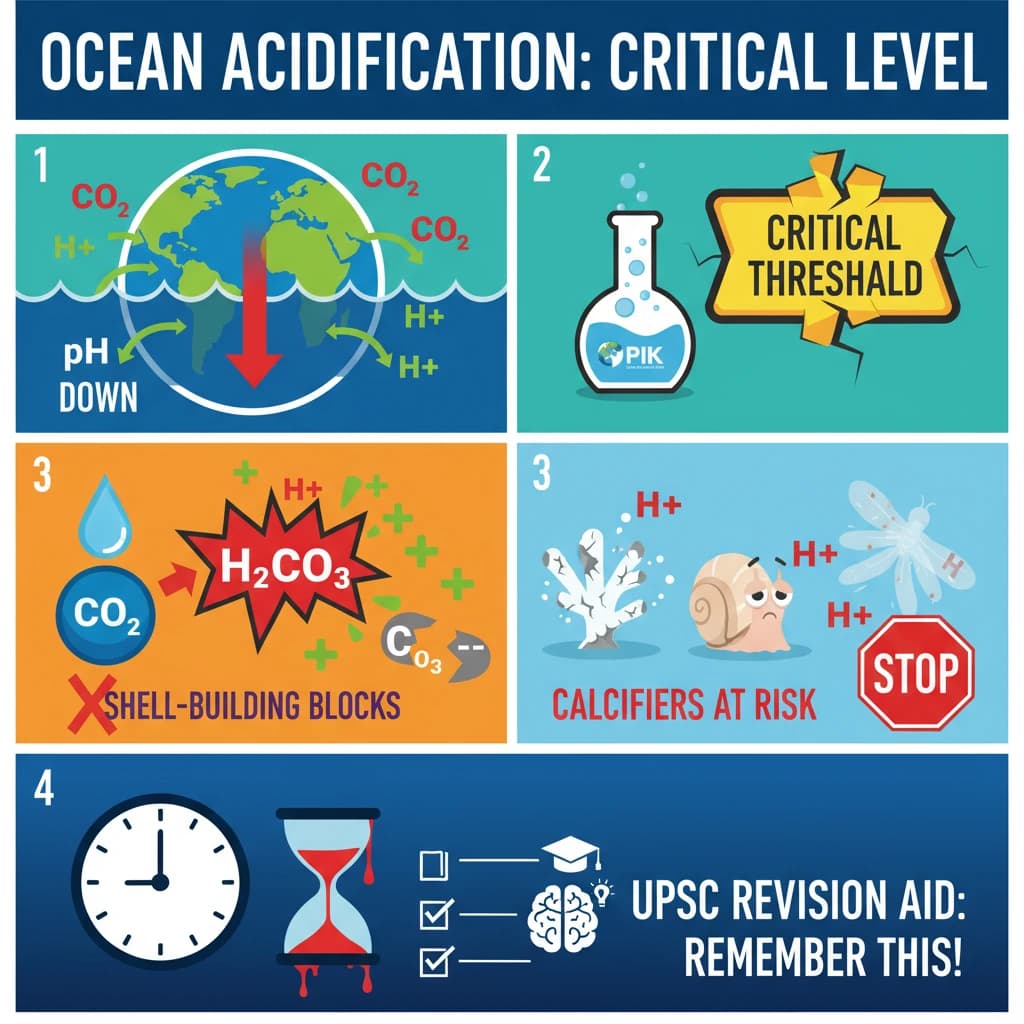
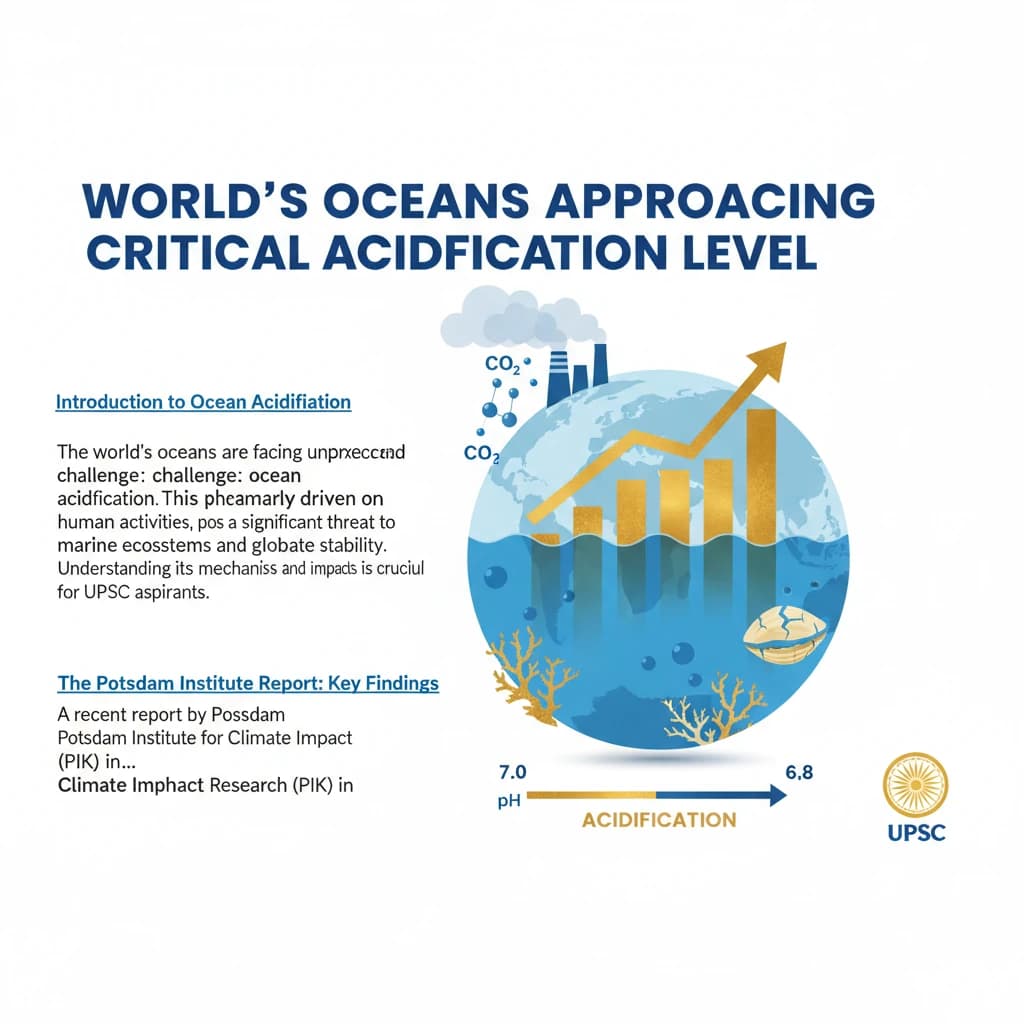
World’s Oceans Approaching Critical Acidification Level is a key topic under Environment And Ecology for UPSC Civil Services Examination. Key points include: Ocean acidification is the ongoing decrease in ocean pH due to absorption of anthropogenic CO2.. The Potsdam Institute for Climate Impact Research (PIK) report highlights oceans nearing a critical acidification threshold.. Increased CO2 forms carbonic acid, releasing hydrogen ions and reducing essential carbonate ions.. Understanding this topic is essential for both UPSC Prelims and Mains preparation.
Why is World’s Oceans Approaching Critical Acidification Level important for UPSC exam?
World’s Oceans Approaching Critical Acidification Level is a Medium-level topic in UPSC Environment And Ecology. It is tested in both Prelims (factual MCQs) and Mains (analytical answer writing). Previous year UPSC questions have frequently covered aspects of World’s Oceans Approaching Critical Acidification Level, making it essential for comprehensive IAS preparation.
How to prepare World’s Oceans Approaching Critical Acidification Level for UPSC?
To prepare World’s Oceans Approaching Critical Acidification Level for UPSC: (1) Study the comprehensive notes covering all key concepts on Vaidra. (2) Practice previous year questions on this topic. (3) Connect it with current affairs using daily updates. (4) Revise using key takeaways and mind maps available for Environment And Ecology. (5) Write practice answers linking World’s Oceans Approaching Critical Acidification Level to related GS Paper topics.
Key takeaways of World’s Oceans Approaching Critical Acidification Level for UPSC
- Ocean acidification is the ongoing decrease in ocean pH due to absorption of anthropogenic CO2.
- The Potsdam Institute for Climate Impact Research (PIK) report highlights oceans nearing a critical acidification threshold.
- Increased CO2 forms carbonic acid, releasing hydrogen ions and reducing essential carbonate ions.
- This impacts marine calcifiers (corals, mollusks, pteropods) by hindering shell/skeleton formation.
- Arctic Ocean is particularly vulnerable due to colder waters and melting ice.
- Mitigation requires drastic reduction in global CO2 emissions; adaptation includes ecosystem protection.
- Recognized under SDG 14.3, addressing OA is crucial for marine life and global climate stability.
World’s Oceans Approaching Critical Acidification Level
📖 Introduction
💡 Key Takeaways
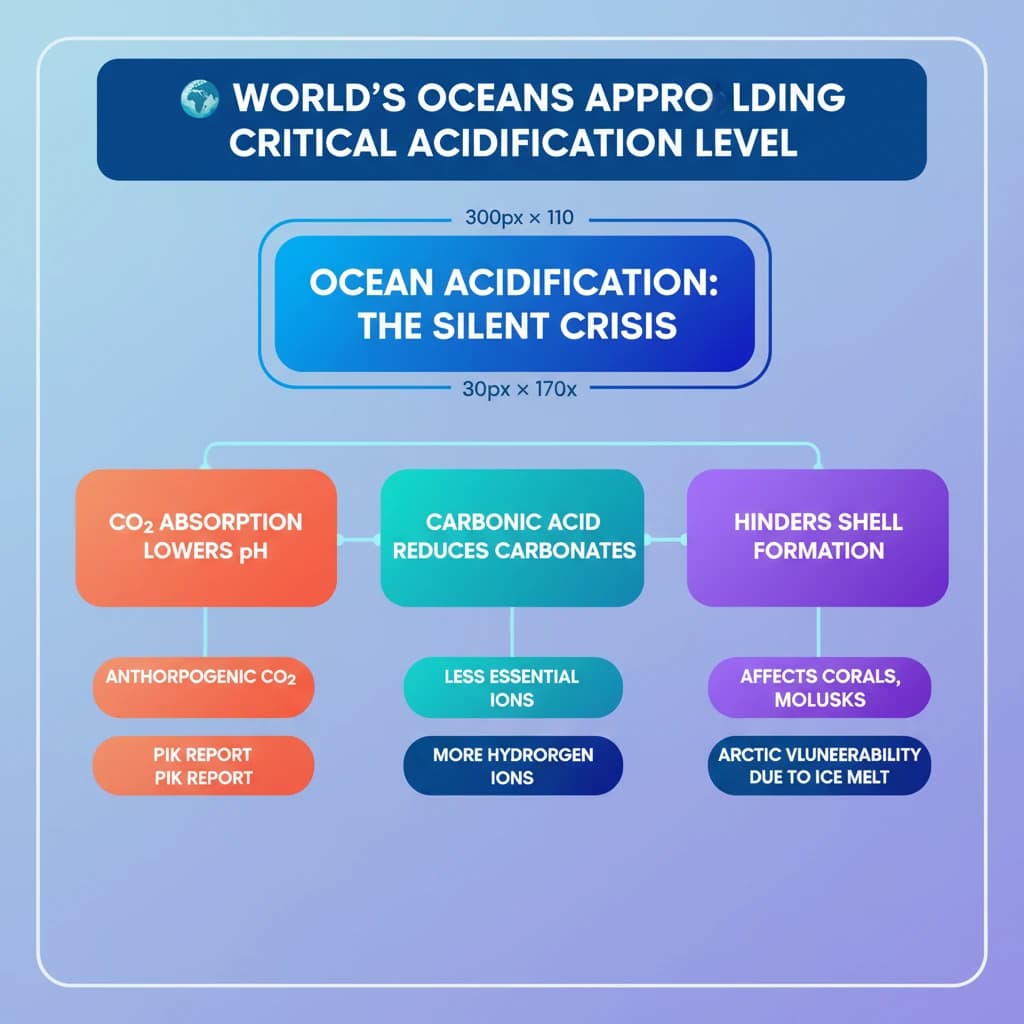
- •Ocean acidification is the ongoing decrease in ocean pH due to absorption of anthropogenic CO2.
- •The Potsdam Institute for Climate Impact Research (PIK) report highlights oceans nearing a critical acidification threshold.
- •Increased CO2 forms carbonic acid, releasing hydrogen ions and reducing essential carbonate ions.
- •This impacts marine calcifiers (corals, mollusks, pteropods) by hindering shell/skeleton formation.
- •Arctic Ocean is particularly vulnerable due to colder waters and melting ice.
- •Mitigation requires drastic reduction in global CO2 emissions; adaptation includes ecosystem protection.
- •Recognized under SDG 14.3, addressing OA is crucial for marine life and global climate stability.
🧠 Memory Techniques