Sundarbans: Environmental Challenges and Sustainable Solutions - UPSC Environment And Ecology
What is Sundarbans: Environmental Challenges and Sustainable Solutions in UPSC Environment And Ecology?
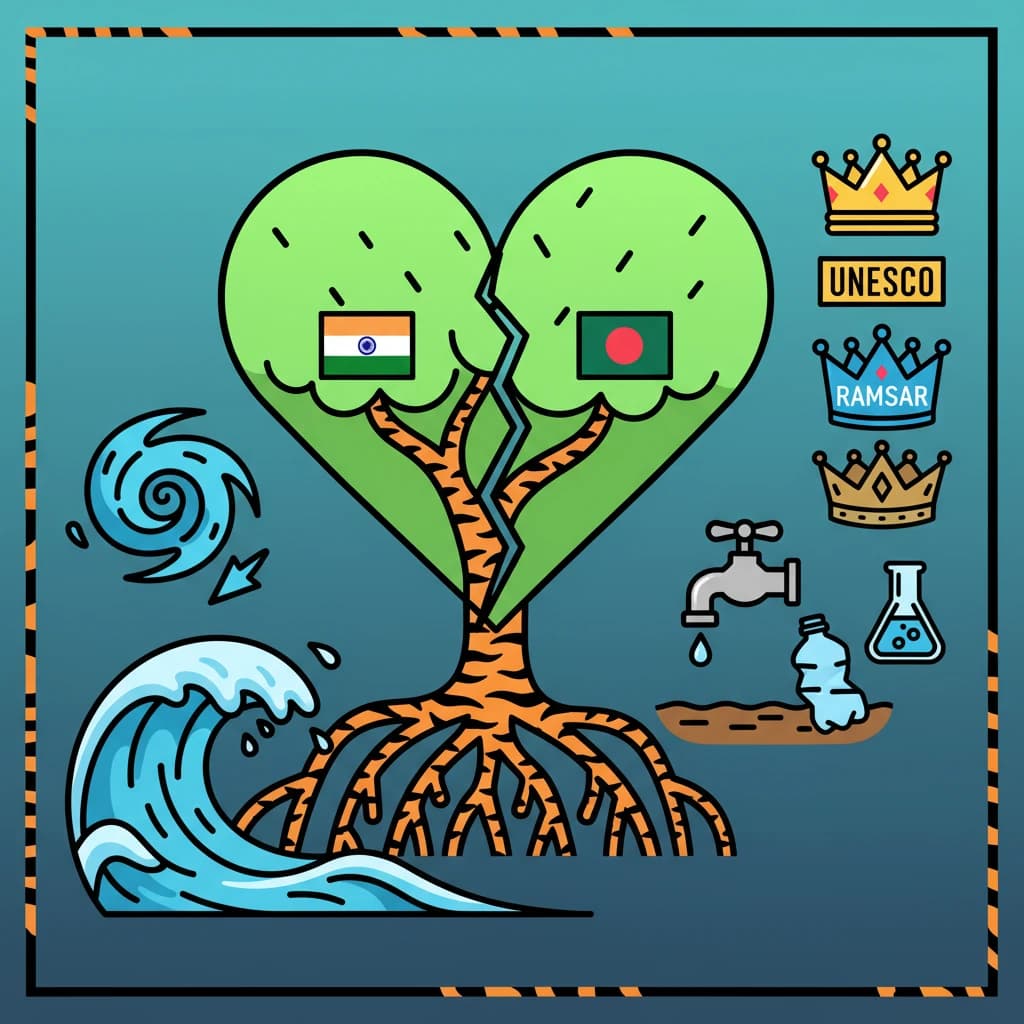
Sundarbans: Environmental Challenges and Sustainable Solutions is a key topic under Environment And Ecology for UPSC Civil Services Examination. Key points include: The Sundarbans is the world's largest mangrove forest, a UNESCO World Heritage Site and Ramsar Site, shared by India and Bangladesh.. It faces severe environmental challenges: freshwater scarcity (due to upstream diversions), microplastic and chemical pollution, and accelerated coastal erosion.. These threats are exacerbated by climate change, leading to rising sea levels and more intense cyclones, impacting biodiversity and local livelihoods.. Understanding this topic is essential for both UPSC Prelims and Mains preparation.
Why is Sundarbans: Environmental Challenges and Sustainable Solutions important for UPSC exam?
Sundarbans: Environmental Challenges and Sustainable Solutions is a Medium-level topic in UPSC Environment And Ecology. It is tested in both Prelims (factual MCQs) and Mains (analytical answer writing). Previous year UPSC questions have frequently covered aspects of Sundarbans: Environmental Challenges and Sustainable Solutions, making it essential for comprehensive IAS preparation.
How to prepare Sundarbans: Environmental Challenges and Sustainable Solutions for UPSC?
To prepare Sundarbans: Environmental Challenges and Sustainable Solutions for UPSC: (1) Study the comprehensive notes covering all key concepts on Vaidra. (2) Practice previous year questions on this topic. (3) Connect it with current affairs using daily updates. (4) Revise using key takeaways and mind maps available for Environment And Ecology. (5) Write practice answers linking Sundarbans: Environmental Challenges and Sustainable Solutions to related GS Paper topics.
Key takeaways of Sundarbans: Environmental Challenges and Sustainable Solutions for UPSC
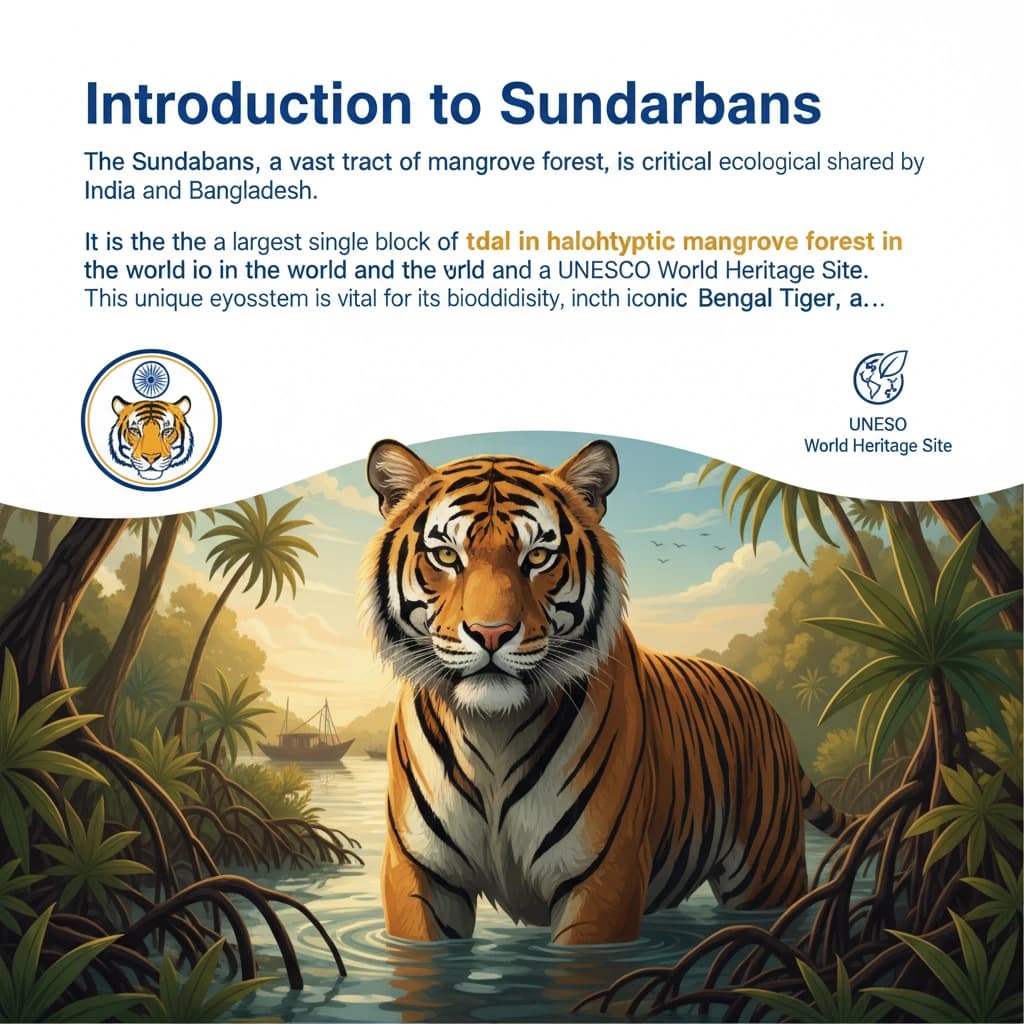
- The Sundarbans is the world's largest mangrove forest, a UNESCO World Heritage Site and Ramsar Site, shared by India and Bangladesh.
- It faces severe environmental challenges: freshwater scarcity (due to upstream diversions), microplastic and chemical pollution, and accelerated coastal erosion.
- These threats are exacerbated by climate change, leading to rising sea levels and more intense cyclones, impacting biodiversity and local livelihoods.
- Mangroves are crucial for coastal protection, carbon sequestration, and supporting unique biodiversity, including the Royal Bengal Tiger.
- Sustainable solutions require integrated approaches, including conservation programs, pollution control, community engagement, and international cooperation.
- The Sundarbans serves as a critical case study for climate change adaptation and sustainable development in deltaic regions.
Sundarbans: Environmental Challenges and Sustainable Solutions
📖 Introduction
💡 Key Takeaways
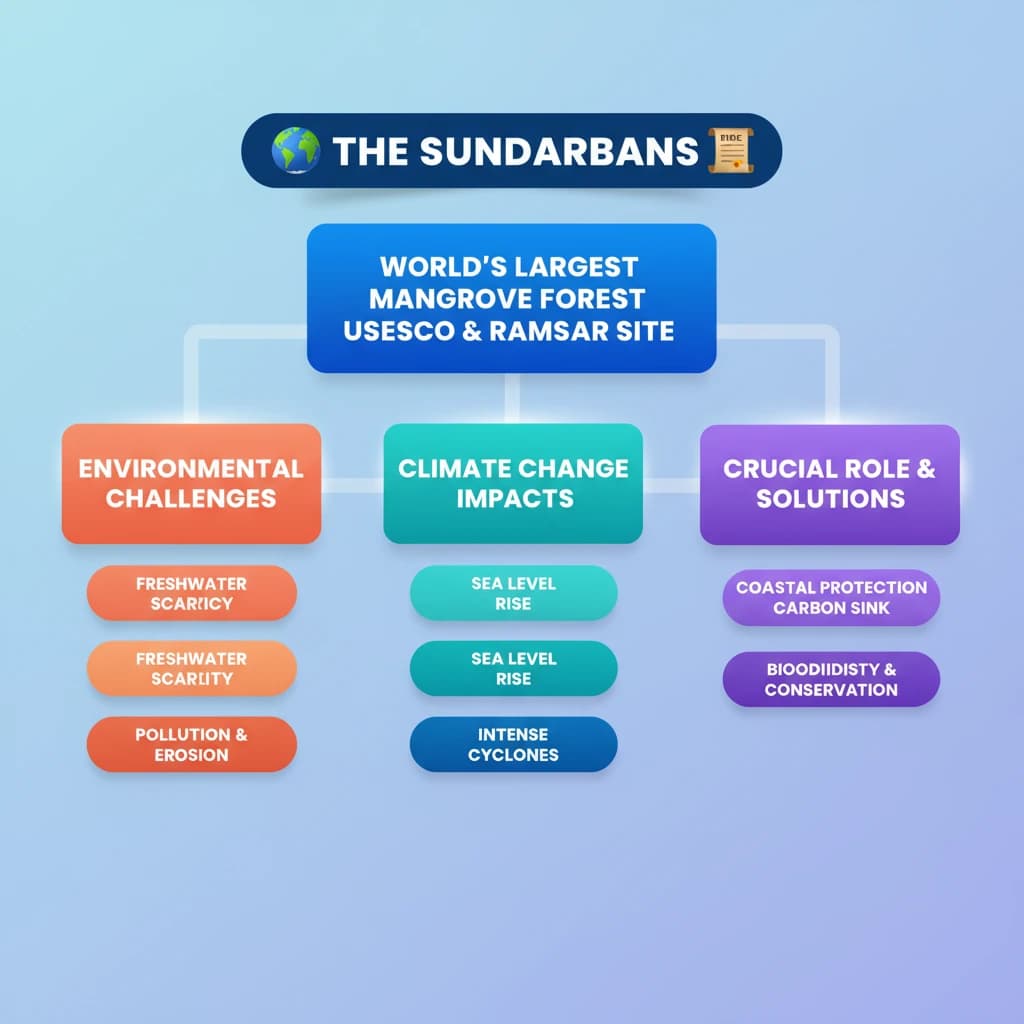
- •The Sundarbans is the world's largest mangrove forest, a UNESCO World Heritage Site and Ramsar Site, shared by India and Bangladesh.
- •It faces severe environmental challenges: freshwater scarcity (due to upstream diversions), microplastic and chemical pollution, and accelerated coastal erosion.
- •These threats are exacerbated by climate change, leading to rising sea levels and more intense cyclones, impacting biodiversity and local livelihoods.
- •Mangroves are crucial for coastal protection, carbon sequestration, and supporting unique biodiversity, including the Royal Bengal Tiger.
- •Sustainable solutions require integrated approaches, including conservation programs, pollution control, community engagement, and international cooperation.
- •The Sundarbans serves as a critical case study for climate change adaptation and sustainable development in deltaic regions.
🧠 Memory Techniques