Loading page, please wait…
Vaidra Logo
Vaidra

Top 4 items + smart groups

UPSC GPT
New
Current Affairs
Daily Solutions
Daily Puzzle
Mains Evaluator

Version 2.0.0 • Built with ❤️ for UPSC aspirants

Loading...
Loading...
Loading...
Loading...
Loading...
Loading...
Loading...
Loading...
Loading...
Loading...
Loading...
Loading...
Loading...
Back
All Subjects

Topics

0 topics • 0 completed

Loading topics...
Loading...
Loading...
Loading...
Loading...
Loading...
Overall Progress0%

What is Avian influenza? - UPSC Environment And Ecology

What is What is Avian influenza? in UPSC Environment And Ecology?

What is Avian influenza? is a key topic under Environment And Ecology for UPSC Civil Services Examination. Key points include: Avian influenza (bird flu) is a highly contagious viral infection primarily affecting birds.. The H5N1 strain was first identified in domestic waterfowl in Southern China in 1996.. Human cases are rare but can occur, with difficult person-to-person transmission.. Understanding this topic is essential for both UPSC Prelims and Mains preparation.

Why is What is Avian influenza? important for UPSC exam?

What is Avian influenza? is a Easy-level topic in UPSC Environment And Ecology. It is tested in both Prelims (factual MCQs) and Mains (analytical answer writing). Previous year UPSC questions have frequently covered aspects of What is Avian influenza?, making it essential for comprehensive IAS preparation.

How to prepare What is Avian influenza? for UPSC?

To prepare What is Avian influenza? for UPSC: (1) Study the comprehensive notes covering all key concepts on Vaidra. (2) Practice previous year questions on this topic. (3) Connect it with current affairs using daily updates. (4) Revise using key takeaways and mind maps available for Environment And Ecology. (5) Write practice answers linking What is Avian influenza? to related GS Paper topics.

Key takeaways of What is Avian influenza? for UPSC

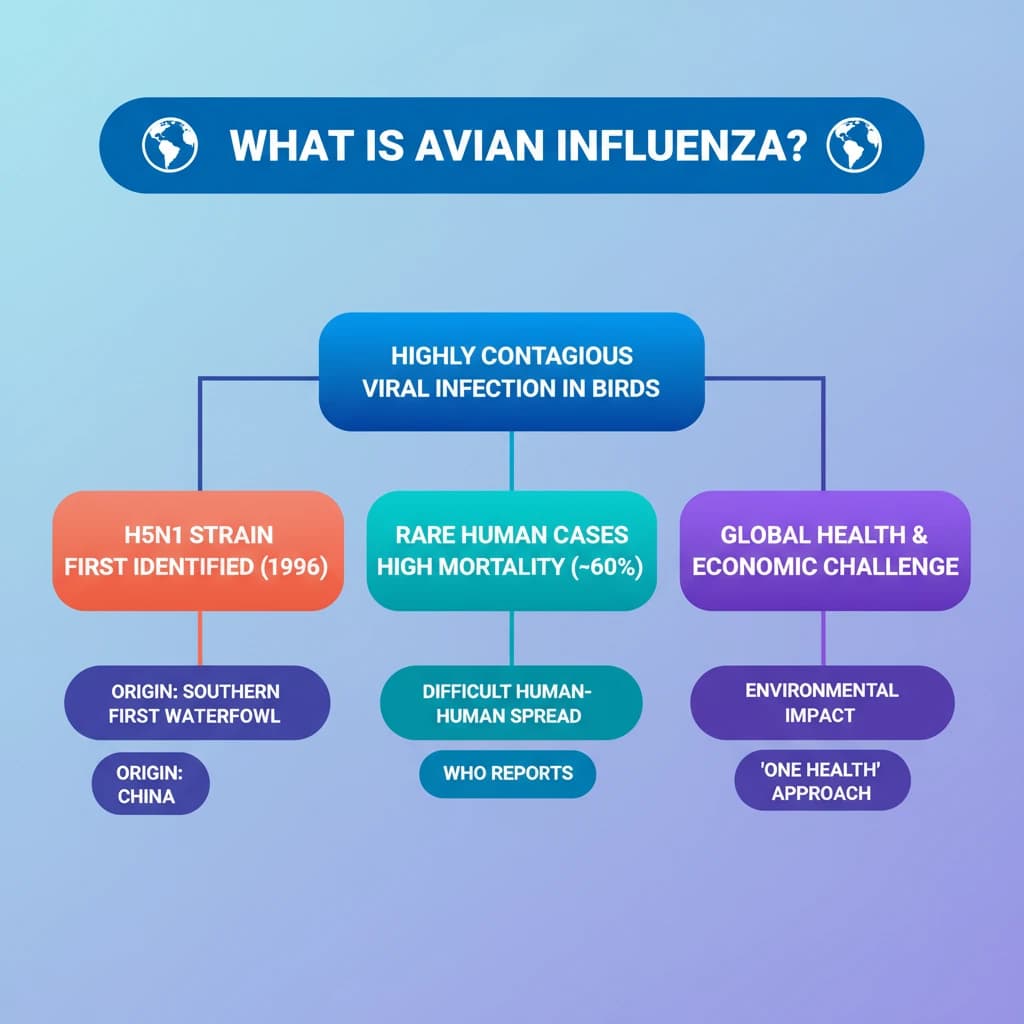
  • Avian influenza (bird flu) is a highly contagious viral infection primarily affecting birds.
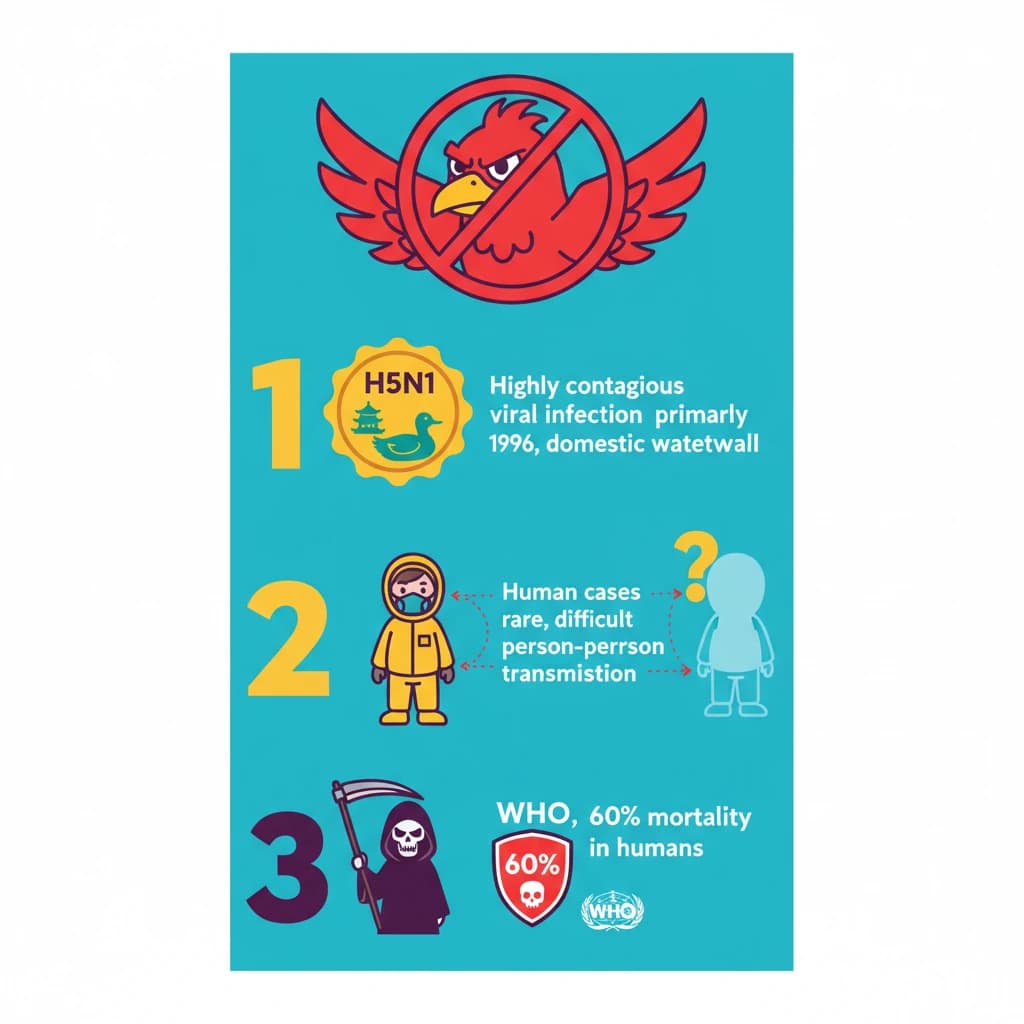
  • The H5N1 strain was first identified in domestic waterfowl in Southern China in 1996.
  • Human cases are rare but can occur, with difficult person-to-person transmission.
  • WHO reports a high mortality rate (approx. 60%) in humans infected with H5N1.
  • It poses ongoing global health, economic, and environmental challenges, requiring a 'One Health' approach.
What is Avian influenza?

What is Avian influenza?

Easy⏱️ 6 min read✓ 95% Verified
environment and ecology

📖 Introduction

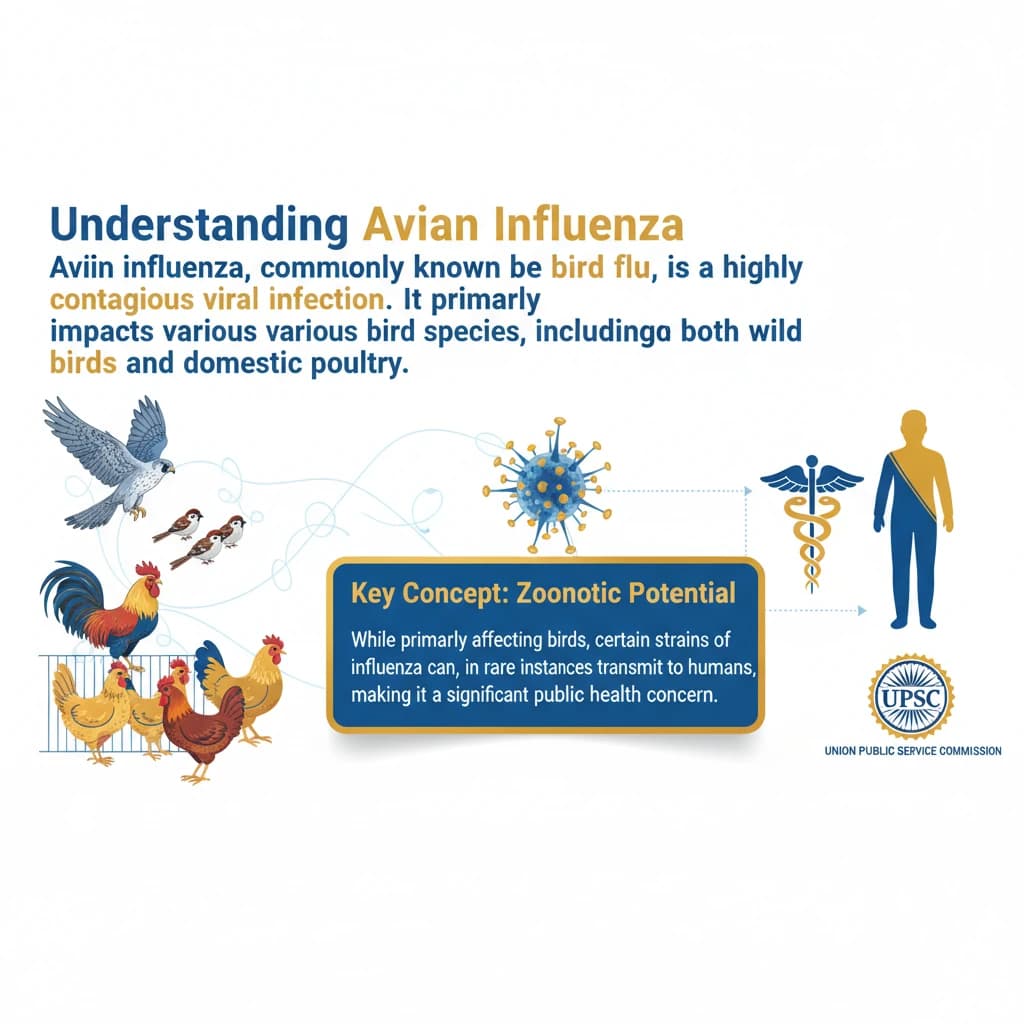
<h4>Understanding Avian Influenza</h4><p><strong>Avian influenza</strong>, commonly known as <strong>bird flu</strong>, is a highly contagious viral infection. It primarily impacts various bird species, including both <strong>wild birds</strong> and <strong>domestic poultry</strong>.</p><div class='key-point-box'><p><strong>Key Concept: Zoonotic Potential</strong></p><p>While primarily affecting birds, certain strains of avian influenza can, in rare instances, transmit to humans, making it a significant public health concern.</p></div><h4>Origin and Identification of H5N1</h4><p>The highly pathogenic <strong>H5N1 avian influenza virus</strong> was first identified in <strong>1996</strong>. This initial discovery occurred in <strong>domestic waterfowl</strong> located in <strong>Southern China</strong>.</p><div class='info-box'><p><strong>Virus Naming Convention:</strong></p><ul><li>The specific virus identified was named <strong>A/goose/Guangdong/1/1996</strong>.</li><li>This name indicates its type (A), host (goose), location of isolation (Guangdong), strain number (1), and year of isolation (1996).</li></ul></div><h4>Transmission to Humans and Mortality</h4><p>Human cases of <strong>H5N1 avian influenza</strong> occur occasionally. However, it is generally considered difficult for the infection to transmit from <strong>person to person</strong>.</p><p>Despite the low human-to-human transmission risk, when people do become infected, the outcome can be severe. The <strong>World Health Organization (WHO)</strong> reports a high mortality rate associated with human H5N1 infections.</p><div class='info-box'><p><strong>Human Mortality Rate:</strong></p><ul><li>According to <strong>WHO</strong> data, the mortality rate for infected individuals is approximately <strong>60%</strong>.</li></ul></div><div class='exam-tip-box'><p><strong>UPSC Insight:</strong> Questions on Avian Influenza often focus on its <strong>zoonotic nature</strong>, <strong>public health implications</strong>, and <strong>preventive measures</strong>. Understanding the high mortality rate in humans is crucial.</p></div>
Concept Diagram

💡 Key Takeaways

  • •Avian influenza (bird flu) is a highly contagious viral infection primarily affecting birds.
  • •The H5N1 strain was first identified in domestic waterfowl in Southern China in 1996.
  • •Human cases are rare but can occur, with difficult person-to-person transmission.
  • •WHO reports a high mortality rate (approx. 60%) in humans infected with H5N1.
  • •It poses ongoing global health, economic, and environmental challenges, requiring a 'One Health' approach.

🧠 Memory Techniques
Memory Aid
95% Verified Content

📚 Reference Sources

•World Health Organization (WHO) fact sheets on Avian Influenza (H5N1)

Related Topics

Loading related topics...
Explore:Environment And Ecology Topics·All Subjects·Daily Current Affairs·Editorial Analysis·Previous Year Questions·UPSC GPT
What is Avian influenza? - UPSC Environment And Ecology