Loading page, please wait…
Vaidra Logo
Vaidra

Top 4 items + smart groups

UPSC GPT
New
Current Affairs
Daily Solutions
Daily Puzzle
Mains Evaluator

Version 2.0.0 • Built with ❤️ for UPSC aspirants

Loading...
Loading...
Loading...
Loading...
Loading...
Loading...
Loading...
Loading...
Loading...
Loading...
Loading...
Loading...
Loading...
Back
All Subjects

Topics

0 topics • 0 completed

Loading topics...
Loading...
Loading...
Loading...
Loading...
Loading...
Overall Progress0%
What Steps are Being Taken to Conserve the GIB? - UPSC Environment And Ecology

What Steps are Being Taken to Conserve the GIB? - UPSC Environment And Ecology

What is What Steps are Being Taken to Conserve the GIB? in UPSC Environment And Ecology?

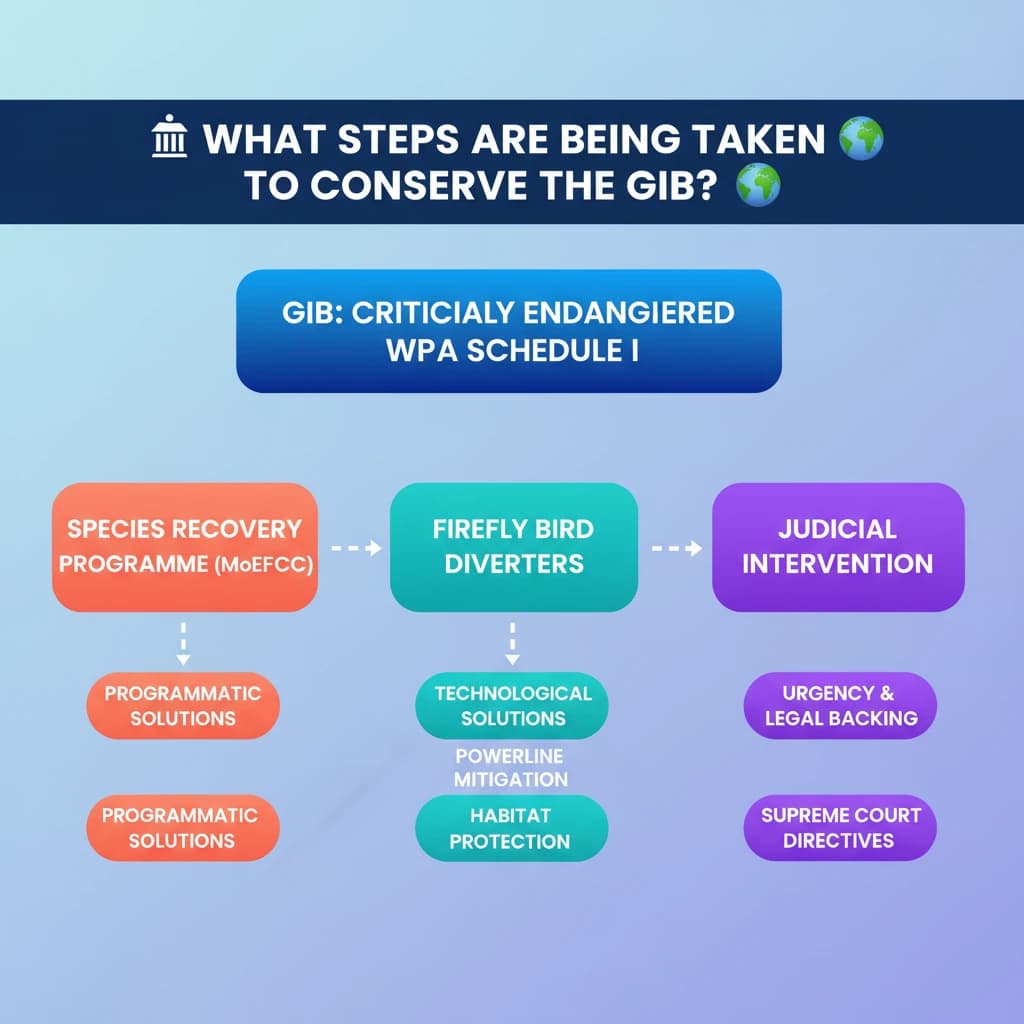
What Steps are Being Taken to Conserve the GIB? is a key topic under Environment And Ecology for UPSC Civil Services Examination. Key points include: GIB is Critically Endangered, protected under WPA Schedule I.. Species Recovery Programme (MoEFCC) is a key initiative for GIB.. Firefly Bird Diverters mitigate power line collision threat.. Understanding this topic is essential for both UPSC Prelims and Mains preparation.

Why is What Steps are Being Taken to Conserve the GIB? important for UPSC exam?

What Steps are Being Taken to Conserve the GIB? is a Medium-level topic in UPSC Environment And Ecology. It is tested in both Prelims (factual MCQs) and Mains (analytical answer writing). Previous year UPSC questions have frequently covered aspects of What Steps are Being Taken to Conserve the GIB?, making it essential for comprehensive IAS preparation.

How to prepare What Steps are Being Taken to Conserve the GIB? for UPSC?

To prepare What Steps are Being Taken to Conserve the GIB? for UPSC: (1) Study the comprehensive notes covering all key concepts on Vaidra. (2) Practice previous year questions on this topic. (3) Connect it with current affairs using daily updates. (4) Revise using key takeaways and mind maps available for Environment And Ecology. (5) Write practice answers linking What Steps are Being Taken to Conserve the GIB? to related GS Paper topics.

Key takeaways of What Steps are Being Taken to Conserve the GIB? for UPSC

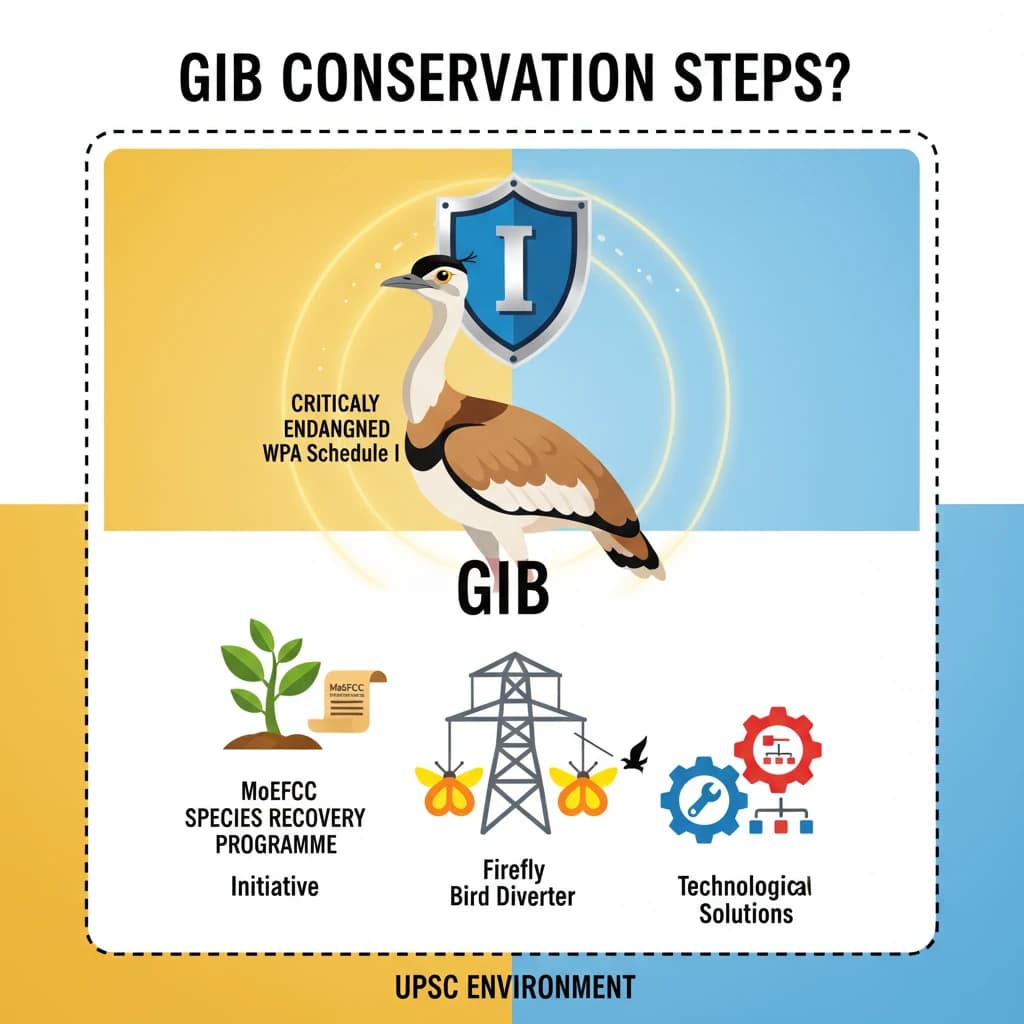
  • GIB is Critically Endangered, protected under WPA Schedule I.
  • Species Recovery Programme (MoEFCC) is a key initiative for GIB.
  • Firefly Bird Diverters mitigate power line collision threat.
  • Conservation involves both programmatic and technological solutions.
  • Judicial intervention highlights urgency of GIB protection.
What Steps are Being Taken to Conserve the GIB?

What Steps are Being Taken to Conserve the GIB?

Medium⏱️ 6 min read✓ 98% Verified
environment and ecology

📖 Introduction

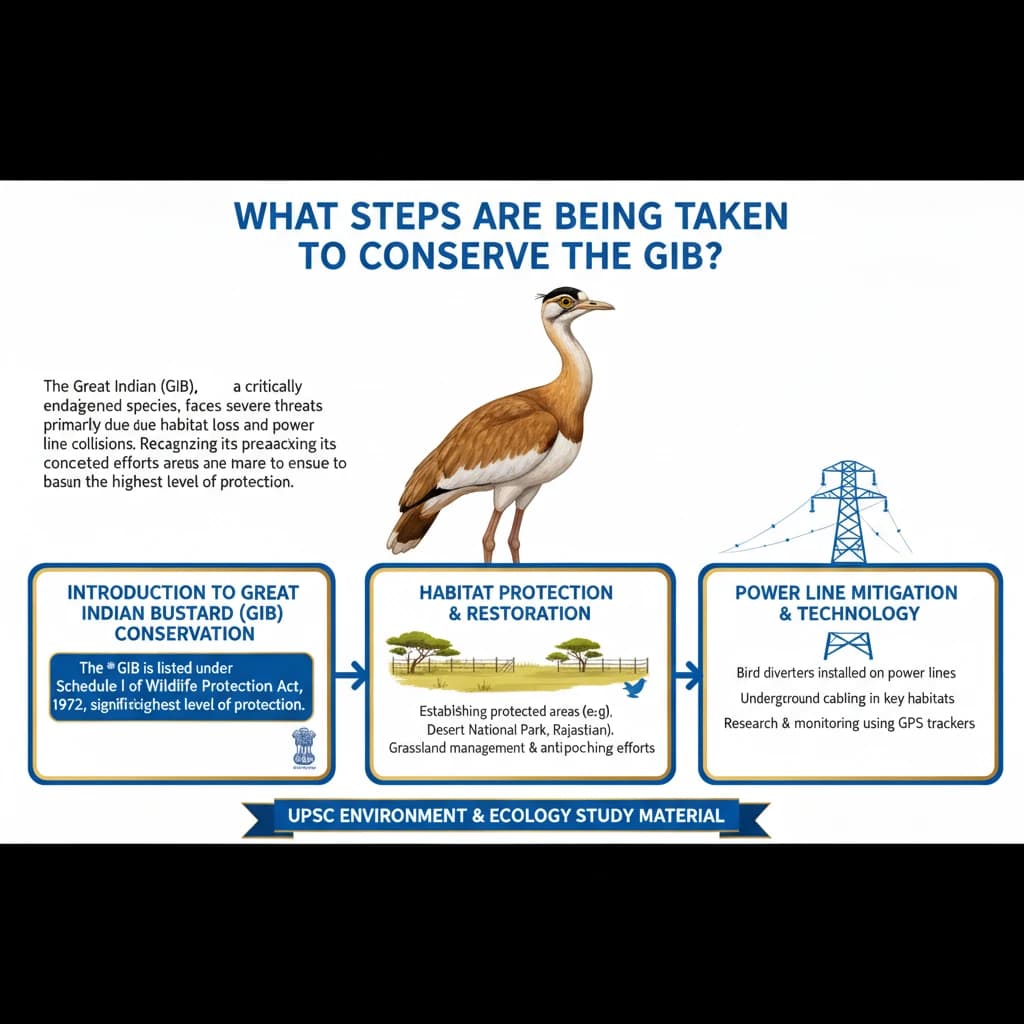
<h4>Introduction to Great Indian Bustard (GIB) Conservation</h4><p>The <strong>Great Indian Bustard (GIB)</strong>, a critically endangered species, faces severe threats primarily due to habitat loss and power line collisions. Recognizing its precarious status, concerted efforts are being made to ensure its survival.</p><div class='key-point-box'><p>The <strong>GIB</strong> is listed under <strong>Schedule I</strong> of the <strong>Wildlife Protection Act, 1972</strong>, signifying the highest level of protection. It is also classified as <strong>Critically Endangered</strong> by the <strong>IUCN Red List</strong>.</p></div><h4>Key Conservation Initiatives for GIB</h4><p>Several strategic steps have been initiated by the Indian government and various organizations to conserve the <strong>Great Indian Bustard</strong>. These efforts focus on both habitat protection and direct threat mitigation.</p><div class='info-box'><p><strong>Species Recovery Programme</strong></p><ul><li>The <strong>GIB</strong> is a focal species under the <strong>Species Recovery Programme</strong>.</li><li>This programme operates under the broader <strong>Integrated Development of Wildlife Habitats (IDWH)</strong> scheme.</li><li>It is spearheaded by the <strong>Ministry of Environment, Forests and Climate Change (MoEFCC)</strong>.</li><li>The primary objective is to enhance the population and habitat of critically endangered species like the <strong>GIB</strong>.</li></ul></div><div class='info-box'><p><strong>Firefly Bird Diverters</strong></p><ul><li><strong>Firefly bird diverters</strong> are innovative devices installed on power lines.</li><li>These are reflective flaps designed to make power lines visible to birds from a distance.</li><li>Birds, including the <strong>GIB</strong>, can spot these diverters from approximately <strong>50 meters</strong> away.</li><li>This early detection allows them to alter their flight path, thereby avoiding collisions with high-tension power cables.</li></ul></div><div class='exam-tip-box'><p><strong>UPSC Insight:</strong> Understanding both programmatic approaches (like <strong>Species Recovery Programme</strong>) and technological solutions (like <strong>Firefly Bird Diverters</strong>) is crucial for answers on biodiversity conservation. Mentioning specific initiatives demonstrates in-depth knowledge for <strong>GS Paper III</strong>.</p></div>
Concept Diagram

💡 Key Takeaways

  • •GIB is Critically Endangered, protected under WPA Schedule I.
  • •Species Recovery Programme (MoEFCC) is a key initiative for GIB.
  • •Firefly Bird Diverters mitigate power line collision threat.
  • •Conservation involves both programmatic and technological solutions.
  • •Judicial intervention highlights urgency of GIB protection.

🧠 Memory Techniques
Memory Aid
98% Verified Content

📚 Reference Sources

•Ministry of Environment, Forests and Climate Change (MoEFCC) official documents and reports
•IUCN Red List for Great Indian Bustard
•Press Information Bureau (PIB) releases regarding GIB conservation

Related Topics

Loading related topics...
Explore:Environment And Ecology Topics·All Subjects·Daily Current Affairs·Editorial Analysis·Previous Year Questions·UPSC GPT