Loading page, please wait…
Vaidra Logo
Vaidra

Top 4 items + smart groups

UPSC GPT
New
Current Affairs
Daily Solutions
Daily Puzzle
Mains Evaluator

Version 2.0.0 • Built with ❤️ for UPSC aspirants

Loading...
Loading...
Loading...
Loading...
Loading...
Loading...
Loading...
Loading...
Loading...
Loading...
Loading...
Loading...
Loading...
Back
All Subjects

Topics

0 topics • 0 completed

Loading topics...
Loading...
Loading...
Loading...
Loading...
Loading...
Overall Progress0%
What are the Key Facts About Brazilian Velvet Ant? - UPSC Environment And Ecology

What are the Key Facts About Brazilian Velvet Ant? - UPSC Environment And Ecology

What is What are the Key Facts About Brazilian Velvet Ant? in UPSC Environment And Ecology?

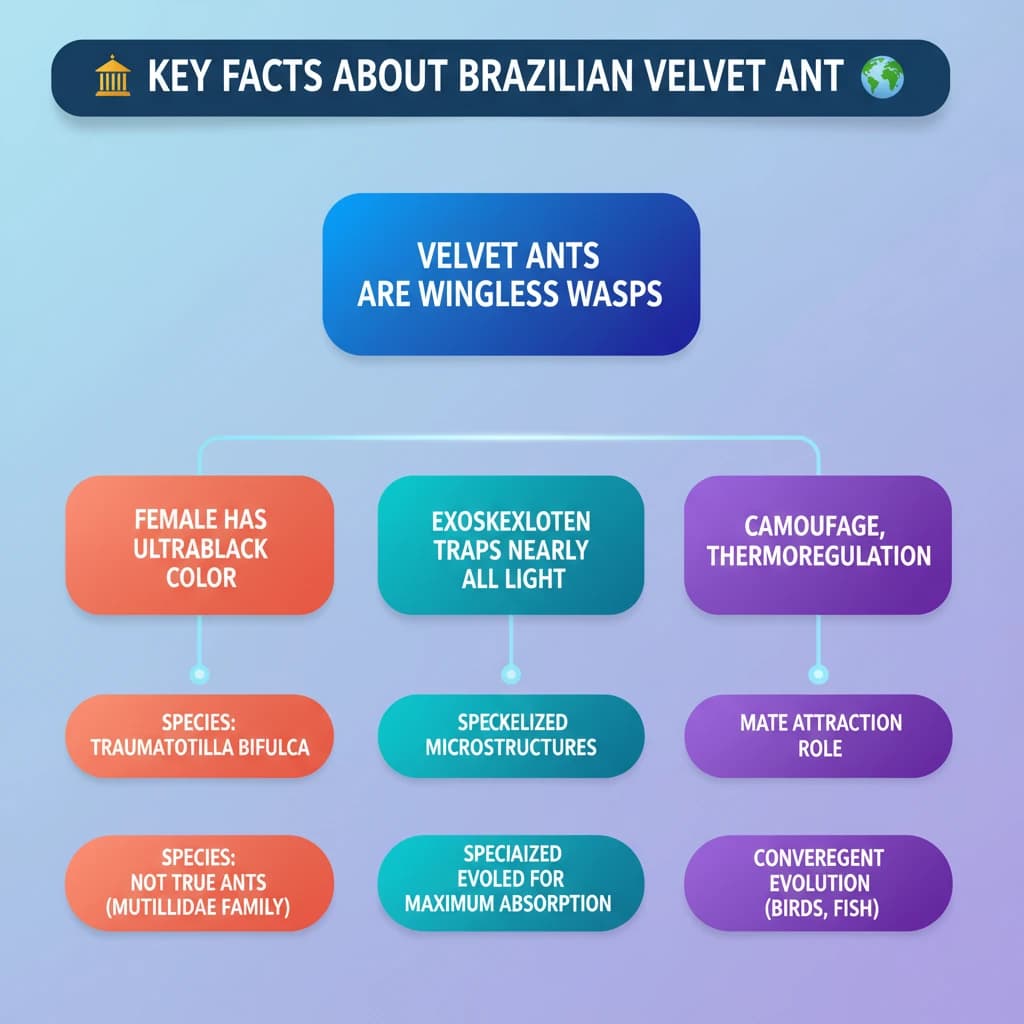
What are the Key Facts About Brazilian Velvet Ant? is a key topic under Environment And Ecology for UPSC Civil Services Examination. Key points include: Velvet ants are actually wasps (Mutillidae family), not true ants.. Female Brazilian velvet ants (Traumatotilla bifulca) exhibit an extraordinary ultrablack color.. This ultrablack property is due to specialized microstructures in their exoskeleton that trap nearly all visible light.. Understanding this topic is essential for both UPSC Prelims and Mains preparation.

Why is What are the Key Facts About Brazilian Velvet Ant? important for UPSC exam?

What are the Key Facts About Brazilian Velvet Ant? is a Medium-level topic in UPSC Environment And Ecology. It is tested in both Prelims (factual MCQs) and Mains (analytical answer writing). Previous year UPSC questions have frequently covered aspects of What are the Key Facts About Brazilian Velvet Ant?, making it essential for comprehensive IAS preparation.

How to prepare What are the Key Facts About Brazilian Velvet Ant? for UPSC?

To prepare What are the Key Facts About Brazilian Velvet Ant? for UPSC: (1) Study the comprehensive notes covering all key concepts on Vaidra. (2) Practice previous year questions on this topic. (3) Connect it with current affairs using daily updates. (4) Revise using key takeaways and mind maps available for Environment And Ecology. (5) Write practice answers linking What are the Key Facts About Brazilian Velvet Ant? to related GS Paper topics.

Key takeaways of What are the Key Facts About Brazilian Velvet Ant? for UPSC

  • Velvet ants are actually wasps (Mutillidae family), not true ants.
  • Female Brazilian velvet ants (Traumatotilla bifulca) exhibit an extraordinary ultrablack color.
  • This ultrablack property is due to specialized microstructures in their exoskeleton that trap nearly all visible light.
  • The ultrablack coloration serves multiple functions: camouflage, temperature control, and mate attraction.
  • It is a prime example of convergent evolution, a phenomenon also observed in diverse species like birds-of-paradise and deep-sea fish.
  • Scientific applications of studying this property include advancements in stealth technology and improving solar panel efficiency.
  • Beyond its unique physical traits, the velvet ant also plays a crucial ecological role as a pollinator.
What are the Key Facts About Brazilian Velvet Ant?

What are the Key Facts About Brazilian Velvet Ant?

Medium⏱️ 7 min read✓ 95% Verified
environment and ecology

📖 Introduction

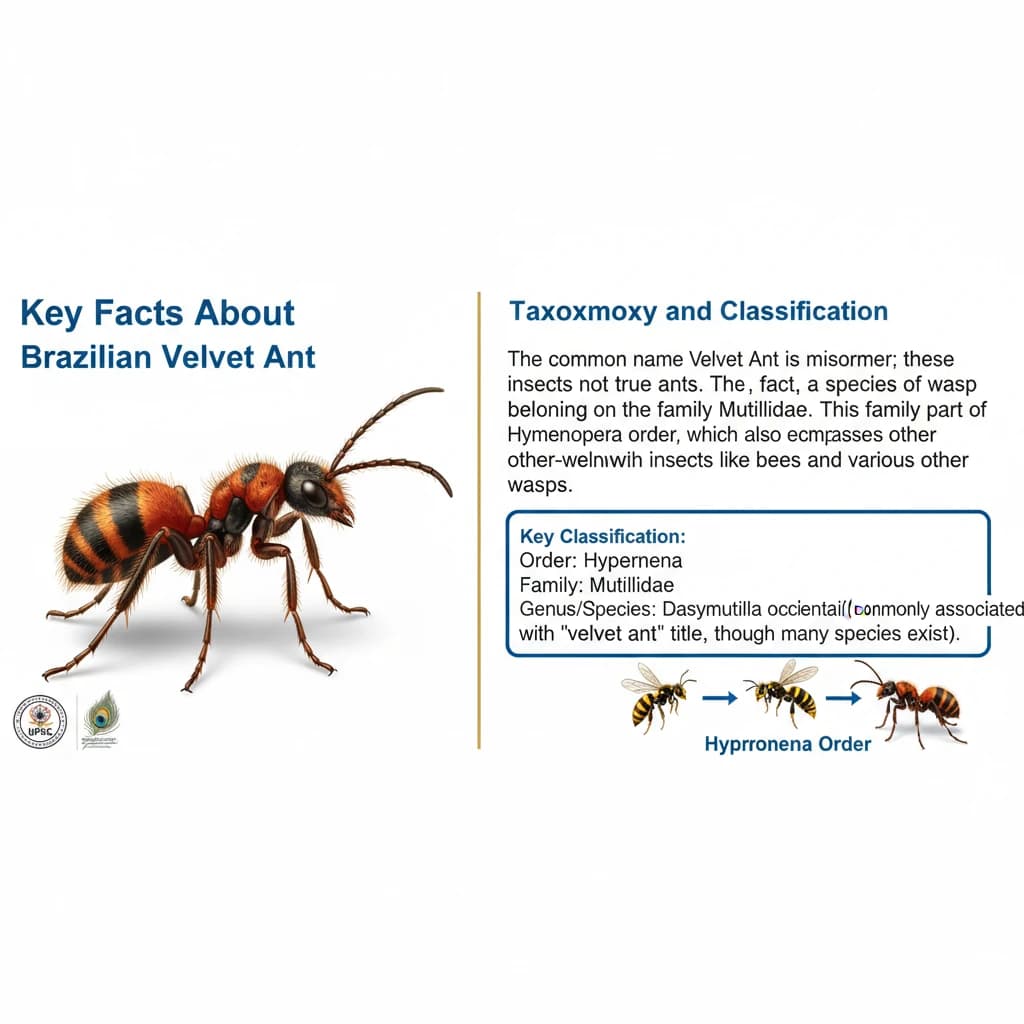
<h4>Taxonomy and Classification</h4><p>The common name <strong>Velvet Ant</strong> is a misnomer; these insects are not true ants. They are, in fact, a species of <strong>wasp</strong> belonging to the family <strong>Mutillidae</strong>.</p><p>This family is part of the <strong>Hymenoptera order</strong>, which also encompasses other well-known insects like <strong>bees</strong> and various other <strong>wasps</strong>.</p><div class='info-box'><p><strong>Key Classification:</strong><br>Order: <strong>Hymenoptera</strong><br>Family: <strong>Mutillidae</strong><br>Common Name: <strong>Velvet Ant</strong> (a misnomer)</p></div><h4>Distinctive Markings and Habitat</h4><p>Certain species, such as <strong>Traumatotilla bifulca</strong>, famously known as the <strong>Brazilian velvet ant</strong>, exhibit visually striking black and white markings.</p><p>These distinctively colored insects are typically found thriving in specific environments, including <strong>tropical savanna</strong> and <strong>dry shrub deserts</strong>.</p><h4>The Ultrablack Property</h4><p>A remarkable characteristic of female velvet ants is their display of an extraordinary <strong>ultrablack color</strong>. This unique property was first observed and documented in <strong>Traumatotilla bifulca</strong>.</p><p>The ultrablack surface possesses the ability to absorb nearly <strong>all visible light</strong>, making it appear exceptionally dark.</p><div class='key-point-box'><p>The <strong>ultrablack color</strong> is not solely due to pigmentation. It results from specialized <strong>microstructures</strong> present in the insect's <strong>exoskeleton</strong>, which are adept at trapping light.</p></div><h4>Functions of Ultrablack Pigmentation</h4><p>This ultrablack property serves several critical biological functions for the velvet ant. It significantly aids in <strong>camouflage</strong>, allowing the insect to blend seamlessly into its surroundings.</p><p>Furthermore, it is believed to play a role in <strong>temperature control</strong>, potentially by efficiently absorbing solar radiation. The ultrablack appearance is also thought to be important for <strong>attracting mates</strong>.</p><h4>Sexual Dimorphism in Coloration</h4><p>There is a clear distinction between the sexes regarding this unique trait. Only <strong>female velvet ants</strong> exhibit the full intensity of the <strong>ultrablack coloration</strong>.</p><p>While males may have similar black markings, they tend to <strong>reflect more light</strong> and do not possess the same profound ultrablack intensity as their female counterparts.</p><h4>Ecological Role</h4><p>Velvet ants contribute meaningfully to the health and functioning of their ecosystems. They perform the vital service of <strong>pollination</strong>, which is essential for the reproduction of many plant species.</p><p>Through their various activities, they play a part in maintaining overall <strong>ecological balance</strong> within their habitats.</p><h4>Evolutionary Significance: Convergent Evolution</h4><p>The ultrablack property in velvet ants is an excellent illustration of <strong>convergent evolution</strong>. This evolutionary process describes how unrelated species independently develop similar traits or adaptations.</p><div class='info-box'><p><strong>Convergent Evolution Definition:</strong> This is a process where organisms that are not closely related independently evolve similar traits as a result of adapting to similar environmental pressures or ecological niches.</p></div><p>Similar ultrablack adaptations have been observed in diverse and unrelated species, including certain <strong>birds-of-paradise</strong> and various <strong>deep-sea fish</strong>.</p><p>These adaptations universally serve crucial functions such as enhancing <strong>camouflage</strong> and improving <strong>survival</strong> prospects in their respective environments.</p><h4>Potential Scientific Applications</h4><p>Studying the ultrablack property of velvet ants offers valuable insights for scientific and technological advancements. It provides a deeper understanding of natural <strong>nanostructures</strong> and their light-absorbing capabilities.</p><p>This knowledge is inspiring breakthroughs in various fields, including the development of advanced <strong>stealth technology</strong> and significant improvements in the <strong>efficiency of solar panels</strong>.</p><div class='exam-tip-box'><p>Understanding <strong>biomimicry</strong> (learning from nature's designs) is a key concept for <strong>UPSC Mains GS-III</strong>, especially in questions related to science and technology applications.</p></div>
Concept Diagram

💡 Key Takeaways

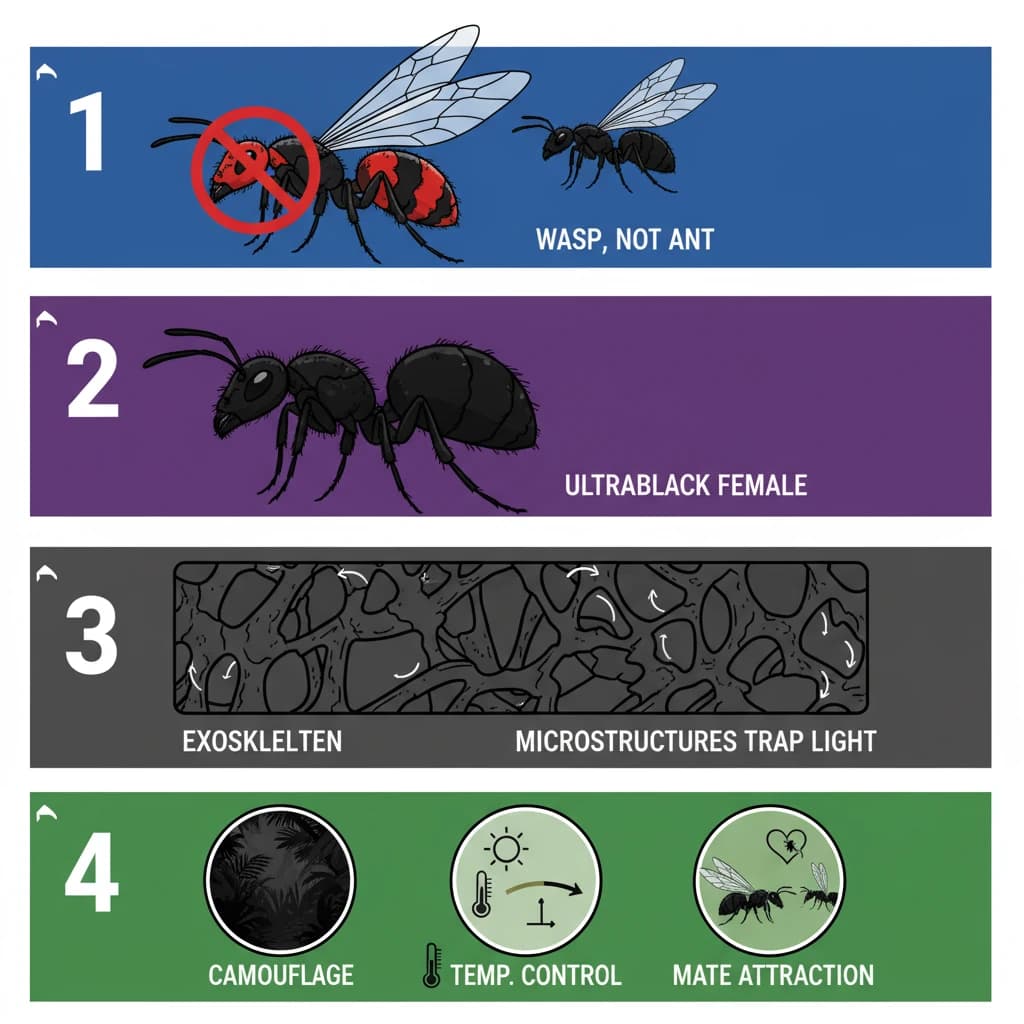
  • •Velvet ants are actually wasps (Mutillidae family), not true ants.
  • •Female Brazilian velvet ants (Traumatotilla bifulca) exhibit an extraordinary ultrablack color.
  • •This ultrablack property is due to specialized microstructures in their exoskeleton that trap nearly all visible light.
  • •The ultrablack coloration serves multiple functions: camouflage, temperature control, and mate attraction.
  • •It is a prime example of convergent evolution, a phenomenon also observed in diverse species like birds-of-paradise and deep-sea fish.
  • •Scientific applications of studying this property include advancements in stealth technology and improving solar panel efficiency.
  • •Beyond its unique physical traits, the velvet ant also plays a crucial ecological role as a pollinator.

🧠 Memory Techniques
Memory Aid
95% Verified Content

Related Topics

Loading related topics...
Explore:Environment And Ecology Topics·All Subjects·Daily Current Affairs·Editorial Analysis·Previous Year Questions·UPSC GPT