Loading page, please wait…
Vaidra Logo
Vaidra

Top 4 items + smart groups

UPSC GPT
New
Current Affairs
Daily Solutions
Daily Puzzle
Mains Evaluator

Version 2.0.0 • Built with ❤️ for UPSC aspirants

Loading...
Loading...
Loading...
Loading...
Loading...
Loading...
Loading...
Loading...
Loading...
Loading...
Loading...
Loading...
Loading...
Back
All Subjects

Topics

0 topics • 0 completed

Loading topics...
Loading...
Loading...
Loading...
Loading...
Loading...
Overall Progress0%

What are the Key Points From the Greenwashing Guidelines? - UPSC Environment And Ecology

What is What are the Key Points From the Greenwashing Guidelines? in UPSC Environment And Ecology?

What are the Key Points From the Greenwashing Guidelines? is a key topic under Environment And Ecology for UPSC Civil Services Examination. Key points include: Greenwashing is deceptive marketing of products as environmentally friendly without credible proof.. Guidelines aim to combat greenwashing, protecting consumers from misleading environmental claims.. Applicable to manufacturers, service providers, traders, ad agencies, and endorsers.. Understanding this topic is essential for both UPSC Prelims and Mains preparation.

Why is What are the Key Points From the Greenwashing Guidelines? important for UPSC exam?

What are the Key Points From the Greenwashing Guidelines? is a Medium-level topic in UPSC Environment And Ecology. It is tested in both Prelims (factual MCQs) and Mains (analytical answer writing). Previous year UPSC questions have frequently covered aspects of What are the Key Points From the Greenwashing Guidelines?, making it essential for comprehensive IAS preparation.

How to prepare What are the Key Points From the Greenwashing Guidelines? for UPSC?

To prepare What are the Key Points From the Greenwashing Guidelines? for UPSC: (1) Study the comprehensive notes covering all key concepts on Vaidra. (2) Practice previous year questions on this topic. (3) Connect it with current affairs using daily updates. (4) Revise using key takeaways and mind maps available for Environment And Ecology. (5) Write practice answers linking What are the Key Points From the Greenwashing Guidelines? to related GS Paper topics.

Key takeaways of What are the Key Points From the Greenwashing Guidelines? for UPSC

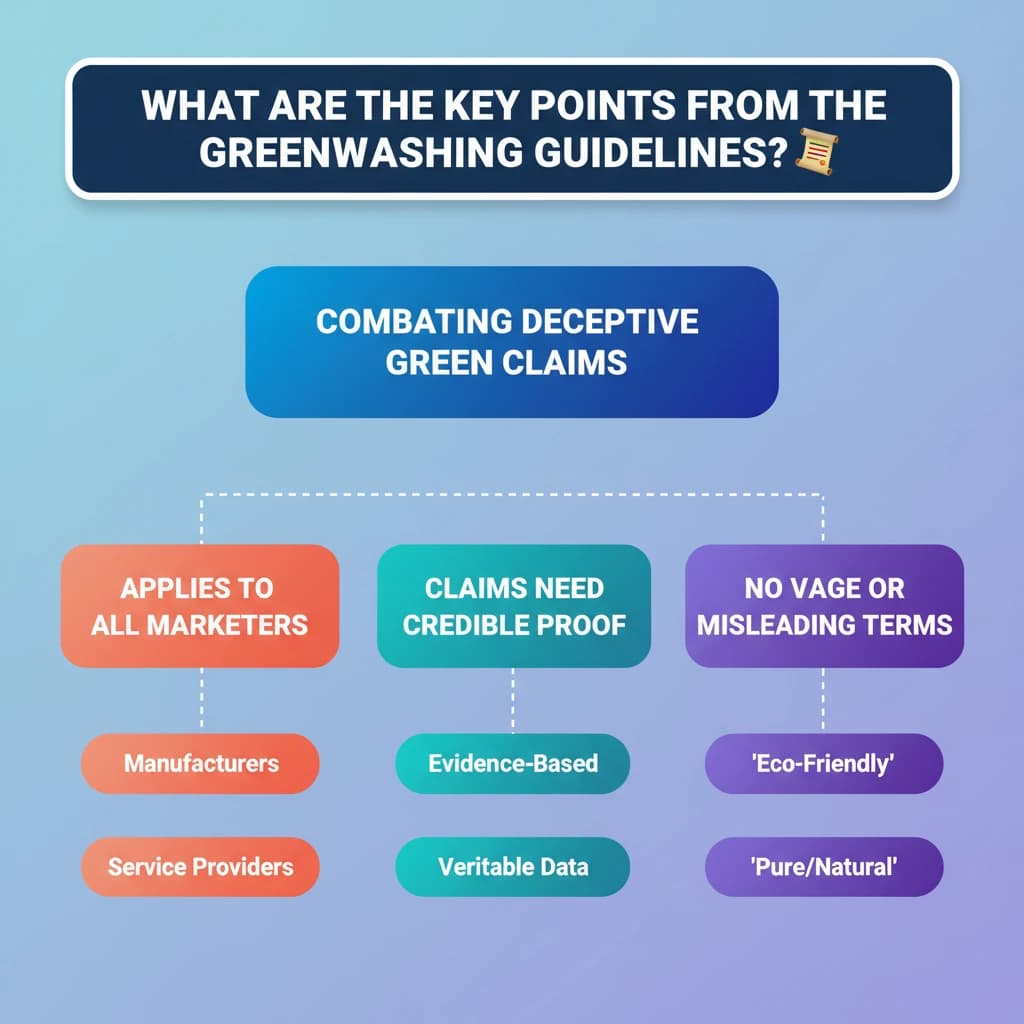
  • Greenwashing is deceptive marketing of products as environmentally friendly without credible proof.
  • Guidelines aim to combat greenwashing, protecting consumers from misleading environmental claims.
  • Applicable to manufacturers, service providers, traders, ad agencies, and endorsers.
  • All environmental claims (e.g., 'eco-friendly', 'zero emissions', 'natural') must be backed by credible evidence.
  • Vague, generic, or misleading environmental descriptions are prohibited.
  • Guidelines do not apply to general advertisements not specific to a product or service.
What are the Key Points From the Greenwashing Guidelines?

What are the Key Points From the Greenwashing Guidelines?

Medium⏱️ 9 min read✓ 95% Verified
environment and ecology

📖 Introduction

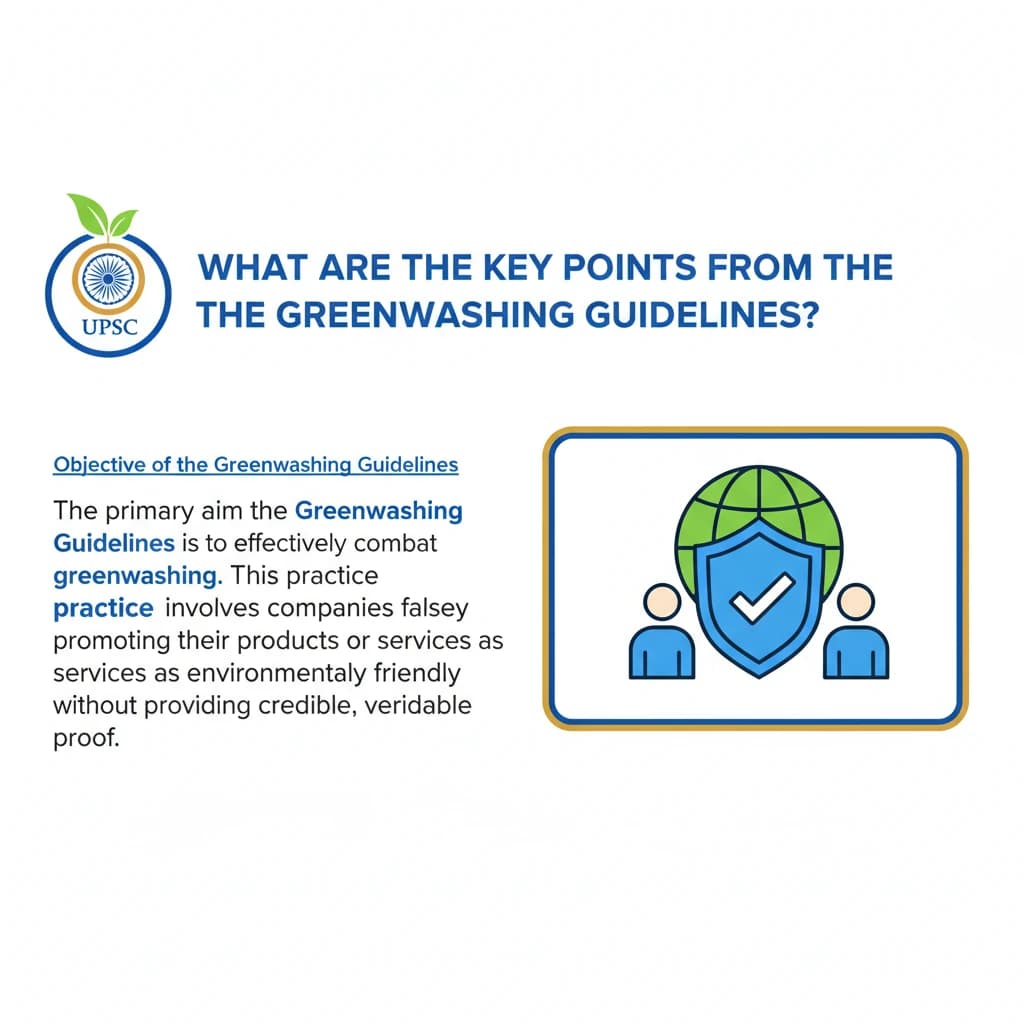
<h4>Objective of the Greenwashing Guidelines</h4><p>The primary aim of the <strong>Greenwashing Guidelines</strong> is to effectively combat <strong>greenwashing</strong>. This practice involves companies falsely promoting their products or services as environmentally friendly without providing credible, verifiable proof.</p><div class='key-point-box'><p>The core purpose is to protect <strong>consumers</strong> from deceptive marketing tactics and ensure transparency in environmental claims made by businesses.</p></div><h4>Scope and Applicability</h4><p>These guidelines have a broad scope, targeting various entities involved in the production and promotion of goods and services. They apply to <strong>manufacturers</strong>, <strong>service providers</strong>, <strong>traders</strong>, <strong>ad agencies</strong>, and <strong>endorsers</strong>.</p><p>A fundamental requirement is that all environmental claims made by these entities must be properly <strong>substantiated</strong> with credible evidence. This ensures accountability across the entire supply and marketing chain.</p><h4>Specific Requirements for Environmental Claims</h4><p>Terms commonly used to denote environmental benefits, such as <strong>eco-friendly</strong>, <strong>green</strong>, <strong>sustainable</strong>, and <strong>natural</strong>, must be backed by concrete evidence. Companies are required to avoid vague or misleading descriptions that could confuse consumers.</p><div class='info-box'><p>For instance, claims like <strong>100% eco-friendly</strong> or <strong>zero emissions</strong> are not allowed without precise, qualifying information. This information must detail the specific aspects of the product or service that justify such a claim.</p></div><p>It is important to note that these guidelines do not apply to general advertisements or communications that are not specific to a particular product or service. The focus remains on tangible product-related environmental claims.</p><div class='exam-tip-box'><p><strong>UPSC Insight:</strong> Understanding the specific terms requiring substantiation and the entities covered is crucial for questions on consumer protection and environmental governance in <strong>GS-II</strong> and <strong>GS-III</strong>.</p></div>
Concept Diagram

💡 Key Takeaways

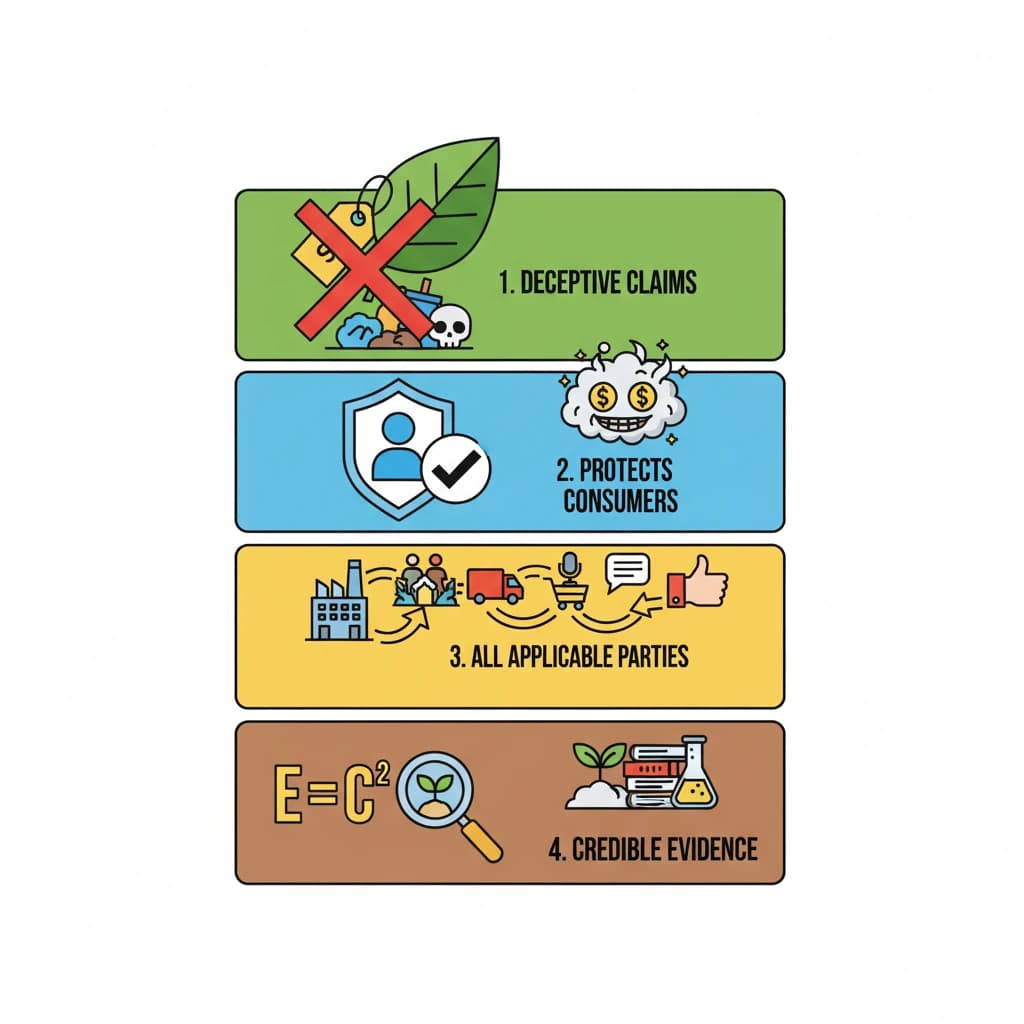
  • •Greenwashing is deceptive marketing of products as environmentally friendly without credible proof.
  • •Guidelines aim to combat greenwashing, protecting consumers from misleading environmental claims.
  • •Applicable to manufacturers, service providers, traders, ad agencies, and endorsers.
  • •All environmental claims (e.g., 'eco-friendly', 'zero emissions', 'natural') must be backed by credible evidence.
  • •Vague, generic, or misleading environmental descriptions are prohibited.
  • •Guidelines do not apply to general advertisements not specific to a product or service.

🧠 Memory Techniques
Memory Aid
95% Verified Content

📚 Reference Sources

•General knowledge of Consumer Protection (Greenwashing) Guidelines and regulatory frameworks (e.g., CCPA, ASCI in India, FTC in USA, ASA in UK)

Related Topics

Loading related topics...
Explore:Environment And Ecology Topics·All Subjects·Daily Current Affairs·Editorial Analysis·Previous Year Questions·UPSC GPT
What are the Key Points From the Greenwashing Guidelines? - UPSC Environment And Ecology