Loading page, please wait…
Vaidra Logo
Vaidra

Top 4 items + smart groups

UPSC GPT
New
Current Affairs
Daily Solutions
Daily Puzzle
Mains Evaluator

Version 2.0.0 • Built with ❤️ for UPSC aspirants

Loading...
Loading...
Loading...
Loading...
Loading...
Loading...
Loading...
Loading...
Loading...
Loading...
Loading...
Loading...
Loading...
Back
All Subjects

Topics

0 topics • 0 completed

Loading topics...
Loading...
Loading...
Loading...
Loading...
Loading...
Overall Progress0%

IUCN’s First Global Tree Assessment - UPSC Environment And Ecology

What is IUCN’s First Global Tree Assessment in UPSC Environment And Ecology?

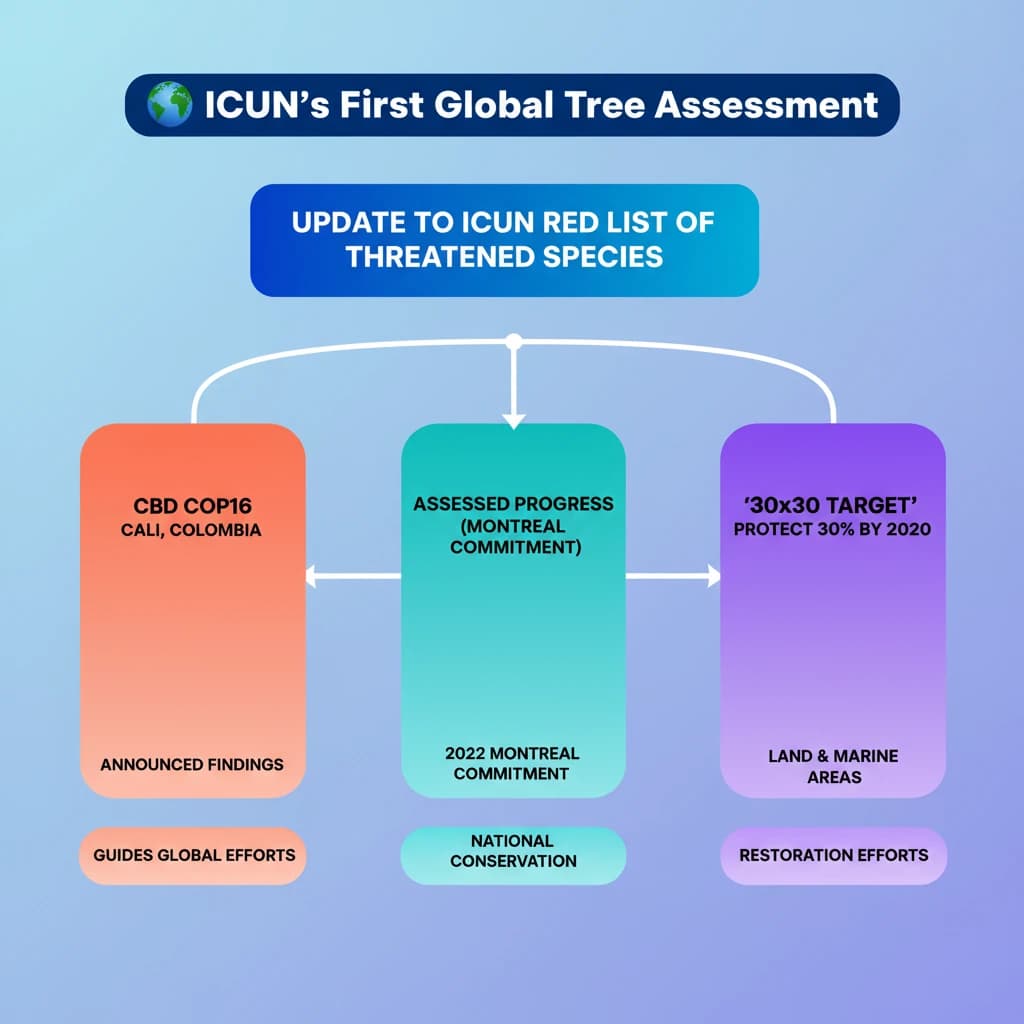
IUCN’s First Global Tree Assessment is a key topic under Environment And Ecology for UPSC Civil Services Examination. Key points include: The <strong>First Global Tree Assessment</strong> was published as an update to the <strong>IUCN Red List of Threatened Species</strong>.. Its findings were announced at <strong>CBD COP16</strong> in <strong>Cali, Colombia</strong>.. <strong>CBD COP16</strong> assessed progress towards the <strong>2022 Montreal commitment</strong>.. Understanding this topic is essential for both UPSC Prelims and Mains preparation.

Why is IUCN’s First Global Tree Assessment important for UPSC exam?

IUCN’s First Global Tree Assessment is a Medium-level topic in UPSC Environment And Ecology. It is tested in both Prelims (factual MCQs) and Mains (analytical answer writing). Previous year UPSC questions have frequently covered aspects of IUCN’s First Global Tree Assessment, making it essential for comprehensive IAS preparation.

How to prepare IUCN’s First Global Tree Assessment for UPSC?

To prepare IUCN’s First Global Tree Assessment for UPSC: (1) Study the comprehensive notes covering all key concepts on Vaidra. (2) Practice previous year questions on this topic. (3) Connect it with current affairs using daily updates. (4) Revise using key takeaways and mind maps available for Environment And Ecology. (5) Write practice answers linking IUCN’s First Global Tree Assessment to related GS Paper topics.

Key takeaways of IUCN’s First Global Tree Assessment for UPSC

  • The <strong>First Global Tree Assessment</strong> was published as an update to the <strong>IUCN Red List of Threatened Species</strong>.
  • Its findings were announced at <strong>CBD COP16</strong> in <strong>Cali, Colombia</strong>.
  • <strong>CBD COP16</strong> assessed progress towards the <strong>2022 Montreal commitment</strong>.
  • The <strong>Montreal commitment</strong> aims to protect <strong>30% of land and marine areas by 2030 ('30x30 target')</strong>.
  • The assessment provides critical data for guiding global and national tree conservation and restoration efforts.
IUCN’s First Global Tree Assessment

IUCN’s First Global Tree Assessment

Medium⏱️ 6 min read✓ 95% Verified
environment and ecology

📖 Introduction

<h4>Introduction to the Global Tree Assessment</h4><p>The <strong>First Global Tree Assessment</strong> was recently published, marking a significant milestone in global conservation efforts. This comprehensive assessment provides a detailed overview of the conservation status of tree species worldwide.</p><p>Its findings were incorporated as part of an update to the <strong>IUCN Red List of Threatened Species</strong>. This integration ensures that the conservation status of trees is officially recognized and contributes to broader biodiversity assessments.</p><div class='key-point-box'><p>The <strong>Global Tree Assessment</strong> is crucial for understanding the health of global forests and identifying species most at risk, thereby guiding targeted conservation actions.</p></div><h4>Announcement and Context: CBD COP16</h4><p>The findings of the <strong>First Global Tree Assessment</strong> were officially announced at the <strong>Convention on Biological Diversity (CBD COP16)</strong>. This major international conference took place in <strong>Cali, Colombia</strong>.</p><div class='info-box'><p><strong>CBD COP16</strong>, the <strong>2024 UN Biodiversity Conference of the Parties</strong>, convened to assess global progress. A primary objective was to evaluate how countries are advancing towards the <strong>2022 Montreal commitment</strong>.</p></div><p>The <strong>Montreal commitment</strong>, also known as the <strong>Kunming-Montreal Global Biodiversity Framework (GBF)</strong>, includes a critical target. It aims to protect <strong>30% of the planet’s land and marine areas by 2030</strong>, often referred to as the <strong>'30x30 target'</strong>.</p><div class='exam-tip-box'><p>Understanding the link between the <strong>Global Tree Assessment</strong>, <strong>IUCN Red List</strong>, and international conventions like <strong>CBD COP16</strong> is vital for <strong>UPSC GS3 (Environment)</strong>. Pay attention to the specific commitments like the <strong>30x30 target</strong>.</p></div>
Concept Diagram

💡 Key Takeaways

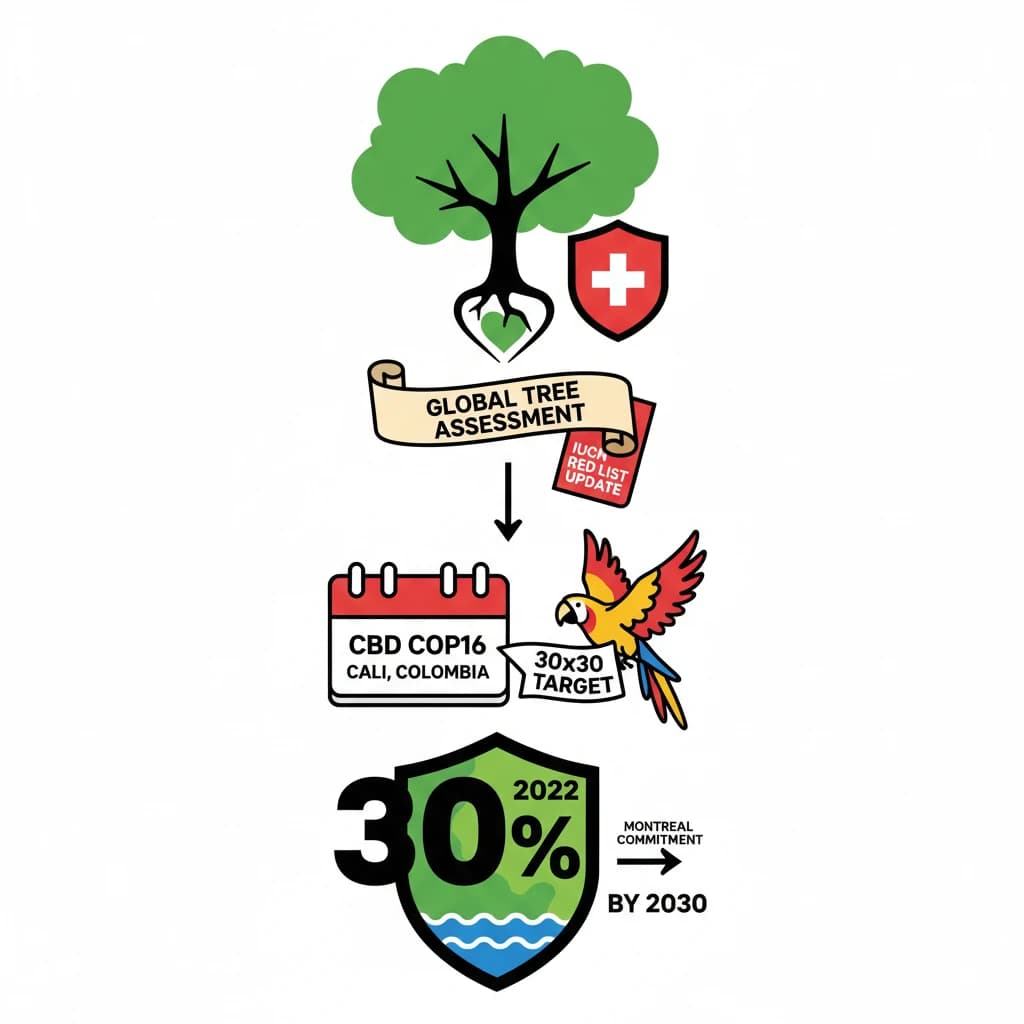
  • •The <strong>First Global Tree Assessment</strong> was published as an update to the <strong>IUCN Red List of Threatened Species</strong>.
  • •Its findings were announced at <strong>CBD COP16</strong> in <strong>Cali, Colombia</strong>.
  • •<strong>CBD COP16</strong> assessed progress towards the <strong>2022 Montreal commitment</strong>.
  • •The <strong>Montreal commitment</strong> aims to protect <strong>30% of land and marine areas by 2030 ('30x30 target')</strong>.
  • •The assessment provides critical data for guiding global and national tree conservation and restoration efforts.

🧠 Memory Techniques
Memory Aid
95% Verified Content

📚 Reference Sources

•IUCN Official Website (Red List and Global Tree Assessment sections)
•Convention on Biological Diversity (CBD) Official Website (COP16 and Kunming-Montreal GBF sections)

Related Topics

Loading related topics...
Explore:Environment And Ecology Topics·All Subjects·Daily Current Affairs·Editorial Analysis·Previous Year Questions·UPSC GPT
IUCN’s First Global Tree Assessment - UPSC Environment And Ecology