Loading page, please wait…
Climate Change Impact on Panama Canal - UPSC Environment And Ecology
What is Climate Change Impact on Panama Canal in UPSC Environment And Ecology?
Climate Change Impact on Panama Canal is a key topic under Environment And Ecology for UPSC Civil Services Examination. Key points include: Panama Canal faces severe operational challenges due to climate change-induced prolonged drought.. Reduced rainfall has led to critically low water levels in Lake Gatun, essential for the canal's lock system.. Ship traffic has significantly decreased, and larger vessels face restrictions, impacting transit efficiency.. Understanding this topic is essential for both UPSC Prelims and Mains preparation.
Why is Climate Change Impact on Panama Canal important for UPSC exam?
Climate Change Impact on Panama Canal is a Medium-level topic in UPSC Environment And Ecology. It is tested in both Prelims (factual MCQs) and Mains (analytical answer writing). Previous year UPSC questions have frequently covered aspects of Climate Change Impact on Panama Canal, making it essential for comprehensive IAS preparation.
How to prepare Climate Change Impact on Panama Canal for UPSC?
To prepare Climate Change Impact on Panama Canal for UPSC: (1) Study the comprehensive notes covering all key concepts on Vaidra. (2) Practice previous year questions on this topic. (3) Connect it with current affairs using daily updates. (4) Revise using key takeaways and mind maps available for Environment And Ecology. (5) Write practice answers linking Climate Change Impact on Panama Canal to related GS Paper topics.
Key takeaways of Climate Change Impact on Panama Canal for UPSC
- Panama Canal faces severe operational challenges due to climate change-induced prolonged drought.
- Reduced rainfall has led to critically low water levels in Lake Gatun, essential for the canal's lock system.
- Ship traffic has significantly decreased, and larger vessels face restrictions, impacting transit efficiency.
- As 5% of global shipping passes through, disruptions cause delayed shipments, increased fuel costs, and potential GDP losses worldwide.
- The crisis underscores the vulnerability of critical global infrastructure to climate change and the urgent need for adaptation strategies.
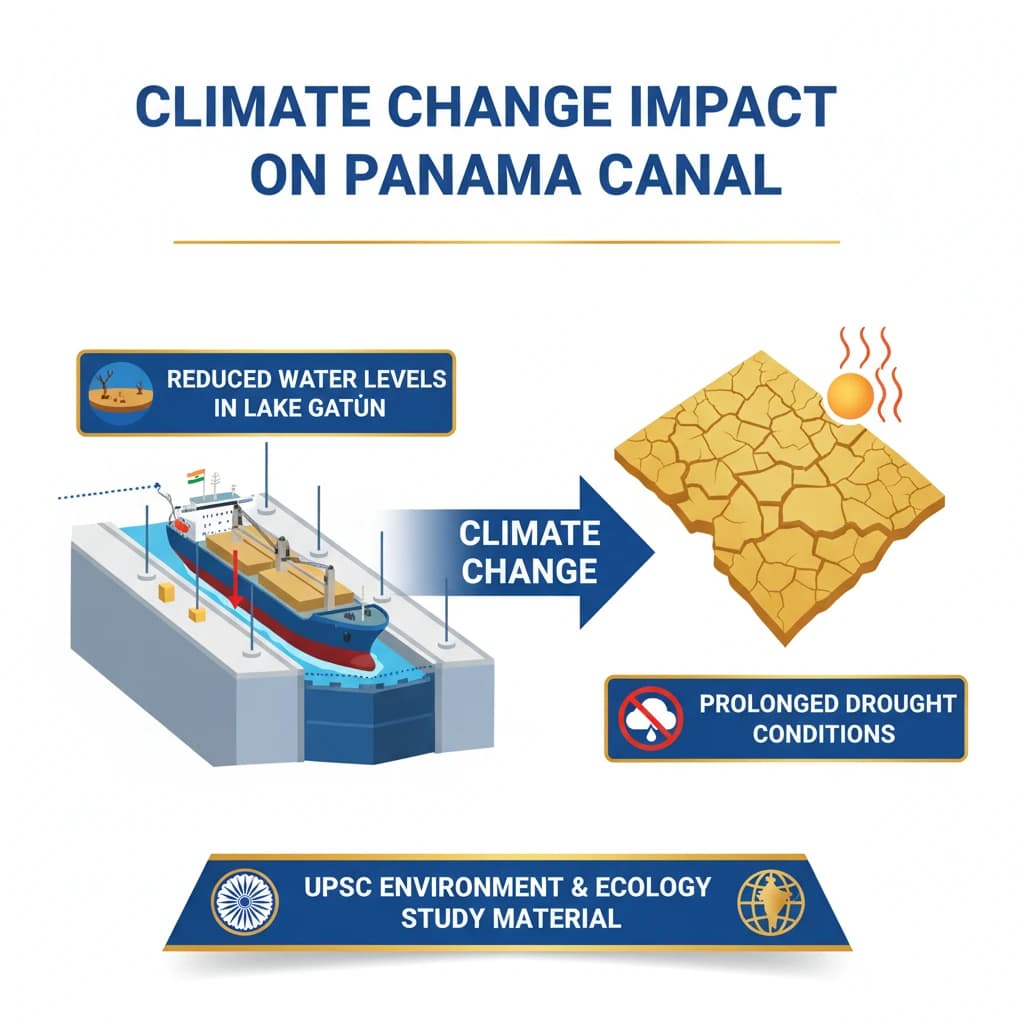
Climate Change Impact on Panama Canal
Medium⏱️ 6 min read
environment and ecology
📖 Introduction
Introduction to the Challenge
The Panama Canal, a critical global shipping lane, is currently facing significant operational challenges. These issues stem from prolonged drought conditions, which have been severely exacerbated by climate change.
This critical situation has led to drastically reduced water levels in Lake Gatun, the primary reservoir for the canal. Consequently, urgent discussions are underway regarding long-term solutions to ensure the sustained operation of this vital waterway.
Drought and its Impact on Shipping
The Panama Canal region has been experiencing a severe and prolonged drought, which commenced in early 2023.
Rainfall in October 2023 was recorded at a staggering 43% below average, making it the driest October the region has seen since the 1950s.
This acute lack of precipitation directly impacts Lake Gatun's water levels, which are indispensable for the canal's intricate lock system. As a direct result, traffic through the canal experienced a significant reduction, dropping to as low as 22 ships per day in December 2023.
This represents a substantial decrease from the typical daily passage rate of 36 to 38 ships, severely disrupting global maritime schedules and logistics.
Restrictions on Ship Size and Draft
The critically lower water levels within the canal impose direct restrictions on the size and draft of ships that can safely navigate its waters. Larger, heavier vessels are at a considerably higher risk of running aground in shallower sections, rendering their passage hazardous.
Furthermore, these larger ships demand a substantially greater volume of lake water to facilitate their passage through the canal's sophisticated lock system. These restrictions lead to extended waiting times and increased operational costs for global shipping companies.
Global Trade Implications
The Panama Canal serves as a pivotal artery in international commerce, handling approximately 5% of global shipping traffic. Disruptions to its operations therefore have far-reaching consequences, significantly affecting the worldwide supply chain.
These impacts include widespread delayed shipments, increased fuel usage as vessels are forced to take longer alternative routes, and potential GDP losses for economies reliant on the canal. The ripple effect of these disruptions is felt across various industries and consumer markets globally.
This scenario vividly illustrates the interconnectedness of environmental factors, critical infrastructure, and global economics, making it a highly relevant topic for UPSC GS-III (Environment and Economy) analyses.
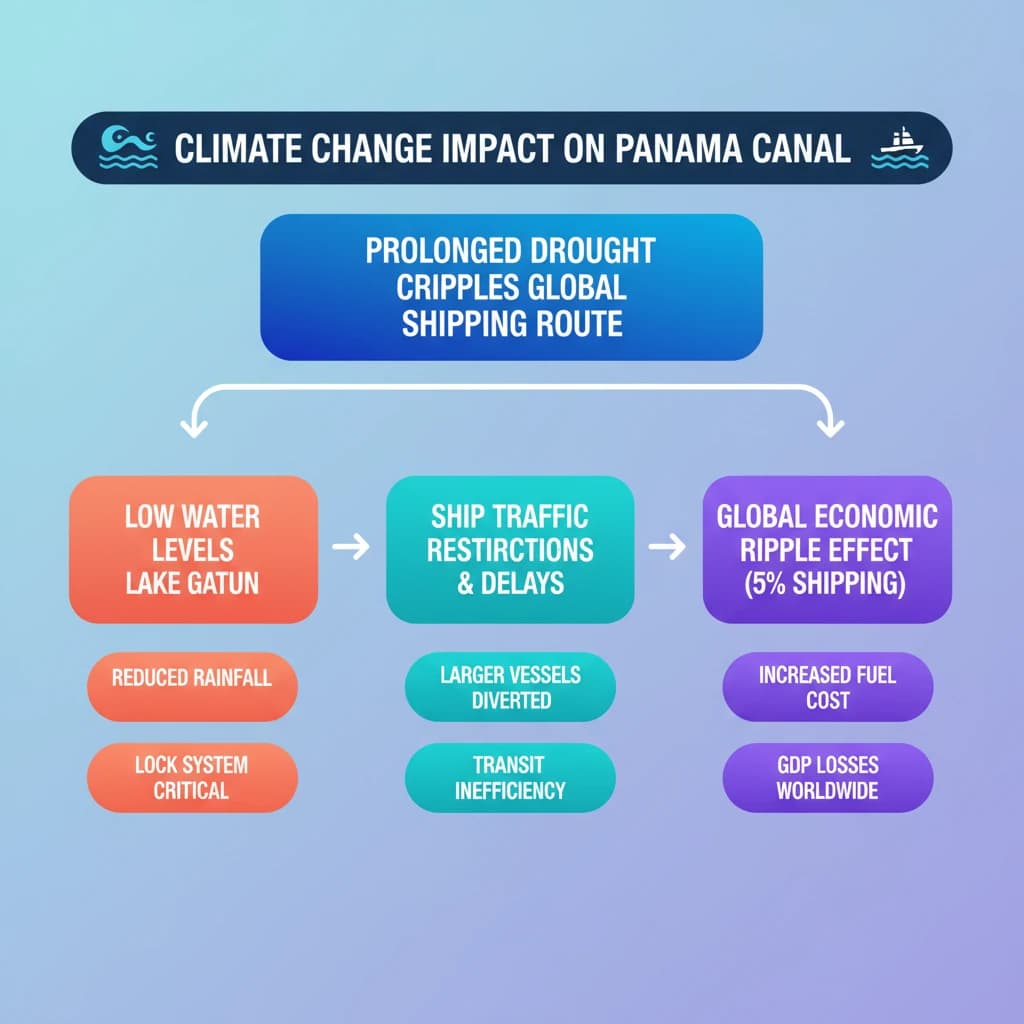
💡 Key Takeaways
- •Panama Canal faces severe operational challenges due to climate change-induced prolonged drought.
- •Reduced rainfall has led to critically low water levels in Lake Gatun, essential for the canal's lock system.
- •Ship traffic has significantly decreased, and larger vessels face restrictions, impacting transit efficiency.
- •As 5% of global shipping passes through, disruptions cause delayed shipments, increased fuel costs, and potential GDP losses worldwide.
- •The crisis underscores the vulnerability of critical global infrastructure to climate change and the urgent need for adaptation strategies.
🧠 Memory Techniques
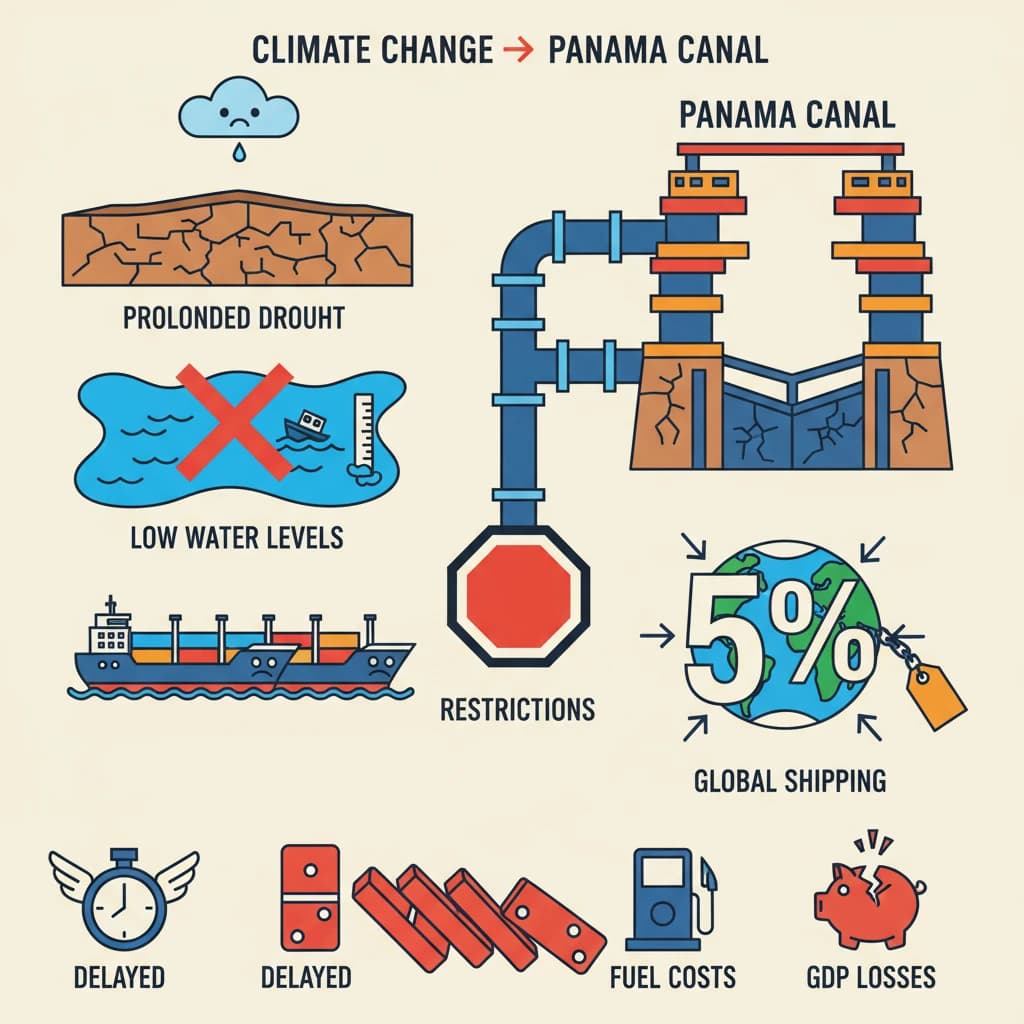
95% Verified Content
📚 Reference Sources
•General knowledge about Panama Canal operations and climate change impacts