Loading page, please wait…
Climate Finance - UPSC Environment And Ecology
What is Climate Finance in UPSC Environment And Ecology?
Climate Finance is a key topic under Environment And Ecology for UPSC Civil Services Examination. Key points include: Climate finance is funding for climate change actions (mitigation and adaptation).. Sources include public, private, and alternative mechanisms.. Crucial for reducing emissions, adapting to climate impacts, and achieving Paris Agreement goals.. Understanding this topic is essential for both UPSC Prelims and Mains preparation.
Why is Climate Finance important for UPSC exam?
Climate Finance is a Medium-level topic in UPSC Environment And Ecology. It is tested in both Prelims (factual MCQs) and Mains (analytical answer writing). Previous year UPSC questions have frequently covered aspects of Climate Finance, making it essential for comprehensive IAS preparation.
How to prepare Climate Finance for UPSC?
To prepare Climate Finance for UPSC: (1) Study the comprehensive notes covering all key concepts on Vaidra. (2) Practice previous year questions on this topic. (3) Connect it with current affairs using daily updates. (4) Revise using key takeaways and mind maps available for Environment And Ecology. (5) Write practice answers linking Climate Finance to related GS Paper topics.
Key takeaways of Climate Finance for UPSC
- Climate finance is funding for climate change actions (mitigation and adaptation).
- Sources include public, private, and alternative mechanisms.
- Crucial for reducing emissions, adapting to climate impacts, and achieving Paris Agreement goals.
- Key mechanisms include GCF, Green Bonds, and MDBs.
- Historical context involves UNFCCC, Kyoto, and Paris Agreements establishing financial commitments.
- Current relevance centers on the USD 100 billion goal, Loss & Damage fund, and India's climate targets.
Climate Finance
Medium⏱️ 7 min read
environment and ecology
📖 Introduction
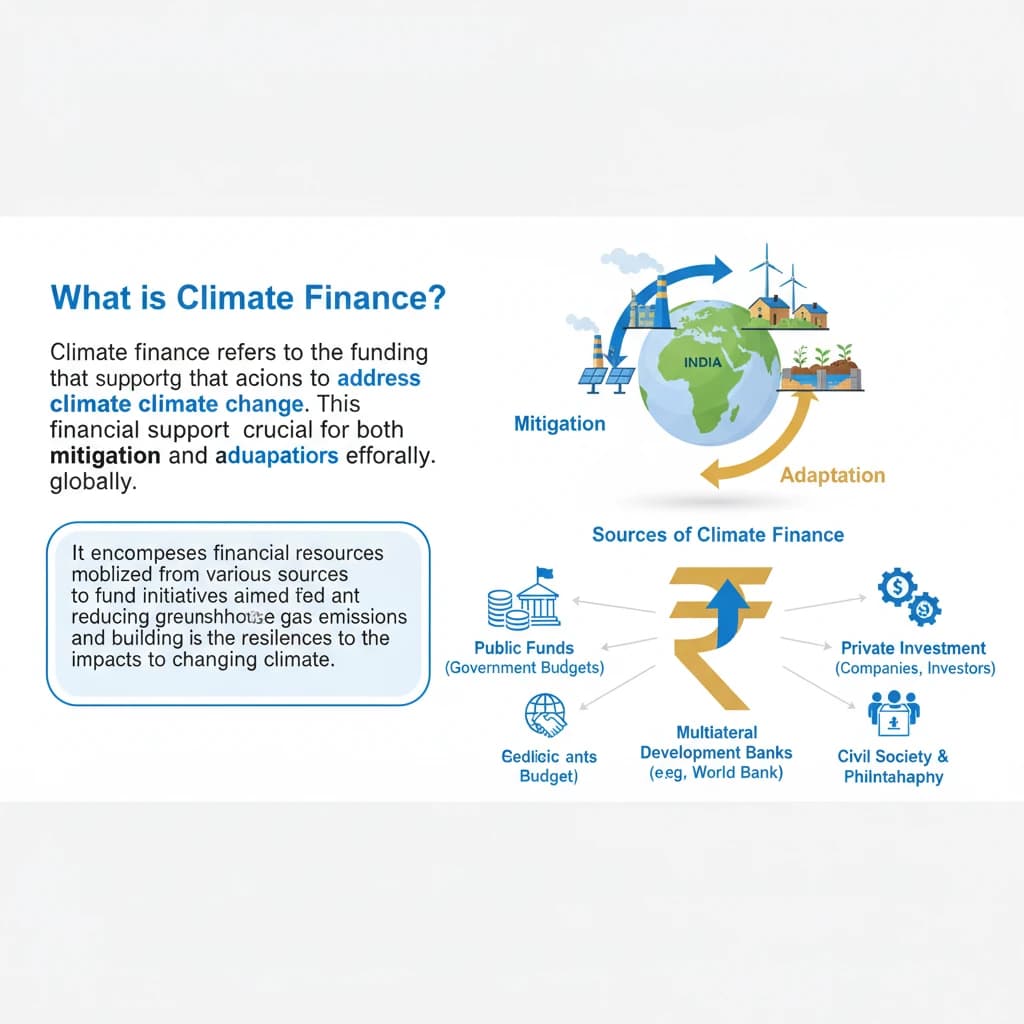
What is Climate Finance?
Climate finance refers to the funding that supports actions to address climate change. This financial support is crucial for both mitigation and adaptation efforts globally.
It encompasses financial resources mobilized from various sources to fund initiatives aimed at reducing greenhouse gas emissions and building resilience to the impacts of a changing climate.
Sources of Climate Finance
Climate finance can originate from a diverse range of sources, reflecting a global commitment to tackling climate change. These sources include public, private, and alternative mechanisms.
- Public Sources: This includes national governments, multilateral development banks (MDBs), and international climate funds.
- Private Sources: This involves investments from commercial banks, institutional investors, and corporations in climate-friendly projects.
- Alternative Sources: Innovative mechanisms like carbon markets, green bonds, and philanthropic contributions also play a role.
Why is Climate Finance Important?
Climate finance is paramount for achieving global climate goals and fostering sustainable development. It provides the necessary capital to implement ambitious climate actions.
It is vital for reducing emissions by supporting the transition to renewable energy, energy efficiency, and sustainable land use practices. It also facilitates adaptation to climate change effects, helping vulnerable communities build resilience against extreme weather events, sea-level rise, and other impacts.
Moreover, climate finance is critical for enabling countries, especially developing nations, to transition towards low-carbon economies. This transition requires significant investment in new technologies and infrastructure.
Understanding climate finance is essential for UPSC, particularly in GS Paper 3 (Environment & Economy). Questions often focus on its mechanisms, challenges, and India's role in its mobilization and utilization.
Ultimately, robust climate finance flows are indispensable for achieving the ambitious goals outlined in the Paris Agreement, particularly limiting global warming to well below 2°C, preferably to 1.5°C, above pre-industrial levels.
💡 Key Takeaways
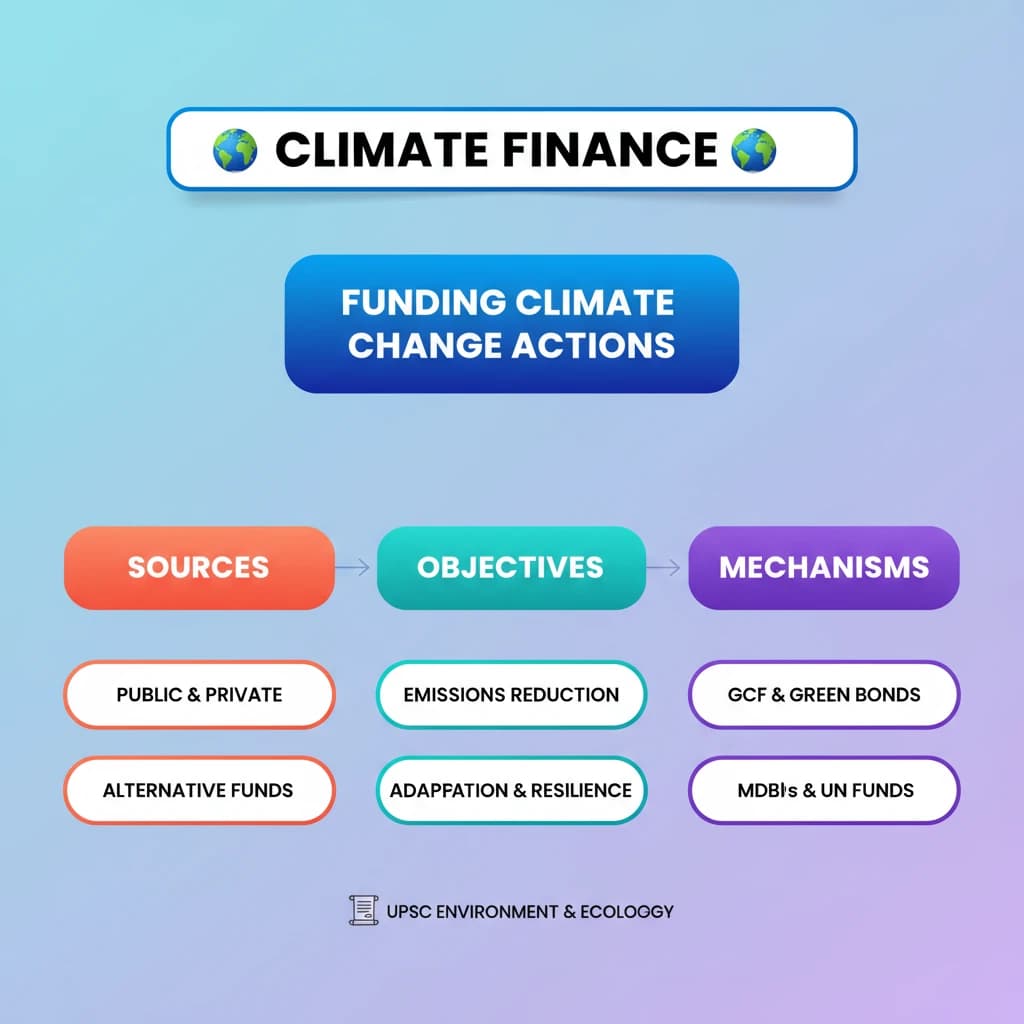
- •Climate finance is funding for climate change actions (mitigation and adaptation).
- •Sources include public, private, and alternative mechanisms.
- •Crucial for reducing emissions, adapting to climate impacts, and achieving Paris Agreement goals.
- •Key mechanisms include GCF, Green Bonds, and MDBs.
- •Historical context involves UNFCCC, Kyoto, and Paris Agreements establishing financial commitments.
- •Current relevance centers on the USD 100 billion goal, Loss & Damage fund, and India's climate targets.
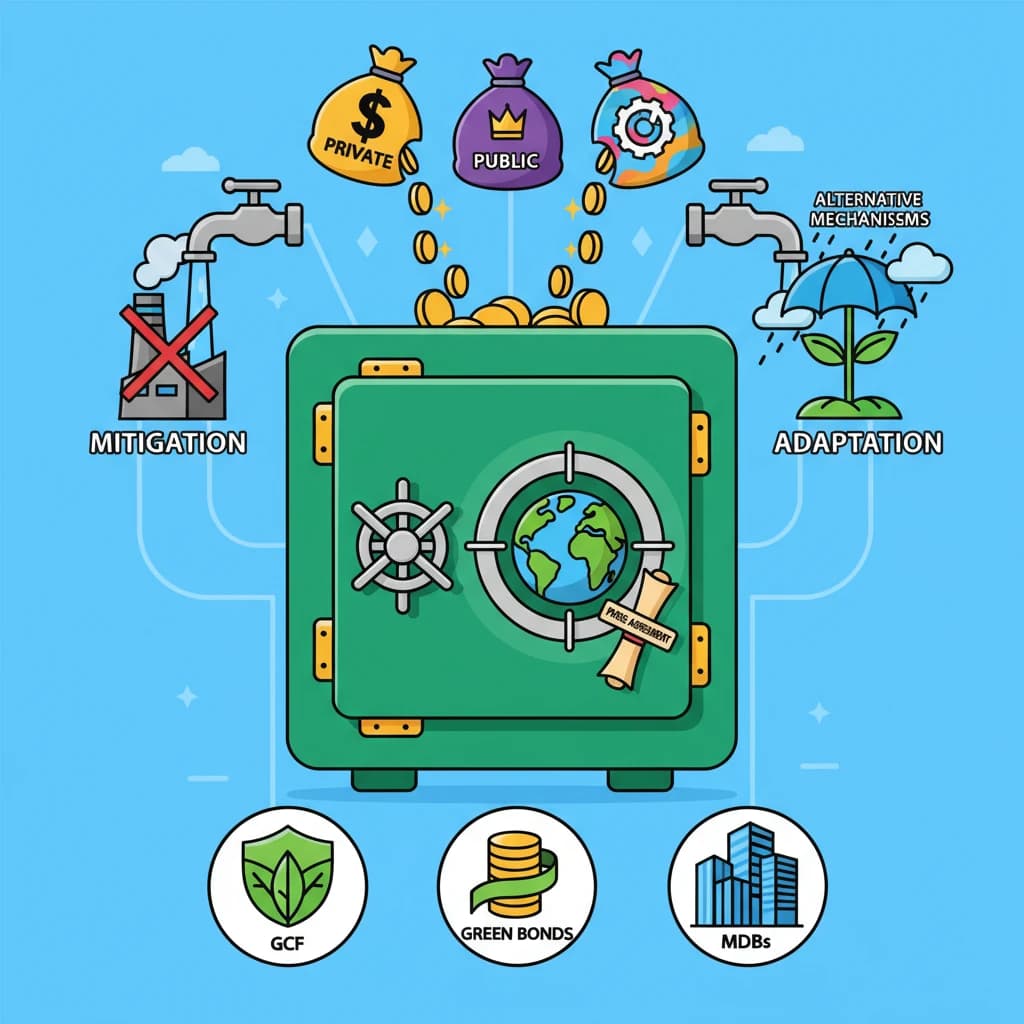
🧠 Memory Techniques
95% Verified Content
📚 Reference Sources
•Green Climate Fund (GCF) official website
•Intergovernmental Panel on Climate Change (IPCC) reports
•Ministry of Finance, Government of India reports on green finance
•World Bank and Asian Development Bank publications on climate finance