Loading page, please wait…
Coastal Regulation Zone (CRZ) - UPSC Environment And Ecology
What is Coastal Regulation Zone (CRZ) in UPSC Environment And Ecology?
Coastal Regulation Zone (CRZ) is a key topic under Environment And Ecology for UPSC Civil Services Examination. Key points include: CRZ was first notified in 1991 under the Environment Protection Act, 1986 by MoEF.. It regulates activities in coastal areas to protect environment and promote sustainable development.. CRZ includes land between HTL & LTL, and a 100m stretch along tidal rivers/estuaries.. Understanding this topic is essential for both UPSC Prelims and Mains preparation.
Why is Coastal Regulation Zone (CRZ) important for UPSC exam?
Coastal Regulation Zone (CRZ) is a Medium-level topic in UPSC Environment And Ecology. It is tested in both Prelims (factual MCQs) and Mains (analytical answer writing). Previous year UPSC questions have frequently covered aspects of Coastal Regulation Zone (CRZ), making it essential for comprehensive IAS preparation.
How to prepare Coastal Regulation Zone (CRZ) for UPSC?
To prepare Coastal Regulation Zone (CRZ) for UPSC: (1) Study the comprehensive notes covering all key concepts on Vaidra. (2) Practice previous year questions on this topic. (3) Connect it with current affairs using daily updates. (4) Revise using key takeaways and mind maps available for Environment And Ecology. (5) Write practice answers linking Coastal Regulation Zone (CRZ) to related GS Paper topics.
Key takeaways of Coastal Regulation Zone (CRZ) for UPSC
- CRZ was first notified in 1991 under the Environment Protection Act, 1986 by MoEF.
- It regulates activities in coastal areas to protect environment and promote sustainable development.
- CRZ includes land between HTL & LTL, and a 100m stretch along tidal rivers/estuaries.
- Categorized into CRZ-I (ecologically sensitive), CRZ-II (built-up), CRZ-III (undisturbed), CRZ-IV (aquatic area).
- Each CRZ category has specific permissible and prohibited activities to balance development and conservation.
Coastal Regulation Zone (CRZ)
Medium⏱️ 8 min read
environment and ecology
📖 Introduction
Introduction to Coastal Regulation Zone (CRZ)
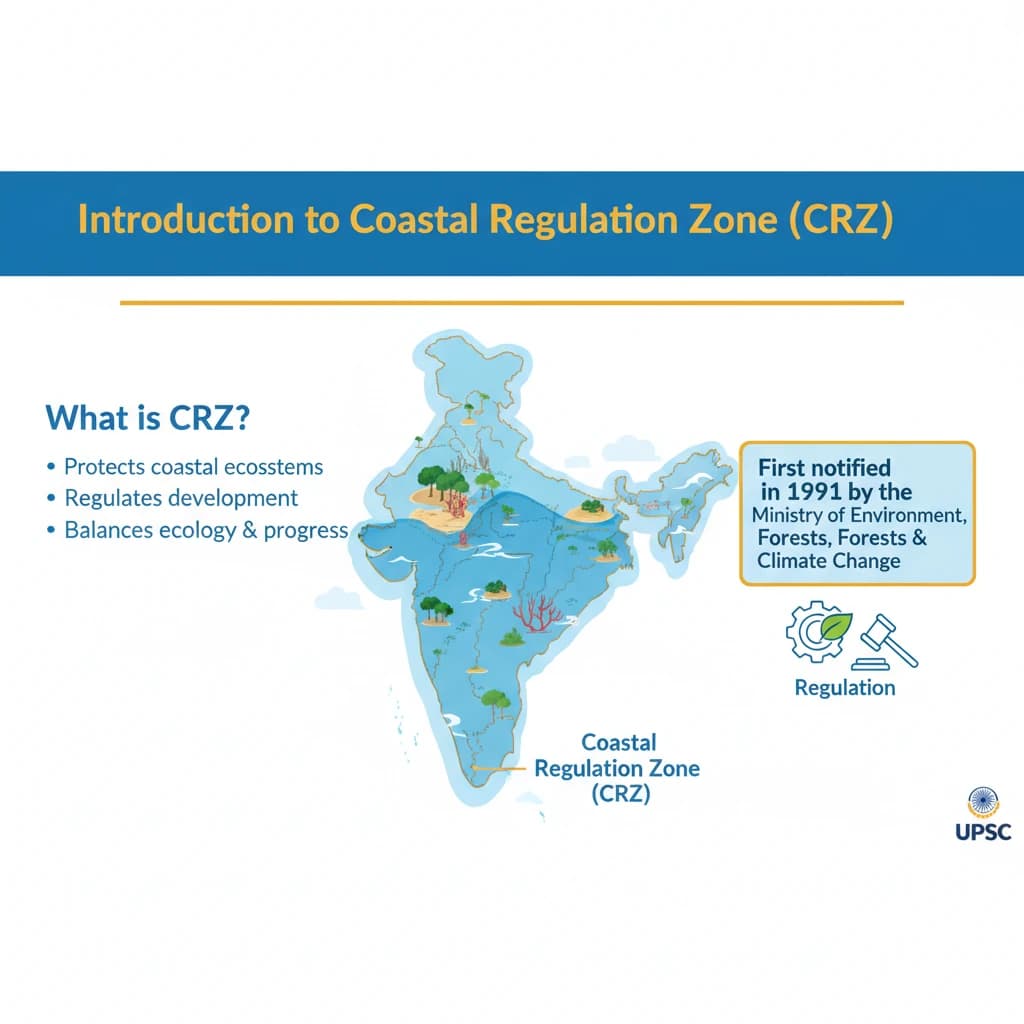
The Coastal Regulation Zone (CRZ) is a designated area near the coastline governed by specific rules. Its primary purpose is to protect the environment and promote sustainable development in these ecologically sensitive regions.
The CRZ Notification aims to regulate developmental activities along the Indian coastline to ensure ecological balance and prevent degradation of coastal ecosystems.
Origin and Legal Basis of CRZ
The CRZ was first officially notified in 1991 by the Ministry of Environment and Forests (MoEF). This notification was issued under the provisions of the Environment Protection Act of 1986, providing it with a strong legal framework.
Act: Environment Protection Act, 1986
Notifying Authority: Ministry of Environment and Forests (MoEF)
First Notification Year: 1991
Defining the Coastal Regulation Zone Area
The CRZ encompasses specific geographical stretches that are influenced by tidal action and proximity to the sea and associated water bodies. Understanding its boundaries is crucial for regulatory compliance.
It includes the land area between the High Tide Line (HTL) and the Low Tide Line (LTL), which is directly exposed to tidal fluctuations.
A 100-metre stretch along the banks of various inland water bodies is also included. This applies to rivers, estuaries, backwaters, and creeks that are significantly affected by tides.
The river banks on either side of estuaries, where the sea's influence extends, are also part of the CRZ.
Categorization of CRZ
To implement nuanced regulations based on ecological sensitivity and existing development, the CRZ is categorized into five distinct zones. Each zone has specific permissible and restricted activities.
CRZ Categories:
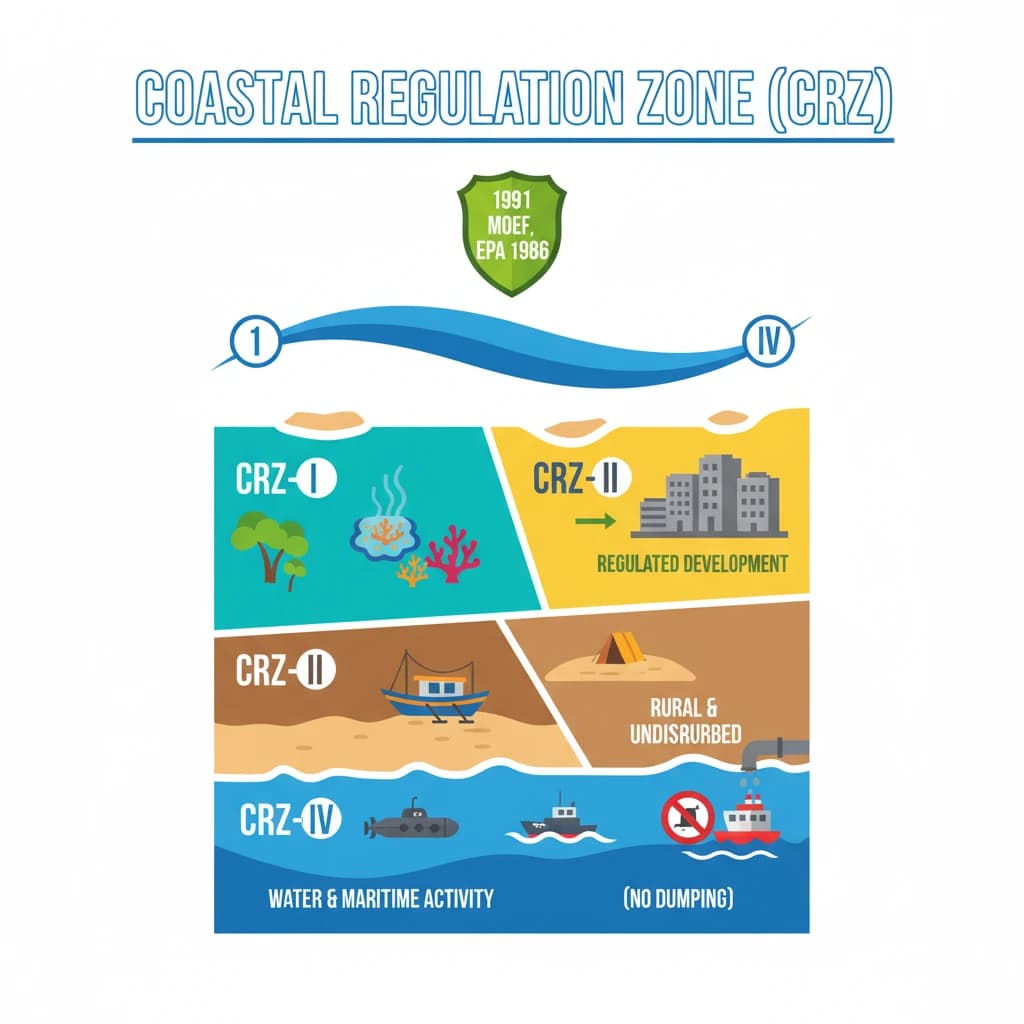
- CRZ-I: Ecologically Sensitive Areas
- CRZ-II: Built-up Areas
- CRZ-III: Undisturbed Areas
- CRZ-IV: Aquatic Area
- CRZ-V: Specific to Goa (not detailed in source content, but implied by 'five zones')
CRZ-I: Ecologically Sensitive Areas
CRZ-I zones are designated as the most ecologically sensitive regions within the coastal stretch. These areas require the highest level of protection due to their invaluable biodiversity and ecological functions.
Examples include mangroves, vital for coastal protection and biodiversity.
Coral reefs, critical marine ecosystems, also fall under this category.
Other examples are biosphere reserves and other designated protected areas along the coast.
CRZ-II: Built-up Areas
CRZ-II includes areas that are already significantly developed. These are primarily villages and towns that have established infrastructure and human settlements.
Regulations in CRZ-II focus on managing further development to ensure it is sustainable and does not degrade the existing coastal environment.
CRZ-III: Undisturbed Areas
CRZ-III covers coastal stretches that are relatively undisturbed and do not fit into either the ecologically sensitive CRZ-I or the built-up CRZ-II categories.
These are typically rural areas with limited development. The regulations here aim to conserve their natural state while allowing for traditional livelihoods.
CRZ-IV: Aquatic Area
CRZ-IV specifically refers to the aquatic area within the coastal zone. This category extends from the Low Tide Line (LTL) outwards up to the territorial limits of the country.
Activities in this zone, such as fishing, dredging, and waste disposal, are strictly regulated to protect marine life and water quality.
UPSC Insight: Understanding the specific permissible and prohibited activities within each CRZ category is crucial for both Prelims (factual recall) and Mains (policy analysis) questions. Pay attention to the rationale behind each classification.
💡 Key Takeaways
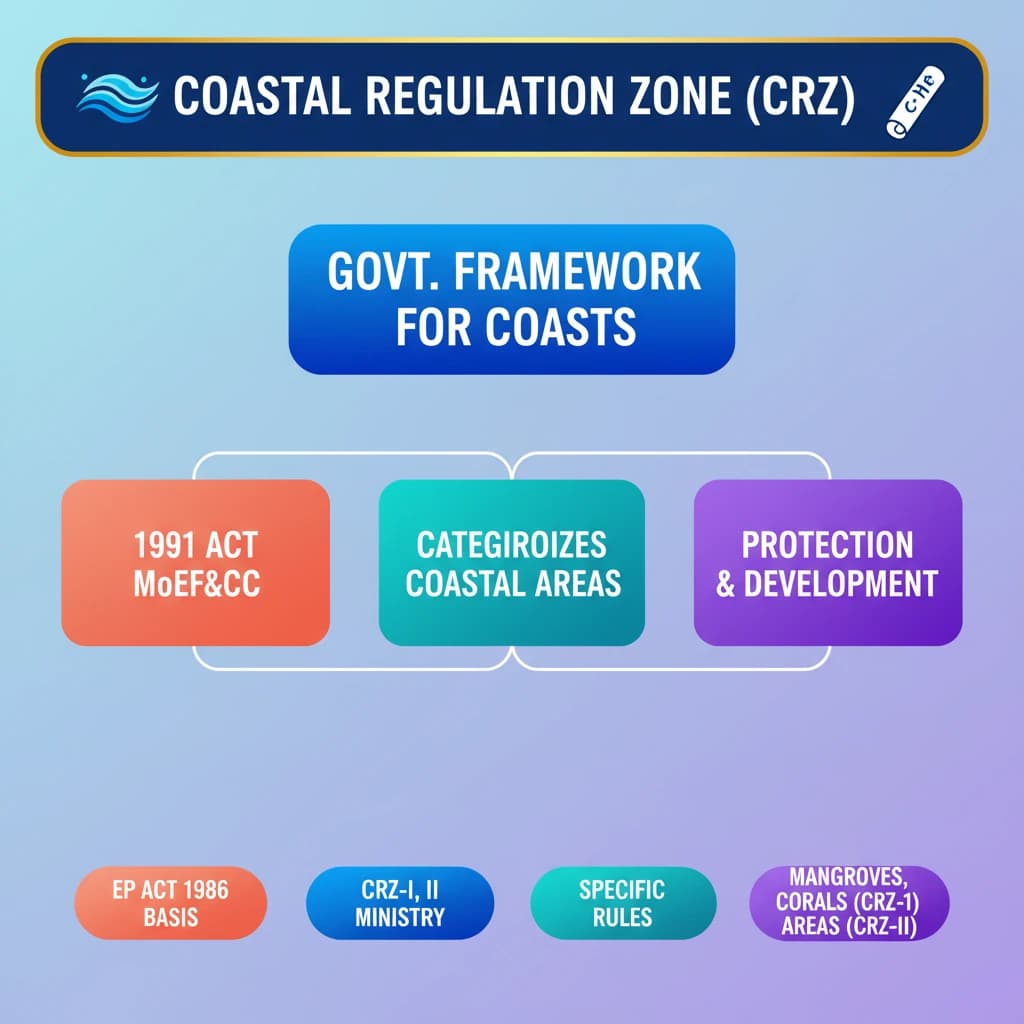
- •CRZ was first notified in 1991 under the Environment Protection Act, 1986 by MoEF.
- •It regulates activities in coastal areas to protect environment and promote sustainable development.
- •CRZ includes land between HTL & LTL, and a 100m stretch along tidal rivers/estuaries.
- •Categorized into CRZ-I (ecologically sensitive), CRZ-II (built-up), CRZ-III (undisturbed), CRZ-IV (aquatic area).
- •Each CRZ category has specific permissible and prohibited activities to balance development and conservation.
🧠 Memory Techniques
95% Verified Content
📚 Reference Sources
•Ministry of Environment, Forest and Climate Change (MoEFCC) Notifications (general knowledge of CRZ evolution)