Loading page, please wait…
Crocodile Conservation Project: Implementation & Achievements - UPSC Environment And Ecology
What is Crocodile Conservation Project: Implementation & Achievements in UPSC Environment And Ecology?
Crocodile Conservation Project: Implementation & Achievements is a key topic under Environment And Ecology for UPSC Civil Services Examination. Key points include: Crocodile Conservation Project launched in 1975 with UNDP and FAO support.. Key sanctuaries: Bhitarkanika (saltwater crocodiles) and National Chambal (gharials).. Saltwater crocodile population has significantly risen since 1975.. Understanding this topic is essential for both UPSC Prelims and Mains preparation.
Why is Crocodile Conservation Project: Implementation & Achievements important for UPSC exam?
Crocodile Conservation Project: Implementation & Achievements is a Medium-level topic in UPSC Environment And Ecology. It is tested in both Prelims (factual MCQs) and Mains (analytical answer writing). Previous year UPSC questions have frequently covered aspects of Crocodile Conservation Project: Implementation & Achievements, making it essential for comprehensive IAS preparation.
How to prepare Crocodile Conservation Project: Implementation & Achievements for UPSC?
To prepare Crocodile Conservation Project: Implementation & Achievements for UPSC: (1) Study the comprehensive notes covering all key concepts on Vaidra. (2) Practice previous year questions on this topic. (3) Connect it with current affairs using daily updates. (4) Revise using key takeaways and mind maps available for Environment And Ecology. (5) Write practice answers linking Crocodile Conservation Project: Implementation & Achievements to related GS Paper topics.
Key takeaways of Crocodile Conservation Project: Implementation & Achievements for UPSC
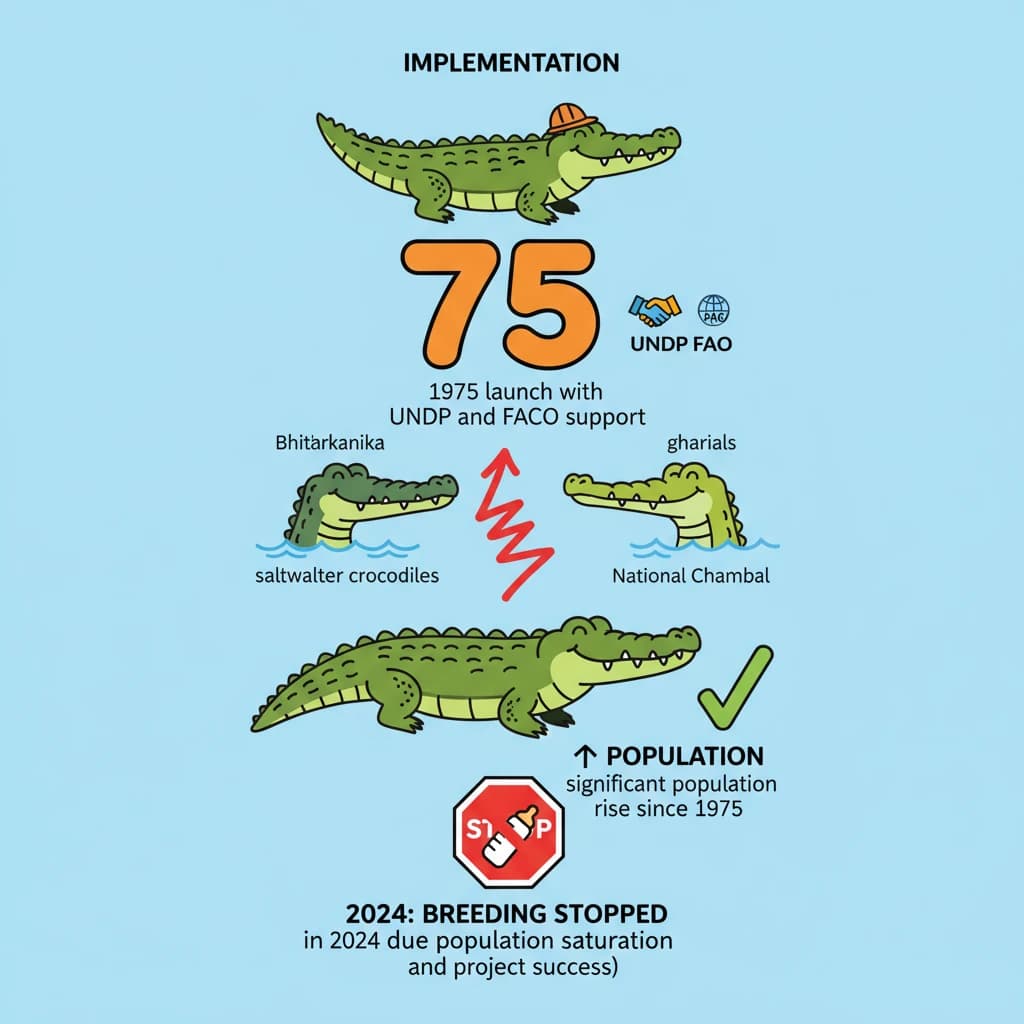
- Crocodile Conservation Project launched in 1975 with UNDP and FAO support.
- Key sanctuaries: Bhitarkanika (saltwater crocodiles) and National Chambal (gharials).
- Saltwater crocodile population has significantly risen since 1975.
- Breeding program stopped in 2024 due to population saturation, showing project success.
- Eggs still collected annually for tourist breeding, linking conservation to education/tourism.
Crocodile Conservation Project: Implementation & Achievements
Medium⏱️ 5 min read
environment and ecology
📖 Introduction
Project Initiation and Support
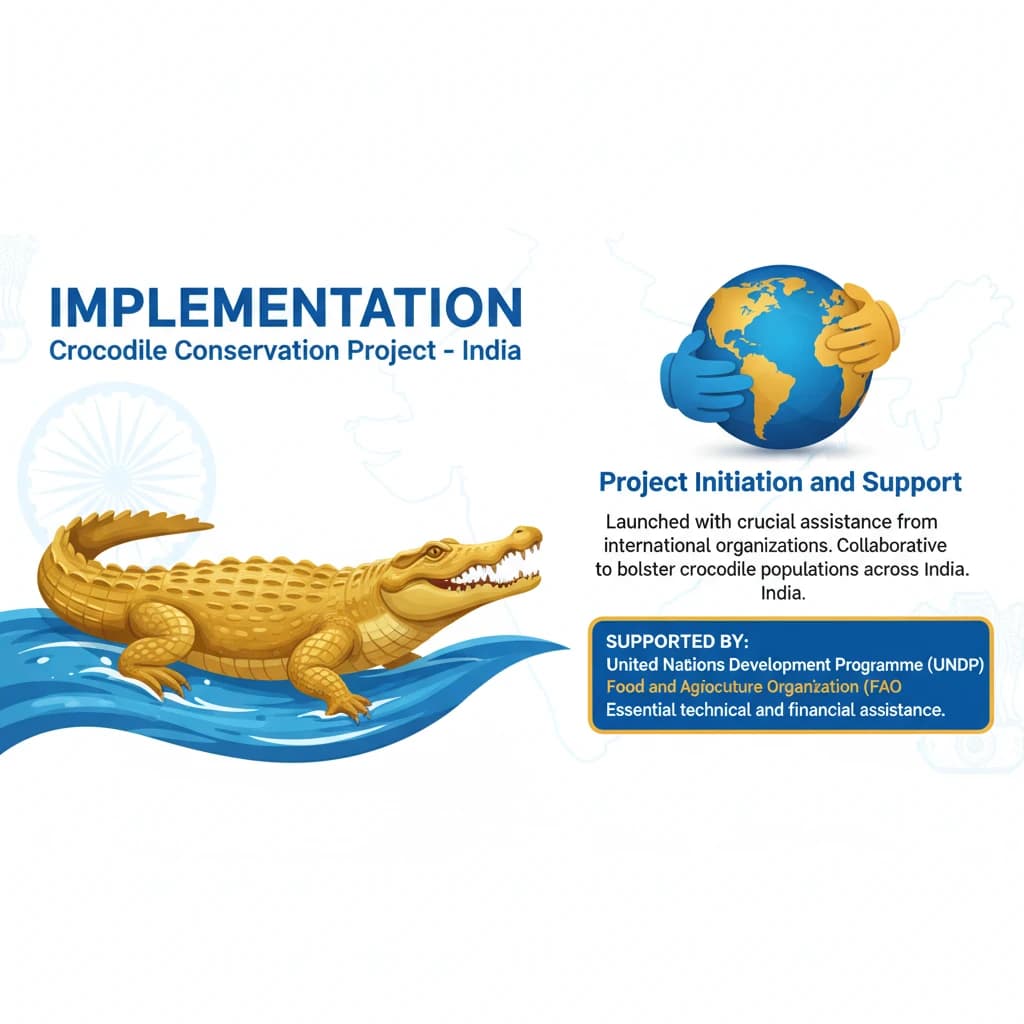
The Crocodile Conservation Project was launched with crucial assistance from international organizations. This collaborative effort aimed to bolster crocodile populations across India.
The project received support from the United Nations Development Programme (UNDP) and the Food and Agriculture Organization (FAO). These partnerships provided essential technical and financial backing.
Key Conservation Sanctuaries
Several protected areas were identified and strengthened to serve as vital habitats for different crocodile species. These sanctuaries play a pivotal role in the species' recovery.
- Bhitarkanika National Park (Odisha): This sanctuary is renowned for its successful conservation of saltwater crocodiles. It provides an ideal estuarine environment for their breeding and growth.
- National Chambal Sanctuary (spanning Madhya Pradesh, Rajasthan, and Uttar Pradesh): This extensive riverine sanctuary is critical for the protection of gharials, a critically endangered crocodile species.
Project Achievements and Adaptations
Since its inception, the project has demonstrated significant success, particularly in the recovery of certain crocodile populations. This success has led to adaptive management strategies.
The saltwater crocodile population has shown a steady and encouraging rise since the launch of the Crocodile Conservation Project in 1975. This marks a major achievement in wildlife conservation.
Due to the achieved population saturation, the active crocodile breeding program within the park was discontinued in 2024. This decision reflects the success of initial conservation efforts.
However, the collection of eggs continues annually. These eggs are subsequently bred, primarily for educational and tourism purposes, showcasing the species to the public.
Remember the specific species-sanctuary pairings (saltwater crocodile with Bhitarkanika, gharials with Chambal) as these are common factual questions in UPSC Prelims.
💡 Key Takeaways
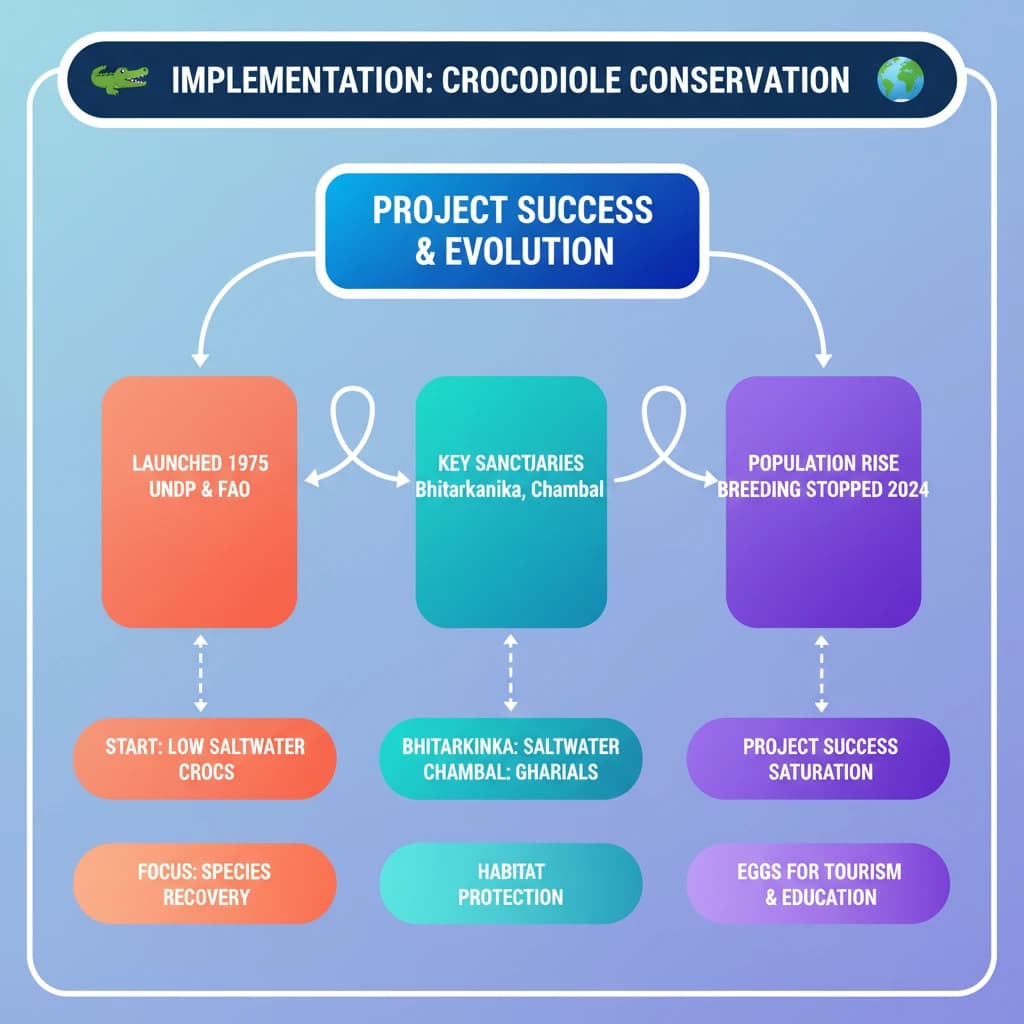
- •Crocodile Conservation Project launched in 1975 with UNDP and FAO support.
- •Key sanctuaries: Bhitarkanika (saltwater crocodiles) and National Chambal (gharials).
- •Saltwater crocodile population has significantly risen since 1975.
- •Breeding program stopped in 2024 due to population saturation, showing project success.
- •Eggs still collected annually for tourist breeding, linking conservation to education/tourism.
🧠 Memory Techniques
95% Verified Content
📚 Reference Sources
•General knowledge about Indian wildlife conservation projects