Loading page, please wait…
Dicliptera Polymorpha - UPSC Environment And Ecology
What is Dicliptera Polymorpha in UPSC Environment And Ecology?
Dicliptera Polymorpha is a key topic under Environment And Ecology for UPSC Civil Services Examination. Key points include: Dicliptera Polymorpha, a new plant species, was discovered by ARI scientists in the Northern Western Ghats.. It exhibits unique fire resilience, surviving summer droughts and adapting to grassland fires.. The species has a dual blooming pattern: post-monsoon (Nov-Apr) and again post-fire (May-Jun).. Understanding this topic is essential for both UPSC Prelims and Mains preparation.
Why is Dicliptera Polymorpha important for UPSC exam?
Dicliptera Polymorpha is a Medium-level topic in UPSC Environment And Ecology. It is tested in both Prelims (factual MCQs) and Mains (analytical answer writing). Previous year UPSC questions have frequently covered aspects of Dicliptera Polymorpha, making it essential for comprehensive IAS preparation.
How to prepare Dicliptera Polymorpha for UPSC?
To prepare Dicliptera Polymorpha for UPSC: (1) Study the comprehensive notes covering all key concepts on Vaidra. (2) Practice previous year questions on this topic. (3) Connect it with current affairs using daily updates. (4) Revise using key takeaways and mind maps available for Environment And Ecology. (5) Write practice answers linking Dicliptera Polymorpha to related GS Paper topics.
Key takeaways of Dicliptera Polymorpha for UPSC
- Dicliptera Polymorpha, a new plant species, was discovered by ARI scientists in the Northern Western Ghats.
- It exhibits unique fire resilience, surviving summer droughts and adapting to grassland fires.
- The species has a dual blooming pattern: post-monsoon (Nov-Apr) and again post-fire (May-Jun).
- Its inflorescence flower structures are morphologically distinct, similar to African species, uncommon in Indian Dicliptera.
- It thrives on open grassland slopes, utilizing woody rootstocks for regeneration after fires.
- Key threats include human-induced fires (if excessive) and habitat overuse (overgrazing, land-use changes).
- The discovery highlights the rich, yet vulnerable, biodiversity of the Western Ghats and the importance of ongoing scientific research for conservation.
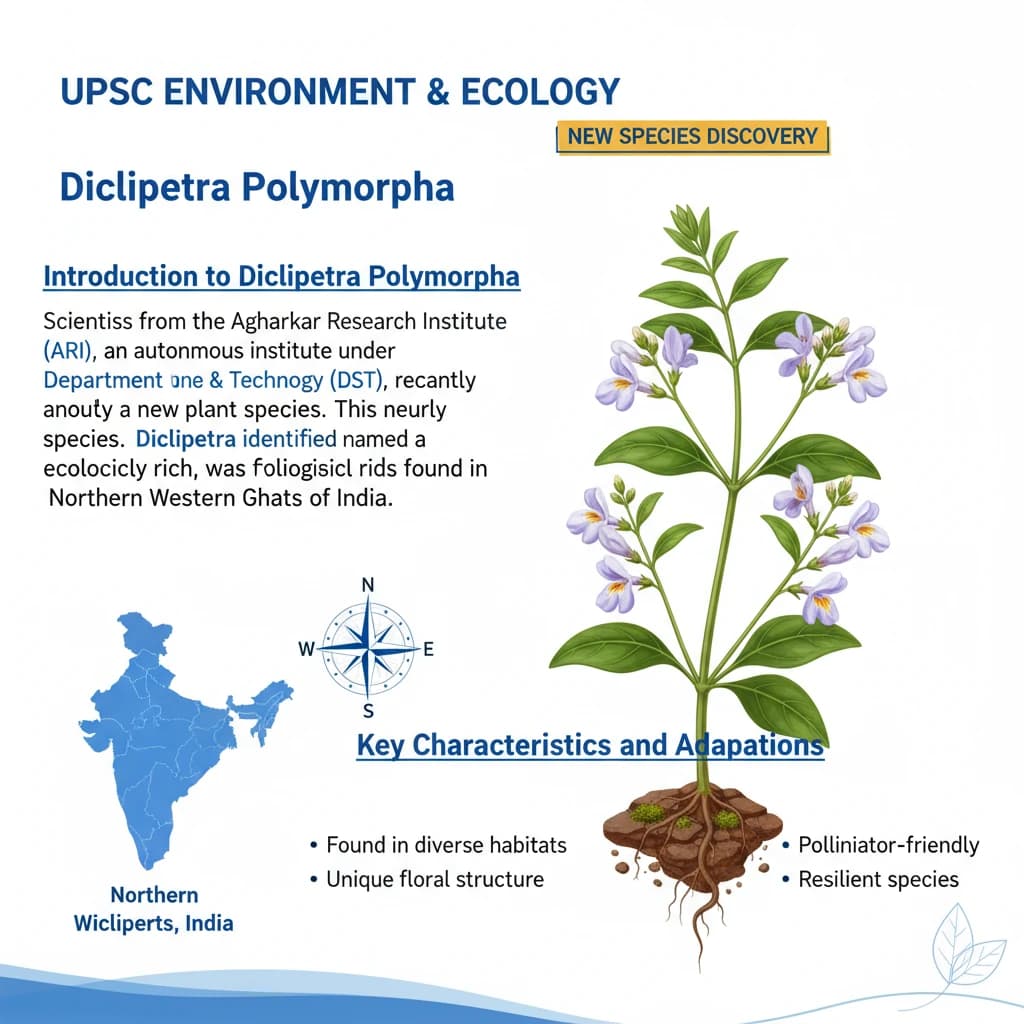
Dicliptera Polymorpha
Medium⏱️ 7 min read
environment and ecology
📖 Introduction
Introduction to Dicliptera Polymorpha
Scientists from the Agharkar Research Institute (ARI), an autonomous institute under the Department of Science & Technology (DST), recently announced the discovery of a new plant species.
This newly identified species, named Dicliptera Polymorpha, was found in the ecologically rich Northern Western Ghats of India.
Key Characteristics and Adaptations
Dicliptera Polymorpha exhibits several unique traits, highlighting its remarkable adaptability to challenging environmental conditions.
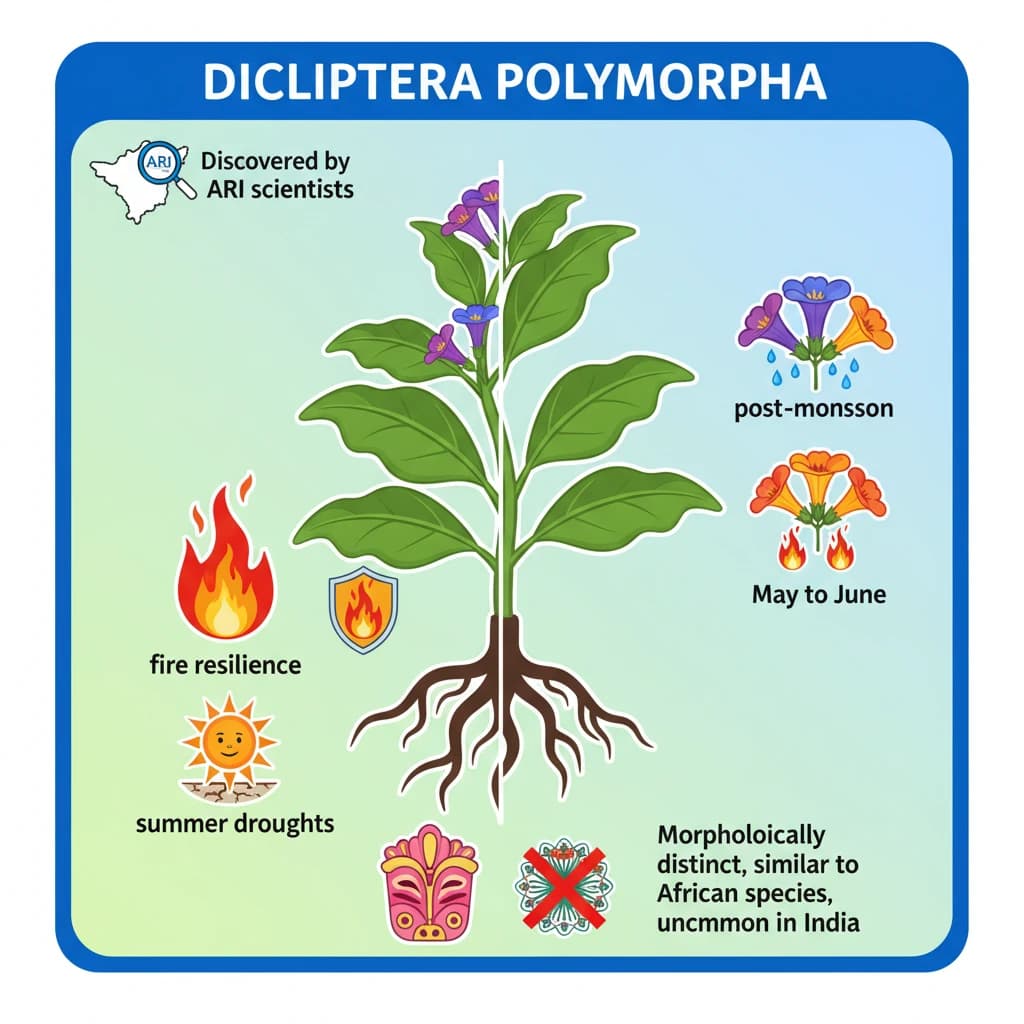
- Fire Resilience: The species demonstrates an exceptional ability to survive summer droughts and adapt to grassland fires, a common occurrence in its habitat.
- Dual Blooming Pattern: It showcases a distinctive two-phase blooming cycle. The primary bloom occurs post-monsoon (November–April), followed by a second bloom in May–June, specifically after fires.
- Morphological Distinction: Its inflorescence flower structures are uncommon among Indian species of Dicliptera, bearing a striking resemblance to those found in African species.
Adaptations to Harsh Conditions
The plant thrives on open grassland slopes within the Western Ghats, indicating its preference for specific, often harsh, environmental niches.
A notable adaptation is its woody rootstocks, which are crucial for producing dwarf flowering shoots during its second flowering phase, especially after fire events.
Threats to Dicliptera Polymorpha
Despite its resilience, Dicliptera Polymorpha faces significant threats, primarily driven by human activities and habitat degradation.
- Human-Induced Fires: While fires can trigger its second bloom, excessive or uncontrolled fires pose a severe risk, potentially destroying its habitat and hindering regeneration.
- Habitat Overuse: Practices like overgrazing and various land-use changes are major contributors to the degradation of grassland biodiversity, directly impacting the species' survival.
For UPSC Prelims, remember the location of discovery (Northern Western Ghats), the discovering institute (ARI), and its unique traits like fire resilience and dual blooming. For Mains, discuss its significance in the context of biodiversity conservation and climate change adaptation.
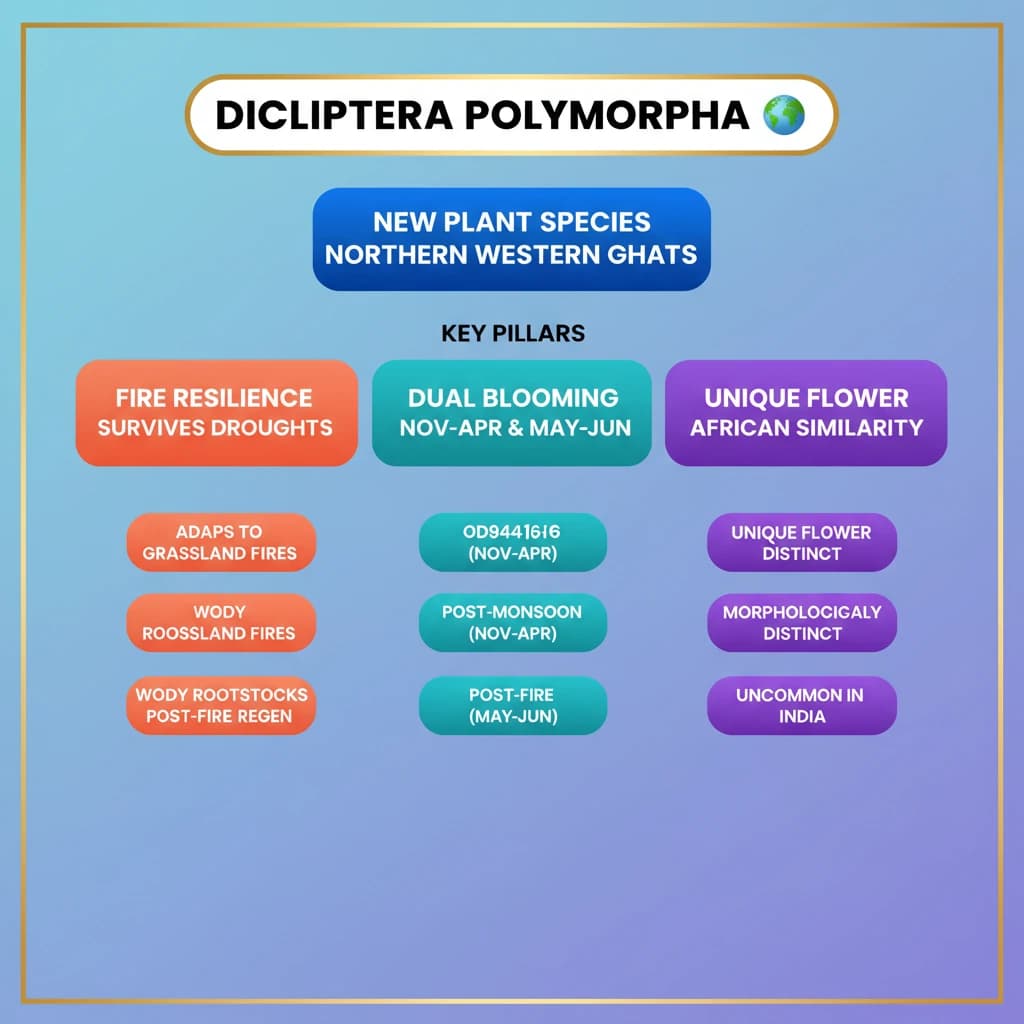
💡 Key Takeaways
- •Dicliptera Polymorpha, a new plant species, was discovered by ARI scientists in the Northern Western Ghats.
- •It exhibits unique fire resilience, surviving summer droughts and adapting to grassland fires.
- •The species has a dual blooming pattern: post-monsoon (Nov-Apr) and again post-fire (May-Jun).
- •Its inflorescence flower structures are morphologically distinct, similar to African species, uncommon in Indian Dicliptera.
- •It thrives on open grassland slopes, utilizing woody rootstocks for regeneration after fires.
- •Key threats include human-induced fires (if excessive) and habitat overuse (overgrazing, land-use changes).
- •The discovery highlights the rich, yet vulnerable, biodiversity of the Western Ghats and the importance of ongoing scientific research for conservation.
🧠 Memory Techniques
95% Verified Content
📚 Reference Sources
•Agharkar Research Institute (ARI) official announcements (implied)
•Department of Science & Technology (DST) press releases (implied)