Loading page, please wait…
Vaidra Logo
Vaidra

Top 4 items + smart groups

UPSC GPT
New
Current Affairs
Daily Solutions
Daily Puzzle
Mains Evaluator

Version 2.0.0 • Built with ❤️ for UPSC aspirants

Loading...
Loading...
Loading...
Loading...
Loading...
Loading...
Loading...
Loading...
Loading...
Loading...
Loading...
Loading...
Loading...
Back
All Subjects

Topics

0 topics • 0 completed

Loading topics...
Loading...
Loading...
Loading...
Loading...
Loading...
Overall Progress0%

Rushikulya River - UPSC Environment And Ecology

What is Rushikulya River in UPSC Environment And Ecology?

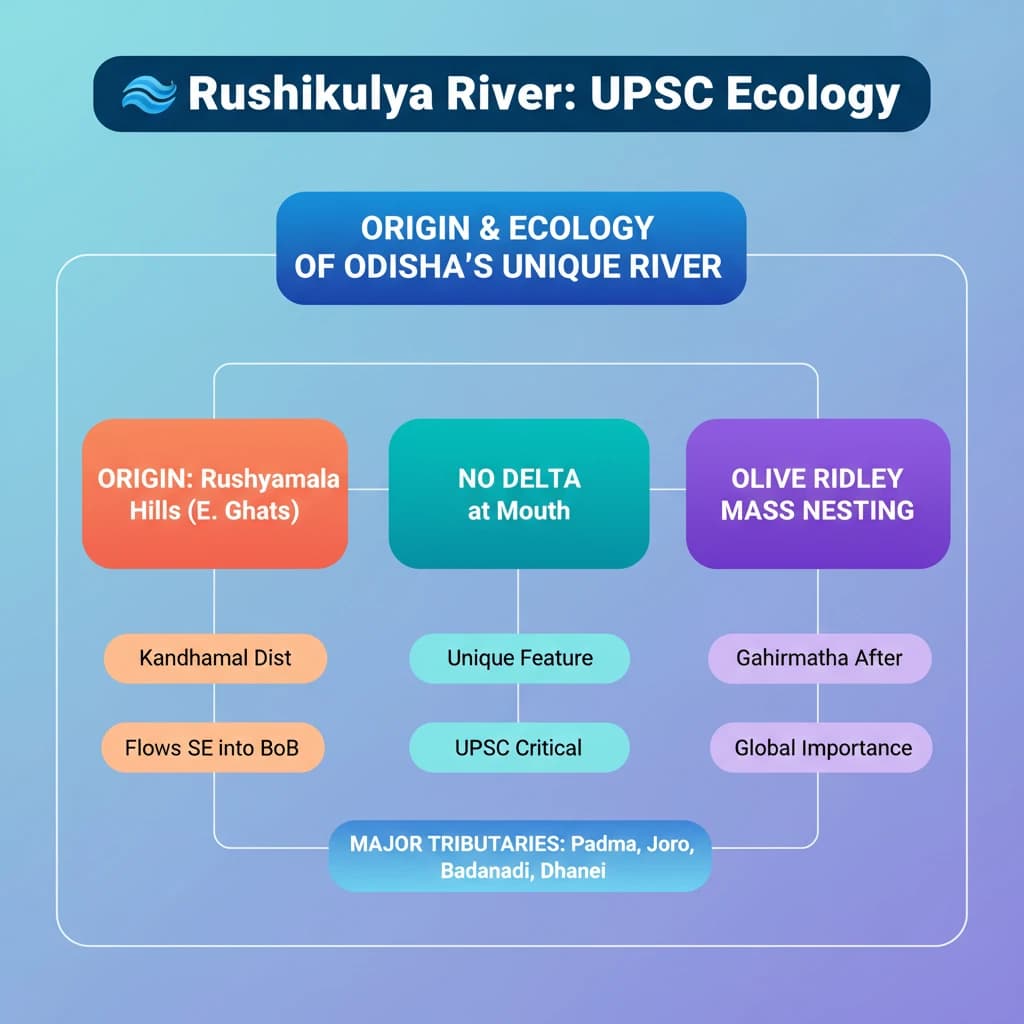
Rushikulya River is a key topic under Environment And Ecology for UPSC Civil Services Examination. Key points include: Rushikulya River originates from Rushyamala hills in Eastern Ghats, Kandhamal district, Odisha.. It flows southeast into the Bay of Bengal and uniquely has no delta at its mouth.. Prominent tributaries include Padma, Boringanalla, Joro, Badanadi, Baghua, Dhanei, and Ghodahado.. Understanding this topic is essential for both UPSC Prelims and Mains preparation.

Why is Rushikulya River important for UPSC exam?

Rushikulya River is a Medium-level topic in UPSC Environment And Ecology. It is tested in both Prelims (factual MCQs) and Mains (analytical answer writing). Previous year UPSC questions have frequently covered aspects of Rushikulya River, making it essential for comprehensive IAS preparation.

How to prepare Rushikulya River for UPSC?

To prepare Rushikulya River for UPSC: (1) Study the comprehensive notes covering all key concepts on Vaidra. (2) Practice previous year questions on this topic. (3) Connect it with current affairs using daily updates. (4) Revise using key takeaways and mind maps available for Environment And Ecology. (5) Write practice answers linking Rushikulya River to related GS Paper topics.

Key takeaways of Rushikulya River for UPSC

  • Rushikulya River originates from Rushyamala hills in Eastern Ghats, Kandhamal district, Odisha.
  • It flows southeast into the Bay of Bengal and uniquely has no delta at its mouth.
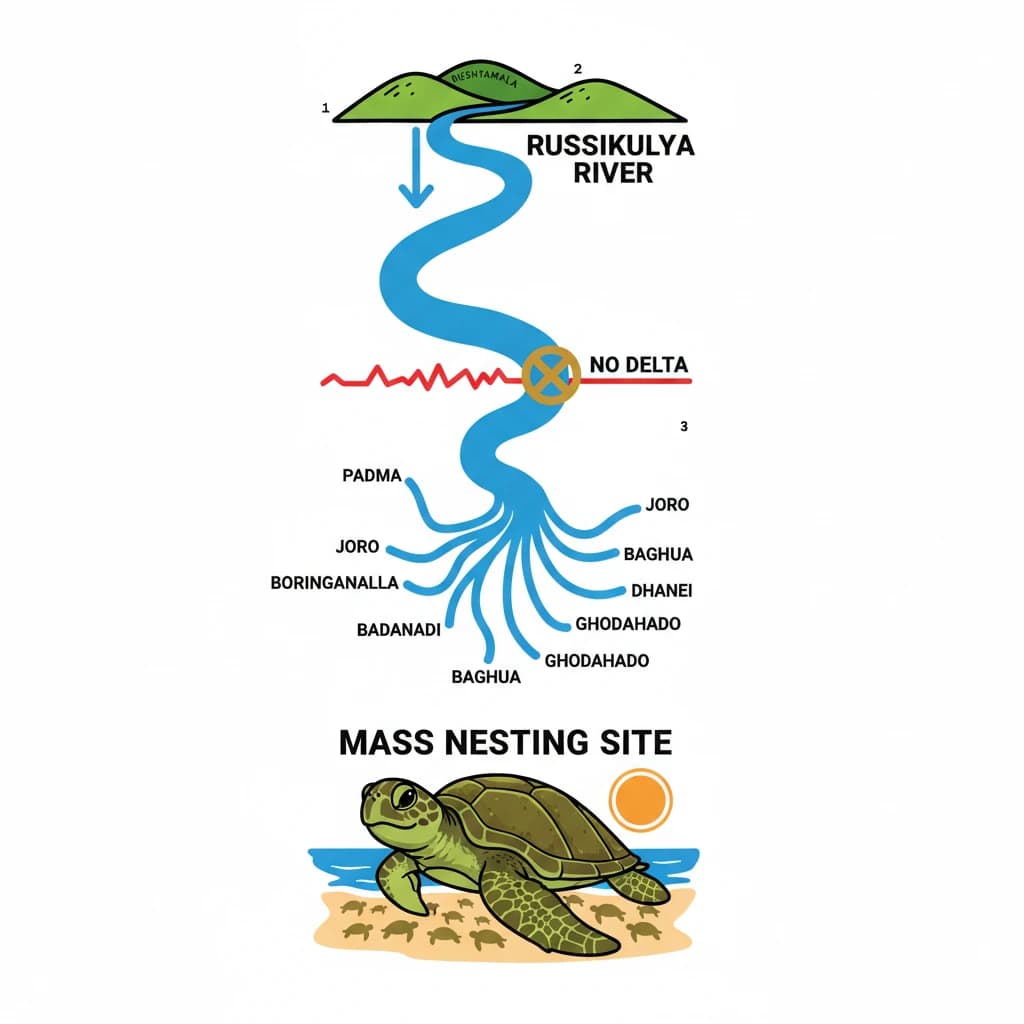
  • Prominent tributaries include Padma, Boringanalla, Joro, Badanadi, Baghua, Dhanei, and Ghodahado.
  • The Rushikulya mouth is a globally significant mass nesting site for Olive Ridley Sea Turtles.
  • Its non-deltaic nature and ecological importance make it crucial for UPSC Environment & Ecology topics.
Rushikulya River

Rushikulya River

Medium⏱️ 8 min read✓ 98% Verified
environment and ecology

📖 Introduction

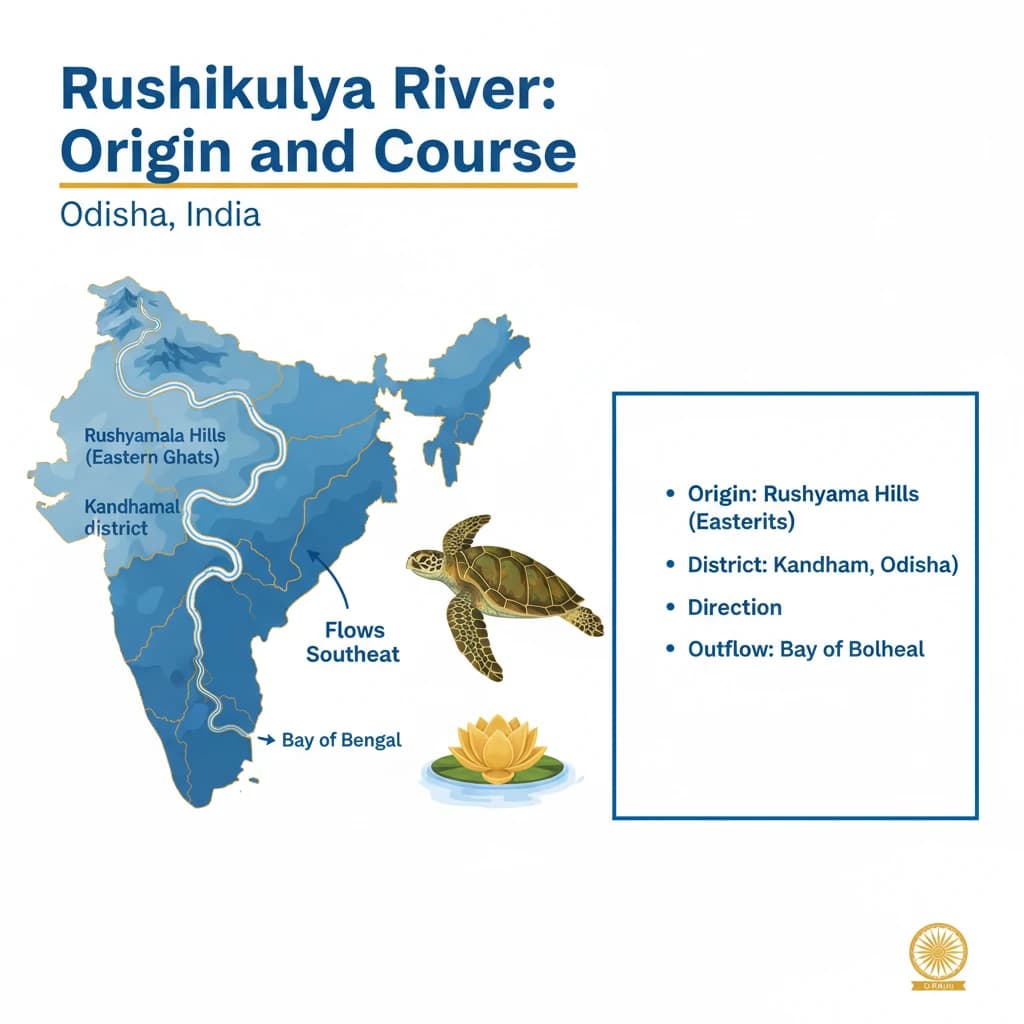
<h4>📍 Origin and Course of the Rushikulya River</h4><p>The <strong>Rushikulya River</strong> is a significant river system located in the state of <strong>Odisha</strong>, India. It originates from the <strong>Rushyamala hills</strong>, which are part of the <strong>Eastern Ghats</strong> mountain range.</p><p>Its source lies specifically in the <strong>Kandhamal district</strong> of Odisha. From its origin, the river flows in a general <strong>southeast direction</strong>, traversing through various landscapes before reaching its ultimate destination.</p><div class='info-box'><p><strong>Key Fact:</strong> The <strong>Rushikulya River</strong> is one of the major rivers of <strong>Odisha</strong>, playing a crucial role in the region's geography and ecology.</p></div><h4>🌊 Journey to the Bay of Bengal</h4><p>After its journey from the highlands, the <strong>Rushikulya River</strong> discharges its waters directly into the <strong>Bay of Bengal</strong>. This confluence marks the end of its course.</p><p>A distinctive feature of the <strong>Rushikulya River</strong> is the absence of a <strong>delta</strong> at its mouth. Unlike many large rivers that form expansive deltas where they meet the sea, the Rushikulya flows directly into the Bay.</p><div class='key-point-box'><p><strong>Important Concept:</strong> The absence of a <strong>delta</strong> at the mouth of the <strong>Rushikulya River</strong> is a key geological characteristic, influencing its coastal ecosystem and making it unique among major rivers.</p></div><h4> tributary Network</h4><p>The <strong>Rushikulya River</strong> is fed by several prominent tributaries that contribute to its water volume and basin area. These tributaries join the main river at various points along its course.</p><ul><li><strong>Padma</strong></li><li><strong>Boringanalla</strong></li><li><strong>Joro</strong></li><li><strong>Badanadi</strong></li><li><strong>Baghua</strong></li><li><strong>Dhanei</strong></li><li><strong>Ghodahado</strong></li></ul><div class='exam-tip-box'><p><strong>UPSC Insight:</strong> Knowing the <strong>origin</strong>, <strong>course</strong>, <strong>tributaries</strong>, and especially the <strong>unique feature</strong> (no delta) of rivers like <strong>Rushikulya</strong> is vital for both <strong>Geography</strong> and <strong>Environment & Ecology</strong> sections of the UPSC exam. Focus on these specific details.</p></div>
Concept Diagram

💡 Key Takeaways

  • •Rushikulya River originates from Rushyamala hills in Eastern Ghats, Kandhamal district, Odisha.
  • •It flows southeast into the Bay of Bengal and uniquely has no delta at its mouth.
  • •Prominent tributaries include Padma, Boringanalla, Joro, Badanadi, Baghua, Dhanei, and Ghodahado.
  • •The Rushikulya mouth is a globally significant mass nesting site for Olive Ridley Sea Turtles.
  • •Its non-deltaic nature and ecological importance make it crucial for UPSC Environment & Ecology topics.

🧠 Memory Techniques
Memory Aid
98% Verified Content

📚 Reference Sources

•NCERT Geography Textbooks (Class XI & XII) - Indian Physiography, River Systems
•Ministry of Environment, Forest and Climate Change (MoEFCC) Reports - Coastal Zone Management, Wildlife Protection Act
•WWF India Publications - Marine Turtle Conservation
•Odisha State Disaster Management Authority (OSDMA) Reports - Coastal Vulnerability

Related Topics

Loading related topics...
Explore:Environment And Ecology Topics·All Subjects·Daily Current Affairs·Editorial Analysis·Previous Year Questions·UPSC GPT
Rushikulya River - UPSC Environment And Ecology