Radioactive Isotopes in Sediments: Caesium, Strontium & Tritium - UPSC Environment And Ecology
What is Radioactive Isotopes in Sediments: Caesium, Strontium & Tritium in UPSC Environment And Ecology?
Radioactive Isotopes in Sediments: Caesium, Strontium & Tritium is a key topic under Environment And Ecology for UPSC Civil Services Examination. Key points include: Sediment concentrations of radionuclides (Cs-137, Sr-90, Tritium) are key indicators of environmental impact.. Caesium-137 and Strontium-90 levels in sediments were within natural statistical variation, showing no accumulation.. Tritium was detectable at most sites, with higher concentrations specifically noted at Rajasthan Atomic Power Station.. Understanding this topic is essential for both UPSC Prelims and Mains preparation.
Why is Radioactive Isotopes in Sediments: Caesium, Strontium & Tritium important for UPSC exam?
Radioactive Isotopes in Sediments: Caesium, Strontium & Tritium is a Medium-level topic in UPSC Environment And Ecology. It is tested in both Prelims (factual MCQs) and Mains (analytical answer writing). Previous year UPSC questions have frequently covered aspects of Radioactive Isotopes in Sediments: Caesium, Strontium & Tritium, making it essential for comprehensive IAS preparation.
How to prepare Radioactive Isotopes in Sediments: Caesium, Strontium & Tritium for UPSC?
To prepare Radioactive Isotopes in Sediments: Caesium, Strontium & Tritium for UPSC: (1) Study the comprehensive notes covering all key concepts on Vaidra. (2) Practice previous year questions on this topic. (3) Connect it with current affairs using daily updates. (4) Revise using key takeaways and mind maps available for Environment And Ecology. (5) Write practice answers linking Radioactive Isotopes in Sediments: Caesium, Strontium & Tritium to related GS Paper topics.
Key takeaways of Radioactive Isotopes in Sediments: Caesium, Strontium & Tritium for UPSC
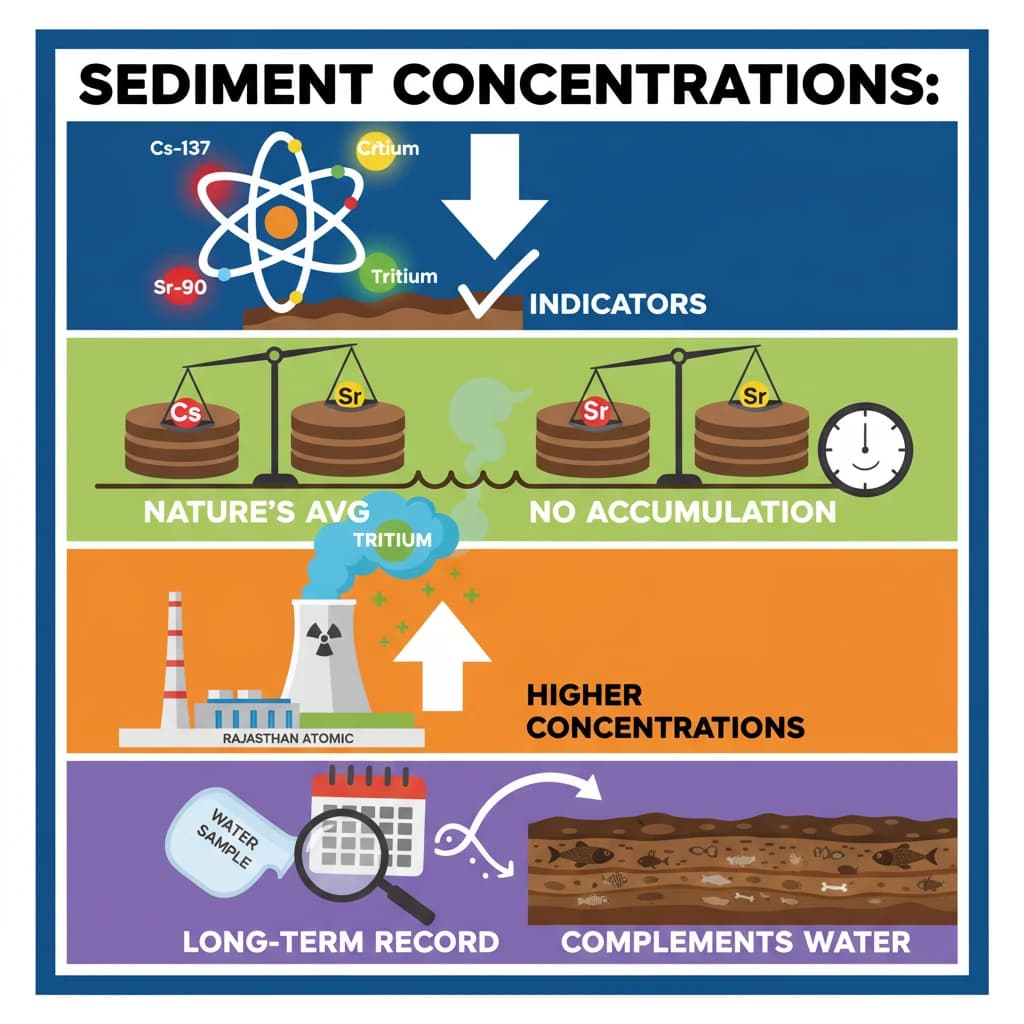
- Sediment concentrations of radionuclides (Cs-137, Sr-90, Tritium) are key indicators of environmental impact.
- Caesium-137 and Strontium-90 levels in sediments were within natural statistical variation, showing no accumulation.
- Tritium was detectable at most sites, with higher concentrations specifically noted at Rajasthan Atomic Power Station.
- Sediments provide a long-term record of contamination, complementing water sampling.
- Continuous monitoring is vital for nuclear safety, environmental protection, and public confidence.

Radioactive Isotopes in Sediments: Caesium, Strontium & Tritium
📖 Introduction
💡 Key Takeaways
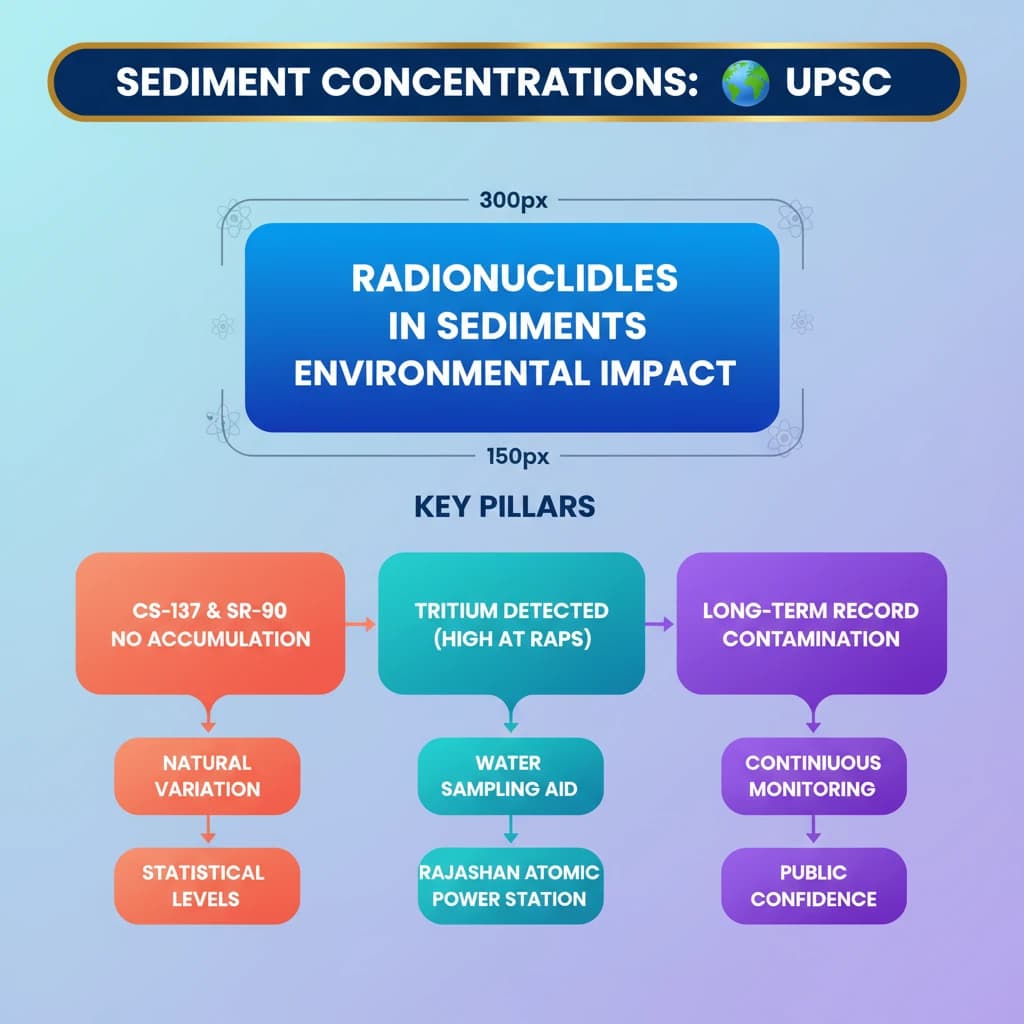
- •Sediment concentrations of radionuclides (Cs-137, Sr-90, Tritium) are key indicators of environmental impact.
- •Caesium-137 and Strontium-90 levels in sediments were within natural statistical variation, showing no accumulation.
- •Tritium was detectable at most sites, with higher concentrations specifically noted at Rajasthan Atomic Power Station.
- •Sediments provide a long-term record of contamination, complementing water sampling.
- •Continuous monitoring is vital for nuclear safety, environmental protection, and public confidence.
🧠 Memory Techniques