Loading page, please wait…
Vaidra Logo
Vaidra

Top 4 items + smart groups

UPSC GPT
New
Current Affairs
Daily Solutions
Daily Puzzle
Mains Evaluator

Version 2.0.0 • Built with ❤️ for UPSC aspirants

Loading...
Loading...
Loading...
Loading...
Loading...
Loading...
Loading...
Loading...
Loading...
Loading...
Loading...
Loading...
Loading...
Back
All Subjects

Topics

0 topics • 0 completed

Loading topics...
Loading...
Loading...
Loading...
Loading...
Loading...
Overall Progress0%
Living Planet Report 2024 - UPSC Environment And Ecology

Living Planet Report 2024 - UPSC Environment And Ecology

What is Living Planet Report 2024 in UPSC Environment And Ecology?

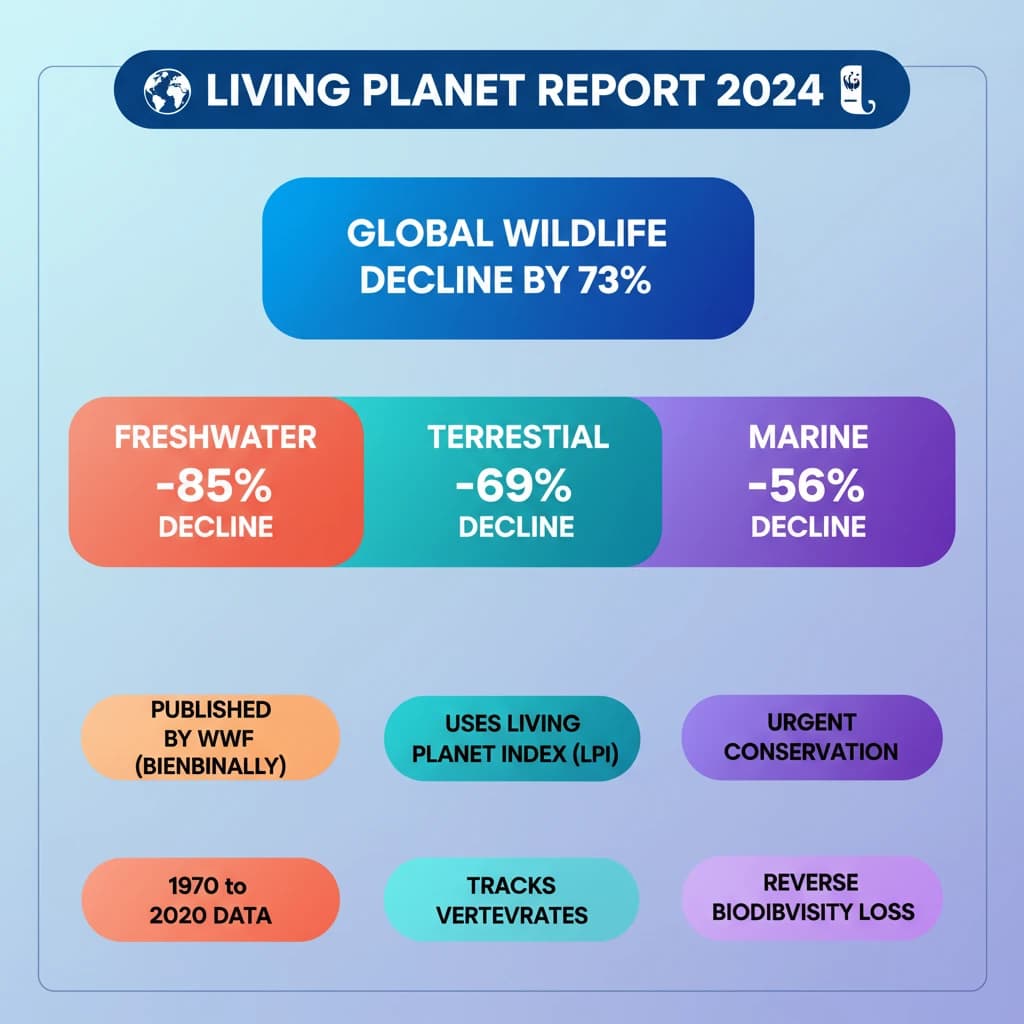
Living Planet Report 2024 is a key topic under Environment And Ecology for UPSC Civil Services Examination. Key points include: Global wildlife populations declined by 73% on average between 1970 and 2020.. Freshwater ecosystems suffered the highest decline (85%), followed by terrestrial (69%) and marine (56%).. The report is published biennially by the World Wide Fund for Nature (WWF).. Understanding this topic is essential for both UPSC Prelims and Mains preparation.

Why is Living Planet Report 2024 important for UPSC exam?

Living Planet Report 2024 is a Medium-level topic in UPSC Environment And Ecology. It is tested in both Prelims (factual MCQs) and Mains (analytical answer writing). Previous year UPSC questions have frequently covered aspects of Living Planet Report 2024, making it essential for comprehensive IAS preparation.

How to prepare Living Planet Report 2024 for UPSC?

To prepare Living Planet Report 2024 for UPSC: (1) Study the comprehensive notes covering all key concepts on Vaidra. (2) Practice previous year questions on this topic. (3) Connect it with current affairs using daily updates. (4) Revise using key takeaways and mind maps available for Environment And Ecology. (5) Write practice answers linking Living Planet Report 2024 to related GS Paper topics.

Key takeaways of Living Planet Report 2024 for UPSC

  • Global wildlife populations declined by 73% on average between 1970 and 2020.
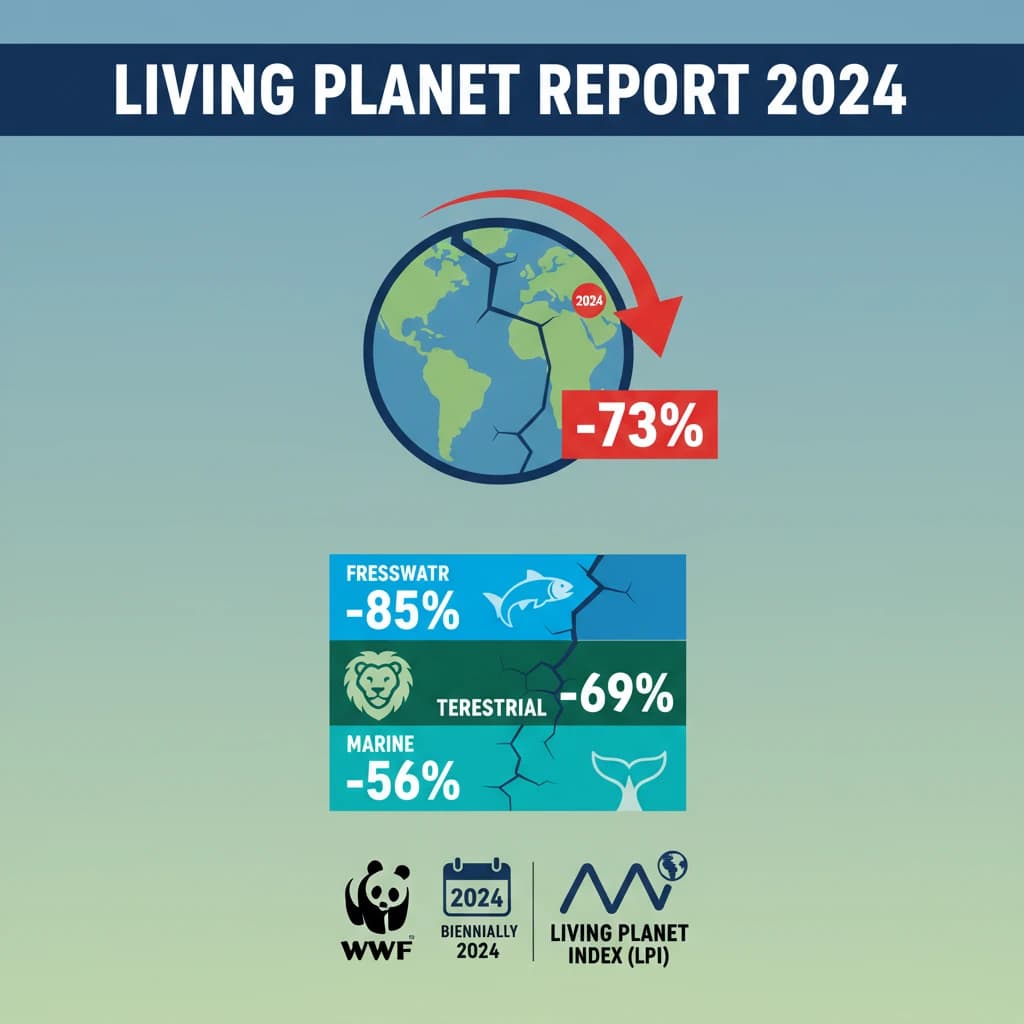
  • Freshwater ecosystems suffered the highest decline (85%), followed by terrestrial (69%) and marine (56%).
  • The report is published biennially by the World Wide Fund for Nature (WWF).
  • It uses the Living Planet Index (LPI) to track vertebrate population trends.
  • The findings emphasize the urgent need for conservation and sustainable practices to reverse biodiversity loss.
Living Planet Report 2024

Living Planet Report 2024

Medium⏱️ 7 min read✓ 98% Verified
environment and ecology

📖 Introduction

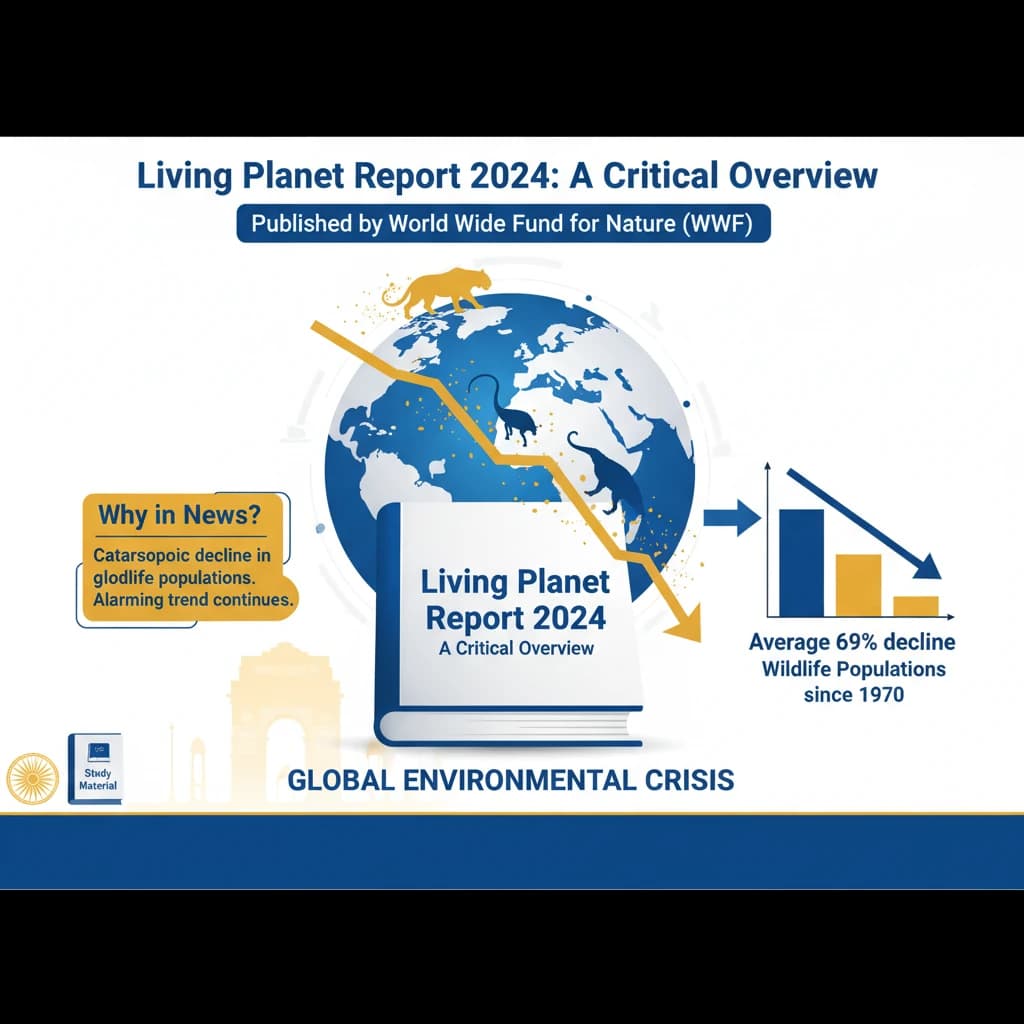
<h4>Living Planet Report 2024: A Critical Overview</h4><p>The <strong>Living Planet Report 2024</strong>, published by the <strong>World Wide Fund for Nature (WWF)</strong>, highlights a severe global environmental crisis. This report serves as a crucial barometer for the health of our planet's ecosystems and biodiversity.</p><div class='info-box'><p><strong>Why in News?</strong></p><p>The latest edition of the report reveals a catastrophic decline in global wildlife populations. This alarming trend underscores the urgent need for robust conservation efforts and sustainable practices worldwide.</p></div><h4>Catastrophic Decline in Wildlife Populations</h4><p>The report's most striking finding is the significant reduction in monitored wildlife populations. Over a span of just <strong>50 years</strong>, from <strong>1970 to 2020</strong>, there has been an average <strong>73% decline</strong> in the size of these populations.</p><div class='key-point-box'><p>This figure signifies that nearly three-quarters of the monitored wildlife has been lost, indicating widespread ecosystem degradation and biodiversity loss across the globe.</p></div><h4>Ecosystem-Specific Declines</h4><p>The decline in wildlife populations is not uniform across all ecosystems. The report meticulously breaks down these losses, revealing which habitats are most severely affected.</p><div class='info-box'><ul><li><strong>Freshwater Ecosystems:</strong> Reported the highest decline at an alarming <strong>85%</strong>. This indicates severe pressure on rivers, lakes, and wetlands, impacting aquatic species.</li><li><strong>Terrestrial Ecosystems:</strong> Experienced a significant decline of <strong>69%</strong>. This includes forests, grasslands, and deserts, highlighting the impact of habitat loss and degradation.</li><li><strong>Marine Ecosystems:</strong> Showed a substantial decline of <strong>56%</strong>. Oceans, seas, and coastal areas are under immense stress from pollution, overfishing, and climate change.</li></ul></div><div class='exam-tip-box'><p><strong>UPSC Insight:</strong> Understanding the differential impact across ecosystems (e.g., <strong>freshwater > terrestrial > marine</strong>) is crucial for both Prelims (factual recall) and Mains (analytical questions on conservation priorities). Always remember the <strong>WWF</strong> and the <strong>1970-2020</strong> timeframe.</p></div>
Concept Diagram

💡 Key Takeaways

  • •Global wildlife populations declined by 73% on average between 1970 and 2020.
  • •Freshwater ecosystems suffered the highest decline (85%), followed by terrestrial (69%) and marine (56%).
  • •The report is published biennially by the World Wide Fund for Nature (WWF).
  • •It uses the Living Planet Index (LPI) to track vertebrate population trends.
  • •The findings emphasize the urgent need for conservation and sustainable practices to reverse biodiversity loss.

🧠 Memory Techniques
Memory Aid
98% Verified Content

📚 Reference Sources

•Drishti IAS Summary

Related Topics

Loading related topics...
Explore:Environment And Ecology Topics·All Subjects·Daily Current Affairs·Editorial Analysis·Previous Year Questions·UPSC GPT