Increase in Coastal Erosion - UPSC Environment And Ecology
What is Increase in Coastal Erosion in UPSC Environment And Ecology?
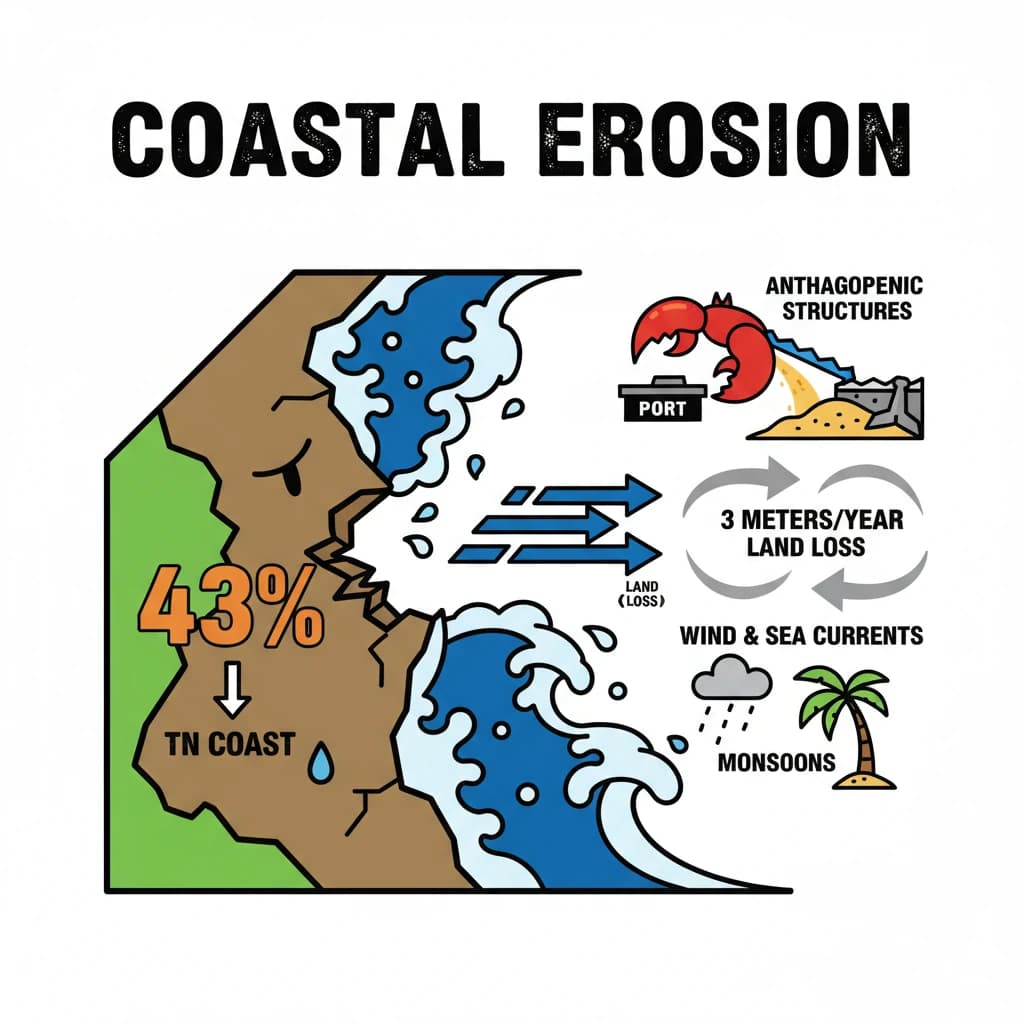
Increase in Coastal Erosion is a key topic under Environment And Ecology for UPSC Civil Services Examination. Key points include: Coastal erosion is the loss of land due to sea action, significantly impacting areas like Tamil Nadu.. Nearly 43% of Tamil Nadu's coast is eroding, with annual land loss rates up to 3 meters.. Anthropogenic structures (ports, breakwaters) disrupt natural sand movement, accelerating erosion.. Understanding this topic is essential for both UPSC Prelims and Mains preparation.
Why is Increase in Coastal Erosion important for UPSC exam?
Increase in Coastal Erosion is a Medium-level topic in UPSC Environment And Ecology. It is tested in both Prelims (factual MCQs) and Mains (analytical answer writing). Previous year UPSC questions have frequently covered aspects of Increase in Coastal Erosion, making it essential for comprehensive IAS preparation.
How to prepare Increase in Coastal Erosion for UPSC?
To prepare Increase in Coastal Erosion for UPSC: (1) Study the comprehensive notes covering all key concepts on Vaidra. (2) Practice previous year questions on this topic. (3) Connect it with current affairs using daily updates. (4) Revise using key takeaways and mind maps available for Environment And Ecology. (5) Write practice answers linking Increase in Coastal Erosion to related GS Paper topics.
Key takeaways of Increase in Coastal Erosion for UPSC
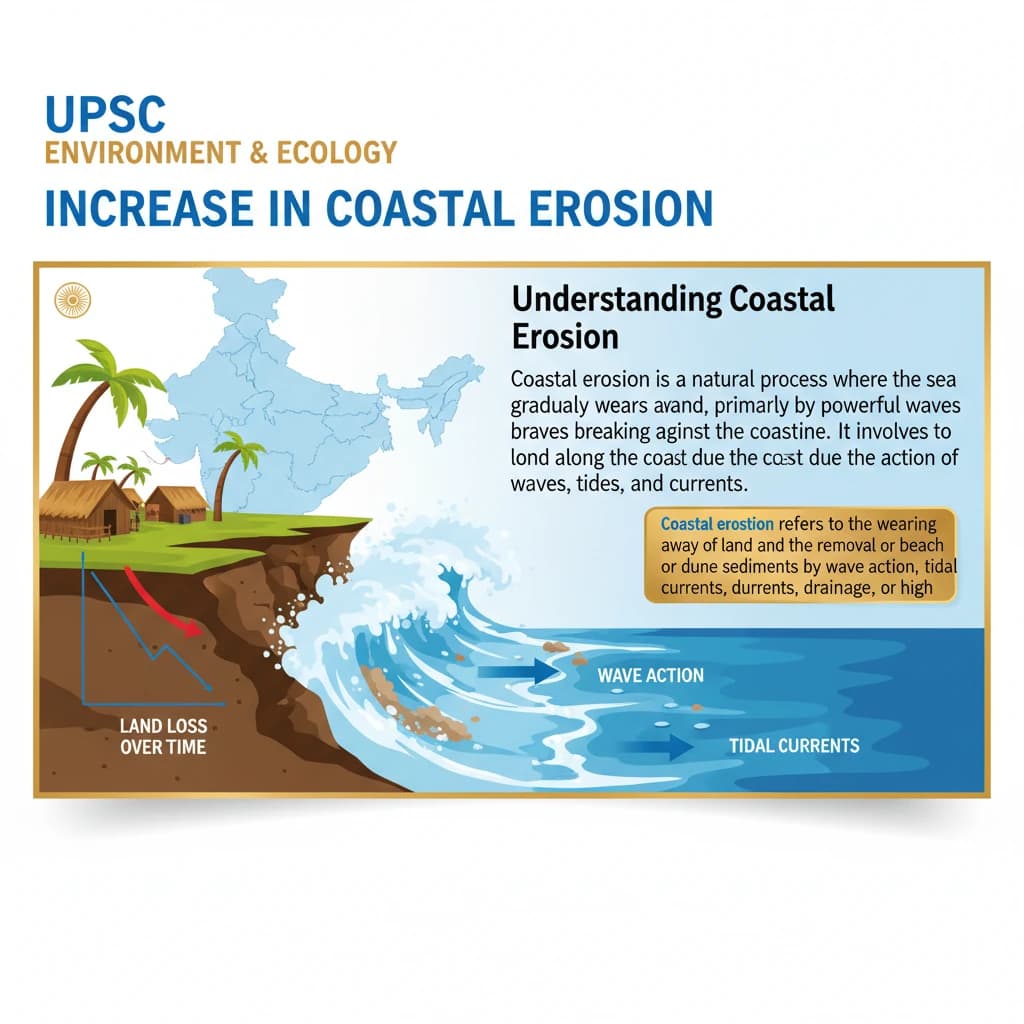
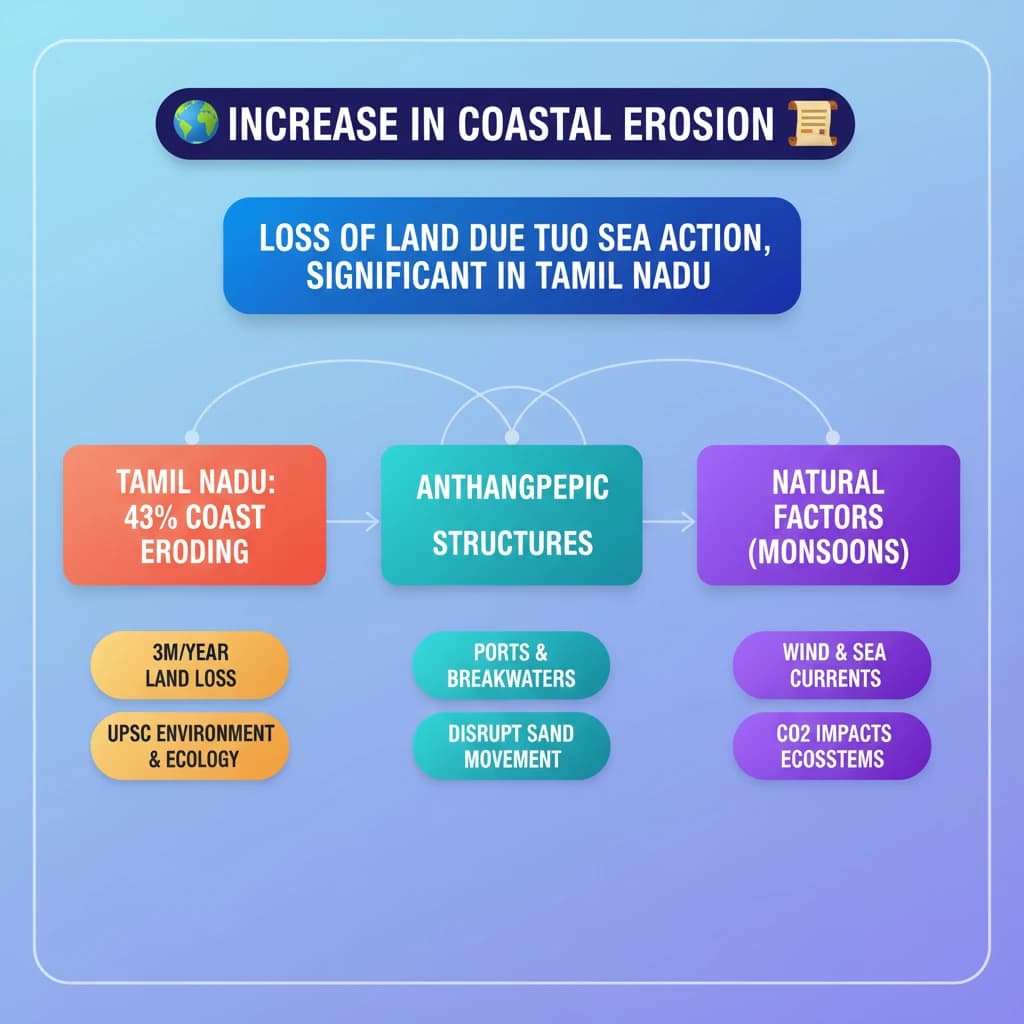
- Coastal erosion is the loss of land due to sea action, significantly impacting areas like Tamil Nadu.
- Nearly 43% of Tamil Nadu's coast is eroding, with annual land loss rates up to 3 meters.
- Anthropogenic structures (ports, breakwaters) disrupt natural sand movement, accelerating erosion.
- Natural factors like wind and sea current patterns, especially during monsoons, influence coastal dynamics.
- Beyond direct coastal impact, environmental changes like increased CO2 can impact other ecosystems (e.g., grasslands).
- Sustainable coastal management and Integrated Coastal Zone Management (ICZM) are crucial to mitigate the effects.
Increase in Coastal Erosion
📖 Introduction
💡 Key Takeaways
- •Coastal erosion is the loss of land due to sea action, significantly impacting areas like Tamil Nadu.
- •Nearly 43% of Tamil Nadu's coast is eroding, with annual land loss rates up to 3 meters.
- •Anthropogenic structures (ports, breakwaters) disrupt natural sand movement, accelerating erosion.
- •Natural factors like wind and sea current patterns, especially during monsoons, influence coastal dynamics.
- •Beyond direct coastal impact, environmental changes like increased CO2 can impact other ecosystems (e.g., grasslands).
- •Sustainable coastal management and Integrated Coastal Zone Management (ICZM) are crucial to mitigate the effects.
🧠 Memory Techniques