Loading page, please wait…
Formation of Acid Rain - UPSC Environment And Ecology
What is Formation of Acid Rain in UPSC Environment And Ecology?
Formation of Acid Rain is a key topic under Environment And Ecology for UPSC Civil Services Examination. Key points include: Acid rain forms when Sulphur Dioxide (SO2) and Nitrogen Oxides (NOx) react with atmospheric water and oxygen.. SO2 primarily forms Sulfuric Acid (H2SO4), and NOx forms Nitric Acid (HNO3).. The typical pH of acid rain (4.2-4.4) is significantly more acidic than normal rain (5.6).. Understanding this topic is essential for both UPSC Prelims and Mains preparation.
Why is Formation of Acid Rain important for UPSC exam?
Formation of Acid Rain is a Easy-level topic in UPSC Environment And Ecology. It is tested in both Prelims (factual MCQs) and Mains (analytical answer writing). Previous year UPSC questions have frequently covered aspects of Formation of Acid Rain, making it essential for comprehensive IAS preparation.
How to prepare Formation of Acid Rain for UPSC?
To prepare Formation of Acid Rain for UPSC: (1) Study the comprehensive notes covering all key concepts on Vaidra. (2) Practice previous year questions on this topic. (3) Connect it with current affairs using daily updates. (4) Revise using key takeaways and mind maps available for Environment And Ecology. (5) Write practice answers linking Formation of Acid Rain to related GS Paper topics.
Key takeaways of Formation of Acid Rain for UPSC
- Acid rain forms when Sulphur Dioxide (SO2) and Nitrogen Oxides (NOx) react with atmospheric water and oxygen.
- SO2 primarily forms Sulfuric Acid (H2SO4), and NOx forms Nitric Acid (HNO3).
- The typical pH of acid rain (4.2-4.4) is significantly more acidic than normal rain (5.6).
- Major sources of these pollutants are fossil fuel combustion from power plants, industries, and vehicles.
- Acid rain causes widespread environmental damage to ecosystems, infrastructure, and human health.
Formation of Acid Rain
Easy⏱️ 5 min read
environment and ecology
📖 Introduction
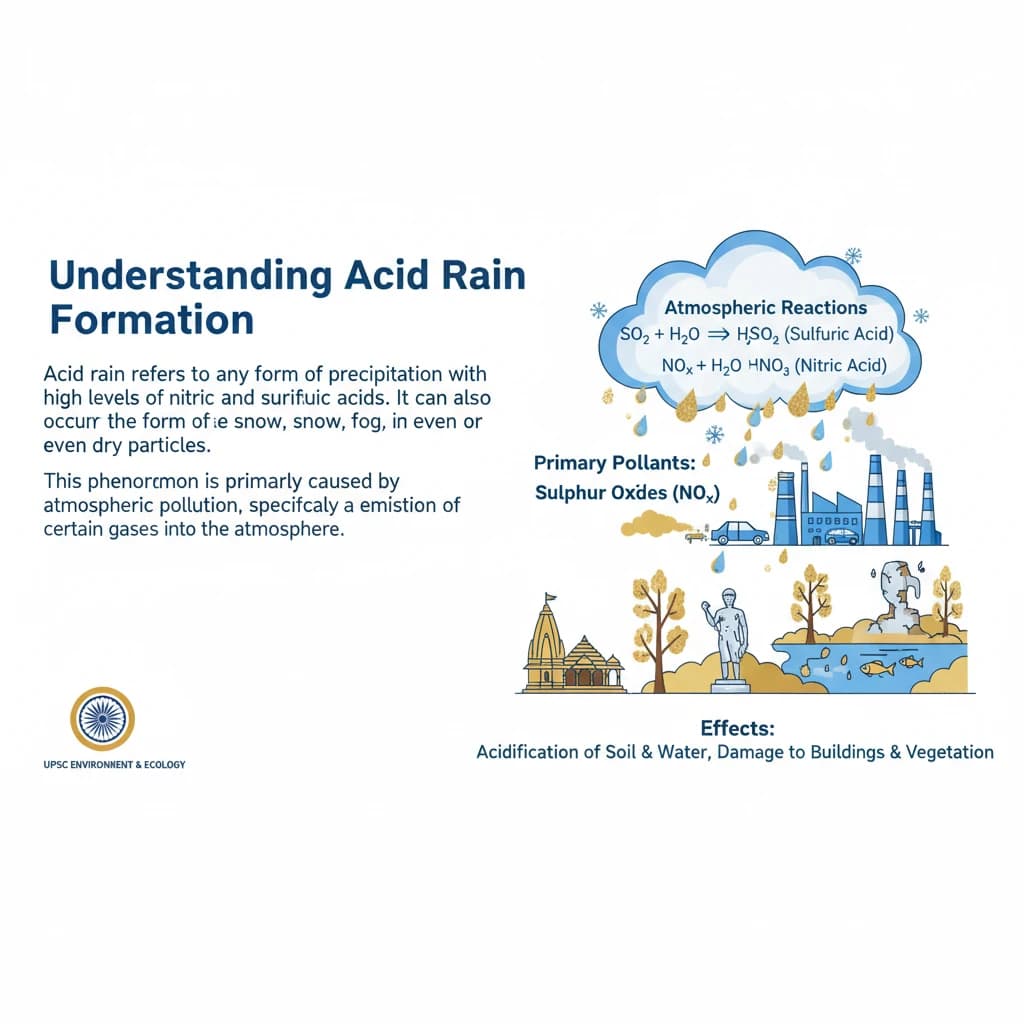
Understanding Acid Rain Formation
Acid rain refers to any form of precipitation with high levels of nitric and sulfuric acids. It can also occur in the form of snow, fog, or even dry particles.
This phenomenon is primarily caused by atmospheric pollution, specifically the emission of certain gases into the atmosphere.
Primary Pollutants: Sulphur Dioxide and Nitrogen Oxides
The two main gaseous pollutants responsible for acid rain formation are Sulphur Dioxide (SO2) and Nitrogen Oxides (NOx). These gases are released into the atmosphere from various sources.
- Sulphur Dioxide (SO2): Primarily originates from the burning of fossil fuels (coal, oil) in power plants and industrial facilities.
- Nitrogen Oxides (NOx): Produced from vehicle exhausts, industrial combustion processes, and power generation.
Atmospheric Chemical Reactions
Once released, SO2 and NOx do not immediately form acid rain. They undergo a series of complex chemical reactions in the atmosphere.
These gases combine with water vapor (H2O) and oxygen (O2) present in the atmosphere. This oxidative process transforms them into their acidic forms.
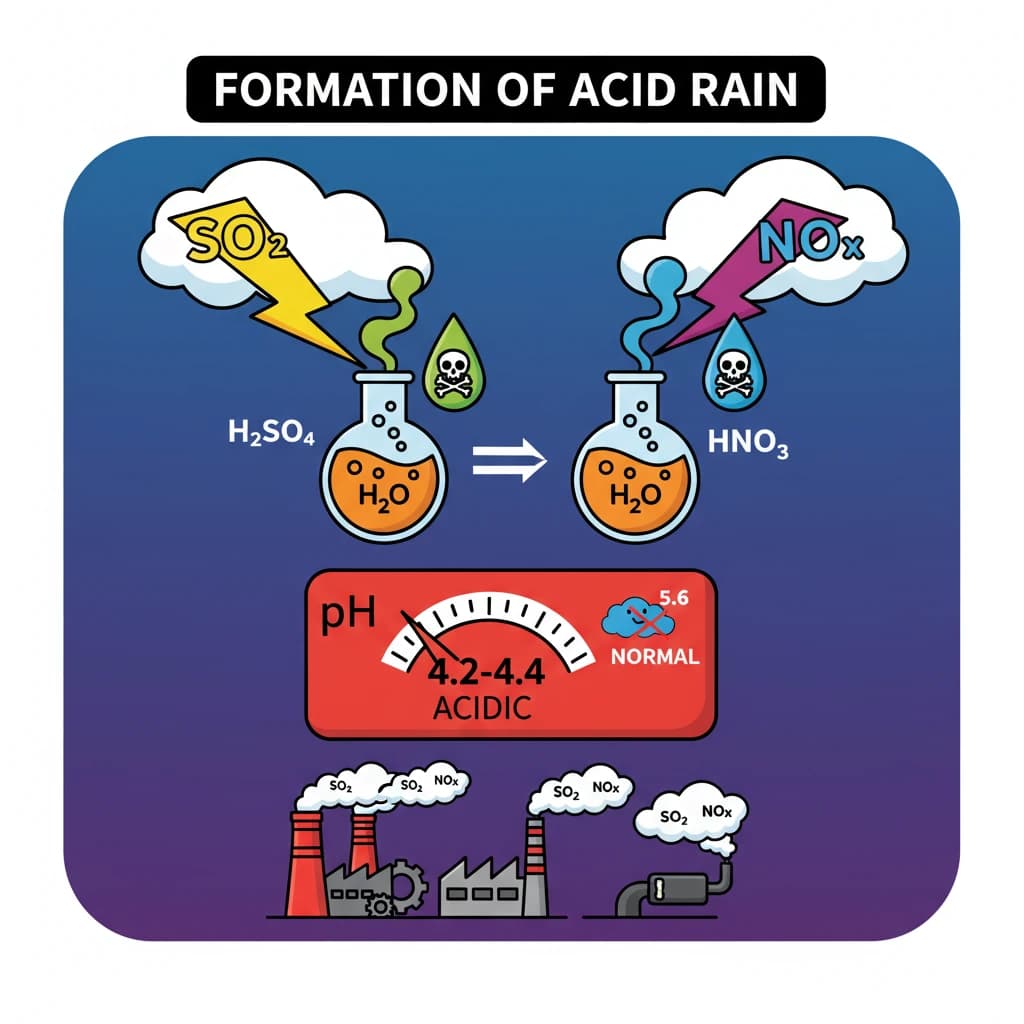
Specifically, Sulphur Dioxide (SO2) reacts to form Sulfuric Acid (H2SO4), and Nitrogen Oxides (NOx) react to form Nitric Acid (HNO3).
Formation of Acidic Precipitation
The newly formed sulfuric acid and nitric acid then dissolve into the tiny water droplets within clouds.
As these water droplets grow and condense, they fall to the Earth's surface as acid rain, acid snow, or acid fog, depending on atmospheric conditions.
Understanding pH Levels
The acidity of precipitation is measured using the pH scale. A lower pH indicates higher acidity.
- The typical pH of normal rain is around 5.6. This slight acidity is due to the natural presence of carbon dioxide in the atmosphere forming carbonic acid.
- In contrast, the pH of acid rain is significantly lower, typically ranging from 4.2 to 4.4, indicating its much higher acidic nature.
Understanding the chemical reactions and the pH values is crucial for UPSC Mains, especially for questions on environmental pollution and its impacts.
💡 Key Takeaways
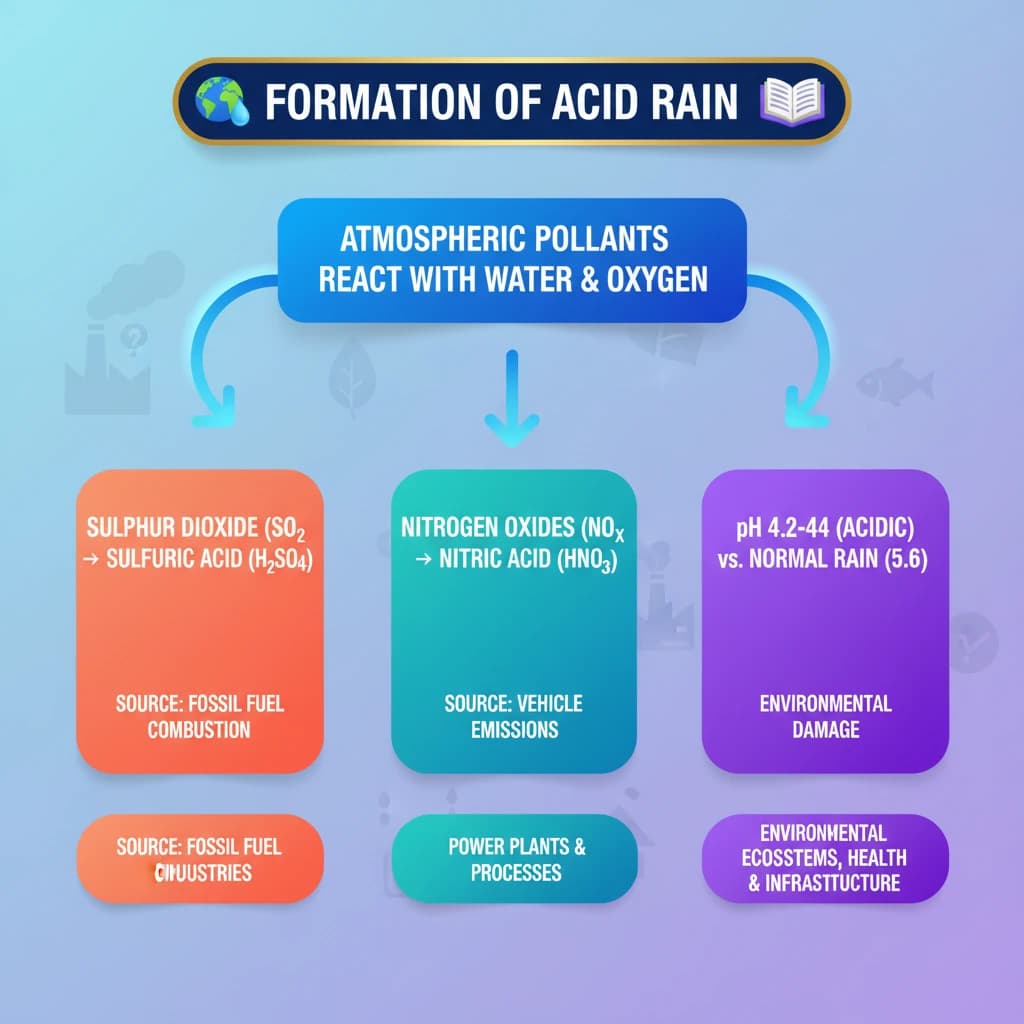
- •Acid rain forms when Sulphur Dioxide (SO2) and Nitrogen Oxides (NOx) react with atmospheric water and oxygen.
- •SO2 primarily forms Sulfuric Acid (H2SO4), and NOx forms Nitric Acid (HNO3).
- •The typical pH of acid rain (4.2-4.4) is significantly more acidic than normal rain (5.6).
- •Major sources of these pollutants are fossil fuel combustion from power plants, industries, and vehicles.
- •Acid rain causes widespread environmental damage to ecosystems, infrastructure, and human health.
🧠 Memory Techniques
95% Verified Content
📚 Reference Sources
•NCERT Class 11 Chemistry (Environmental Chemistry chapter)
•US EPA resources on Acid Rain
•United Nations Environment Programme (UNEP) reports