Loading page, please wait…
India as the World Largest Plastic Polluter - UPSC Environment And Ecology
What is India as the World Largest Plastic Polluter in UPSC Environment And Ecology?
India as the World Largest Plastic Polluter is a key topic under Environment And Ecology for UPSC Civil Services Examination. Key points include: India is the highest contributor to global plastic pollution, accounting for approximately one-fifth of total plastic waste.. India generates 9.3 million tonnes of plastic pollution annually, with 3.5 million tonnes released into the environment.. A clear Global North-South divide exists: Global South (like India) uses open burning, Global North uses controlled systems.. Understanding this topic is essential for both UPSC Prelims and Mains preparation.
Why is India as the World Largest Plastic Polluter important for UPSC exam?
India as the World Largest Plastic Polluter is a Medium-level topic in UPSC Environment And Ecology. It is tested in both Prelims (factual MCQs) and Mains (analytical answer writing). Previous year UPSC questions have frequently covered aspects of India as the World Largest Plastic Polluter, making it essential for comprehensive IAS preparation.
How to prepare India as the World Largest Plastic Polluter for UPSC?
To prepare India as the World Largest Plastic Polluter for UPSC: (1) Study the comprehensive notes covering all key concepts on Vaidra. (2) Practice previous year questions on this topic. (3) Connect it with current affairs using daily updates. (4) Revise using key takeaways and mind maps available for Environment And Ecology. (5) Write practice answers linking India as the World Largest Plastic Polluter to related GS Paper topics.
Key takeaways of India as the World Largest Plastic Polluter for UPSC
- India is the highest contributor to global plastic pollution, accounting for approximately one-fifth of total plastic waste.
- India generates 9.3 million tonnes of plastic pollution annually, with 3.5 million tonnes released into the environment.
- A clear Global North-South divide exists: Global South (like India) uses open burning, Global North uses controlled systems.
- 69% of global plastic waste emissions come from just 20 countries.
- India's per capita plastic waste generation is 0.12 kg per day.
- The study from 'Nature' journal underscores the urgency for robust waste management policies and public action in India.
India as the World Largest Plastic Polluter
Medium⏱️ 8 min read
environment and ecology
📖 Introduction
India's Position in Global Plastic Pollution
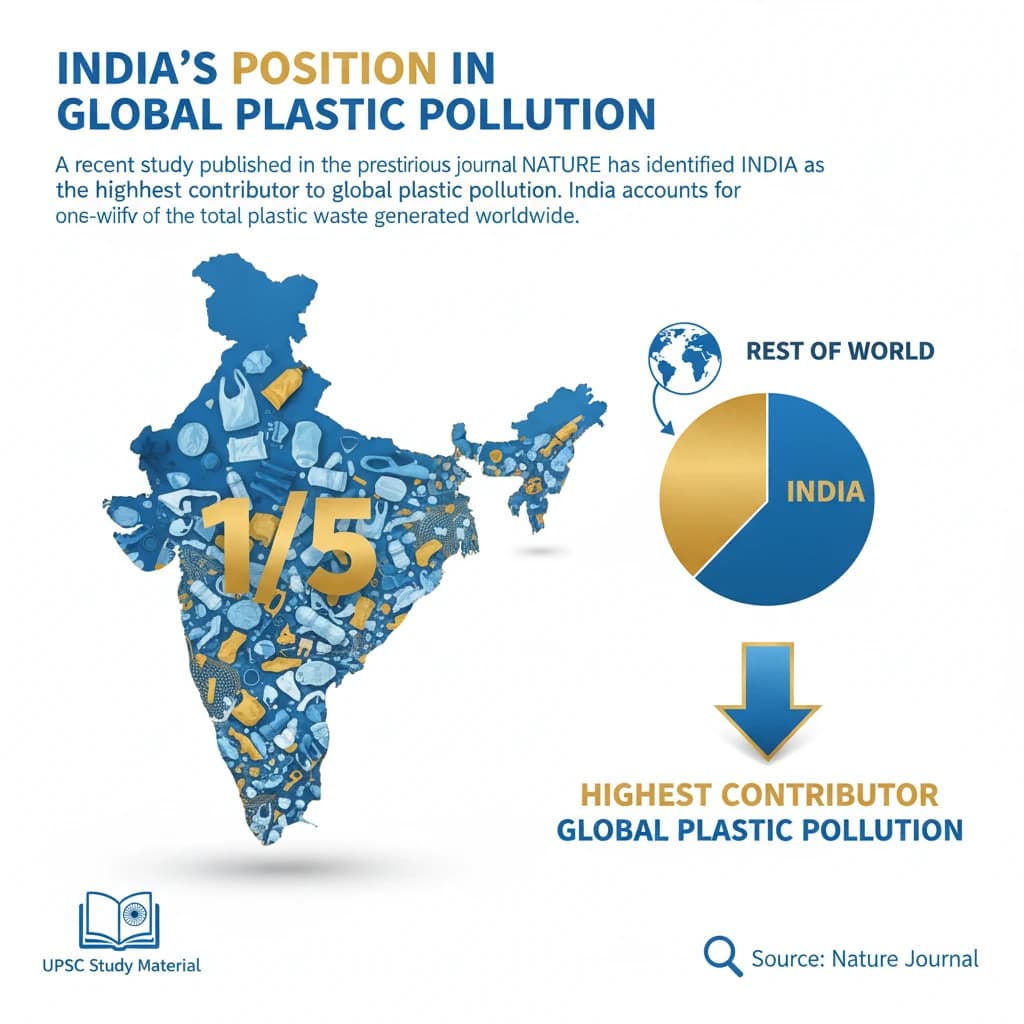
A recent study published in the prestigious journal Nature has brought to light a critical environmental issue. This study identifies India as the highest contributor to global plastic pollution, a significant finding with far-reaching implications.
India's contribution is substantial, accounting for approximately one-fifth of the total plastic waste generated worldwide. This places the nation at the forefront of global efforts to tackle plastic waste.
Key Findings of the Study on Plastic Waste Generation
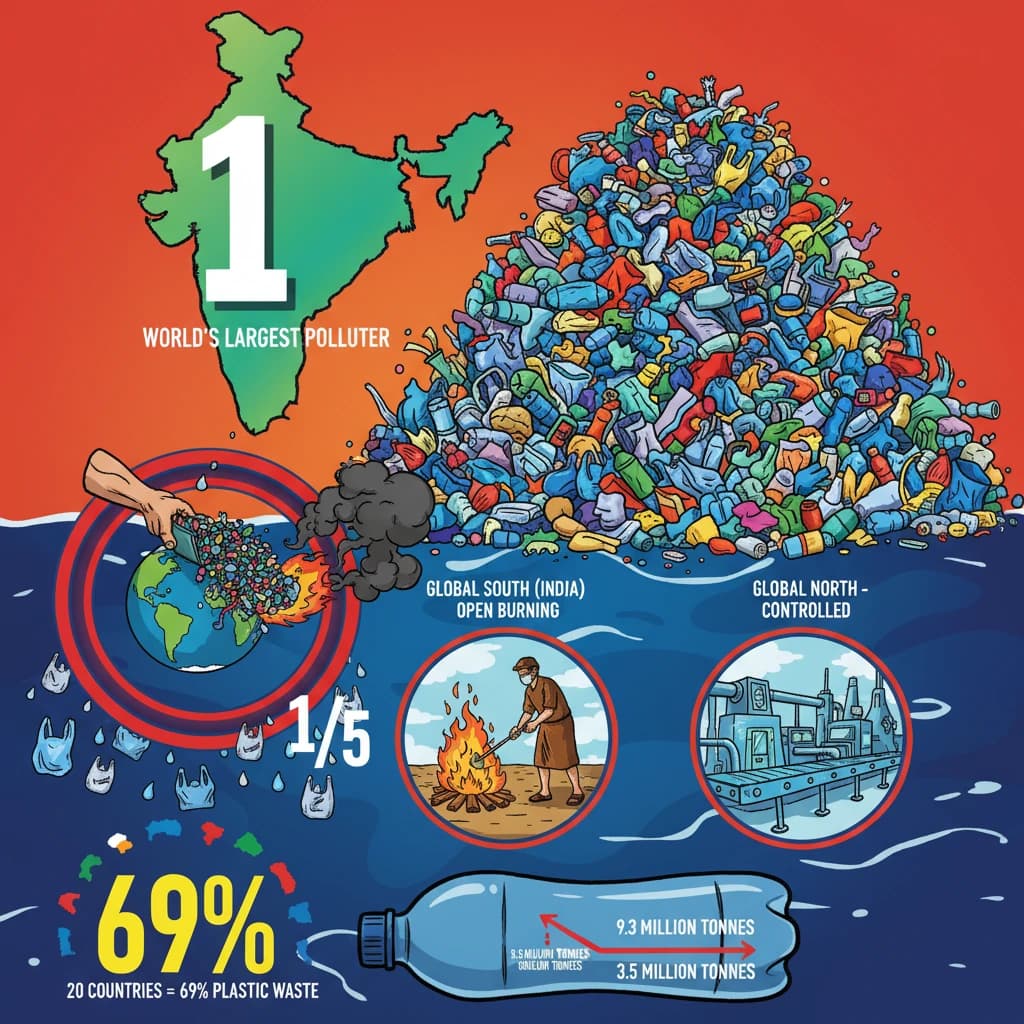
The study provides specific figures on plastic waste. India generates approximately 9.3 million tonnes (mt) of plastic pollution annually, a figure that highlights the scale of the challenge.
Out of 9.3 mt of plastic waste generated:
- 5.8 mt are incinerated.
- 3.5 mt are released into the environment as debris.
This generation rate is considerably higher when compared to other nations. For instance, Nigeria generates 3.5 mt, Indonesia 3.4 mt, and China 2.8 mt, making India's output significantly larger.
On a per capita basis, India's waste generation rate is approximately 0.12 kilograms per capita per day. This metric provides insight into individual contributions to the overall plastic pollution problem.
Global North-South Divide in Plastic Pollution
The study also reveals a distinct geographical pattern in plastic waste emissions. The highest concentrations are observed across countries in Southern Asia, Sub-Saharan Africa, and South-eastern Asia.
There is a clear divide in plastic pollution sources between the Global North and the Global South. This distinction is crucial for understanding the differing challenges and solutions.
Global South countries, including India, frequently rely on open burning for waste management. This method often leads to a higher amount of unmanaged waste entering the environment.
In contrast, countries in the Global North typically employ more controlled waste management systems. These systems generally result in less unmanaged waste and reduced environmental release.
Disparity Between High and Low-Income Countries
Globally, a significant portion of plastic waste emissions originates from a limited number of nations. 69%, or 35.7 million tonnes per year (Mt/year), of total plastic waste emissions come from just 20 countries.
Sources of Plastic Pollution:
- Global South: Primarily from open burning due to poor waste management infrastructure.
- Global North: Mostly from uncontrolled debris, despite more advanced systems.
UPSC Insight: Understanding the Global North-South divide in plastic pollution is vital for Mains GS-III (Environment) and Essay. It highlights systemic issues in waste management and development disparities. Mentioning specific figures and the 'Nature' journal study adds credibility to your answers.
💡 Key Takeaways
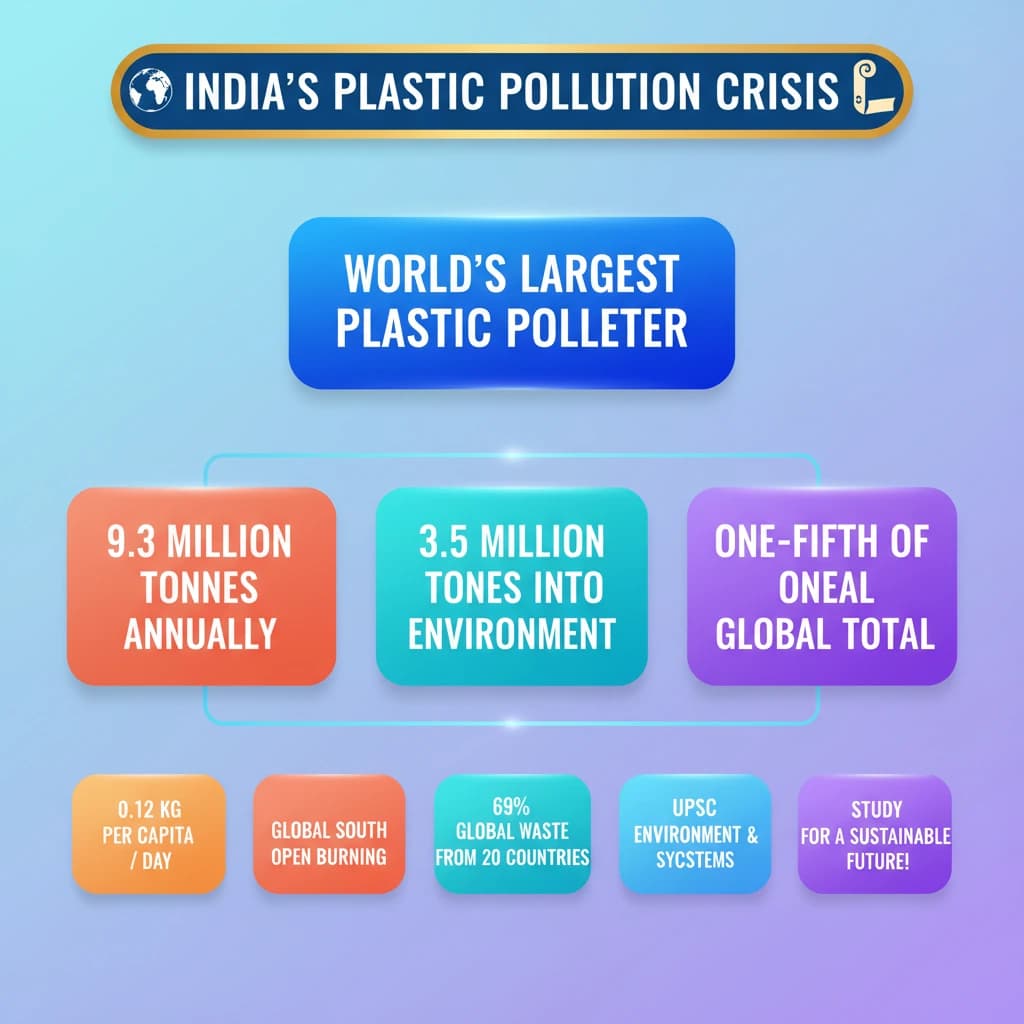
- •India is the highest contributor to global plastic pollution, accounting for approximately one-fifth of total plastic waste.
- •India generates 9.3 million tonnes of plastic pollution annually, with 3.5 million tonnes released into the environment.
- •A clear Global North-South divide exists: Global South (like India) uses open burning, Global North uses controlled systems.
- •69% of global plastic waste emissions come from just 20 countries.
- •India's per capita plastic waste generation is 0.12 kg per day.
- •The study from 'Nature' journal underscores the urgency for robust waste management policies and public action in India.
🧠 Memory Techniques
95% Verified Content
📚 Reference Sources
•Journal Nature (as cited in the provided content)