Loading page, please wait…
India as the World Largest Plastic Polluter - UPSC Environment And Ecology
What is India as the World Largest Plastic Polluter in UPSC Environment And Ecology?
India as the World Largest Plastic Polluter is a key topic under Environment And Ecology for UPSC Civil Services Examination. Key points include: India is the world's largest plastic polluter, contributing one-fifth of global plastic waste.. Annually, India generates 9.3 million tonnes of plastic pollution, with 3.5 million tonnes released as environmental debris.. The Global South, including India, relies heavily on open burning for waste management, contrasting with controlled systems in the Global North.. Understanding this topic is essential for both UPSC Prelims and Mains preparation.
Why is India as the World Largest Plastic Polluter important for UPSC exam?
India as the World Largest Plastic Polluter is a Medium-level topic in UPSC Environment And Ecology. It is tested in both Prelims (factual MCQs) and Mains (analytical answer writing). Previous year UPSC questions have frequently covered aspects of India as the World Largest Plastic Polluter, making it essential for comprehensive IAS preparation.
How to prepare India as the World Largest Plastic Polluter for UPSC?
To prepare India as the World Largest Plastic Polluter for UPSC: (1) Study the comprehensive notes covering all key concepts on Vaidra. (2) Practice previous year questions on this topic. (3) Connect it with current affairs using daily updates. (4) Revise using key takeaways and mind maps available for Environment And Ecology. (5) Write practice answers linking India as the World Largest Plastic Polluter to related GS Paper topics.
Key takeaways of India as the World Largest Plastic Polluter for UPSC
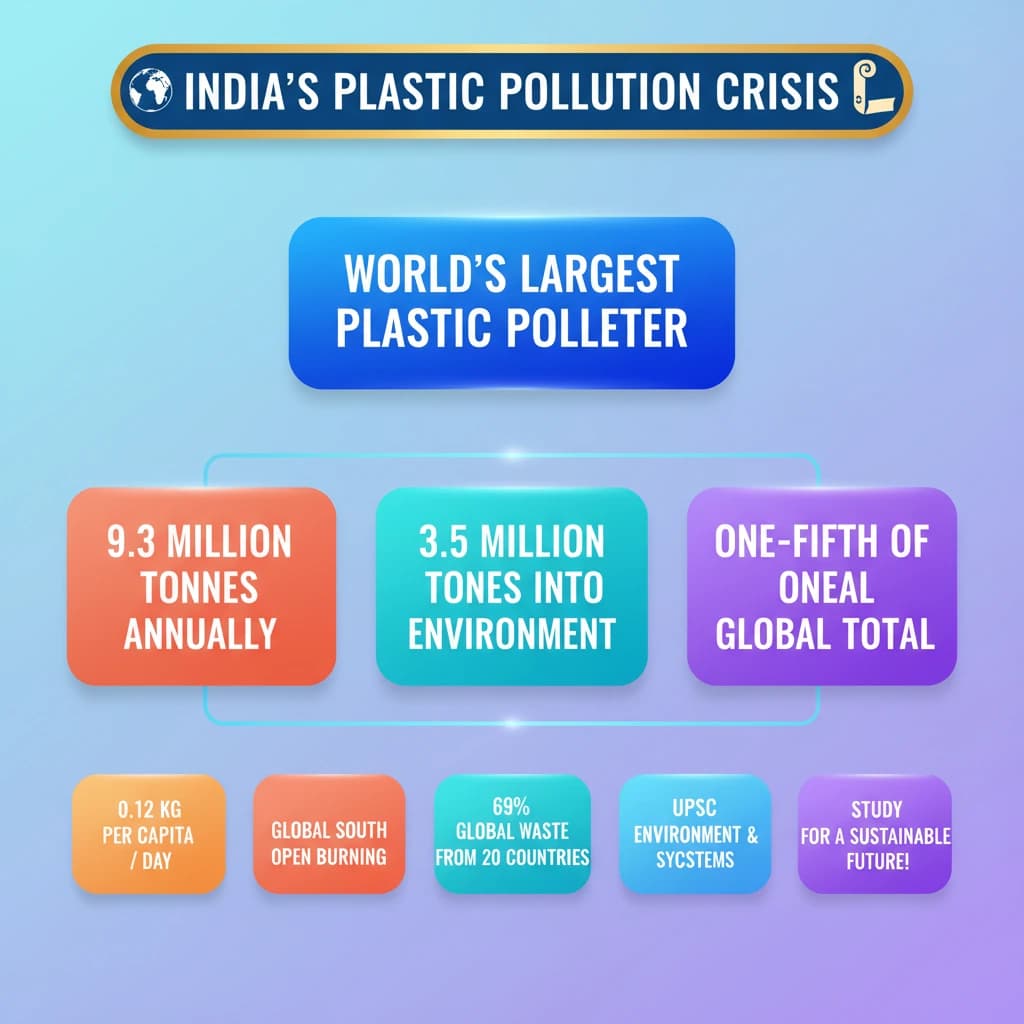
- India is the world's largest plastic polluter, contributing one-fifth of global plastic waste.
- Annually, India generates 9.3 million tonnes of plastic pollution, with 3.5 million tonnes released as environmental debris.
- The Global South, including India, relies heavily on open burning for waste management, contrasting with controlled systems in the Global North.
- Criticisms of the study include its narrow focus on waste management over production reduction and potential industry influence.
- Addressing plastic pollution requires comprehensive upstream (production reduction) and downstream (waste management) solutions.
- Government initiatives like EPR and the Single-Use Plastic Ban are crucial steps towards a circular economy for plastics in India.
India as the World Largest Plastic Polluter
Medium⏱️ 10 min read
environment and ecology
📖 Introduction
India's Dominance in Global Plastic Pollution
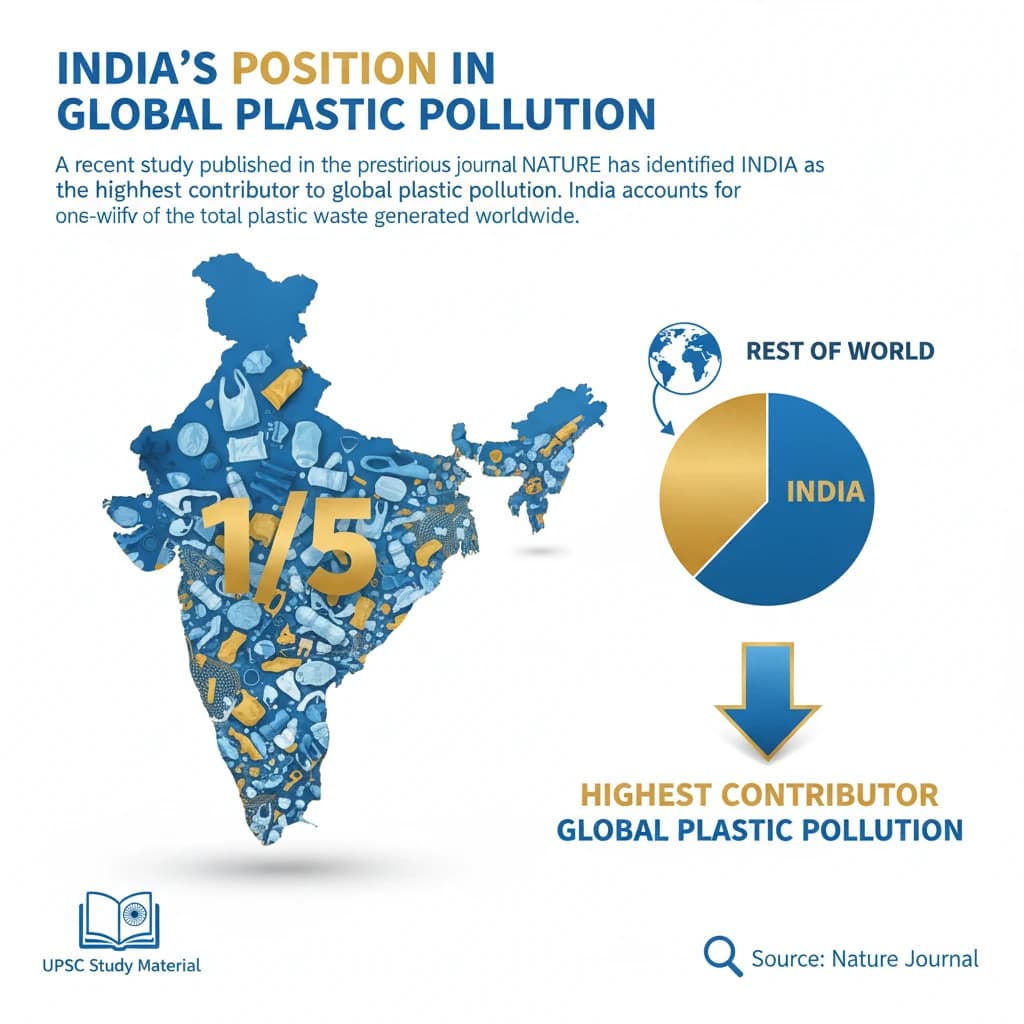
A recent study published in the prestigious journal Nature has highlighted a critical environmental issue, revealing India as the leading contributor to global plastic pollution. This finding underscores the significant challenge the nation faces in managing its burgeoning waste.
India accounts for approximately one-fifth of the total plastic waste generated worldwide, making its contribution substantial and globally impactful.
Key Findings on Plastic Waste Generation
The study provides specific figures on India's plastic waste output. The nation generates an estimated 9.3 million tonnes of plastic pollution annually. This massive volume presents considerable disposal challenges.
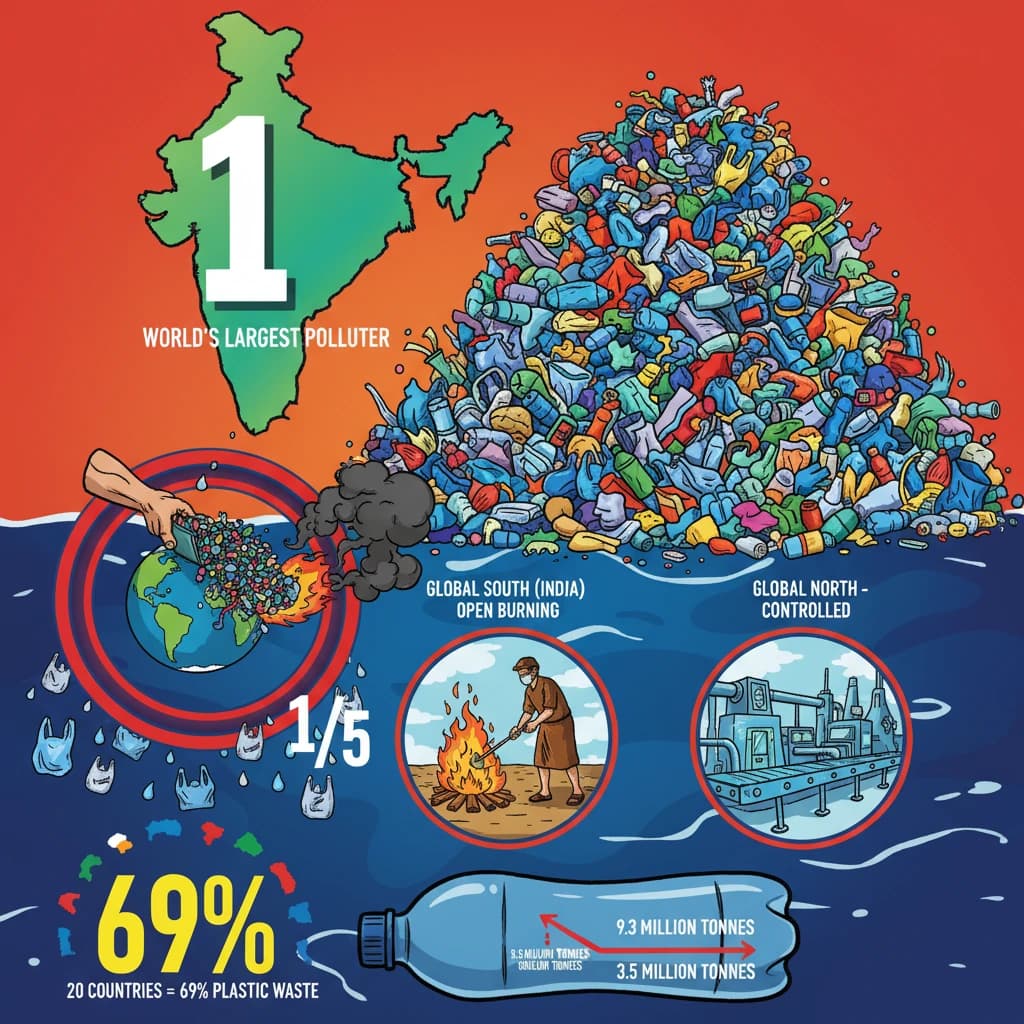
Out of the total 9.3 million tonnes of plastic waste, 5.8 million tonnes (mt) are typically incinerated. The remaining 3.5 million tonnes are unfortunately released directly into the environment as uncontrolled debris.
These figures are significantly higher compared to other populous nations. For instance, Nigeria contributes 3.5 mt, Indonesia 3.4 mt, and China 2.8 mt. India's per capita waste generation rate is approximately 0.12 kilograms per capita per day.
The Global North-South Divide in Plastic Pollution
The study also revealed a clear geographical divide in plastic waste emissions. The highest concentrations of plastic pollution are observed across countries in Southern Asia, Sub-Saharan Africa, and South-eastern Asia. This pattern indicates systemic differences in waste management practices.
Countries in the Global South, including India, frequently rely on methods like open burning for waste management due to inadequate infrastructure. In contrast, the Global North typically employs more controlled systems, resulting in less unmanaged waste entering the environment.
Disparities Between High and Low-Income Countries
Globally, a significant portion of plastic waste emissions originates from a limited number of countries. Approximately 69%, or 35.7 million tonnes per year, of plastic waste emissions come from just 20 countries.
In the Global South, the primary source of plastic pollution is open burning, largely attributable to poor and insufficient waste management systems. Conversely, in the Global North, pollution is predominantly from uncontrolled debris, despite higher overall waste generation rates.
High-income countries generally have higher plastic waste generation rates. However, they are not among the top 90 polluters due to their robust waste management infrastructure, which includes nearly 100% collection coverage and highly controlled disposal methods.
Criticisms of the Research Methodology
Despite its significant findings, the study has faced several criticisms regarding its scope and potential implications.
Narrow Focus
One major criticism is that the study overemphasized the importance of waste management as a solution. Critics argue it neglected the fundamental need to reduce plastic production at its source.
Misplaced Priorities
There are concerns that the study's findings could inadvertently divert attention from more fundamental upstream solutions. These include crucial measures like the phasing out of single-use plastics, which address the problem before it becomes waste.
Industry Support Concerns
The endorsement of the study by various plastics industry groups has raised questions. Critics suggest this alignment might indicate a bias towards industry interests rather than broader, more impactful environmental goals.
Undermining Comprehensive Solutions
Ultimately, the study's concentrated focus on waste management might inadvertently weaken efforts to address the more complex and interconnected issues of plastic production and effective recycling systems, hindering a truly holistic approach.
UPSC Insight: When addressing environmental issues like plastic pollution, always consider both upstream solutions (reducing production, promoting alternatives) and downstream solutions (effective waste collection, recycling, disposal). A balanced approach is key for comprehensive answers in GS-III Environment.
💡 Key Takeaways
- •India is the world's largest plastic polluter, contributing one-fifth of global plastic waste.
- •Annually, India generates 9.3 million tonnes of plastic pollution, with 3.5 million tonnes released as environmental debris.
- •The Global South, including India, relies heavily on open burning for waste management, contrasting with controlled systems in the Global North.
- •Criticisms of the study include its narrow focus on waste management over production reduction and potential industry influence.
- •Addressing plastic pollution requires comprehensive upstream (production reduction) and downstream (waste management) solutions.
- •Government initiatives like EPR and the Single-Use Plastic Ban are crucial steps towards a circular economy for plastics in India.
🧠 Memory Techniques
95% Verified Content
📚 Reference Sources
•Drishti IAS Summary on 'India as the World Largest Plastic Polluter'
•Government of India, Ministry of Environment, Forest and Climate Change (MoEFCC) reports on Plastic Waste Management Rules