Loading page, please wait…
Indore and Udaipur Joined Wetland Accredited Cities - UPSC Environment And Ecology
What is Indore and Udaipur Joined Wetland Accredited Cities in UPSC Environment And Ecology?
Indore and Udaipur Joined Wetland Accredited Cities is a key topic under Environment And Ecology for UPSC Civil Services Examination. Key points include: Indore and Udaipur are the first Indian cities to receive Wetland City Accreditation under the Ramsar Convention.. This accreditation recognizes cities committed to conserving and sustainably managing their urban wetlands.. The Ramsar Convention protects 89 Indian wetlands and involves 172 member countries globally.. Understanding this topic is essential for both UPSC Prelims and Mains preparation.
Why is Indore and Udaipur Joined Wetland Accredited Cities important for UPSC exam?
Indore and Udaipur Joined Wetland Accredited Cities is a Medium-level topic in UPSC Environment And Ecology. It is tested in both Prelims (factual MCQs) and Mains (analytical answer writing). Previous year UPSC questions have frequently covered aspects of Indore and Udaipur Joined Wetland Accredited Cities, making it essential for comprehensive IAS preparation.
How to prepare Indore and Udaipur Joined Wetland Accredited Cities for UPSC?
To prepare Indore and Udaipur Joined Wetland Accredited Cities for UPSC: (1) Study the comprehensive notes covering all key concepts on Vaidra. (2) Practice previous year questions on this topic. (3) Connect it with current affairs using daily updates. (4) Revise using key takeaways and mind maps available for Environment And Ecology. (5) Write practice answers linking Indore and Udaipur Joined Wetland Accredited Cities to related GS Paper topics.
Key takeaways of Indore and Udaipur Joined Wetland Accredited Cities for UPSC
- Indore and Udaipur are the first Indian cities to receive Wetland City Accreditation under the Ramsar Convention.
- This accreditation recognizes cities committed to conserving and sustainably managing their urban wetlands.
- The Ramsar Convention protects 89 Indian wetlands and involves 172 member countries globally.
- Accreditation criteria focus on balancing urban development with ecological preservation and wetland services.
- This achievement positions India as a leader in urban wetland conservation and promotes sustainable urban planning.
- Wetlands provide essential ecosystem services vital for environmental and community well-being.
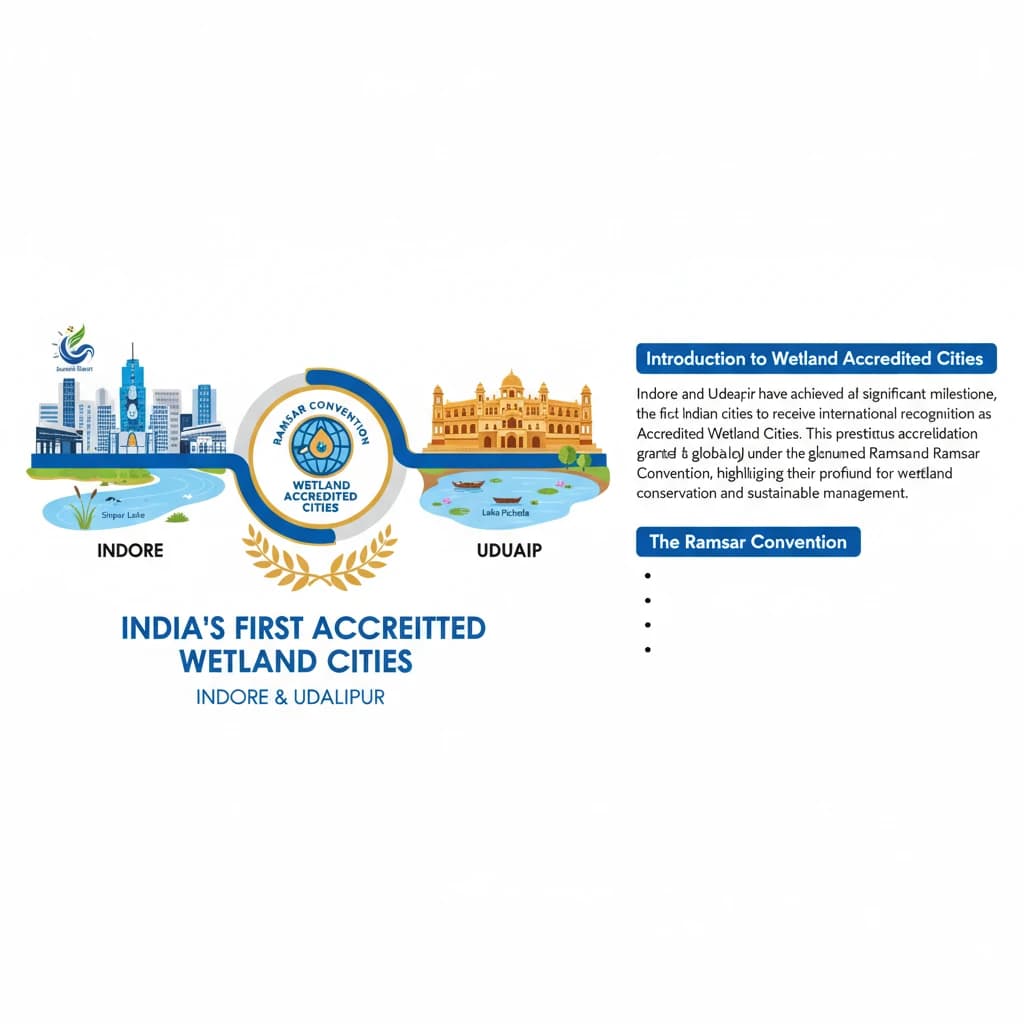
Indore and Udaipur Joined Wetland Accredited Cities
Medium⏱️ 7 min read
environment and ecology
📖 Introduction
Introduction to Wetland Accredited Cities
Indore and Udaipur have achieved a significant milestone, becoming the first Indian cities to receive international recognition as Accredited Wetland Cities.
This prestigious accreditation is granted under the globally renowned Ramsar Convention, highlighting their profound commitment to wetland conservation and sustainable management.
The Ramsar Convention and India's Wetlands
The Ramsar Convention is an intergovernmental treaty that provides the framework for national action and international cooperation for the conservation and wise use of wetlands.
Currently, India boasts 89 wetlands that are protected under the Ramsar Convention. Globally, the convention includes 172 member countries.
These wetlands are crucial for biodiversity, water regulation, and climate resilience, making their protection a global priority.
Understanding Wetland Accredited Cities
The Wetland City Accreditation is an international recognition for urban areas that demonstrate exceptional commitment to conserving and sustainably managing their wetlands.
It aims to promote the integration of wetland conservation into urban planning and decision-making processes.
This recognition acknowledges cities that actively protect their wetlands, ensuring these vital ecosystems continue to provide essential services to both the environment and local communities.
Accreditation Criteria Overview
Cities seeking this accreditation must fulfill six international criteria, which primarily focus on the conservation of wetland ecosystems and the services they provide.
The process ensures that accredited cities are committed to striking a delicate balance between urban development and ecological preservation.
For UPSC, understanding the purpose and significance of the Wetland City Accreditation, along with the broader role of the Ramsar Convention, is crucial for both Prelims (factual recall) and Mains (environmental governance, sustainable development).
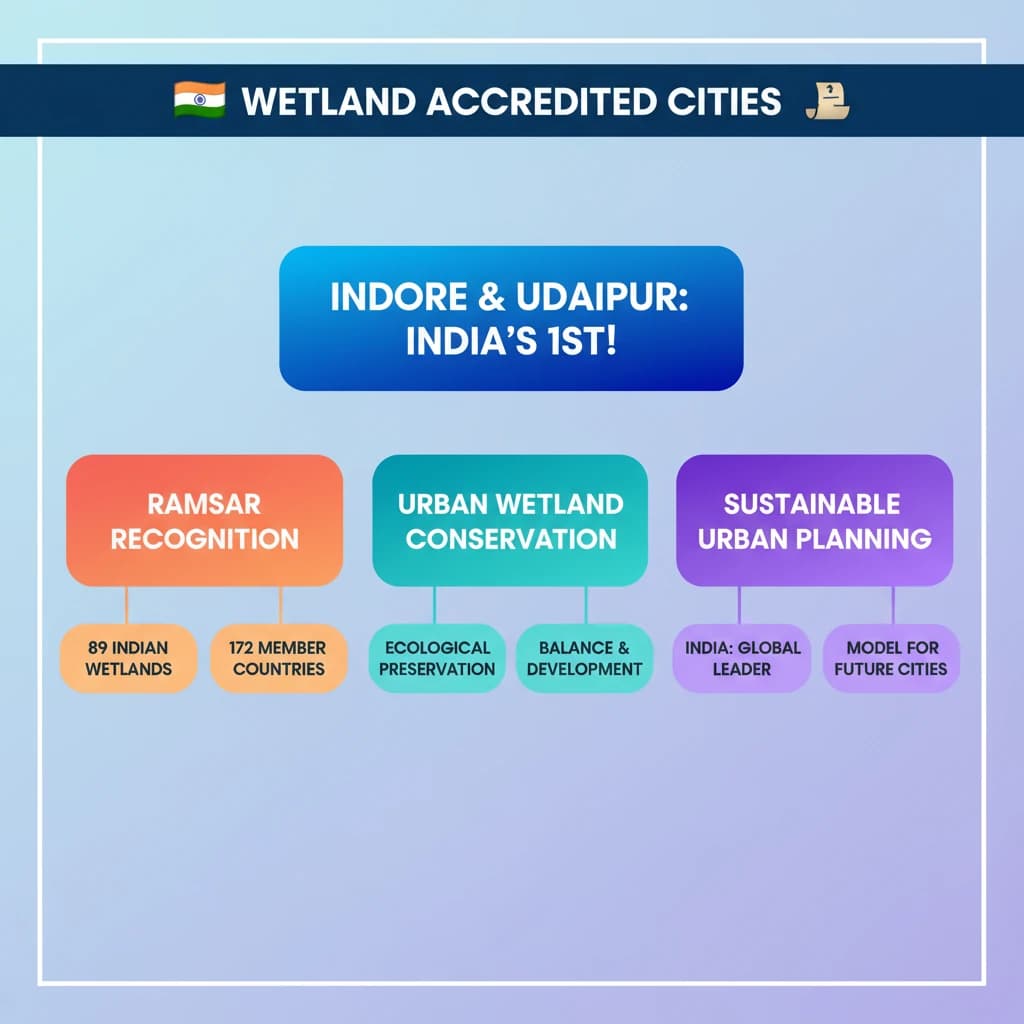
💡 Key Takeaways
- •Indore and Udaipur are the first Indian cities to receive Wetland City Accreditation under the Ramsar Convention.
- •This accreditation recognizes cities committed to conserving and sustainably managing their urban wetlands.
- •The Ramsar Convention protects 89 Indian wetlands and involves 172 member countries globally.
- •Accreditation criteria focus on balancing urban development with ecological preservation and wetland services.
- •This achievement positions India as a leader in urban wetland conservation and promotes sustainable urban planning.
- •Wetlands provide essential ecosystem services vital for environmental and community well-being.
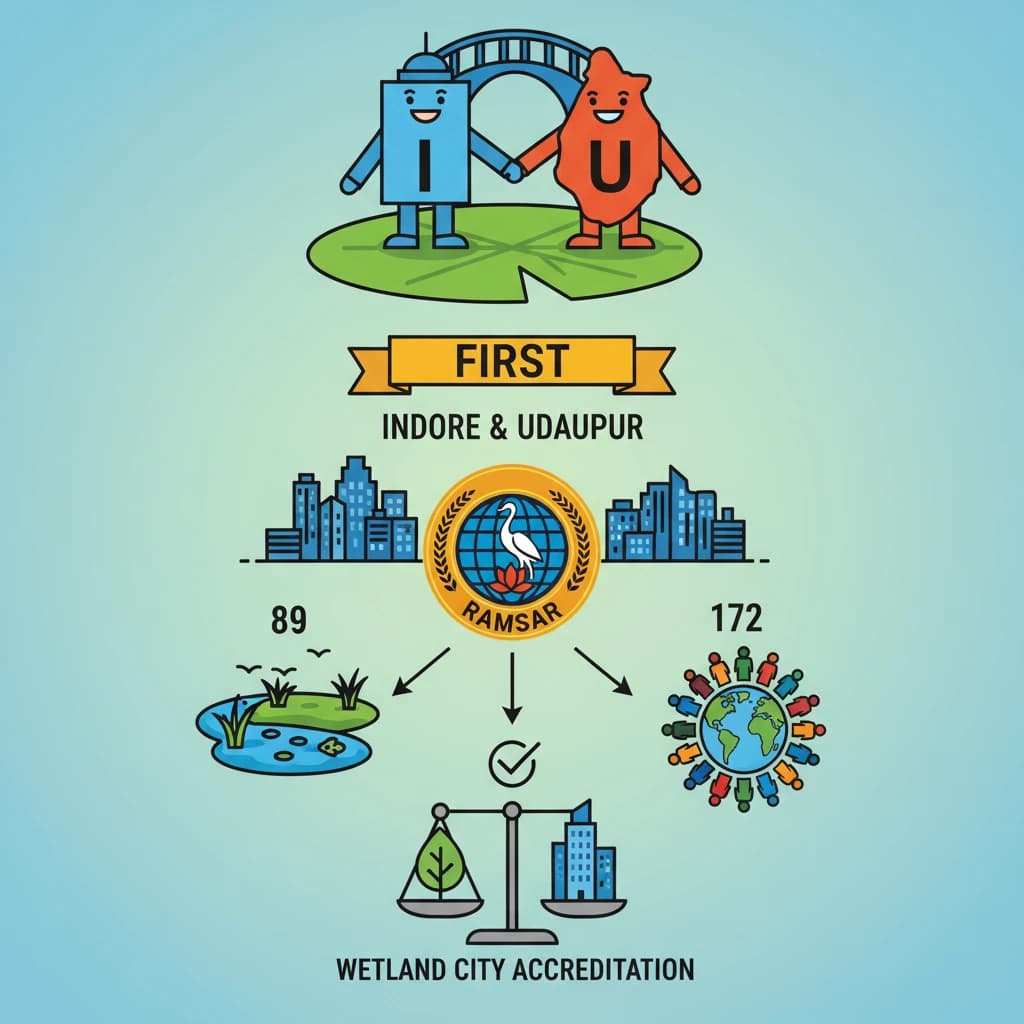
🧠 Memory Techniques
95% Verified Content
📚 Reference Sources
•Ramsar Convention Website (for general information on Ramsar and Wetland City Accreditation)
•Ministry of Environment, Forest and Climate Change (MoEFCC) publications (for India-specific wetland data)