Loading page, please wait…
Kaziranga National Park - UPSC Environment And Ecology
What is Kaziranga National Park in UPSC Environment And Ecology?
Kaziranga National Park is a key topic under Environment And Ecology for UPSC Civil Services Examination. Key points include: Kaziranga National Park (KNP) is located in Assam, established in 1908.. It holds multiple protected statuses: National Park (1974), UNESCO World Heritage Site (1985), and Tiger Reserve (2006).. KNP is the primary habitat for over 2200 Indian One-Horned Rhinoceros, representing ~2/3rd of the global population.. Understanding this topic is essential for both UPSC Prelims and Mains preparation.
Why is Kaziranga National Park important for UPSC exam?
Kaziranga National Park is a Medium-level topic in UPSC Environment And Ecology. It is tested in both Prelims (factual MCQs) and Mains (analytical answer writing). Previous year UPSC questions have frequently covered aspects of Kaziranga National Park, making it essential for comprehensive IAS preparation.
How to prepare Kaziranga National Park for UPSC?
To prepare Kaziranga National Park for UPSC: (1) Study the comprehensive notes covering all key concepts on Vaidra. (2) Practice previous year questions on this topic. (3) Connect it with current affairs using daily updates. (4) Revise using key takeaways and mind maps available for Environment And Ecology. (5) Write practice answers linking Kaziranga National Park to related GS Paper topics.
Key takeaways of Kaziranga National Park for UPSC
- Kaziranga National Park (KNP) is located in Assam, established in 1908.
- It holds multiple protected statuses: National Park (1974), UNESCO World Heritage Site (1985), and Tiger Reserve (2006).
- KNP is the primary habitat for over 2200 Indian One-Horned Rhinoceros, representing ~2/3rd of the global population.
- It is a unique ecosystem within the Brahmaputra Valley floodplain, supporting diverse vegetation.
- The park faces significant threats from poaching and increasingly intense annual floods due to climate change.
- KNP is crucial for eco-tourism and local livelihoods, balancing conservation with community benefits.
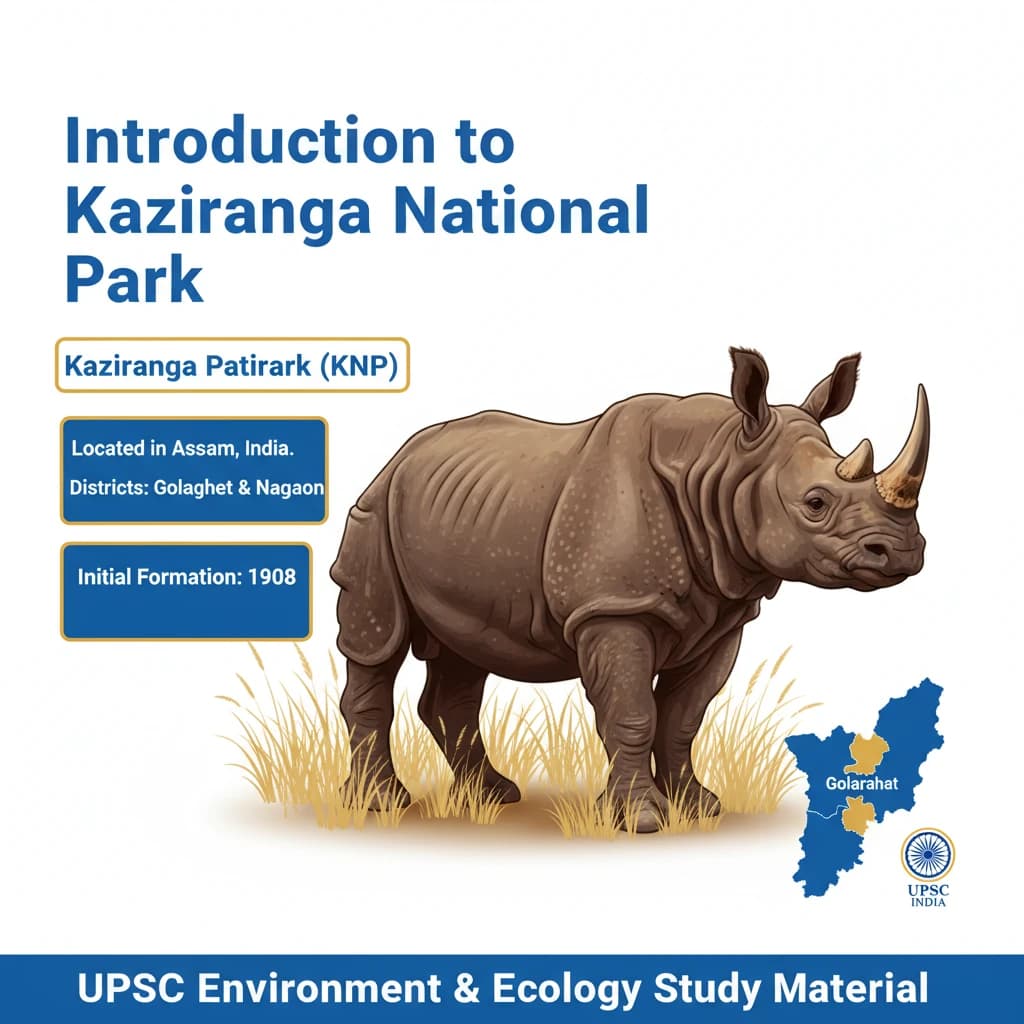
Kaziranga National Park
Medium⏱️ 7 min read
environment and ecology
📖 Introduction
Introduction to Kaziranga National Park
Kaziranga National Park (KNP) is a renowned wildlife sanctuary located in the northeastern part of India. It spans across the districts of Golaghat and Nagaon in the state of Assam.
The park was initially formed in 1908, marking the beginning of its journey as a protected area.
Initial Formation: Kaziranga National Park was established in 1908.
Key Declarations and Status
Over the years, KNP has received several significant designations, highlighting its global importance for conservation.
It was officially declared a National Park in 1974, granting it a higher level of protection under Indian law.
National Park Status: Declared a National Park in 1974.
Further international recognition came in 1985 when the park was designated a World Heritage Site by UNESCO, acknowledging its outstanding universal value.
International Recognition: Declared a UNESCO World Heritage Site in 1985.
In 2006, Kaziranga was also declared a Tiger Reserve, underscoring its role in the conservation of the endangered big cat population.
Tiger Conservation: Declared a Tiger Reserve in 2006.
Geographical Significance
Kaziranga National Park holds a unique ecological position as the single largest undisturbed and representative area in the Brahmaputra Valley floodplain.
Ecological Importance: KNP is the most extensive and untouched representative area within the dynamic Brahmaputra Valley floodplain ecosystem.
Diverse Vegetation Types
The park's diverse landscape supports a variety of vegetation types, which are crucial for its rich biodiversity.
- Alluvial inundated grasslands
- Alluvial savanna woodlands
- Tropical moist mixed deciduous forests
- Tropical semi-evergreen forests
Home to the Indian One-Horned Rhinoceros
Kaziranga National Park is world-renowned as the primary stronghold for the Indian one-horned rhinoceros.
It is home to more than 2200 Indian one-horned rhinoceros, which constitutes approximately 2/3rd of their total global population.
Flagship Species: KNP protects over 2200 Indian one-horned rhinoceros, representing about 2/3rd of the world's population.
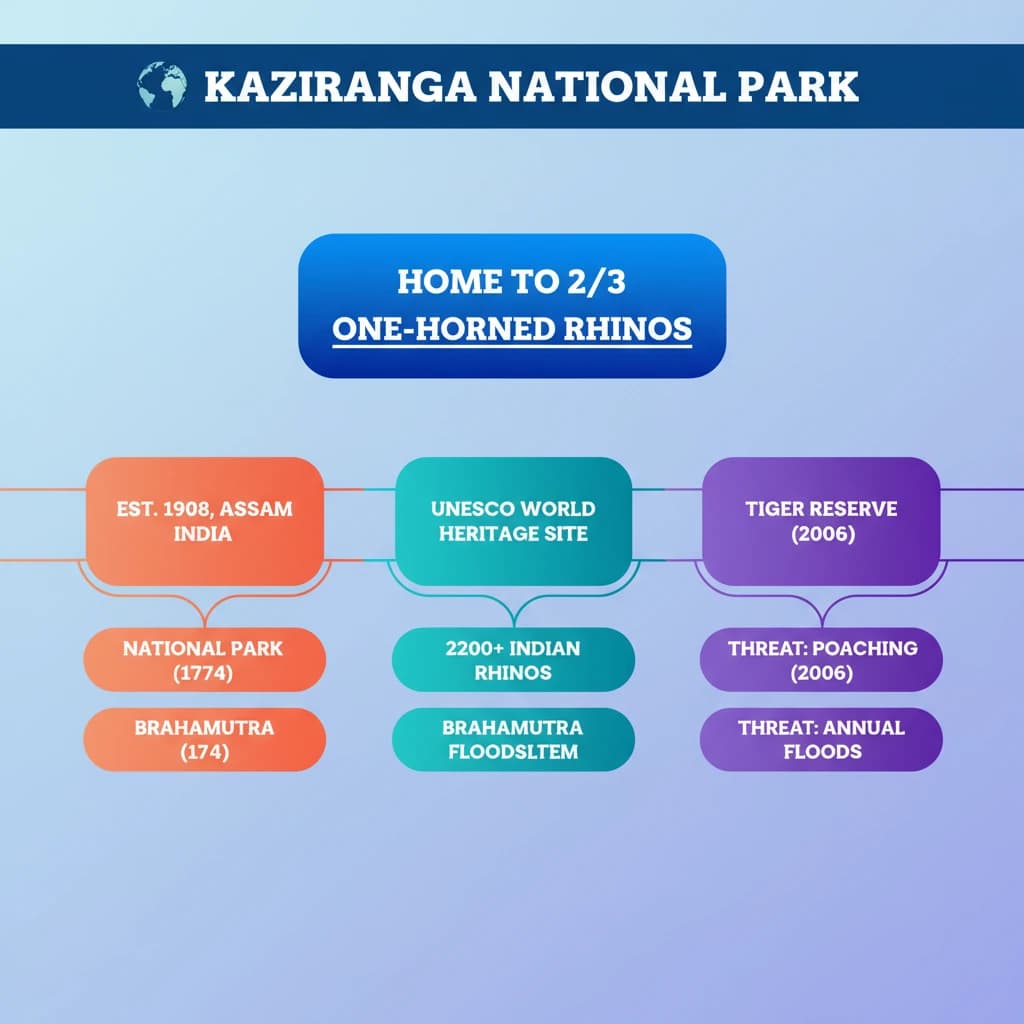
💡 Key Takeaways
- •Kaziranga National Park (KNP) is located in Assam, established in 1908.
- •It holds multiple protected statuses: National Park (1974), UNESCO World Heritage Site (1985), and Tiger Reserve (2006).
- •KNP is the primary habitat for over 2200 Indian One-Horned Rhinoceros, representing ~2/3rd of the global population.
- •It is a unique ecosystem within the Brahmaputra Valley floodplain, supporting diverse vegetation.
- •The park faces significant threats from poaching and increasingly intense annual floods due to climate change.
- •KNP is crucial for eco-tourism and local livelihoods, balancing conservation with community benefits.
🧠 Memory Techniques

98% Verified Content