Loading page, please wait…
Natural Pathogenic Fungi to Save Eucalyptus Forests - UPSC Environment And Ecology
What is Natural Pathogenic Fungi to Save Eucalyptus Forests in UPSC Environment And Ecology?
Natural Pathogenic Fungi to Save Eucalyptus Forests is a key topic under Environment And Ecology for UPSC Civil Services Examination. Key points include: Eucalyptus forests are crucial for paper pulp but threatened by the Eucalyptus snout beetle.. Researchers found a natural pathogenic fungi to control the beetle, acting as a biopesticide.. The Eucalyptus snout beetle (Gonipterus platensis) is an invasive defoliator originating from Australia.. Understanding this topic is essential for both UPSC Prelims and Mains preparation.
Why is Natural Pathogenic Fungi to Save Eucalyptus Forests important for UPSC exam?
Natural Pathogenic Fungi to Save Eucalyptus Forests is a Medium-level topic in UPSC Environment And Ecology. It is tested in both Prelims (factual MCQs) and Mains (analytical answer writing). Previous year UPSC questions have frequently covered aspects of Natural Pathogenic Fungi to Save Eucalyptus Forests, making it essential for comprehensive IAS preparation.
How to prepare Natural Pathogenic Fungi to Save Eucalyptus Forests for UPSC?
To prepare Natural Pathogenic Fungi to Save Eucalyptus Forests for UPSC: (1) Study the comprehensive notes covering all key concepts on Vaidra. (2) Practice previous year questions on this topic. (3) Connect it with current affairs using daily updates. (4) Revise using key takeaways and mind maps available for Environment And Ecology. (5) Write practice answers linking Natural Pathogenic Fungi to Save Eucalyptus Forests to related GS Paper topics.
Key takeaways of Natural Pathogenic Fungi to Save Eucalyptus Forests for UPSC
- Eucalyptus forests are crucial for paper pulp but threatened by the Eucalyptus snout beetle.
- Researchers found a natural pathogenic fungi to control the beetle, acting as a biopesticide.
- The Eucalyptus snout beetle (Gonipterus platensis) is an invasive defoliator originating from Australia.
- Biopesticides offer an eco-friendly alternative to chemical pesticides for pest management.
- This approach supports sustainable forestry, economic stability, and biodiversity conservation.
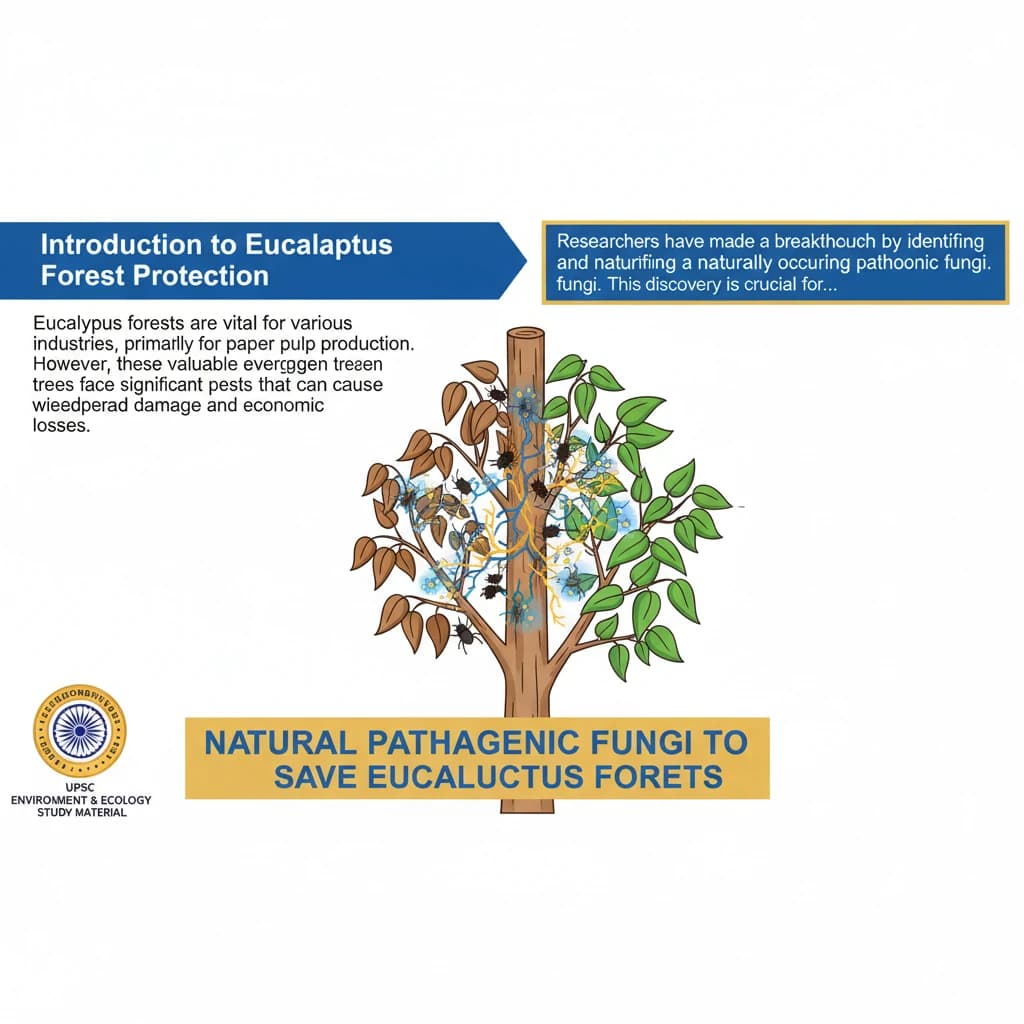
Natural Pathogenic Fungi to Save Eucalyptus Forests
Medium⏱️ 7 min read
environment and ecology
📖 Introduction
Introduction to Eucalyptus Forest Protection
Eucalyptus forests are vital for various industries, primarily for paper pulp production. However, these valuable evergreen trees face significant threats from pests that can cause widespread damage and economic losses.
Researchers have made a breakthrough by identifying and characterizing a naturally occurring pathogenic fungi. This discovery is crucial for developing a sustainable biopesticide to control harmful beetle populations affecting Eucalyptus trees.
Understanding the Eucalyptus Snout Beetle
The primary pest threatening Eucalyptus forests is the Eucalyptus snout beetle, scientifically known as Gonipterus platensis. This beetle is a voracious leaf-feeding pest and a major defoliator of eucalypts.
According to the Food and Agriculture Organization of the United Nations (FAO), the Eucalyptus snout beetle causes significant damage globally. It targets leaves, buds, and shoots, leading to stunted growth and severe defoliation.
Origin and Spread of the Pest
The Eucalyptus snout beetle is indigenous to Australia, its native habitat. However, it has spread to many other countries worldwide where Eucalyptus trees are cultivated, becoming an invasive pest.
The beetle possesses a great flight capability, enabling it to cover vast areas. Its transfer is also facilitated by the transport of forest products, making its control challenging across different regions.
Impact of Beetle Infestation
Infestations by the Eucalyptus snout beetle result in heavy losses for the forestry industry. The continuous feeding on leaves, buds, and shoots severely impacts the trees' health and productivity.
This damage manifests as stunted growth and widespread defoliation, reducing the quantity and quality of wood available for industries like paper pulp production.
UPSC Relevance: This topic highlights issues in environmental conservation, sustainable forestry, and the application of biotechnology in pest management, often relevant for GS Paper III (Environment & Ecology, Science & Technology).
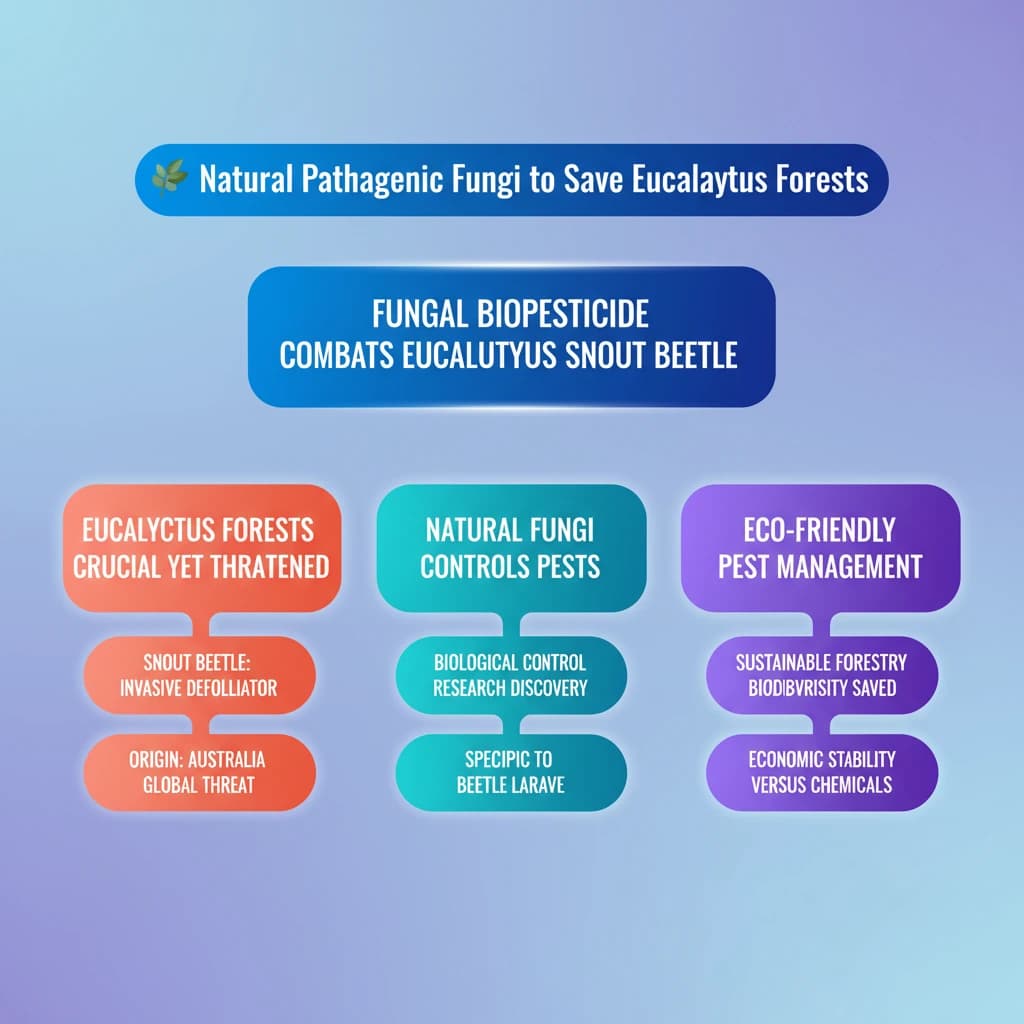
💡 Key Takeaways
- •Eucalyptus forests are crucial for paper pulp but threatened by the Eucalyptus snout beetle.
- •Researchers found a natural pathogenic fungi to control the beetle, acting as a biopesticide.
- •The Eucalyptus snout beetle (Gonipterus platensis) is an invasive defoliator originating from Australia.
- •Biopesticides offer an eco-friendly alternative to chemical pesticides for pest management.
- •This approach supports sustainable forestry, economic stability, and biodiversity conservation.
🧠 Memory Techniques
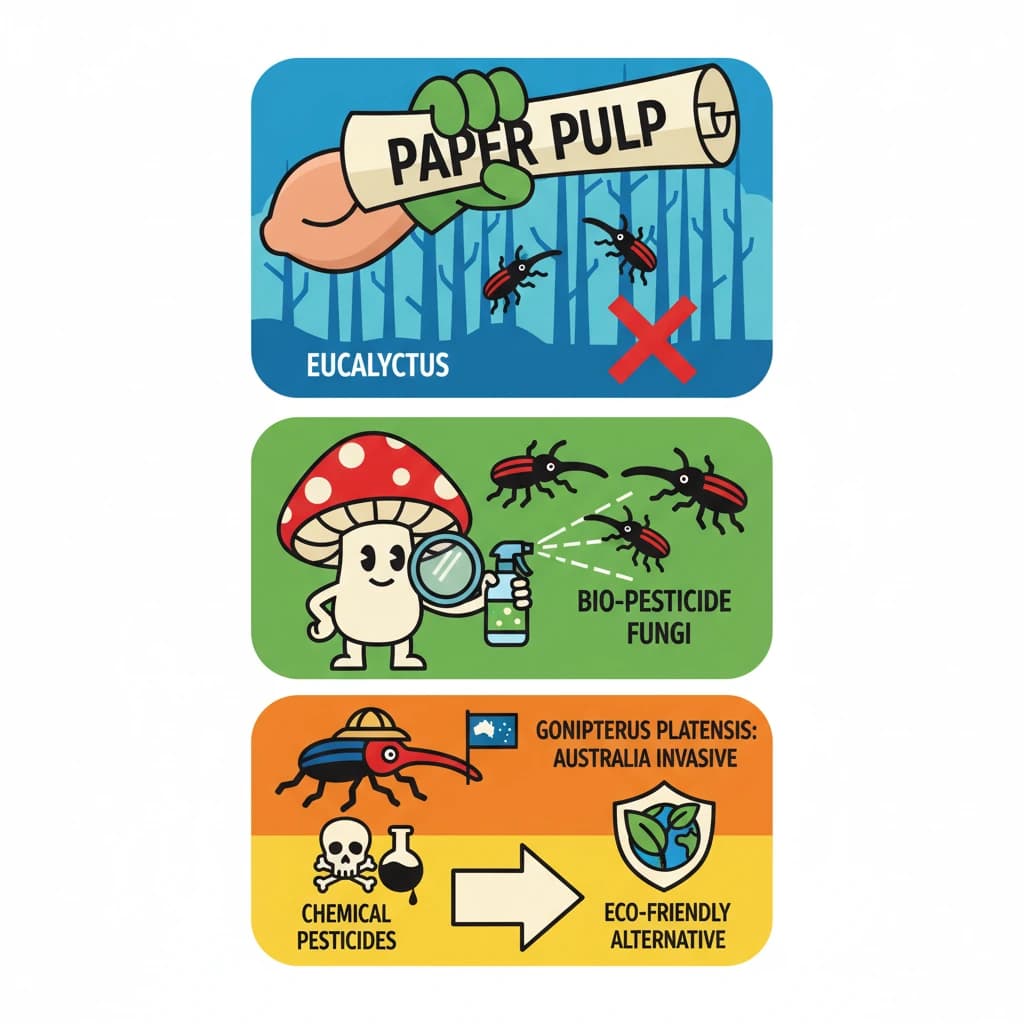
95% Verified Content
📚 Reference Sources
•Food and Agriculture Organization of the United Nations (FAO) - on Eucalyptus snout beetle