Loading page, please wait…
Nitrogen Pollution - UPSC Environment And Ecology
What is Nitrogen Pollution in UPSC Environment And Ecology?
Nitrogen Pollution is a key topic under Environment And Ecology for UPSC Civil Services Examination. Key points include: Nitrogen pollution is the excessive presence of reactive nitrogen compounds in the environment, primarily in water bodies.. Human activities now produce more reactive nitrogen than natural processes, with 80% lost to the environment annually (UNEP).. A key driver is the doubling of nitrogen-based fertilizer consumption globally between 1978 and 2014.. Understanding this topic is essential for both UPSC Prelims and Mains preparation.
Why is Nitrogen Pollution important for UPSC exam?
Nitrogen Pollution is a Medium-level topic in UPSC Environment And Ecology. It is tested in both Prelims (factual MCQs) and Mains (analytical answer writing). Previous year UPSC questions have frequently covered aspects of Nitrogen Pollution, making it essential for comprehensive IAS preparation.
How to prepare Nitrogen Pollution for UPSC?
To prepare Nitrogen Pollution for UPSC: (1) Study the comprehensive notes covering all key concepts on Vaidra. (2) Practice previous year questions on this topic. (3) Connect it with current affairs using daily updates. (4) Revise using key takeaways and mind maps available for Environment And Ecology. (5) Write practice answers linking Nitrogen Pollution to related GS Paper topics.
Key takeaways of Nitrogen Pollution for UPSC
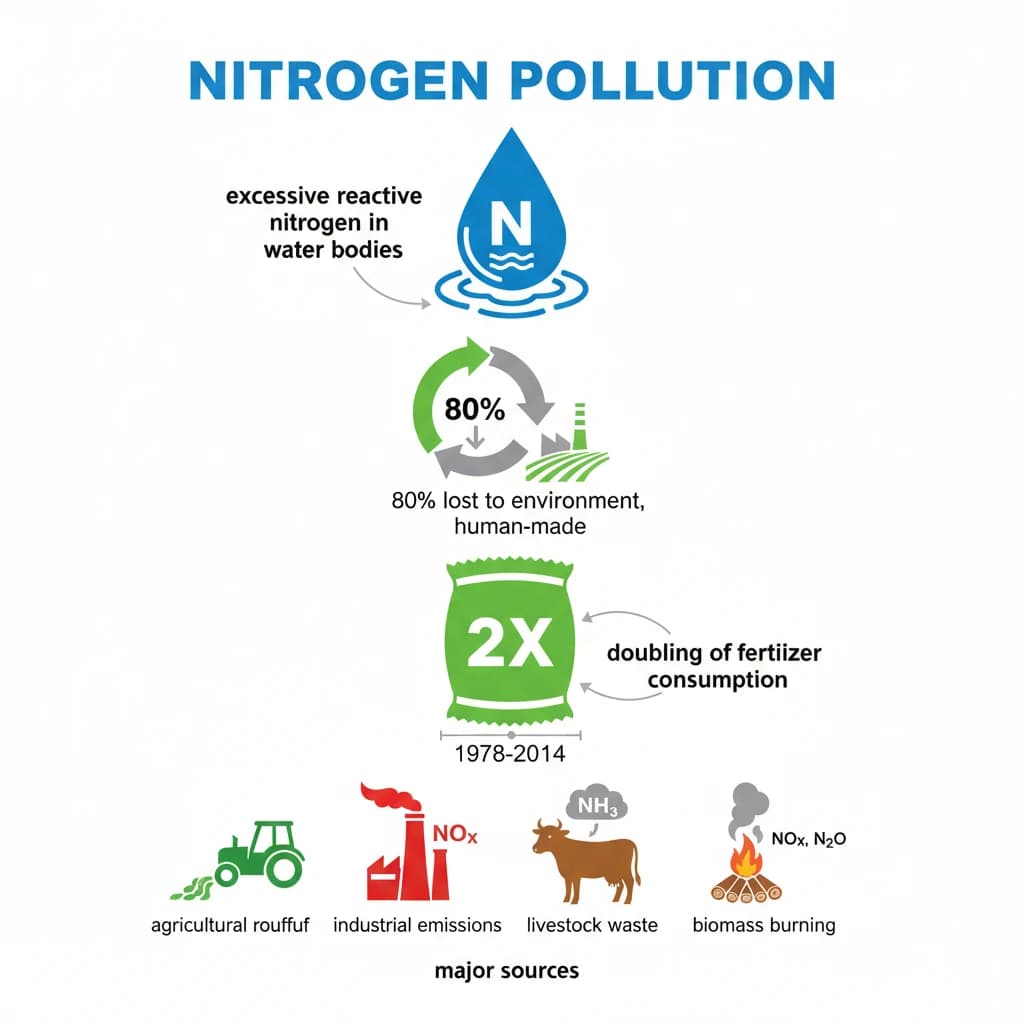
- Nitrogen pollution is the excessive presence of reactive nitrogen compounds in the environment, primarily in water bodies.
- Human activities now produce more reactive nitrogen than natural processes, with 80% lost to the environment annually (UNEP).
- A key driver is the doubling of nitrogen-based fertilizer consumption globally between 1978 and 2014.
- Major sources include agricultural runoff, industrial emissions (NOx), livestock waste (ammonia), and biomass burning (NOx, N2O).
- By 2050, one-third of global river sub-basins are projected to face severe clean water scarcity due to this pollution.
Nitrogen Pollution
Medium⏱️ 6 min read
environment and ecology
📖 Introduction
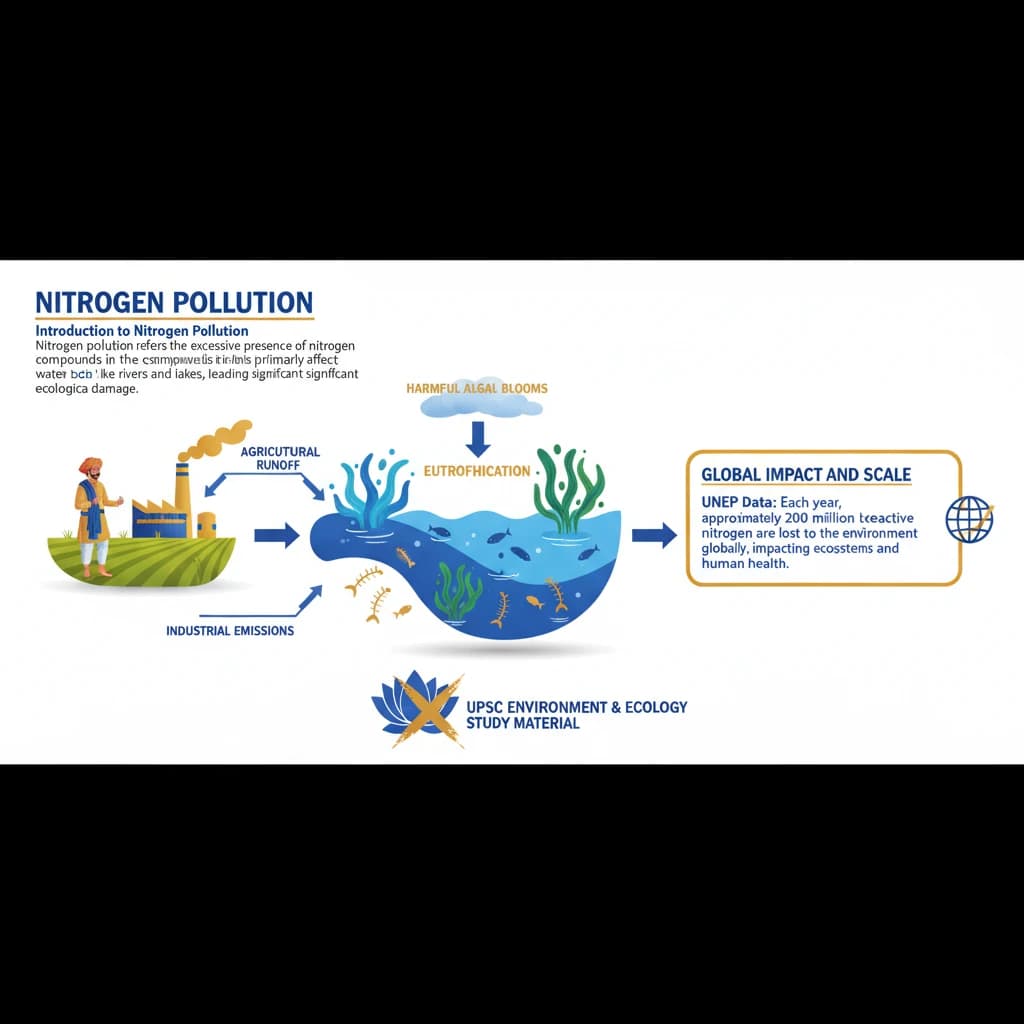
Introduction to Nitrogen Pollution
Nitrogen pollution refers to the excessive presence of nitrogen compounds in the environment. These compounds primarily affect water bodies like rivers and lakes, leading to significant ecological damage.
Global Impact and Scale
UNEP Data: Each year, approximately 200 million tonnes of reactive nitrogen are lost to the environment globally.
This accounts for 80% of the total reactive nitrogen, highlighting the vast scale of human impact.
Human activities now produce more reactive nitrogen than natural processes, indicating a significant imbalance in the natural nitrogen cycle.
Projected Future Scarcity
Recent research projects that by 2050, one-third of global river sub-basins will face severe scarcity of clean water.
This critical issue is directly attributed to the escalating problem of nitrogen pollution, impacting human health and ecosystems.
Key Drivers: Fertilizer Consumption
A primary driver of nitrogen pollution is the increasing use of nitrogen-based fertilizers in agriculture worldwide.
Historical Trend: Global consumption of nitrogen-based fertilizers doubled between 1978 and 2014, contributing significantly to environmental overload.
Sources of Nitrogen Pollution
Nitrogen pollution originates from a variety of anthropogenic activities, releasing nitrogen compounds into the atmosphere, soil, and water systems.
Agricultural Activities
The extensive use of nitrogen-based fertilizers is a major contributor to environmental nitrogen overload.
- These fertilizers can leach into groundwater, contaminating drinking water sources.
- They also lead to runoff into surface water bodies, causing eutrophication and algal blooms.
Industrial Processes
Manufacturing industries, especially those producing nitrogen-based chemicals and fertilizers, release nitrogen compounds directly into the environment.
The combustion of fossil fuels in industrial settings also emits harmful nitrogen oxides (NOx) into the atmosphere, contributing to acid rain and smog.
Livestock Farming
Waste from livestock, including manure and urine, contains significant amounts of nitrogen compounds such as ammonia.
Emissions: The livestock sector currently emits 65 teragrams (Tg) of nitrogen per year, which is equivalent to one-third of all current human-induced nitrogen emissions.
Improper storage and management of livestock waste lead to nitrogen runoff, polluting water bodies and exacerbating eutrophication.
Biomass Burning
Activities such as wildfires and the burning of cow dung cakes (often used as fuel in rural areas) release nitrogen compounds.
These processes emit nitrogen oxides (NOx) and nitrous oxide (N2O) into the atmosphere, contributing to air pollution and acting as potent greenhouse gases.
💡 Key Takeaways
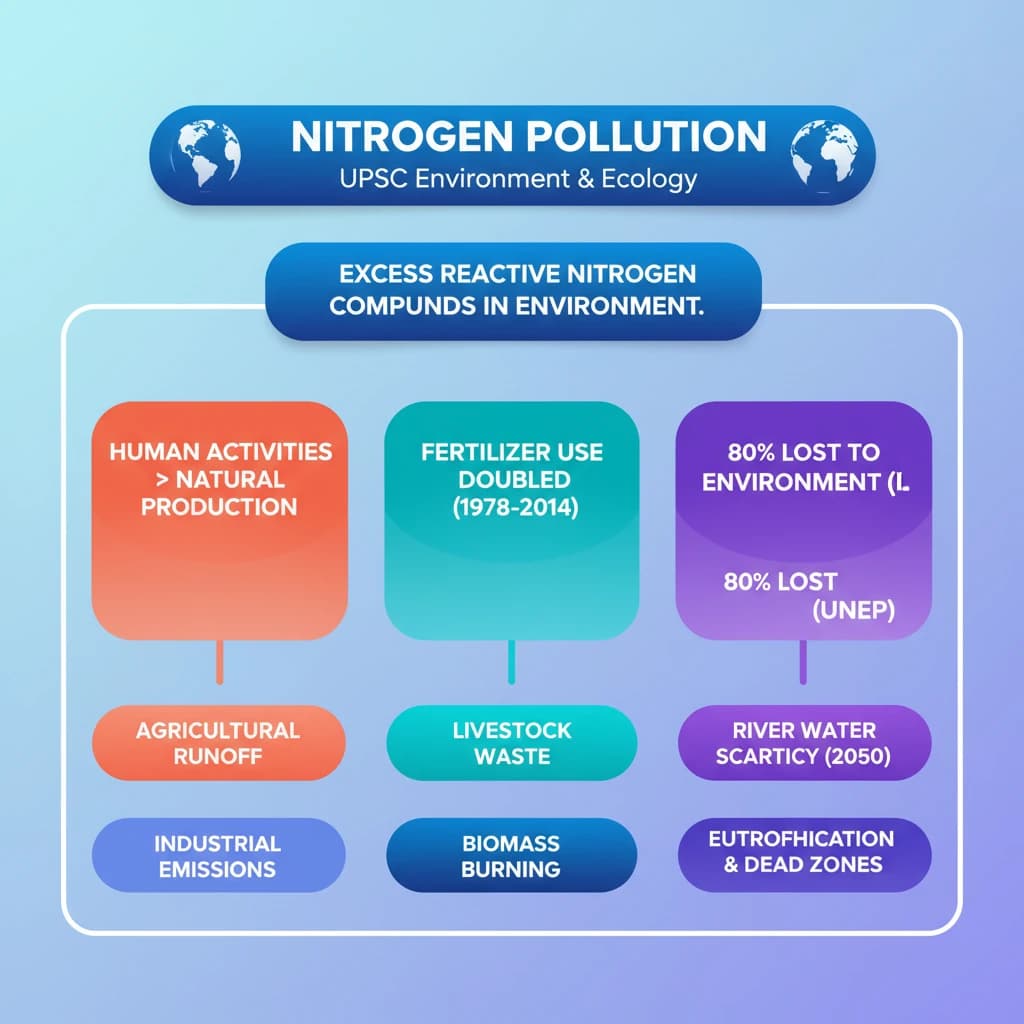
- •Nitrogen pollution is the excessive presence of reactive nitrogen compounds in the environment, primarily in water bodies.
- •Human activities now produce more reactive nitrogen than natural processes, with 80% lost to the environment annually (UNEP).
- •A key driver is the doubling of nitrogen-based fertilizer consumption globally between 1978 and 2014.
- •Major sources include agricultural runoff, industrial emissions (NOx), livestock waste (ammonia), and biomass burning (NOx, N2O).
- •By 2050, one-third of global river sub-basins are projected to face severe clean water scarcity due to this pollution.
🧠 Memory Techniques
95% Verified Content