Loading page, please wait…
Northeast African Cheetah - UPSC Environment And Ecology
What is Northeast African Cheetah in UPSC Environment And Ecology?
Northeast African Cheetah is a key topic under Environment And Ecology for UPSC Civil Services Examination. Key points include: Northeast African Cheetah faces severe threats including prey loss, retaliatory killing, and illegal trade.. Illegal trade of cubs to Arab countries is causing a critical decline in its genetic diversity.. Reduced genetic diversity makes the subspecies vulnerable to diseases and less adaptable.. Understanding this topic is essential for both UPSC Prelims and Mains preparation.
Why is Northeast African Cheetah important for UPSC exam?
Northeast African Cheetah is a Medium-level topic in UPSC Environment And Ecology. It is tested in both Prelims (factual MCQs) and Mains (analytical answer writing). Previous year UPSC questions have frequently covered aspects of Northeast African Cheetah, making it essential for comprehensive IAS preparation.
How to prepare Northeast African Cheetah for UPSC?
To prepare Northeast African Cheetah for UPSC: (1) Study the comprehensive notes covering all key concepts on Vaidra. (2) Practice previous year questions on this topic. (3) Connect it with current affairs using daily updates. (4) Revise using key takeaways and mind maps available for Environment And Ecology. (5) Write practice answers linking Northeast African Cheetah to related GS Paper topics.
Key takeaways of Northeast African Cheetah for UPSC
- Northeast African Cheetah faces severe threats including prey loss, retaliatory killing, and illegal trade.
- Illegal trade of cubs to Arab countries is causing a critical decline in its genetic diversity.
- Reduced genetic diversity makes the subspecies vulnerable to diseases and less adaptable.
- Conservation efforts require tackling organized crime, engaging communities, and enforcing international laws like CITES.
- The issue highlights broader challenges in biodiversity conservation and combating wildlife trafficking.
Northeast African Cheetah
Medium⏱️ 7 min read
environment and ecology
📖 Introduction
Introduction to the Northeast African Cheetah
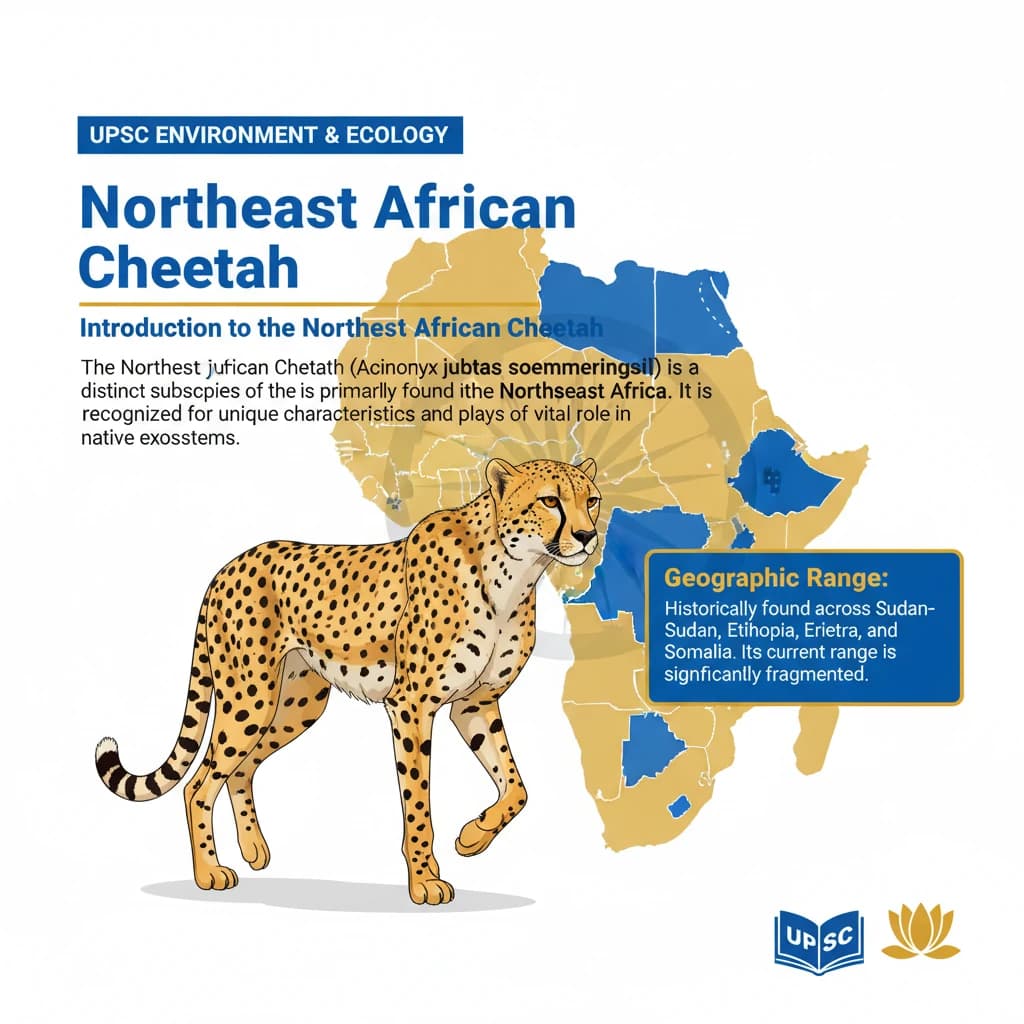
The Northeast African Cheetah (Acinonyx jubatus soemmeringii) is a distinct subspecies of cheetah primarily found in parts of Northeast Africa. It is recognized for its unique characteristics and plays a vital role in its native ecosystems.
Geographic Range: Historically found across Sudan, Ethiopia, Eritrea, and Somalia. Its current range is significantly fragmented.
Key Threats to the Northeast African Cheetah
The survival of the Northeast African Cheetah is under severe pressure from multiple anthropogenic factors. These threats collectively contribute to its declining population numbers.
- Loss of Natural Prey Species: A significant threat stems from the depletion of the cheetah's natural food sources. This often results from habitat degradation and competition with human livestock.
- Retaliatory Killing: Conflict with human populations, particularly livestock owners, leads to retaliatory killings. Cheetahs are often killed when they prey on domestic animals, perceived as a threat to livelihoods.
- Illegal Trade of Fur and Bones: The Northeast African Cheetah is a target for the illegal wildlife trade. Its fur and bones are highly sought after in illicit markets, fueling poaching activities.
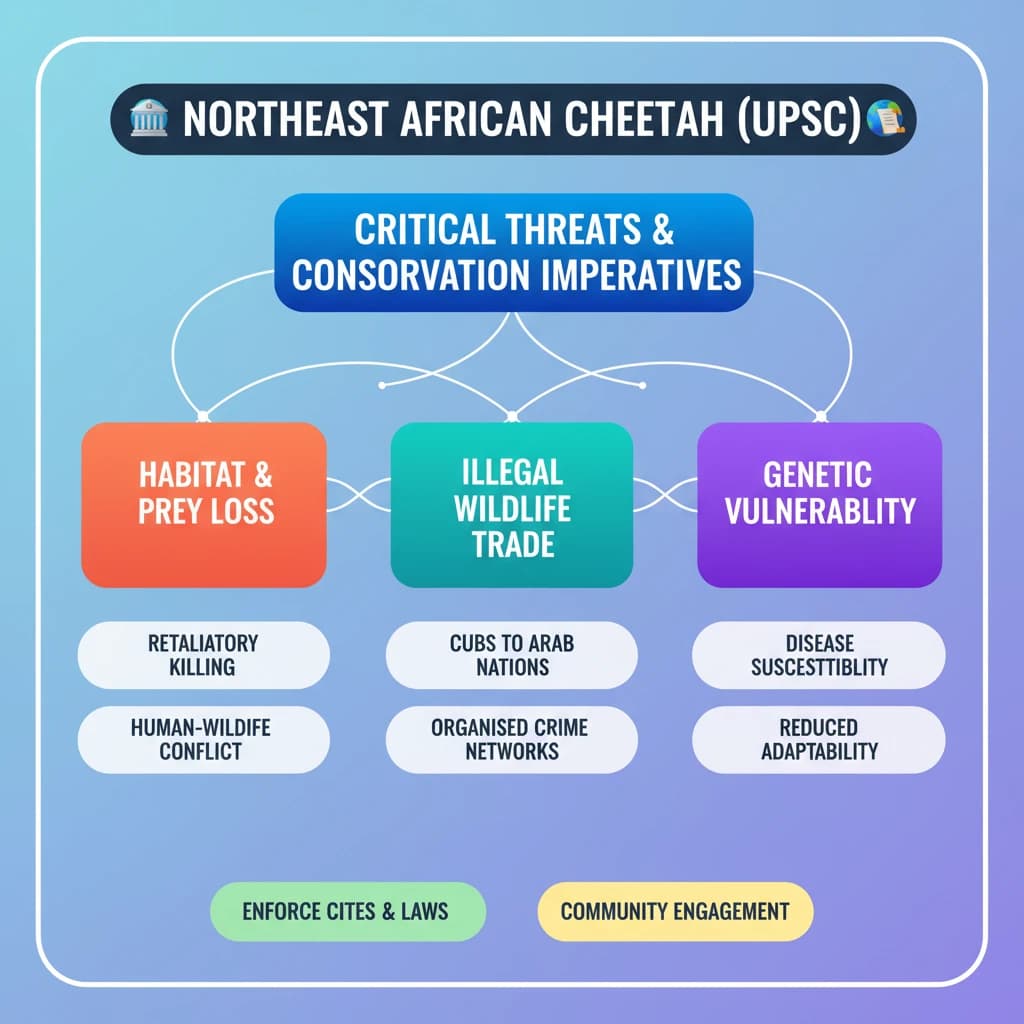
Decline in Genetic Diversity: A critical and growing concern is the significant decline in the genetic diversity of the Northeast African Cheetah population. This makes the species more vulnerable to diseases and less adaptable to environmental changes.
This genetic erosion is primarily driven by the illegal trade of cheetah cubs. These cubs are often smuggled to Arab countries, where they are kept as exotic pets, further reducing the breeding pool in the wild.
UPSC Insight: Understanding the specific threats, especially the link between illegal trade and genetic diversity, is crucial for questions on biodiversity conservation and environmental ethics in GS Paper 3.
💡 Key Takeaways
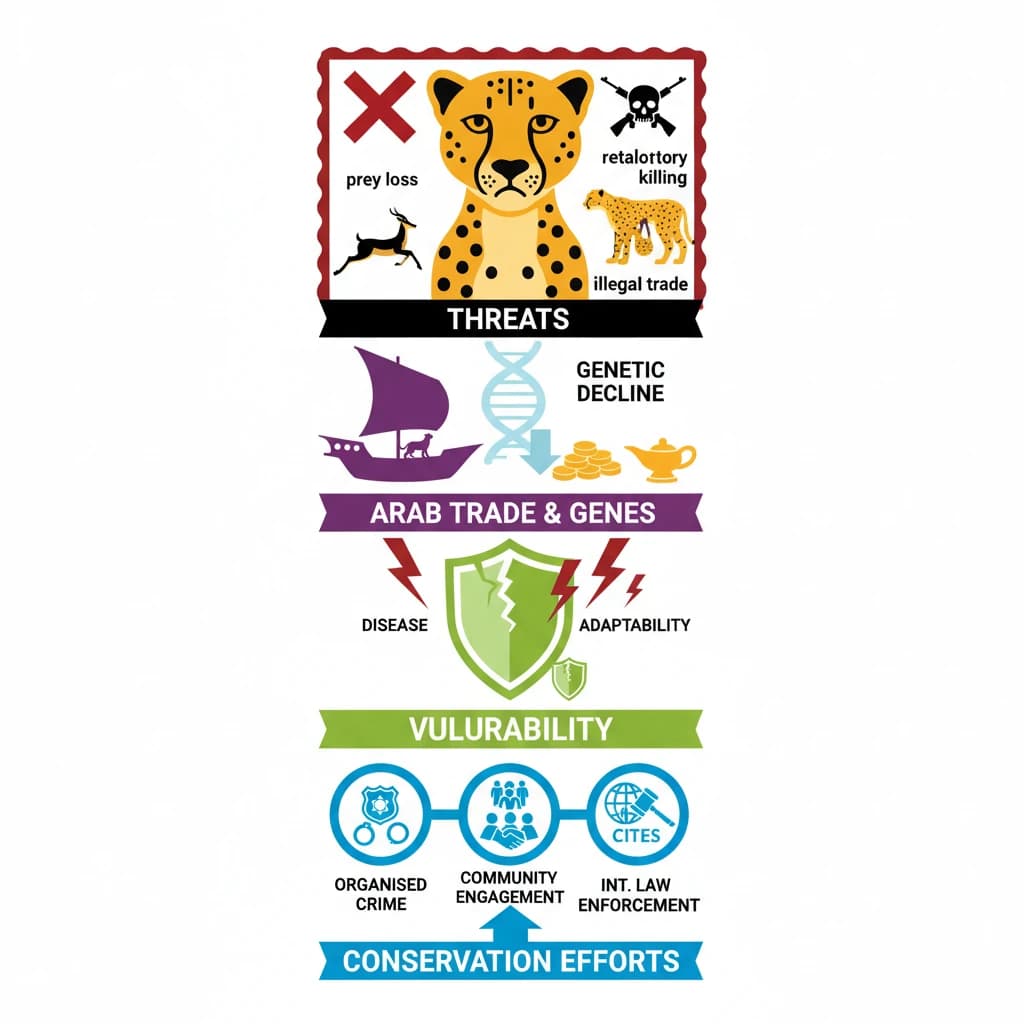
- •Northeast African Cheetah faces severe threats including prey loss, retaliatory killing, and illegal trade.
- •Illegal trade of cubs to Arab countries is causing a critical decline in its genetic diversity.
- •Reduced genetic diversity makes the subspecies vulnerable to diseases and less adaptable.
- •Conservation efforts require tackling organized crime, engaging communities, and enforcing international laws like CITES.
- •The issue highlights broader challenges in biodiversity conservation and combating wildlife trafficking.
🧠 Memory Techniques
95% Verified Content
📚 Reference Sources
•IUCN Red List (for cheetah status and threats)
•CITES Official Website (for trade regulations)
•UNODC Reports on Wildlife Crime