Loading page, please wait…
Oysters’ Antimicrobial Properties - UPSC Environment And Ecology
What is Oysters’ Antimicrobial Properties in UPSC Environment And Ecology?
Oysters’ Antimicrobial Properties is a key topic under Environment And Ecology for UPSC Civil Services Examination. Key points include: Oysters contain antimicrobial proteins in their hemolymph.. These proteins can kill drug-resistant bacteria (superbugs).. Discovery offers a new source for novel antibiotic development.. Understanding this topic is essential for both UPSC Prelims and Mains preparation.
Why is Oysters’ Antimicrobial Properties important for UPSC exam?
Oysters’ Antimicrobial Properties is a Medium-level topic in UPSC Environment And Ecology. It is tested in both Prelims (factual MCQs) and Mains (analytical answer writing). Previous year UPSC questions have frequently covered aspects of Oysters’ Antimicrobial Properties, making it essential for comprehensive IAS preparation.
How to prepare Oysters’ Antimicrobial Properties for UPSC?
To prepare Oysters’ Antimicrobial Properties for UPSC: (1) Study the comprehensive notes covering all key concepts on Vaidra. (2) Practice previous year questions on this topic. (3) Connect it with current affairs using daily updates. (4) Revise using key takeaways and mind maps available for Environment And Ecology. (5) Write practice answers linking Oysters’ Antimicrobial Properties to related GS Paper topics.
Key takeaways of Oysters’ Antimicrobial Properties for UPSC
- Oysters contain antimicrobial proteins in their hemolymph.
- These proteins can kill drug-resistant bacteria (superbugs).
- Discovery offers a new source for novel antibiotic development.
- Relevant in the global fight against Antimicrobial Resistance (AMR).
- Highlights the potential of marine bioprospecting for health solutions.
Oysters’ Antimicrobial Properties
Medium⏱️ 5 min read
environment and ecology
📖 Introduction
Why in News?
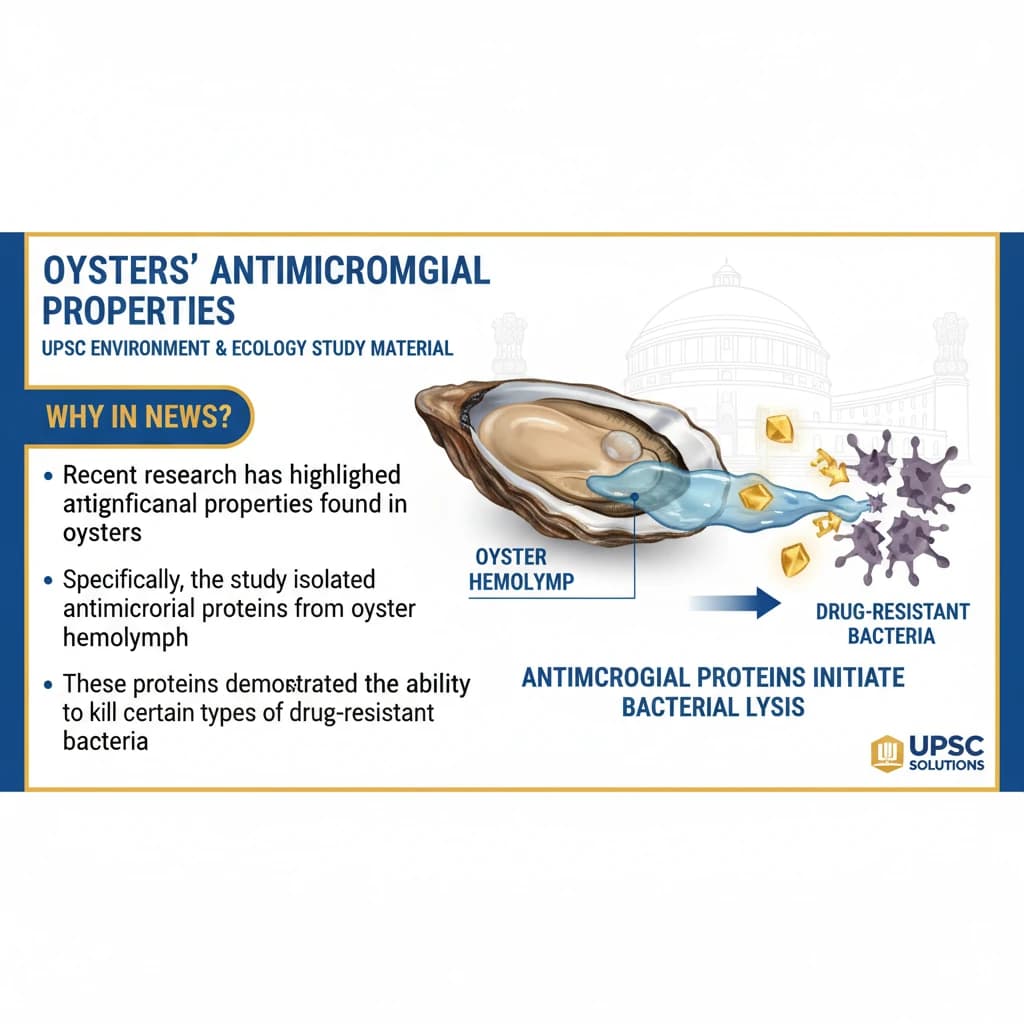
Recent research has highlighted the significant antimicrobial properties found in oysters. This discovery could pave the way for novel solutions to combat growing health challenges.
Specifically, the study isolated antimicrobial proteins from oyster hemolymph. These proteins demonstrated the ability to kill certain types of drug-resistant bacteria, often referred to as 'superbugs'.
Hemolymph: This is the circulatory fluid found in invertebrates, serving a similar function to blood in vertebrates. It transports nutrients, waste products, and immune cells throughout the organism.
Understanding Antimicrobial Properties
Antimicrobial properties refer to the ability of a substance to kill or inhibit the growth of microorganisms, including bacteria, fungi, and viruses. Organisms like oysters naturally produce these compounds as part of their immune defense mechanisms.
The discovery of antimicrobial proteins (AMPs) in oysters is crucial. AMPs are a diverse group of molecules that are part of the innate immune system of most living organisms, offering broad-spectrum protection against pathogens.
Implications for Drug Discovery
The efficacy of these oyster-derived proteins against drug-resistant bacteria is particularly noteworthy. This suggests a potential new source for developing antibiotics, which are desperately needed given the global crisis of Antimicrobial Resistance (AMR).
UPSC Relevance: This topic is highly relevant for GS Paper 3 (Science and Technology) under Biotechnology and Health. Questions can focus on Antimicrobial Resistance (AMR), novel drug discovery, and sustainable solutions from marine resources.
💡 Key Takeaways
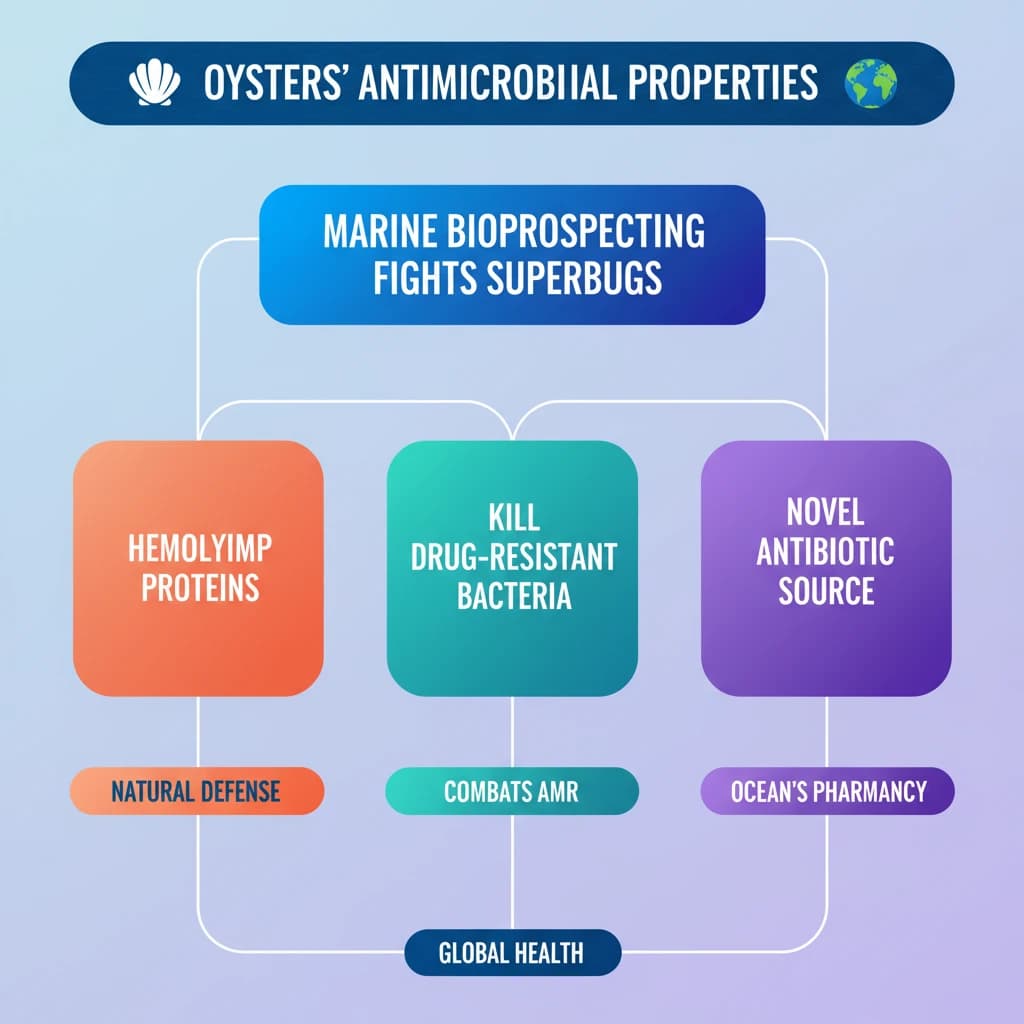
- •Oysters contain antimicrobial proteins in their hemolymph.
- •These proteins can kill drug-resistant bacteria (superbugs).
- •Discovery offers a new source for novel antibiotic development.
- •Relevant in the global fight against Antimicrobial Resistance (AMR).
- •Highlights the potential of marine bioprospecting for health solutions.
🧠 Memory Techniques
95% Verified Content
📚 Reference Sources
•General Scientific Literature on Antimicrobial Resistance and Marine Bioprospecting