Loading page, please wait…
Ratanpani Tiger Reserve - UPSC Environment And Ecology
What is Ratanpani Tiger Reserve in UPSC Environment And Ecology?
Ratanpani Tiger Reserve is a key topic under Environment And Ecology for UPSC Civil Services Examination. Key points include: Ratanpani Wildlife Sanctuary is now India's 57th and MP's 8th Tiger Reserve.. It exemplifies an OECM (Other Effective Area-Based Conservation Measure) due to its cultural and ecological significance.. Cultural beliefs promoting tree worship and prohibitions on hunting are vital for conservation in the region.. Understanding this topic is essential for both UPSC Prelims and Mains preparation.
Why is Ratanpani Tiger Reserve important for UPSC exam?
Ratanpani Tiger Reserve is a Medium-level topic in UPSC Environment And Ecology. It is tested in both Prelims (factual MCQs) and Mains (analytical answer writing). Previous year UPSC questions have frequently covered aspects of Ratanpani Tiger Reserve, making it essential for comprehensive IAS preparation.
How to prepare Ratanpani Tiger Reserve for UPSC?
To prepare Ratanpani Tiger Reserve for UPSC: (1) Study the comprehensive notes covering all key concepts on Vaidra. (2) Practice previous year questions on this topic. (3) Connect it with current affairs using daily updates. (4) Revise using key takeaways and mind maps available for Environment And Ecology. (5) Write practice answers linking Ratanpani Tiger Reserve to related GS Paper topics.
Key takeaways of Ratanpani Tiger Reserve for UPSC
- Ratanpani Wildlife Sanctuary is now India's 57th and MP's 8th Tiger Reserve.
- It exemplifies an OECM (Other Effective Area-Based Conservation Measure) due to its cultural and ecological significance.
- Cultural beliefs promoting tree worship and prohibitions on hunting are vital for conservation in the region.
- The Piplantri Model is a pioneering community-led initiative integrating environmental protection, gender equality, and economic growth.
- Both Ratanpani and Piplantri highlight the critical role of community participation and traditional practices in achieving sustainable conservation outcomes.
Ratanpani Tiger Reserve
Medium⏱️ 7 min read
environment and ecology
📖 Introduction
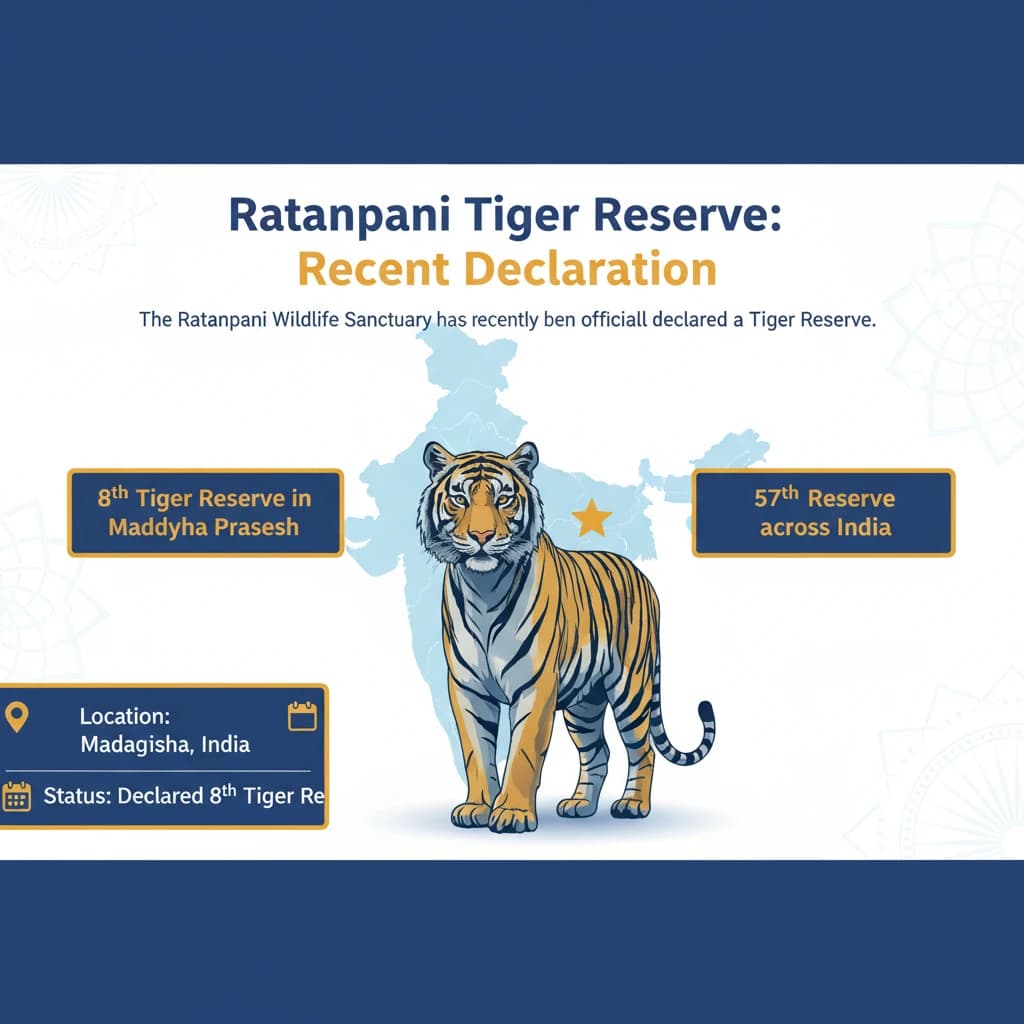
Ratanpani Tiger Reserve: Recent Declaration
The Ratanpani Wildlife Sanctuary has recently been officially declared a Tiger Reserve. This significant development marks it as the 8th tiger reserve in Madhya Pradesh and the 57th tiger reserve across India.
📍 Location: Madhya Pradesh, India
📅 Status: Declared 8th Tiger Reserve of MP, 57th of India
Cultural Significance and Conservation Role
The region encompassing Ratanpani is deeply integral to Hindu beliefs. These beliefs foster a strong sense of coexistence and reverence for nature among local communities.
This cultural connection plays a crucial role in conservation efforts. Traditional practices are naturally aligned with modern biodiversity principles.
Key Conservation Practices:
- Tree worship: Promotes respect and protection for flora.
- Strict prohibitions: Bans on logging and hunting are enforced, safeguarding wildlife.
Ecological Importance and OECM Status
Ratanpani serves as a vital refuge for a diverse array of flora and fauna. Its ecosystems are crucial for maintaining ecological balance and supporting various species.
Furthermore, the reserve plays a significant role in maintaining clean water ecosystems, which are essential for both wildlife and human populations.
The Ratanpani Tiger Reserve is also recognized as an example of Other Effective Area-Based Conservation Measures (OECMs). This classification highlights its importance beyond traditional protected areas.
UPSC Insight: Understanding OECMs is crucial for GS Paper 3 (Environment). It signifies conservation efforts that achieve positive biodiversity outcomes outside formally protected areas, often involving local communities.
💡 Key Takeaways
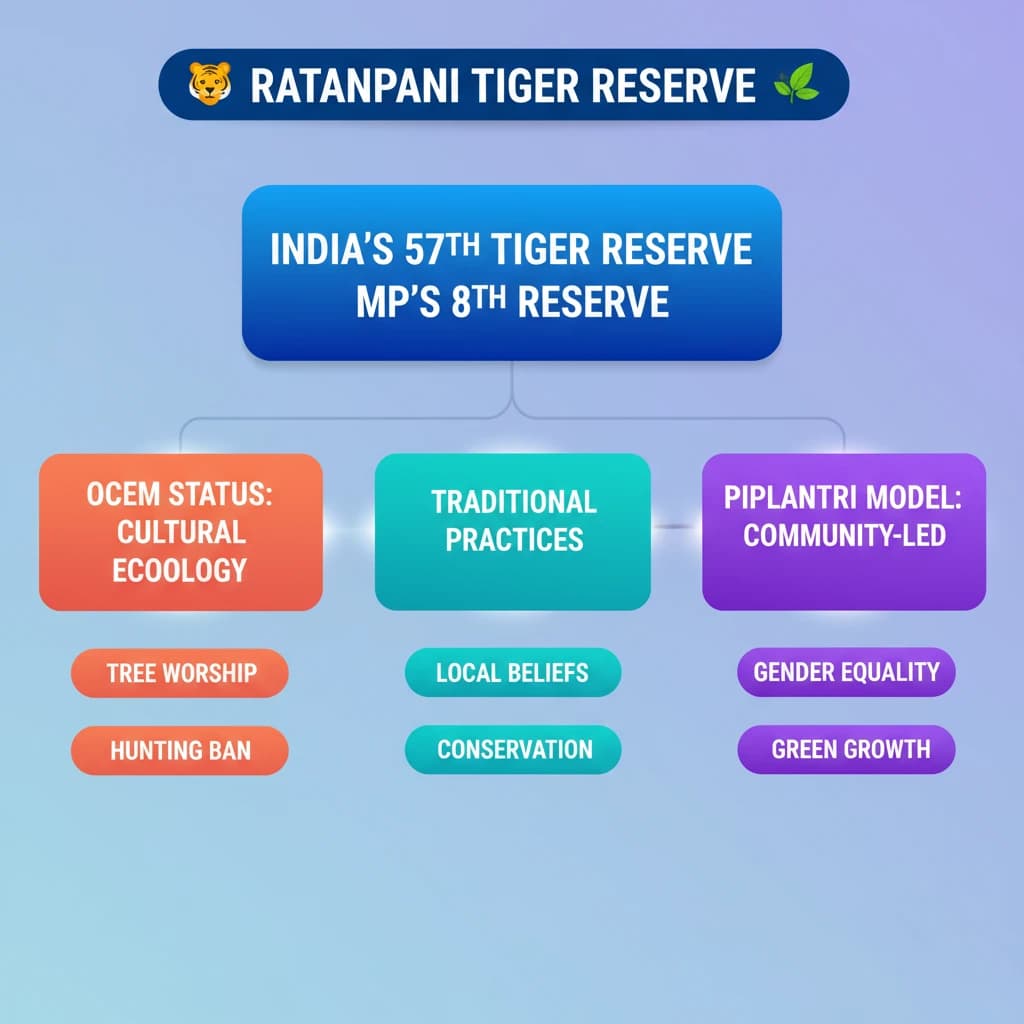
- •Ratanpani Wildlife Sanctuary is now India's 57th and MP's 8th Tiger Reserve.
- •It exemplifies an OECM (Other Effective Area-Based Conservation Measure) due to its cultural and ecological significance.
- •Cultural beliefs promoting tree worship and prohibitions on hunting are vital for conservation in the region.
- •The Piplantri Model is a pioneering community-led initiative integrating environmental protection, gender equality, and economic growth.
- •Both Ratanpani and Piplantri highlight the critical role of community participation and traditional practices in achieving sustainable conservation outcomes.
🧠 Memory Techniques

98% Verified Content
📚 Reference Sources
•National Tiger Conservation Authority (NTCA) reports (general reference for tiger reserves)
•Ministry of Environment, Forest and Climate Change (MoEFCC) publications (general reference for OECMs)
•News reports and articles on the Piplantri Model