Loading page, please wait…
Simlipal Tiger Reserve - UPSC Environment And Ecology
What is Simlipal Tiger Reserve in UPSC Environment And Ecology?
Simlipal Tiger Reserve is a key topic under Environment And Ecology for UPSC Civil Services Examination. Key points include: Simlipal is a Tiger Reserve in the Deccan Peninsula Biogeographic Zone, Odisha.. It boasts 7% of India's flowering plants and 8% of its orchid species.. Key fauna include tigers, sambar, chital, gaur, and successfully revived mugger crocodiles.. Understanding this topic is essential for both UPSC Prelims and Mains preparation.
Why is Simlipal Tiger Reserve important for UPSC exam?
Simlipal Tiger Reserve is a Medium-level topic in UPSC Environment And Ecology. It is tested in both Prelims (factual MCQs) and Mains (analytical answer writing). Previous year UPSC questions have frequently covered aspects of Simlipal Tiger Reserve, making it essential for comprehensive IAS preparation.
How to prepare Simlipal Tiger Reserve for UPSC?
To prepare Simlipal Tiger Reserve for UPSC: (1) Study the comprehensive notes covering all key concepts on Vaidra. (2) Practice previous year questions on this topic. (3) Connect it with current affairs using daily updates. (4) Revise using key takeaways and mind maps available for Environment And Ecology. (5) Write practice answers linking Simlipal Tiger Reserve to related GS Paper topics.
Key takeaways of Simlipal Tiger Reserve for UPSC
- Simlipal is a Tiger Reserve in the Deccan Peninsula Biogeographic Zone, Odisha.
- It boasts 7% of India's flowering plants and 8% of its orchid species.
- Key fauna include tigers, sambar, chital, gaur, and successfully revived mugger crocodiles.
- Designated a UNESCO Global Network of Biosphere site in 2009.
- It's a critical example of integrated conservation, protecting diverse habitats and species while involving local communities.
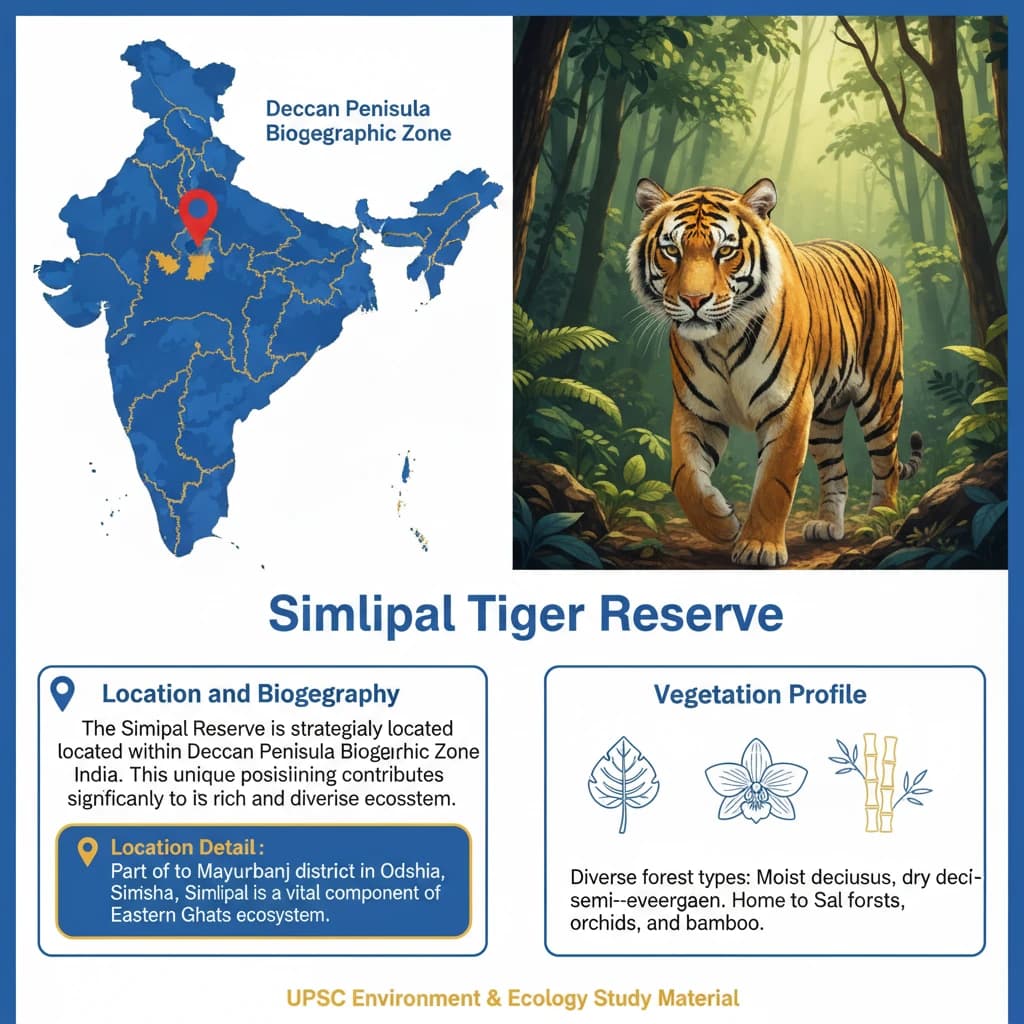
Simlipal Tiger Reserve
Medium⏱️ 8 min read
environment and ecology
📖 Introduction
Location and Biogeography
The Simlipal Tiger Reserve is strategically located within the Deccan Peninsula Biogeographic Zone of India. This unique positioning contributes significantly to its rich and diverse ecosystem.
📍 Location Detail: Part of the Mayurbhanj district in Odisha, Simlipal is a vital component of the Eastern Ghats ecosystem.
Vegetation Profile
The reserve is characterized by a predominantly moist mixed deciduous forest. This forest type supports a wide array of plant life, adapting to varying moisture levels across the landscape.
Within this, one can find patches of tropical semi-evergreen forests, particularly in more sheltered and moist areas. Additionally, sporadic occurrences of dry deciduous forests and expansive grasslands contribute to the habitat heterogeneity.
Exceptional Floral Richness
Simlipal is a treasure trove of botanical diversity. It is home to a significant percentage of India's flowering plants and a remarkable variety of orchid species, highlighting its ecological importance.
- 🌺 Flowering Plants: The reserve holds approximately 7% of India’s total flowering plant species.
- 🌸 Orchid Diversity: It accounts for about 8% of India’s diverse orchid species, making it a crucial site for orchid conservation.
Diverse Faunal Population
Beyond its iconic tigers, Simlipal boasts a rich array of mammalian species. These animals play crucial roles in maintaining the ecological balance of the forest ecosystem.
🐅 Key Mammal Species:
- Sambar, Chital (Spotted Deer), and Barking Deer are commonly found herbivores.
- The majestic Gaur (Indian Bison) and the elusive Mouse Deer also inhabit the reserve.
- Predators include Leopards and the specialized Fishing Cat, alongside the Bengal Tiger.
Successful Conservation Initiatives
Dedicated management efforts within Simlipal Tiger Reserve have led to notable successes in wildlife conservation. These initiatives focus on species revival and habitat protection.
🐊 Mugger Crocodile Revival: Significant success has been achieved in reviving populations of the Mugger Crocodile (Crocodylus palustris) along the major rivers, particularly Khairi and Deo, which flow through the reserve.
Global Recognition as Biosphere Reserve
The ecological significance of Simlipal has been recognized internationally. Its designation underscores its importance for both biodiversity conservation and sustainable development.
🌍 Global Network of Biosphere Reserves: Simlipal was officially designated as a site under the UNESCO Global Network of Biosphere Reserves in 2009. This status highlights its role as a model region for sustainable living.
⚡ UPSC Insight: Understanding the criteria and benefits of being a Biosphere Reserve is vital for Environment & Ecology questions. Note the difference between a National Park, Wildlife Sanctuary, and Biosphere Reserve.
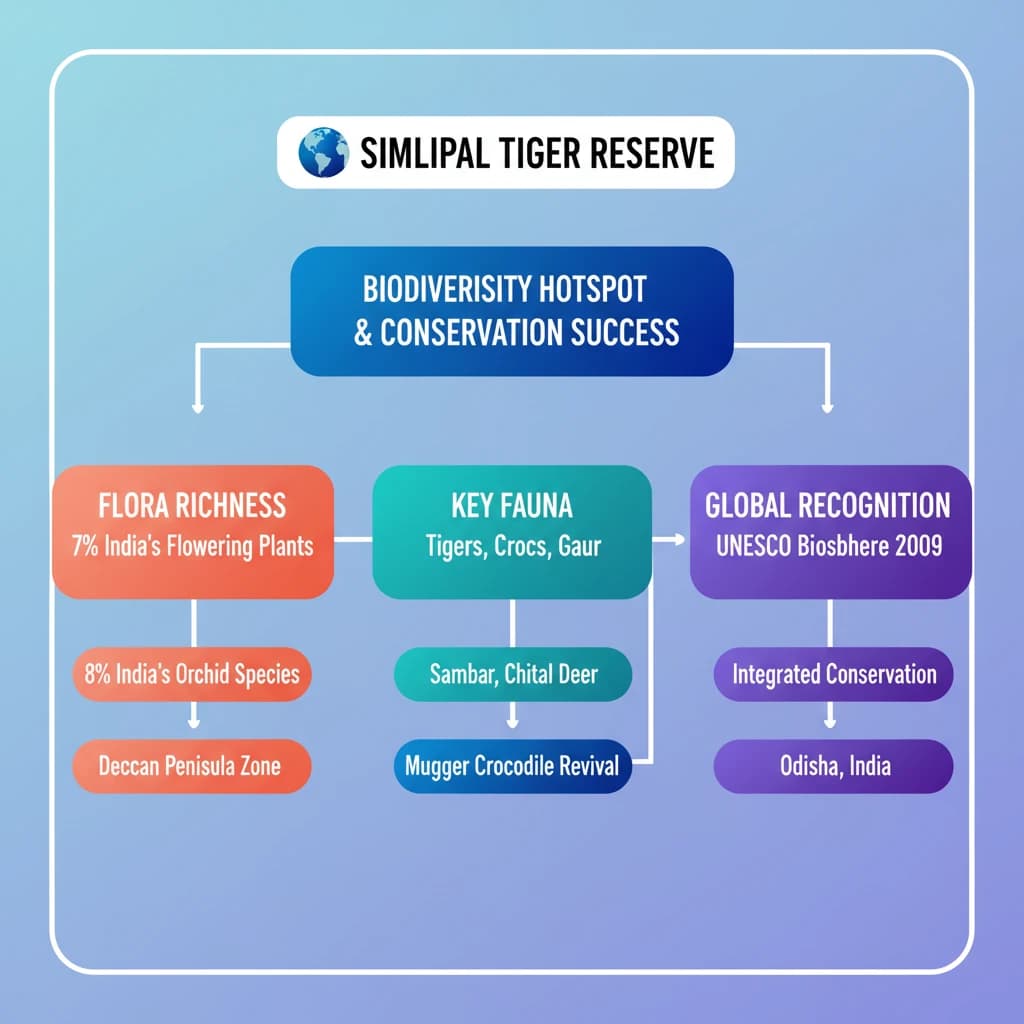
💡 Key Takeaways
- •Simlipal is a Tiger Reserve in the Deccan Peninsula Biogeographic Zone, Odisha.
- •It boasts 7% of India's flowering plants and 8% of its orchid species.
- •Key fauna include tigers, sambar, chital, gaur, and successfully revived mugger crocodiles.
- •Designated a UNESCO Global Network of Biosphere site in 2009.
- •It's a critical example of integrated conservation, protecting diverse habitats and species while involving local communities.
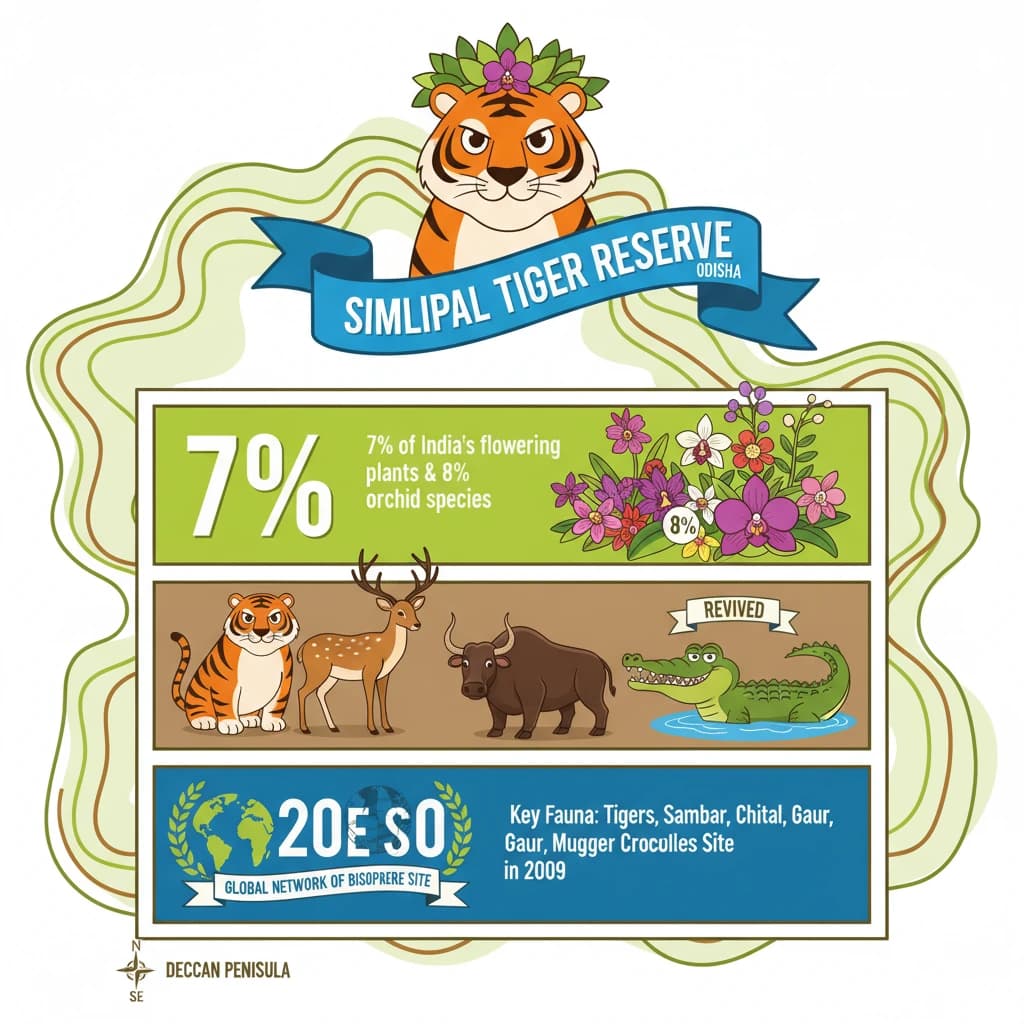
🧠 Memory Techniques
98% Verified Content
📚 Reference Sources
•UNESCO Man and the Biosphere (MAB) Programme website - Similipal Biosphere Reserve profile
•Project Tiger, National Tiger Conservation Authority (NTCA) website - List of Tiger Reserves
•Ministry of Environment, Forest and Climate Change (MoEFCC), Government of India publications