Loading page, please wait…
Sustainable Nitrogen Management: FAO - UPSC Environment And Ecology
What is Sustainable Nitrogen Management: FAO in UPSC Environment And Ecology?
Sustainable Nitrogen Management: FAO is a key topic under Environment And Ecology for UPSC Civil Services Examination. Key points include: The FAO report 'Sustainable nitrogen management in agrifood systems' highlights global nitrogen pollution.. Livestock is the largest source of nitrogen emissions (one-third), followed by synthetic fertilizers, land-use change, and manure.. Nitrogen Use Efficiency (NUE) varies regionally; Europe/North America have higher NUE, while Asia faced pollution from Green Revolution.. Understanding this topic is essential for both UPSC Prelims and Mains preparation.
Why is Sustainable Nitrogen Management: FAO important for UPSC exam?
Sustainable Nitrogen Management: FAO is a Medium-level topic in UPSC Environment And Ecology. It is tested in both Prelims (factual MCQs) and Mains (analytical answer writing). Previous year UPSC questions have frequently covered aspects of Sustainable Nitrogen Management: FAO, making it essential for comprehensive IAS preparation.
How to prepare Sustainable Nitrogen Management: FAO for UPSC?
To prepare Sustainable Nitrogen Management: FAO for UPSC: (1) Study the comprehensive notes covering all key concepts on Vaidra. (2) Practice previous year questions on this topic. (3) Connect it with current affairs using daily updates. (4) Revise using key takeaways and mind maps available for Environment And Ecology. (5) Write practice answers linking Sustainable Nitrogen Management: FAO to related GS Paper topics.
Key takeaways of Sustainable Nitrogen Management: FAO for UPSC
- The FAO report 'Sustainable nitrogen management in agrifood systems' highlights global nitrogen pollution.
- Livestock is the largest source of nitrogen emissions (one-third), followed by synthetic fertilizers, land-use change, and manure.
- Nitrogen Use Efficiency (NUE) varies regionally; Europe/North America have higher NUE, while Asia faced pollution from Green Revolution.
- Southeast Asia's NUE dropped significantly (65% to 45%) but recovered to 54% by 2022.
- Africa struggles with low yields and nutrient depletion due to limited access to fertilizers and inadequate policies.
- Sustainable nitrogen management is crucial for balancing food security with environmental protection.
- India needs climate finance, potentially from UNFCCC mechanisms (GCF, GEF), to scale up sustainable agricultural practices.
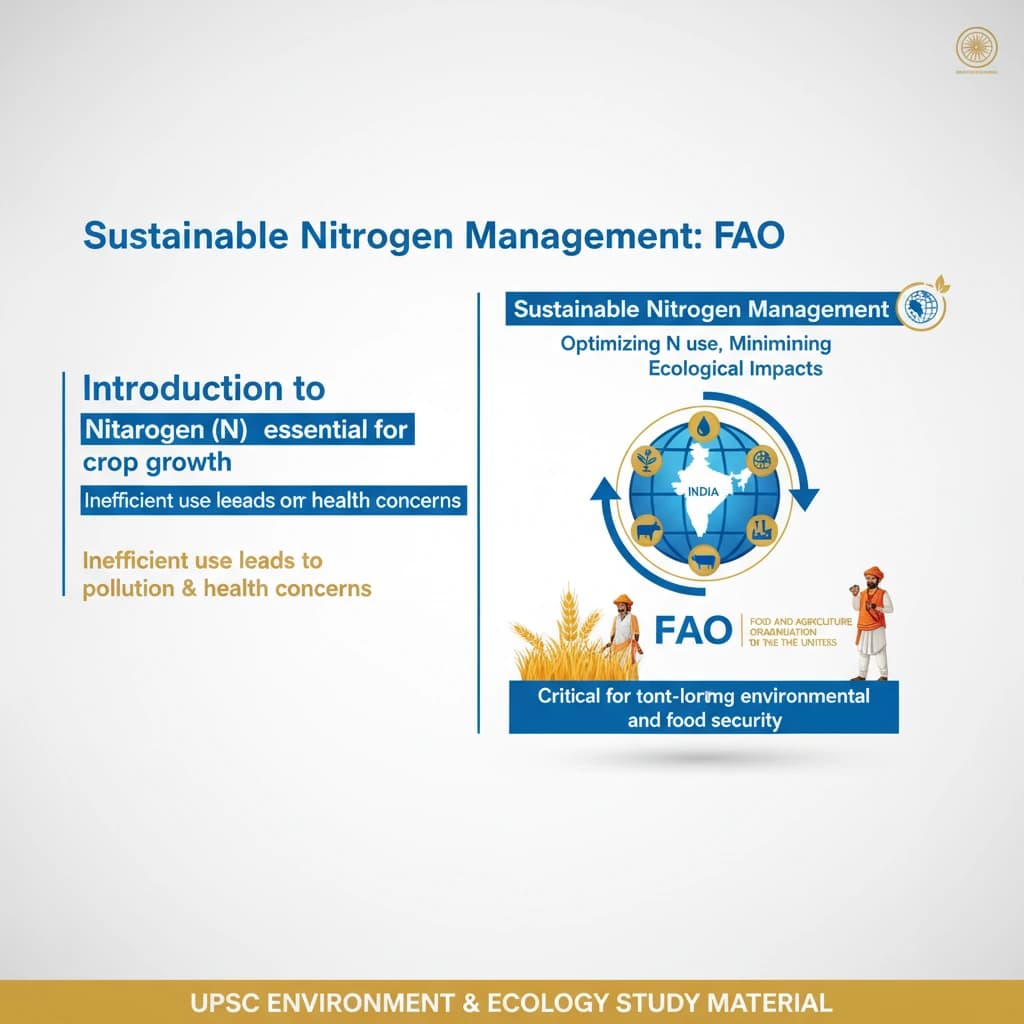
Sustainable Nitrogen Management: FAO
Medium⏱️ 9 min read
environment and ecology
📖 Introduction
Introduction to Sustainable Nitrogen Management
Nitrogen (N) is a vital nutrient essential for crop growth and global food production. However, its inefficient use in agricultural systems leads to significant environmental pollution and health concerns.
The concept of Sustainable Nitrogen Management focuses on optimizing nitrogen use to maximize its benefits while minimizing adverse ecological impacts. This approach is critical for long-term environmental health and agricultural sustainability.
Why Sustainable Nitrogen Management is in News
The Food and Agriculture Organization (FAO) recently released a significant report titled “Sustainable nitrogen management in agrifood systems”. This report has brought the issue to the forefront of global environmental discussions.
This comprehensive report offers a detailed overview of the role of nitrogen use within agrifood systems. It also highlights the substantial challenges arising from its widespread and often inefficient application.
The report provides a critical assessment of the current state of nitrogen pollution globally, underscoring the urgent need for more sustainable management practices across various sectors.
Key Highlights of the FAO Report
The FAO report serves as a crucial document, providing actionable insights into the primary sources of nitrogen pollution and the distinct regional disparities in its management and environmental impact.
A central theme of the report is the imperative to improve Nitrogen Use Efficiency (NUE). Enhancing NUE is vital for mitigating environmental damage while simultaneously ensuring global food security for a growing population.
Major Sources of Nitrogen Loss and Emissions
The report identifies several key contributors to global nitrogen emissions. These emissions originate from various human activities, collectively highlighting the scale and complexity of the nitrogen pollution problem.
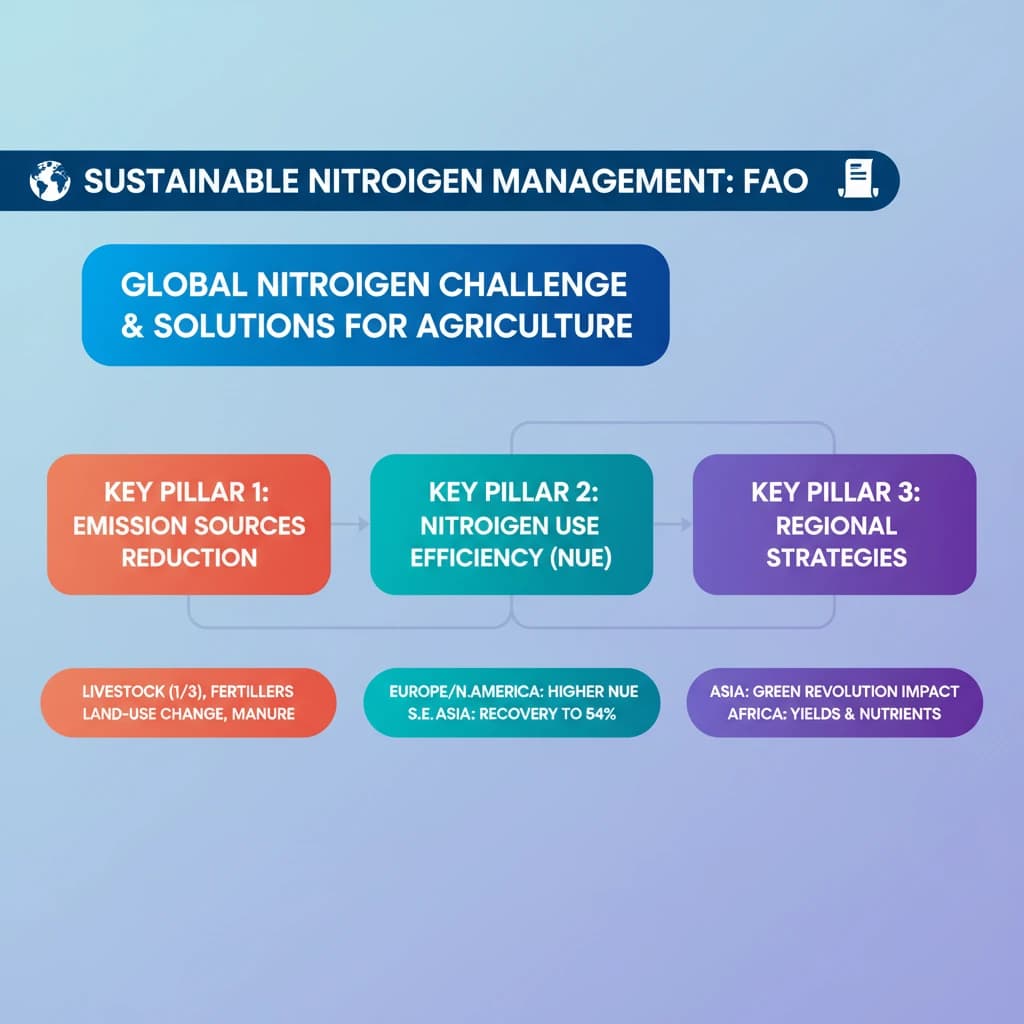
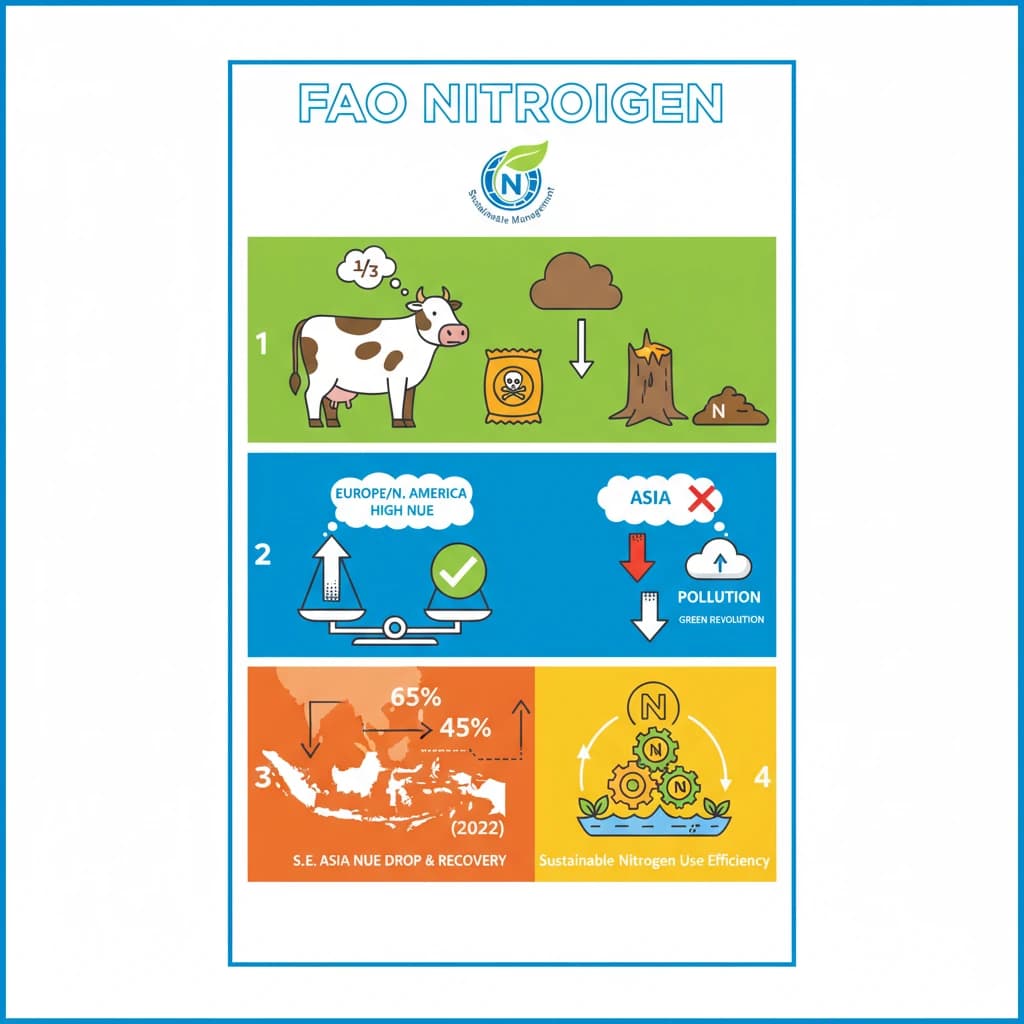
- Livestock: This sector is identified as the single largest contributor to nitrogen emissions, responsible for approximately one-third of the total emissions from human activities.
- Synthetic Fertilizers: The extensive use of artificial nitrogen fertilizers in modern agriculture is another primary source of significant nitrogen loss into the environment.
- Land-Use Change: Alterations in land use, such as deforestation, urbanization, and the conversion of natural ecosystems, also contribute substantially to nitrogen release.
- Manure Emissions: Improper storage and management of animal manure lead to considerable nitrogen release, particularly in the form of ammonia and nitrous oxide.
Regional Differences in Nitrogen Management
The FAO report meticulously details the varying patterns of nitrogen use, efficiency, and pollution across different geographical regions. These differences reflect diverse agricultural practices, economic conditions, and policy frameworks.
- Asia: This region experienced a significant increase in nitrogen pollution, largely attributable to the intensive use of fertilizers. This was driven by subsidies during the Green Revolution, which boosted yields but at an environmental cost.
- Southeast Asia: Witnessed a notable decline in Nitrogen Use Efficiency (NUE), falling from 65% in 1961 to 45% in the 1990s. However, subsequent efforts led to a recovery, with NUE increasing to 54% in 2022.
- Africa: Many African nations struggle with persistently low crop yields and severe nutrient depletion in their soils. This is often due to inadequate agricultural policies and limited access to essential fertilizers.
- Europe & North America: These regions have generally achieved higher levels of NUE. This success is primarily attributed to the implementation of robust nutrient management guidelines and stringent environmental regulations.
Understanding these regional differences is crucial for UPSC aspirants. This knowledge can be applied to answer questions on global environmental challenges, sustainable development, and policy responses in UPSC Mains GS-III.
💡 Key Takeaways
- •The FAO report 'Sustainable nitrogen management in agrifood systems' highlights global nitrogen pollution.
- •Livestock is the largest source of nitrogen emissions (one-third), followed by synthetic fertilizers, land-use change, and manure.
- •Nitrogen Use Efficiency (NUE) varies regionally; Europe/North America have higher NUE, while Asia faced pollution from Green Revolution.
- •Southeast Asia's NUE dropped significantly (65% to 45%) but recovered to 54% by 2022.
- •Africa struggles with low yields and nutrient depletion due to limited access to fertilizers and inadequate policies.
- •Sustainable nitrogen management is crucial for balancing food security with environmental protection.
- •India needs climate finance, potentially from UNFCCC mechanisms (GCF, GEF), to scale up sustainable agricultural practices.
🧠 Memory Techniques
95% Verified Content
📚 Reference Sources
•Food and Agriculture Organization (FAO) report: 'Sustainable nitrogen management in agrifood systems'