Loading page, please wait…
Teal Carbon Study at Keoladeo National Park - UPSC Environment And Ecology
What is Teal Carbon Study at Keoladeo National Park in UPSC Environment And Ecology?
Teal Carbon Study at Keoladeo National Park is a key topic under Environment And Ecology for UPSC Civil Services Examination. Key points include: Teal carbon is carbon stored in freshwater wetlands (non-tidal), including vegetation and organic matter.. India's first teal carbon study was conducted at Keoladeo National Park (KNP), Rajasthan.. The KNP study found elevated methane emissions and recommended specialized biochar to reduce them.. Understanding this topic is essential for both UPSC Prelims and Mains preparation.
Why is Teal Carbon Study at Keoladeo National Park important for UPSC exam?
Teal Carbon Study at Keoladeo National Park is a Medium-level topic in UPSC Environment And Ecology. It is tested in both Prelims (factual MCQs) and Mains (analytical answer writing). Previous year UPSC questions have frequently covered aspects of Teal Carbon Study at Keoladeo National Park, making it essential for comprehensive IAS preparation.
How to prepare Teal Carbon Study at Keoladeo National Park for UPSC?
To prepare Teal Carbon Study at Keoladeo National Park for UPSC: (1) Study the comprehensive notes covering all key concepts on Vaidra. (2) Practice previous year questions on this topic. (3) Connect it with current affairs using daily updates. (4) Revise using key takeaways and mind maps available for Environment And Ecology. (5) Write practice answers linking Teal Carbon Study at Keoladeo National Park to related GS Paper topics.
Key takeaways of Teal Carbon Study at Keoladeo National Park for UPSC
- Teal carbon is carbon stored in freshwater wetlands (non-tidal), including vegetation and organic matter.
- India's first teal carbon study was conducted at Keoladeo National Park (KNP), Rajasthan.
- The KNP study found elevated methane emissions and recommended specialized biochar to reduce them.
- Teal carbon ecosystems are crucial for climate change mitigation by sequestering carbon, raising groundwater, and controlling GHGs.
- Primary reservoirs include peatlands, freshwater swamps, and marshes, storing an estimated 500.21 PgC globally.
- KNP is a UNESCO World Heritage Site, one of India's first Ramsar Sites (1981), and is currently on the Montreux Record.
Teal Carbon Study at Keoladeo National Park
Medium⏱️ 7 min read
environment and ecology
📖 Introduction
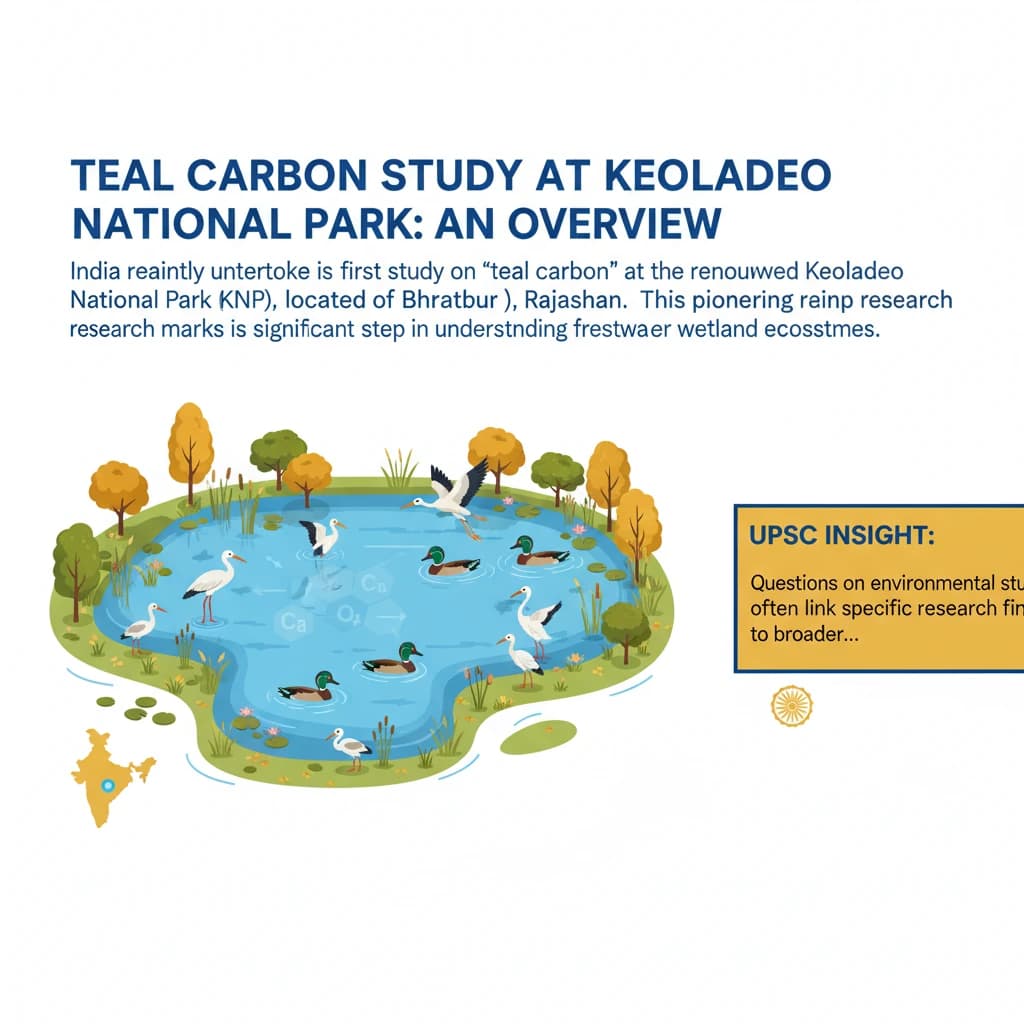
Teal Carbon Study at Keoladeo National Park: An Overview
India recently undertook its first study on 'teal carbon' at the renowned Keoladeo National Park (KNP), located in Bharatpur, Rajasthan. This pioneering research marks a significant step in understanding freshwater wetland ecosystems.
UPSC Insight: Questions on environmental studies often link specific research findings to broader concepts like climate change mitigation and biodiversity. Understanding such pilot projects is crucial for GS Paper 3.
Key Findings and Recommendations
The study at Keoladeo National Park revealed concerning findings: elevated levels of methane emissions. Methane is a potent greenhouse gas, contributing significantly to global warming.
To counteract these elevated emissions, the research recommended the application of specialized biochar. This suggests a practical, nature-based solution to a pressing environmental challenge.
Biochar: A carbon-rich material created through pyrolysis (heating biomass with little or no oxygen). It enhances soil fertility, improves water retention, and boosts carbon productivity in soil.
Importance of Wetland Conservation
The pilot project's findings underscore the critical role of wetland conservation. Wetlands are vital for addressing challenges related to climate adaptation and building resilience against environmental changes.
The study aimed to develop innovative nature-based solutions to effectively combat the impacts of climate change. Such solutions leverage natural processes to achieve environmental benefits.
What is Teal Carbon?
Teal carbon specifically refers to the carbon stored within freshwater (non-tidal) wetlands. This includes carbon found in various forms within these ecosystems.
Its reservoirs encompass vegetation, microbial biomass, and both dissolved and particulate organic matter. These components collectively contribute to the carbon sequestration capacity of wetlands.
Distinguishing Feature: Unlike black carbon and brown carbon, which are products of incomplete combustion and contribute to climate change, teal carbon is defined by its role in carbon sequestration within wetland ecosystems.
Types of Carbon
Carbon is categorized based on its ecological role and location. Understanding these distinctions is vital for comprehensive environmental analysis.
- Teal Carbon: Stored in freshwater wetlands (vegetation, microbial biomass, organic matter).
- Black Carbon: Sooty material from burning fossil fuels, a major air pollutant.
- Brown Carbon: From incomplete combustion of organic materials (e.g., biomass), absorbs UV and visible light, contributing to warming.
- Blue Carbon: Carbon stored in coastal and marine ecosystems (oceans, mangroves, salt marshes, seagrasses).
- Green Carbon: Carbon sequestered by terrestrial plants through photosynthesis.
- Gray Carbon: Emitted from industrial processes and stored in fossil fuels (coal, oil, biogas).
- Red Carbon: Released by biological particles found on snow and ice.
Role of Teal Carbon in Climate Change Mitigation
Teal carbon ecosystems are pivotal in mitigating climate change. They perform several crucial ecological functions that benefit the environment.
These functions include sequestering carbon, raising groundwater levels, reducing urban heat islands, controlling greenhouse gases, and mitigating the severity of floods.
Primary Reservoirs of Teal Carbon
The main storage sites for teal carbon are specific types of freshwater wetlands. These ecosystems are globally significant carbon sinks.
Key reservoirs include peatlands, freshwater swamps, and natural freshwater marshes. These contribute substantially to the planet's overall carbon sequestration capacity.
Global Storage: The estimated global storage of teal carbon across various ecosystems is approximately 500.21 petagrams of carbon (PgC). This highlights their immense environmental value.
Threats to Teal Carbon Ecosystems
Despite their critical role, teal carbon ecosystems face severe threats. Degradation of these wetlands compromises their ability to store carbon and maintain ecological balance.
Major threats include pollution, adverse land use changes, excessive water extraction, and various landscape modifications. Protecting these areas is essential for climate action.
About Keoladeo National Park (KNP)
Keoladeo National Park is a globally recognized wetland and a vital bird sanctuary. It is situated in Bharatpur, Rajasthan, and is celebrated for its rich biodiversity.
The park holds the prestigious status of a UNESCO World Heritage Site, acknowledging its outstanding universal value. It is a key destination for migratory birds.
Ramsar Recognition: Keoladeo National Park, along with Chilika Lake (Odisha), was among the first Ramsar Sites of India, designated in 1981. This signifies its international importance as a wetland.
Currently, Keoladeo National Park is listed in the Montreux Record, along with Loktak Lake (Manipur). This indicates that it is a Ramsar site facing or likely to face severe ecological changes due to human interference.
💡 Key Takeaways
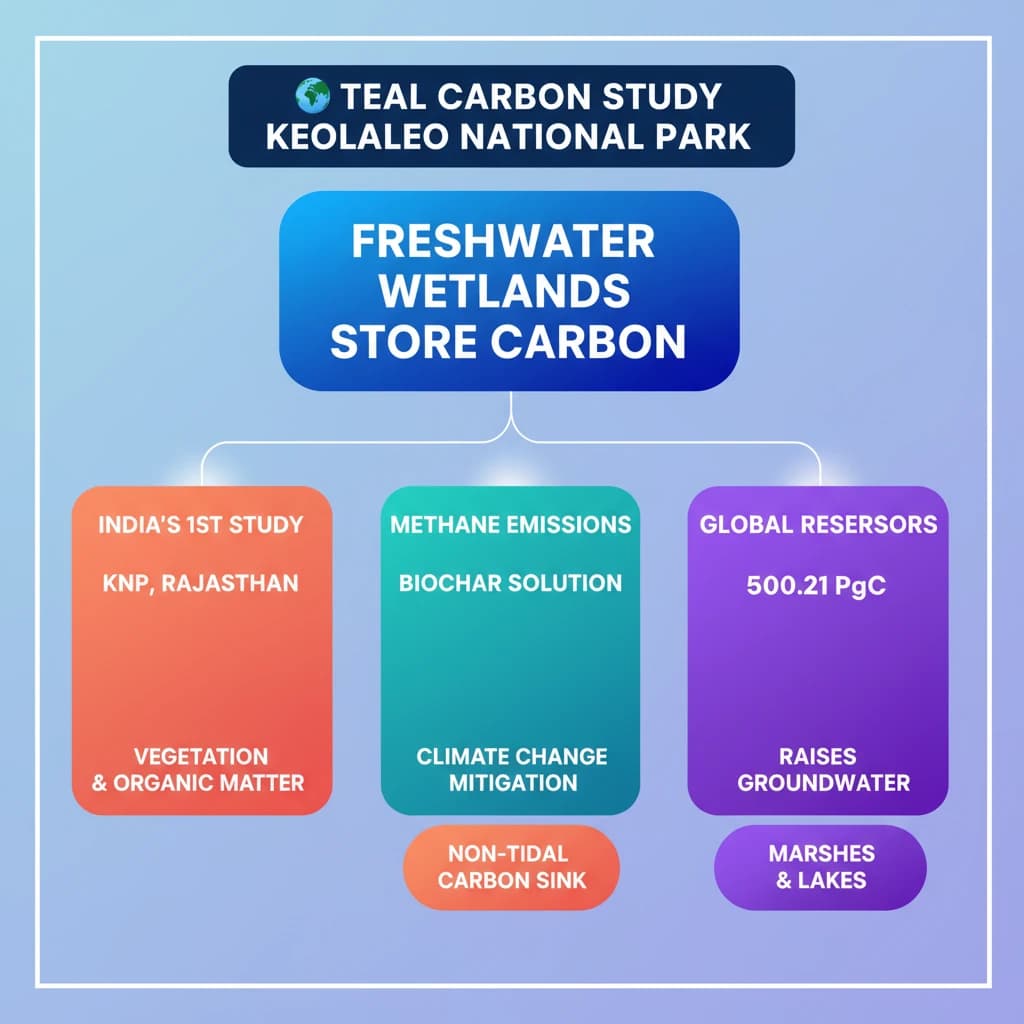
- •Teal carbon is carbon stored in freshwater wetlands (non-tidal), including vegetation and organic matter.
- •India's first teal carbon study was conducted at Keoladeo National Park (KNP), Rajasthan.
- •The KNP study found elevated methane emissions and recommended specialized biochar to reduce them.
- •Teal carbon ecosystems are crucial for climate change mitigation by sequestering carbon, raising groundwater, and controlling GHGs.
- •Primary reservoirs include peatlands, freshwater swamps, and marshes, storing an estimated 500.21 PgC globally.
- •KNP is a UNESCO World Heritage Site, one of India's first Ramsar Sites (1981), and is currently on the Montreux Record.
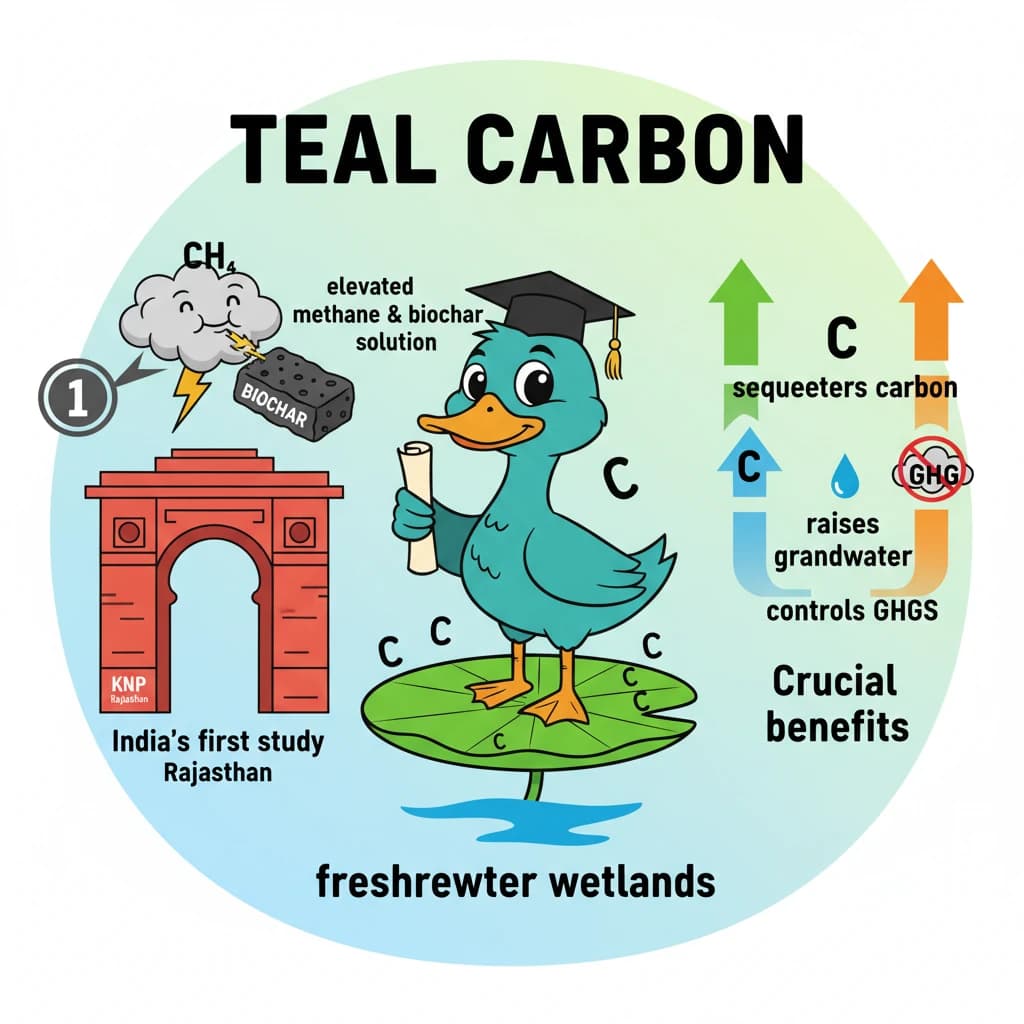
🧠 Memory Techniques
95% Verified Content
📚 Reference Sources
•Keoladeo National Park official information (general knowledge about KNP's status)
•Ramsar Convention Secretariat (information on Ramsar Sites and Montreux Record)