Loading page, please wait…
What are Eight Sections Containing Guidelines for OECMs? - UPSC Environment And Ecology
What is What are Eight Sections Containing Guidelines for OECMs? in UPSC Environment And Ecology?
What are Eight Sections Containing Guidelines for OECMs? is a key topic under Environment And Ecology for UPSC Civil Services Examination. Key points include: The Kunming-Montreal Global Biodiversity Framework (KMGBF) is the current global blueprint for biodiversity action.. A key KMGBF target is to restore at least 30% of degraded terrestrial, inland water, and marine ecosystems globally.. This 30% target is a global collective effort, not a country-specific mandate.. Understanding this topic is essential for both UPSC Prelims and Mains preparation.
Why is What are Eight Sections Containing Guidelines for OECMs? important for UPSC exam?
What are Eight Sections Containing Guidelines for OECMs? is a Medium-level topic in UPSC Environment And Ecology. It is tested in both Prelims (factual MCQs) and Mains (analytical answer writing). Previous year UPSC questions have frequently covered aspects of What are Eight Sections Containing Guidelines for OECMs?, making it essential for comprehensive IAS preparation.
How to prepare What are Eight Sections Containing Guidelines for OECMs? for UPSC?
To prepare What are Eight Sections Containing Guidelines for OECMs? for UPSC: (1) Study the comprehensive notes covering all key concepts on Vaidra. (2) Practice previous year questions on this topic. (3) Connect it with current affairs using daily updates. (4) Revise using key takeaways and mind maps available for Environment And Ecology. (5) Write practice answers linking What are Eight Sections Containing Guidelines for OECMs? to related GS Paper topics.
Key takeaways of What are Eight Sections Containing Guidelines for OECMs? for UPSC
- The Kunming-Montreal Global Biodiversity Framework (KMGBF) is the current global blueprint for biodiversity action.
- A key KMGBF target is to restore at least 30% of degraded terrestrial, inland water, and marine ecosystems globally.
- This 30% target is a global collective effort, not a country-specific mandate.
- CBD COP-16 took place in Cali, Colombia in 2024 with the theme "Peace with Nature."
- India launched its updated National Biodiversity Strategy and Action Plan (NBSAP) at COP-16, aligning with KMGBF.
- Fair and equitable benefit sharing from Digital Sequence Information (DSI) on genetic resources is a critical and ongoing discussion point.
What are Eight Sections Containing Guidelines for OECMs?
Medium⏱️ 7 min read
environment and ecology
📖 Introduction
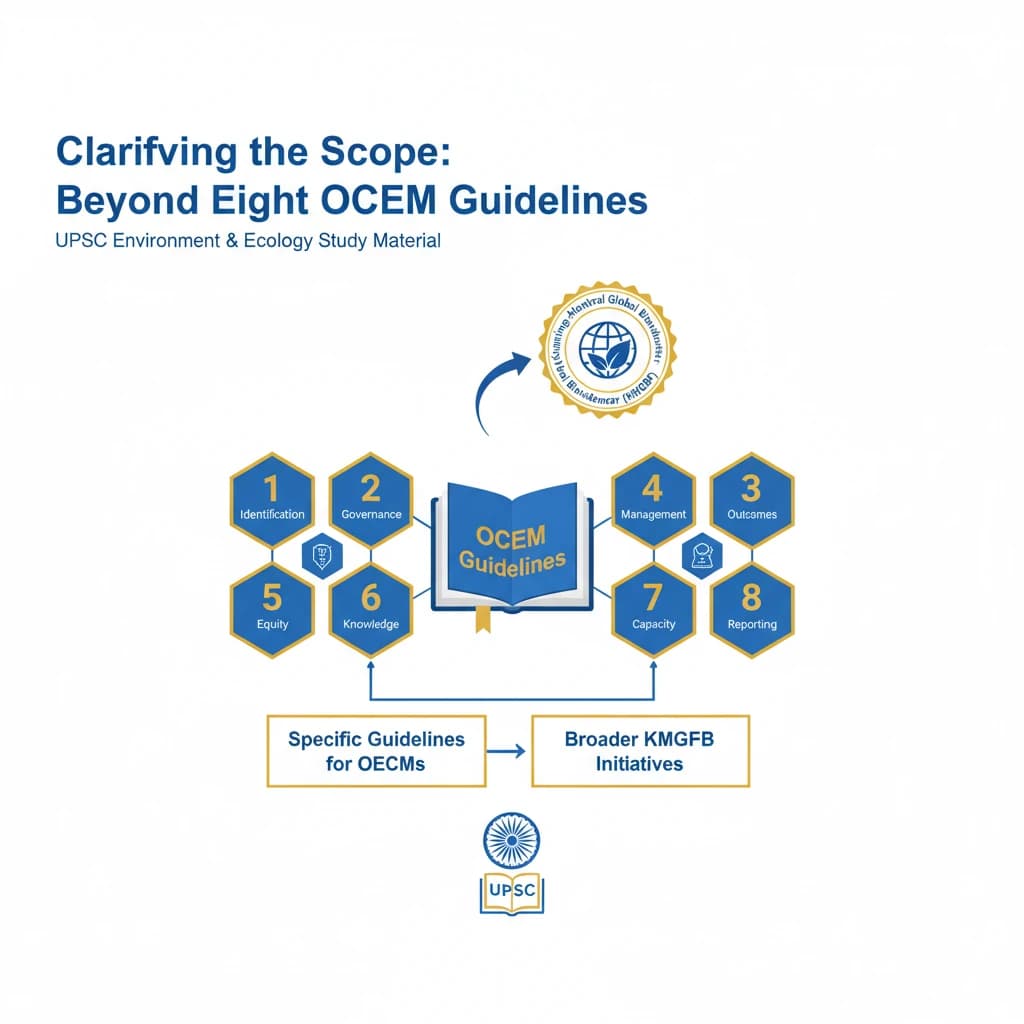
Clarifying the Scope: Beyond Eight OECM Guidelines
While the topic heading refers to "Eight Sections Containing Guidelines for Other Effective Area-Based Conservation Measures (OECMs)", the provided source content primarily elaborates on key aspects of the Kunming-Montreal Global Biodiversity Framework (KMGBF) and related biodiversity initiatives.
It is important for UPSC aspirants to distinguish between the specific guidelines for OECMs and the broader global biodiversity targets and frameworks like the KMGBF, which often incorporate OECMs as a tool for achieving conservation goals.
This explanation will therefore focus on the details provided regarding the KMGBF, its targets, and recent developments, which are directly present in the source material.
Key Biodiversity Targets under KMGBF
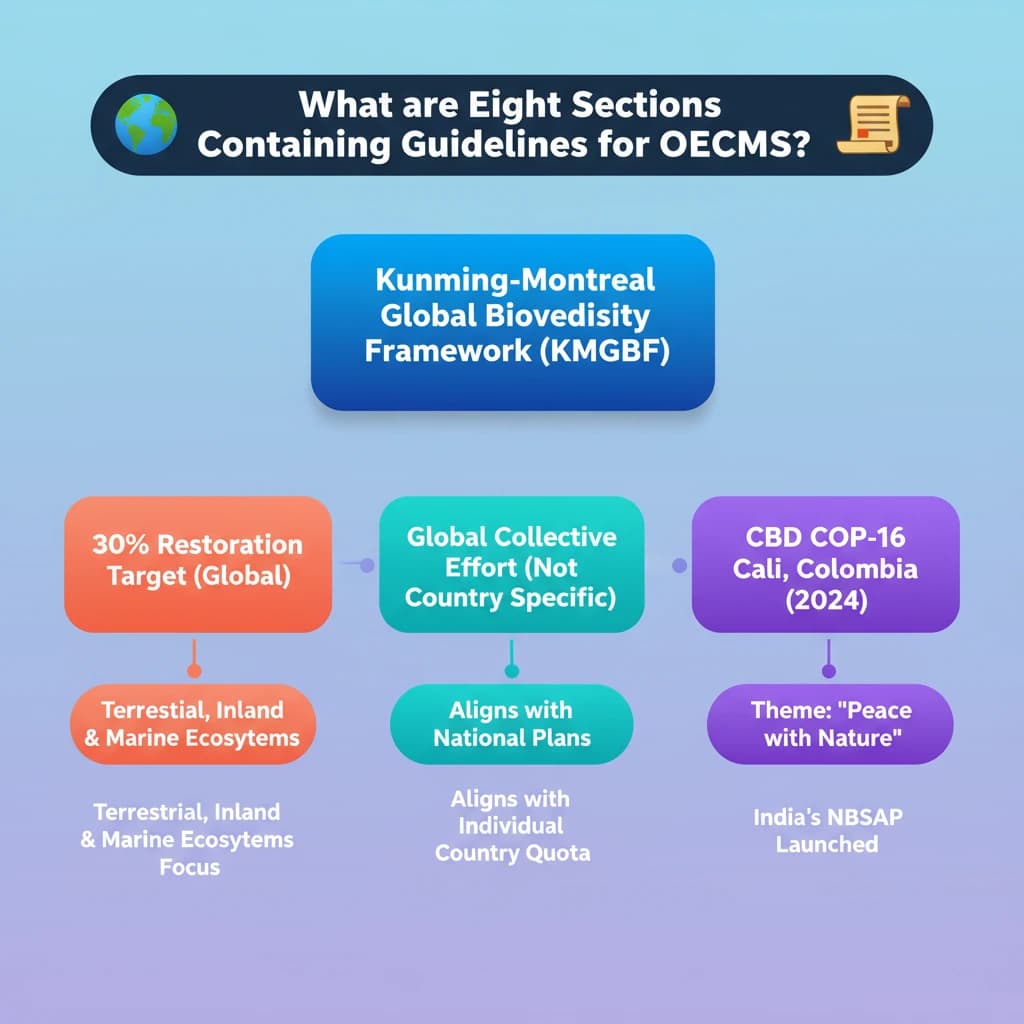
A significant target within the Kunming-Montreal Global Biodiversity Framework (KMGBF) is the commitment to restore at least 30% of degraded terrestrial, inland water, and marine ecosystems.
This 30% restoration target refers to a global effort. It is not a requirement for each individual country to allocate 30% of its own land and water for restoration.
The framework encourages collective action and shared responsibility among nations to achieve this ambitious goal.
Future Outlook and Vision 2050
The KMGBF envisions a long-term future where humanity lives in harmony with nature by 2050.
This overarching vision guides current actions and policies focused on biodiversity conservation and sustainable use of natural resources.
CBD COP-16: Recent Developments
The Convention on Biological Diversity (CBD) Conference of the Parties (COP-16) was a recent and significant international event for biodiversity.
Location: Cali, Colombia
Year: 2024
Theme: "Peace with Nature"
These conferences are crucial for reviewing progress, addressing challenges, and setting future agendas for global biodiversity protection.
India's Commitment: Updated NBSAP
At CBD COP-16, India demonstrated its strong commitment to global biodiversity goals.
The nation launched its updated National Biodiversity Strategy and Action Plan (NBSAP), specifically designed to align with the objectives of the Kunming-Montreal Global Biodiversity Framework (KMGBF).
Addressing Digital Sequence Information (DSI)
A critical and evolving area of discussion within biodiversity governance is the need for careful work to ensure fair and equitable sharing of benefits.
This applies particularly to benefits derived from the use of Digital Sequence Information (DSI) on genetic resources.
The issue of DSI benefit sharing is complex and remains a key point of negotiation under the CBD, often appearing in UPSC Mains GS-III questions related to intellectual property, biotechnology, and biodiversity governance.
💡 Key Takeaways
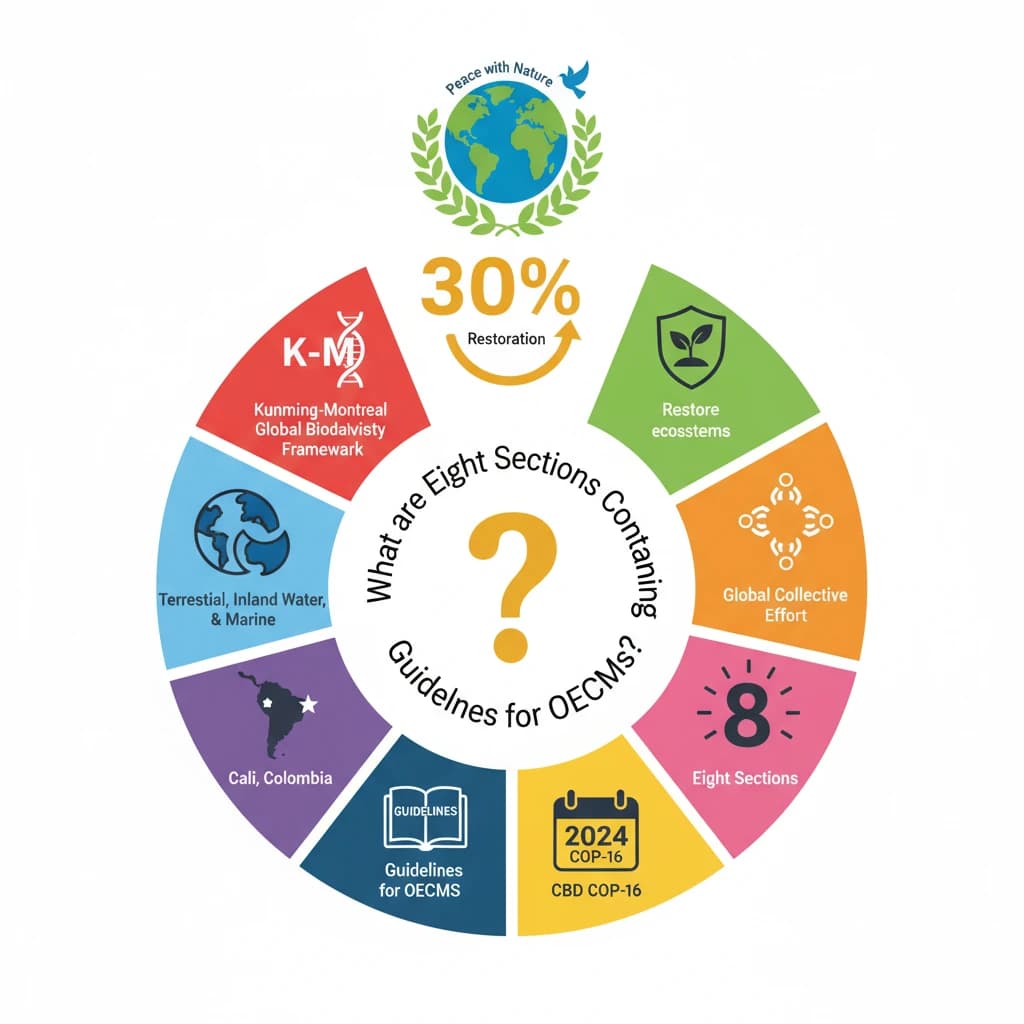
- •The Kunming-Montreal Global Biodiversity Framework (KMGBF) is the current global blueprint for biodiversity action.
- •A key KMGBF target is to restore at least 30% of degraded terrestrial, inland water, and marine ecosystems globally.
- •This 30% target is a global collective effort, not a country-specific mandate.
- •CBD COP-16 took place in Cali, Colombia in 2024 with the theme "Peace with Nature."
- •India launched its updated National Biodiversity Strategy and Action Plan (NBSAP) at COP-16, aligning with KMGBF.
- •Fair and equitable benefit sharing from Digital Sequence Information (DSI) on genetic resources is a critical and ongoing discussion point.
🧠 Memory Techniques
95% Verified Content
📚 Reference Sources
•Official Website of the Convention on Biological Diversity (CBD)
•United Nations Environment Programme (UNEP) reports on KMGBF