Loading page, please wait…
What are Key Facts About BNP? - UPSC Environment And Ecology
What is What are Key Facts About BNP? in UPSC Environment And Ecology?
What are Key Facts About BNP? is a key topic under Environment And Ecology for UPSC Civil Services Examination. Key points include: Bhitarkanika National Park (BNP) is India's 2nd largest mangrove ecosystem, located in Odisha.. It is a recognized Ramsar Site, signifying its international importance as a wetland.. BNP's unique ecosystem is fed by Brahmani, Baitarani, Dhamra, and Patasala rivers, creating brackish water creeks.. Understanding this topic is essential for both UPSC Prelims and Mains preparation.
Why is What are Key Facts About BNP? important for UPSC exam?
What are Key Facts About BNP? is a Easy-level topic in UPSC Environment And Ecology. It is tested in both Prelims (factual MCQs) and Mains (analytical answer writing). Previous year UPSC questions have frequently covered aspects of What are Key Facts About BNP?, making it essential for comprehensive IAS preparation.
How to prepare What are Key Facts About BNP? for UPSC?
To prepare What are Key Facts About BNP? for UPSC: (1) Study the comprehensive notes covering all key concepts on Vaidra. (2) Practice previous year questions on this topic. (3) Connect it with current affairs using daily updates. (4) Revise using key takeaways and mind maps available for Environment And Ecology. (5) Write practice answers linking What are Key Facts About BNP? to related GS Paper topics.
Key takeaways of What are Key Facts About BNP? for UPSC
- Bhitarkanika National Park (BNP) is India's 2nd largest mangrove ecosystem, located in Odisha.
- It is a recognized Ramsar Site, signifying its international importance as a wetland.
- BNP's unique ecosystem is fed by Brahmani, Baitarani, Dhamra, and Patasala rivers, creating brackish water creeks.
- Proximity to the Bay of Bengal enriches soil with salts, supporting specialized intertidal vegetation.
- Mangroves in BNP provide crucial coastal protection and carbon sequestration benefits.
What are Key Facts About BNP?
Easy⏱️ 7 min read
environment and ecology
📖 Introduction
Introduction to Bhitarkanika National Park
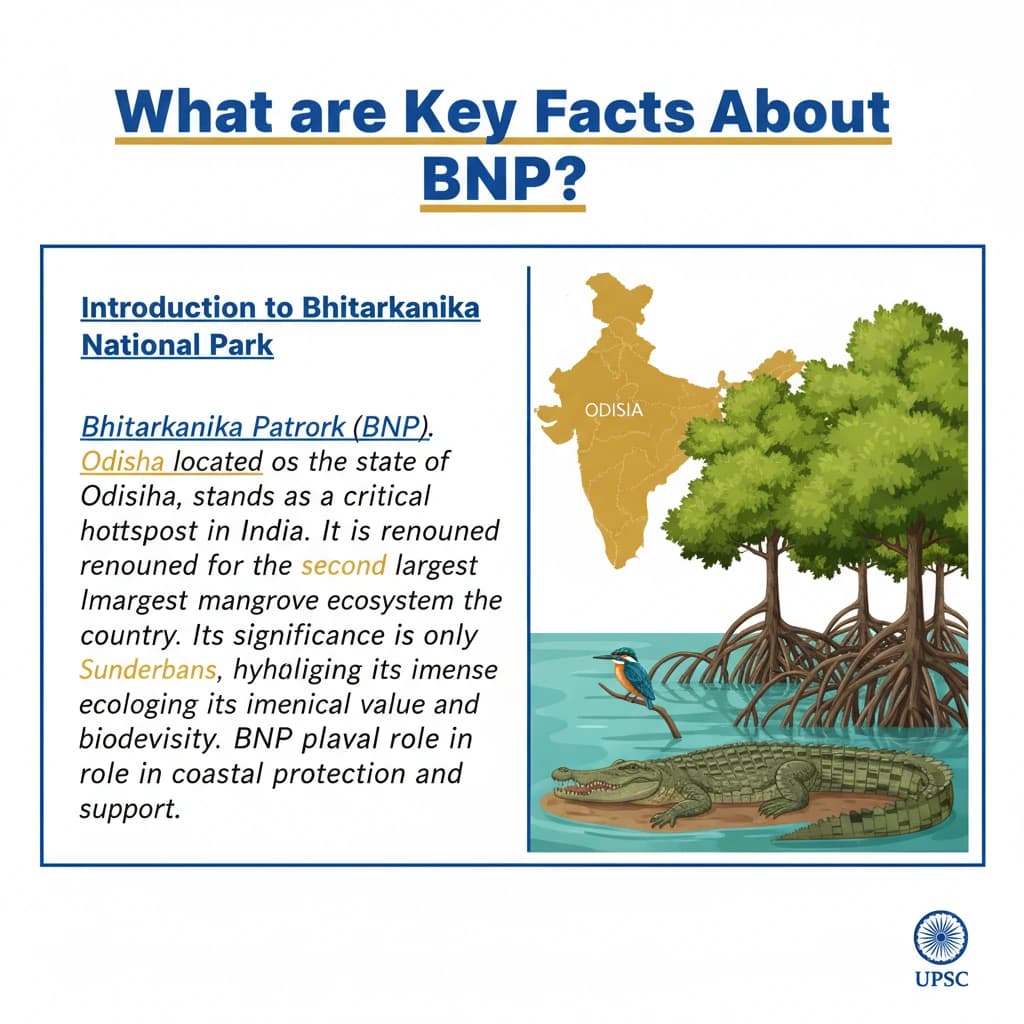
Bhitarkanika National Park (BNP), located in the state of Odisha, stands as a critical ecological hotspot in India. It is renowned for being the second largest mangrove ecosystem in the country.
Its significance is only surpassed by the vast Sunderbans, highlighting its immense ecological value and biodiversity. BNP plays a crucial role in coastal protection and supporting diverse flora and fauna.
Geographical Location and Hydrology
BNP is strategically positioned in Odisha, close to the Bay of Bengal. This proximity is vital for its unique ecosystem, as it facilitates the constant interaction of fresh and saline waters.
- Location: Kendrapara district, Odisha, India.
- Major Rivers: Fed by the Brahmani, Baitarani, Dhamra, and Patasala rivers.
- Water System: Comprises an intricate network of creeks and canals.
The confluence of these major rivers with the tidal waters from the Bay of Bengal creates a dynamic and nutrient-rich environment. This brackish water system is ideal for mangrove growth.
Unique Mangrove Ecosystem Characteristics
The park's ecosystem is characterized by its extensive mangrove forests, which thrive in the intertidal zones. These forests are critical for maintaining coastal ecological balance.
The constant influx of riverine and oceanic waters enriches the soil with essential salts. This saline-rich soil environment is a prerequisite for the survival and growth of specialized vegetation.
The vegetation primarily consists of tropical and subtropical intertidal species. These plants have evolved unique adaptations to survive in harsh saline and anaerobic conditions.
International Recognition: Ramsar Site Status
Bhitarkanika National Park has received significant international recognition by being designated a Ramsar Site. This status underscores its importance as a wetland of global significance.
Understanding Ramsar Sites is crucial for UPSC. Questions often relate to their location, ecological significance, and the criteria for their designation. BNP is a prime example of a Wetland of International Importance.
The Ramsar Convention aims to conserve and wise use of all wetlands through local, regional and national actions and international cooperation, contributing towards achieving sustainable development throughout the world.
💡 Key Takeaways
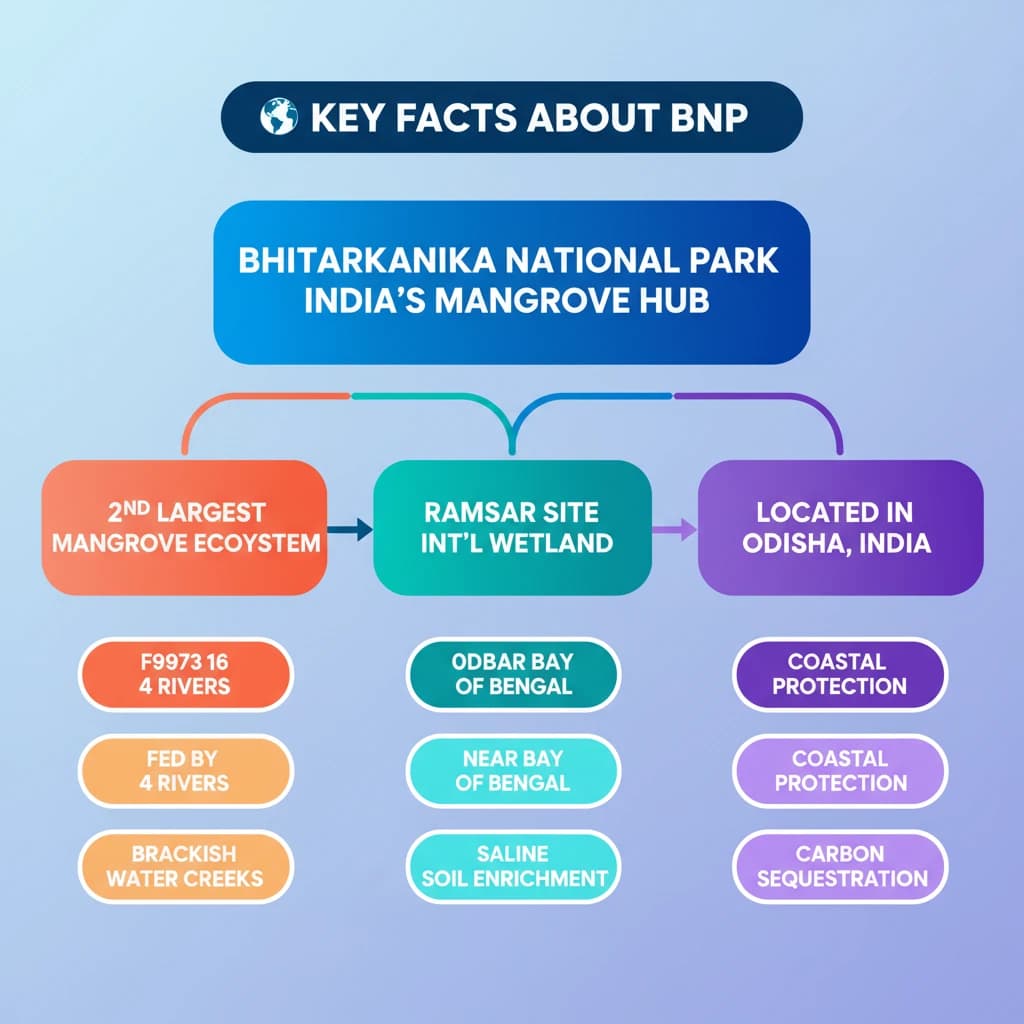
- •Bhitarkanika National Park (BNP) is India's 2nd largest mangrove ecosystem, located in Odisha.
- •It is a recognized Ramsar Site, signifying its international importance as a wetland.
- •BNP's unique ecosystem is fed by Brahmani, Baitarani, Dhamra, and Patasala rivers, creating brackish water creeks.
- •Proximity to the Bay of Bengal enriches soil with salts, supporting specialized intertidal vegetation.
- •Mangroves in BNP provide crucial coastal protection and carbon sequestration benefits.
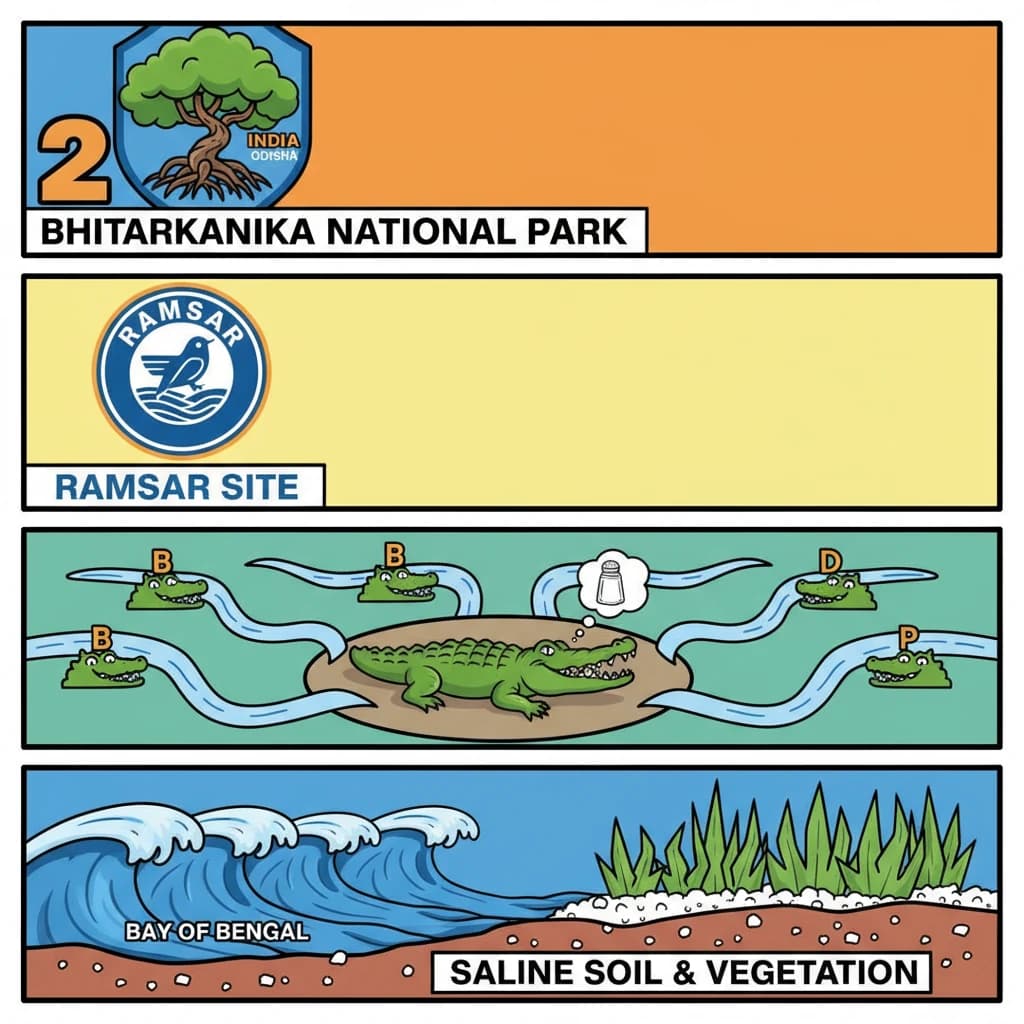
🧠 Memory Techniques
95% Verified Content
📚 Reference Sources
•Ramsar Sites Information Service
•Ministry of Environment, Forest and Climate Change (MoEFCC) reports