Loading page, please wait…
What are Key Facts About the Western Ghats? - UPSC Environment And Ecology
What is What are Key Facts About the Western Ghats? in UPSC Environment And Ecology?
What are Key Facts About the Western Ghats? is a key topic under Environment And Ecology for UPSC Civil Services Examination. Key points include: Western Ghats, or Sahyadri Hills, are a UNESCO World Heritage Site.. They are one of India's four biodiversity hotspots, rich in endemic species.. Home to 2 biosphere reserves, 13 National Parks, and many wildlife sanctuaries.. Understanding this topic is essential for both UPSC Prelims and Mains preparation.
Why is What are Key Facts About the Western Ghats? important for UPSC exam?
What are Key Facts About the Western Ghats? is a Medium-level topic in UPSC Environment And Ecology. It is tested in both Prelims (factual MCQs) and Mains (analytical answer writing). Previous year UPSC questions have frequently covered aspects of What are Key Facts About the Western Ghats?, making it essential for comprehensive IAS preparation.
How to prepare What are Key Facts About the Western Ghats? for UPSC?
To prepare What are Key Facts About the Western Ghats? for UPSC: (1) Study the comprehensive notes covering all key concepts on Vaidra. (2) Practice previous year questions on this topic. (3) Connect it with current affairs using daily updates. (4) Revise using key takeaways and mind maps available for Environment And Ecology. (5) Write practice answers linking What are Key Facts About the Western Ghats? to related GS Paper topics.
Key takeaways of What are Key Facts About the Western Ghats? for UPSC
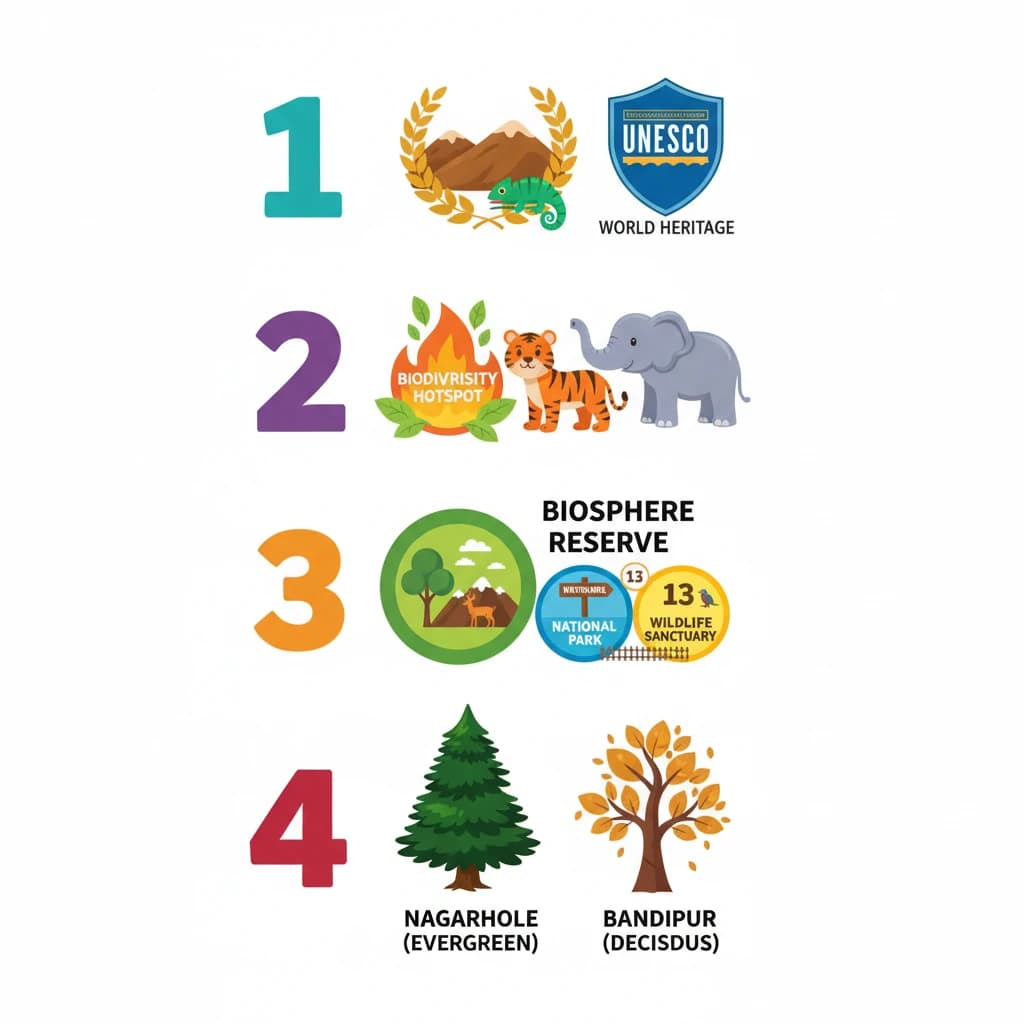
- Western Ghats, or Sahyadri Hills, are a UNESCO World Heritage Site.
- They are one of India's four biodiversity hotspots, rich in endemic species.
- Home to 2 biosphere reserves, 13 National Parks, and many wildlife sanctuaries.
- Diverse forests include evergreen (Nagarahole) and deciduous (Bandipur).
- The Gadgil Committee (WGEEP) was formed in 2011 for conservation recommendations.
What are Key Facts About the Western Ghats?
Medium⏱️ 6 min read
environment and ecology
📖 Introduction
Introduction to the Western Ghats
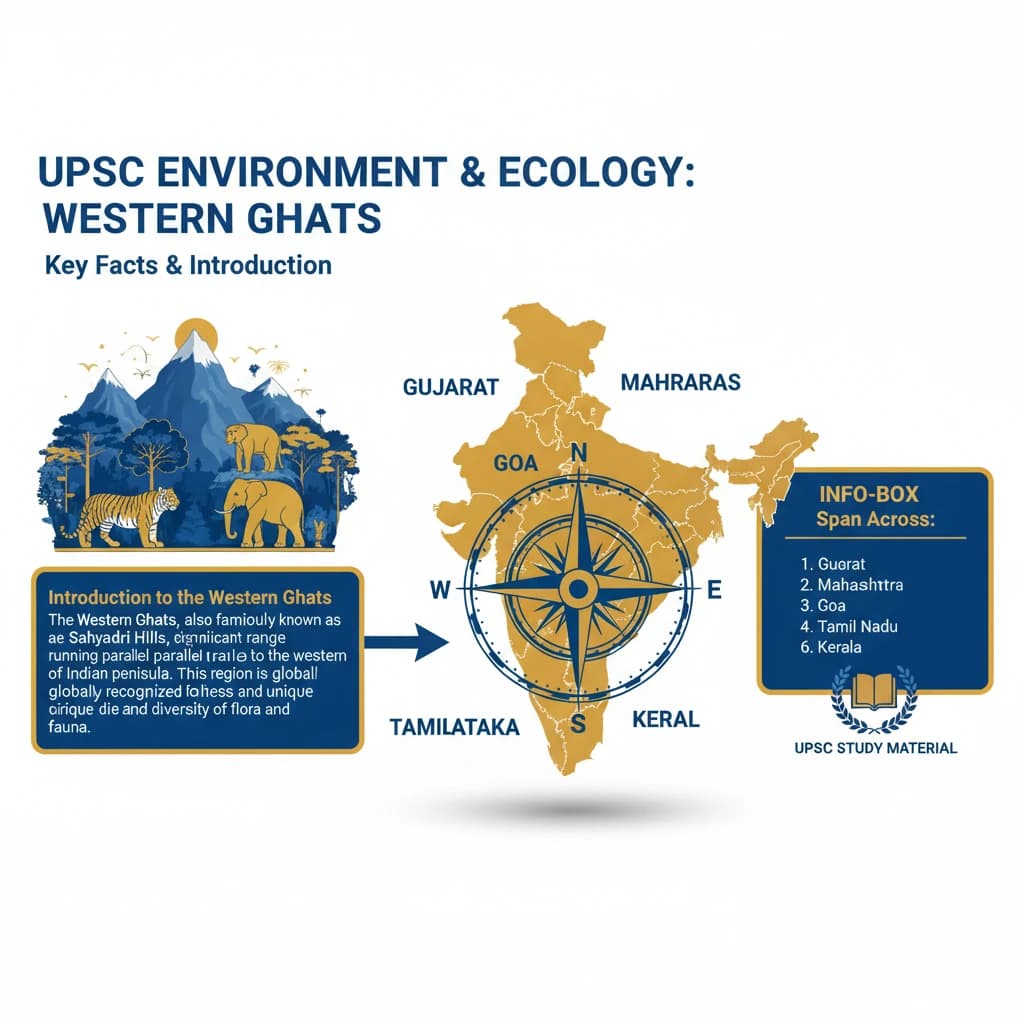
The Western Ghats, also famously known as the Sahyadri Hills, constitute a significant mountain range running parallel to the western coast of the Indian peninsula. This region is globally recognized for its exceptional richness and unique diversity of flora and fauna.
The Western Ghats span across six Indian states: Gujarat, Maharashtra, Goa, Karnataka, Kerala, and Tamil Nadu.
Geographical Nomenclature Across States
The nomenclature of the Western Ghats varies across different states, reflecting regional identities and local geographical features.
- In northern Maharashtra, the range is primarily known as Sahyadri.
- Moving south, it encompasses the Nilgiri Hills in parts of Karnataka and Tamil Nadu.
- Further south, it includes the Anaimalai Hills and the Cardamom Hills, predominantly located in Kerala.
Ecological Significance and Protected Areas
The Western Ghats are a vital ecological zone, housing a significant number of protected areas critical for biodiversity conservation.
This region is home to India’s two biosphere reserves, 13 National Parks, numerous wildlife sanctuaries, and a vast network of Reserve Forests.
The diverse ecosystems within the Western Ghats support various forest types, each with its distinct characteristics and species.
- The evergreen forests of Nagarahole (Karnataka).
- The deciduous forests of Bandipur National Park and Bugli in Karnataka.
- Adjoining regions include the ecologically rich areas of Wayanad (Kerala) and Mudumalai National Park (Tamil Nadu).
Global Biodiversity Hotspot Status
The Western Ghats hold immense global ecological importance, recognized as one of the world's most critical biodiversity regions.
It is one of India’s four recognized biodiversity hotspots, signifying its extraordinary levels of biodiversity and high rates of endemism.
This hotspot is a treasure trove of biological diversity, hosting many endemic species — species found nowhere else on Earth — and a multitude of yet-to-be-discovered species.
The Western Ghats are also designated as a UNESCO World Heritage Site, underscoring their universal value and the need for their protection.
Conservation Efforts: The Gadgil Committee
Recognizing the ecological fragility and importance of the Western Ghats, significant efforts have been made towards their conservation and sustainable management.
The Gadgil Committee (2011), officially known as the Western Ghats Ecology Expert Panel (WGEEP), was a landmark initiative established to assess the ecological status of the region and recommend conservation measures.
Understanding the recommendations of the Gadgil Committee and subsequent reports (like Kasturirangan Committee) is crucial for UPSC Mains questions on environmental governance and conservation. Focus on their key findings and the debates surrounding their implementation.
💡 Key Takeaways
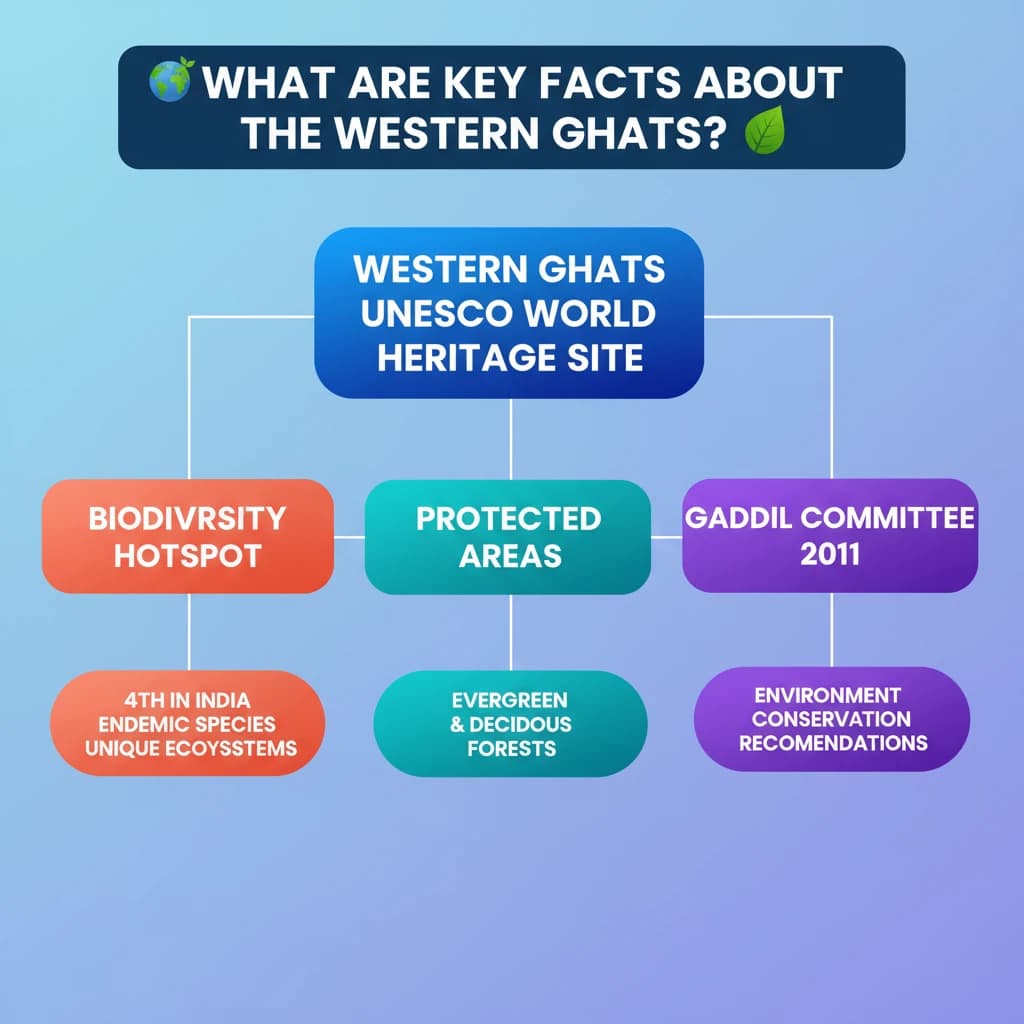
- •Western Ghats, or Sahyadri Hills, are a UNESCO World Heritage Site.
- •They are one of India's four biodiversity hotspots, rich in endemic species.
- •Home to 2 biosphere reserves, 13 National Parks, and many wildlife sanctuaries.
- •Diverse forests include evergreen (Nagarahole) and deciduous (Bandipur).
- •The Gadgil Committee (WGEEP) was formed in 2011 for conservation recommendations.
🧠 Memory Techniques
98% Verified Content