Loading page, please wait…
What Are Oysters? - UPSC Environment And Ecology
What is What Are Oysters? in UPSC Environment And Ecology?
What Are Oysters? is a key topic under Environment And Ecology for UPSC Civil Services Examination. Key points include: Oysters are invertebrates, omnivorous, and live in colonies (beds/reefs) in shallow ocean waters.. They are a keystone species, providing critical habitat for other marine organisms.. Oysters are highly efficient water filters, removing pollutants and improving water quality.. Understanding this topic is essential for both UPSC Prelims and Mains preparation.
Why is What Are Oysters? important for UPSC exam?
What Are Oysters? is a Medium-level topic in UPSC Environment And Ecology. It is tested in both Prelims (factual MCQs) and Mains (analytical answer writing). Previous year UPSC questions have frequently covered aspects of What Are Oysters?, making it essential for comprehensive IAS preparation.
How to prepare What Are Oysters? for UPSC?
To prepare What Are Oysters? for UPSC: (1) Study the comprehensive notes covering all key concepts on Vaidra. (2) Practice previous year questions on this topic. (3) Connect it with current affairs using daily updates. (4) Revise using key takeaways and mind maps available for Environment And Ecology. (5) Write practice answers linking What Are Oysters? to related GS Paper topics.
Key takeaways of What Are Oysters? for UPSC
- Oysters are invertebrates, omnivorous, and live in colonies (beds/reefs) in shallow ocean waters.
- They are a keystone species, providing critical habitat for other marine organisms.
- Oysters are highly efficient water filters, removing pollutants and improving water quality.
- They exhibit gender change, starting as male and often becoming female.
- Oysters are a nutritious food source, rich in calcium, iron, and protein.
- Conservation and restoration of oyster reefs are crucial for marine health and coastal protection.
What Are Oysters?
Medium⏱️ 7 min read
environment and ecology
📖 Introduction
Understanding Oysters: An Overview
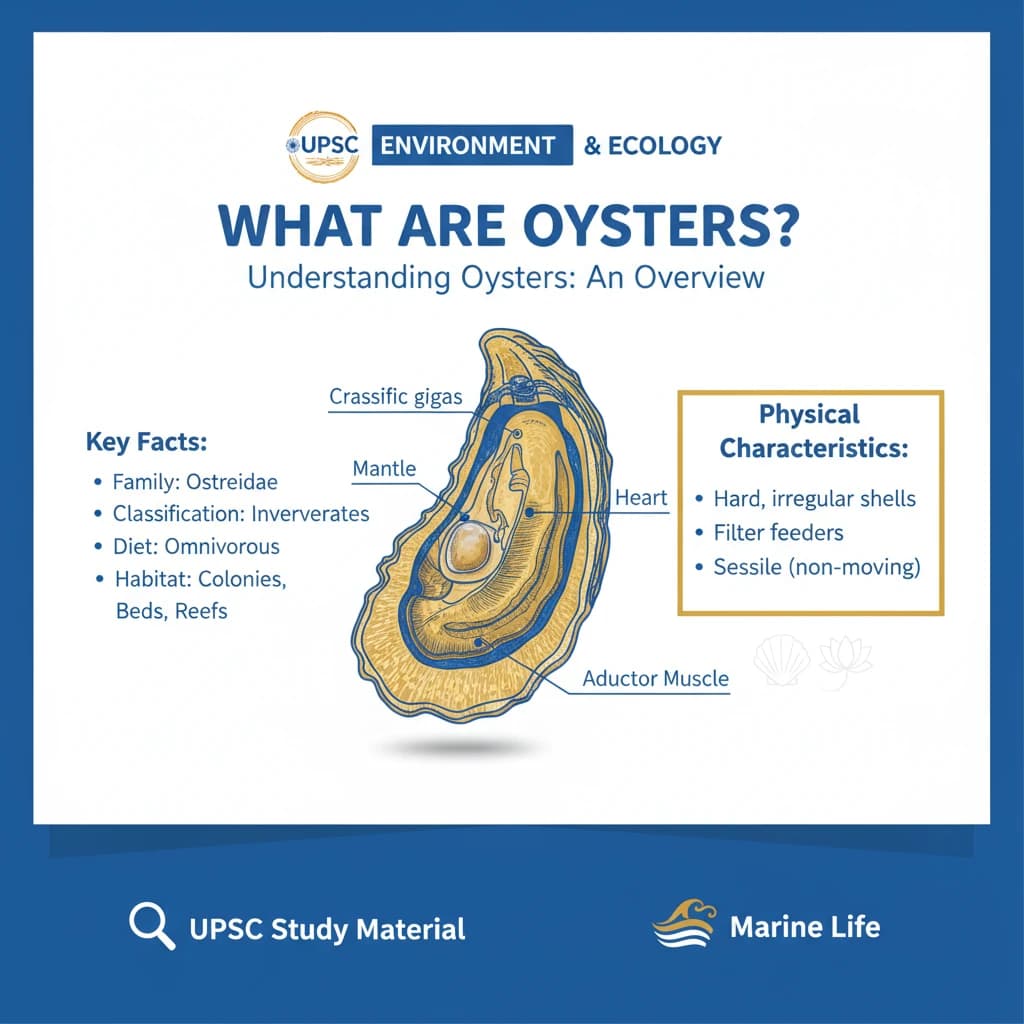
Oysters belong to the biological family Ostreidae. They are classified as invertebrates, meaning they lack a backbone.
These fascinating marine creatures are omnivorous. They typically live in large aggregations, which are referred to as colonies, beds, or reefs.
Physical Characteristics:
- Shells: Rough, rock-hard, and usually oval or pear-shaped.
- Classification: Invertebrates, family Ostreidae.
- Diet: Omnivorous.
Habitat and Pearl Production
Oysters thrive in shallow ocean waters across the globe. They form their characteristic colonies, beds, or reefs in these coastal environments.
While some edible oysters can occasionally produce pearls, it is important to note they are distinct from pearl oysters. Pearl oysters belong to a different bivalve family specifically cultivated for pearl production.
Ecological Significance: Keystone Species
Oysters are widely recognized as a keystone species within their ecosystems. This designation highlights their disproportionately large impact relative to their abundance.
What is a Keystone Species?
A keystone species is an organism that has a unique and crucial role in the way an ecosystem functions. Without keystone species, the ecosystem would be dramatically different or cease to exist. Examples include tigers and sea otters.
Oyster beds and reefs provide vital habitat and protection. They support a diverse array of marine organisms, including sea anemones, barnacles, and mussels.
Water Filtration: Nature's Purifiers
One of the most significant ecological roles of oysters is their ability to filter water. A single oyster is remarkably efficient, capable of filtering over two gallons of water per hour.
This translates to an impressive capacity of up to 50 gallons per day per oyster. Their filtration process removes various pollutants from the water.
Pollutants Removed by Oysters:
- Nitrates
- Ammonia
- Phosphates
- Bacteria
- Organic matter
By removing these substances, oysters significantly contribute to improving overall water quality and clarity in their habitats.
Diet, Behavior, and Reproduction
Oysters are filter feeders. They obtain their nutrition by drawing water over their gills, which capture algae and other microscopic food particles.
A unique aspect of oyster biology is their reproductive behavior. All oysters begin their life cycle as males. However, they typically undergo a permanent gender change to become females after approximately one year.
Furthermore, oysters exhibit the fascinating ability to change their gender multiple times throughout their lifespan, adapting to environmental conditions and reproductive needs.
Oysters as a Food Source
For thousands of years, oysters have been a valuable food source for humans. They are consumed both raw and cooked, prized for their distinctive flavor and nutritional content.
Nutritional Value of Oysters:
- High in calcium
- Rich in iron
- Excellent source of protein
UPSC Insight: Understanding the ecological roles of species like oysters (e.g., keystone species, bio-filters) is crucial for topics related to biodiversity conservation, marine ecosystems, and environmental pollution in GS Paper III.
💡 Key Takeaways
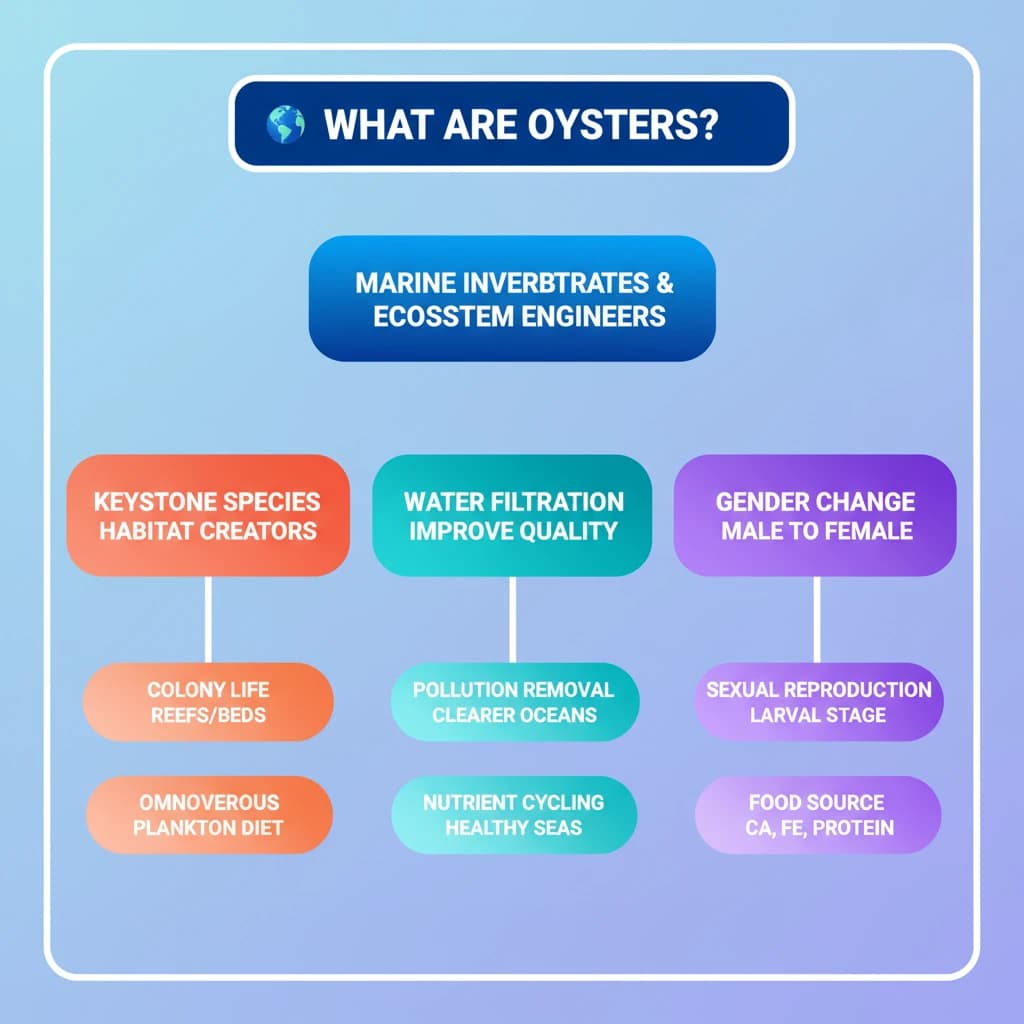
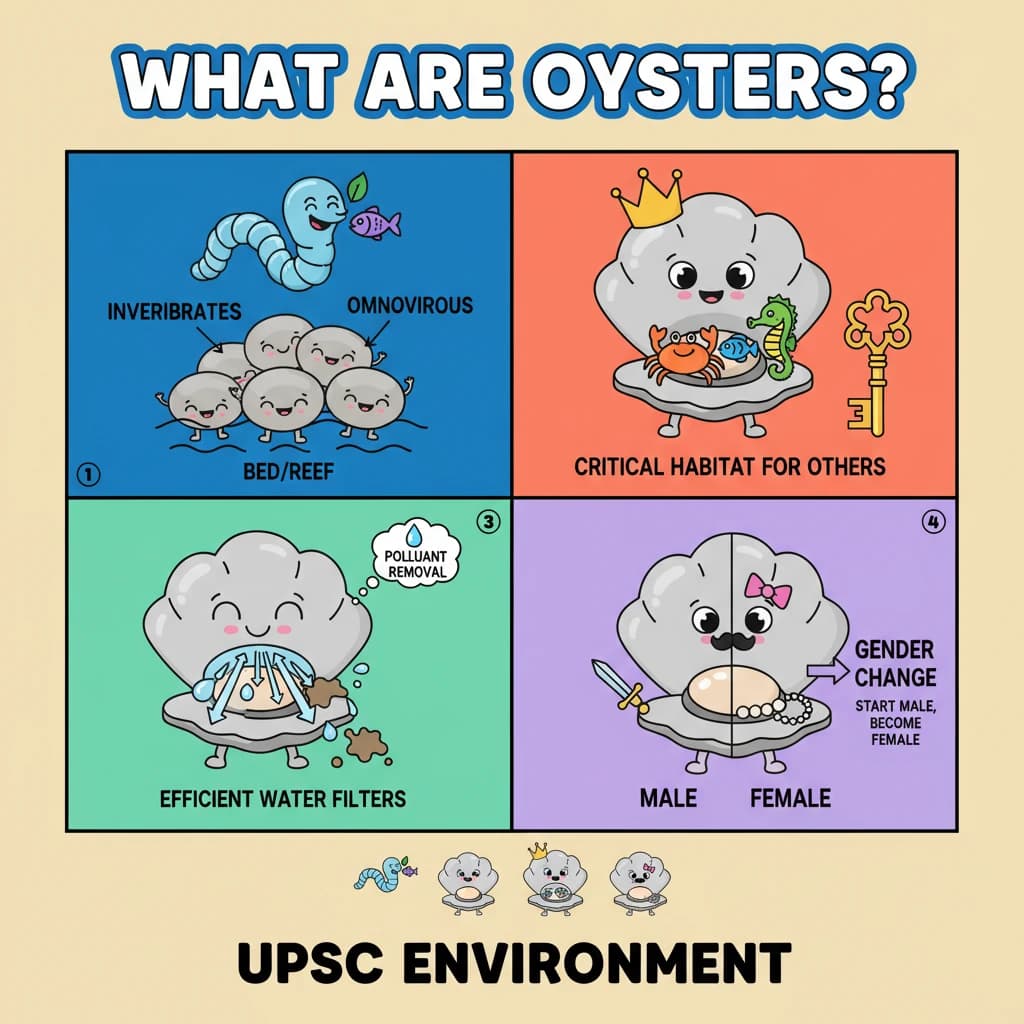
- •Oysters are invertebrates, omnivorous, and live in colonies (beds/reefs) in shallow ocean waters.
- •They are a keystone species, providing critical habitat for other marine organisms.
- •Oysters are highly efficient water filters, removing pollutants and improving water quality.
- •They exhibit gender change, starting as male and often becoming female.
- •Oysters are a nutritious food source, rich in calcium, iron, and protein.
- •Conservation and restoration of oyster reefs are crucial for marine health and coastal protection.
🧠 Memory Techniques
95% Verified Content
📚 Reference Sources
•NOAA (National Oceanic and Atmospheric Administration)
•Scientific journals on marine biology and ecology