Loading page, please wait…
What are the Key Facts About Northeast African Cheetahs? - UPSC Environment And Ecology
What is What are the Key Facts About Northeast African Cheetahs? in UPSC Environment And Ecology?
What are the Key Facts About Northeast African Cheetahs? is a key topic under Environment And Ecology for UPSC Civil Services Examination. Key points include: Northeast African Cheetah (Acinonyx jubatus soemmeringii) is also known as the Sudan cheetah.. First described by Leopold Fitzinger in 1855 from Sudan's Bayuda Desert.. Genetically closer to Southern African cheetahs than Saharan cheetahs.. Understanding this topic is essential for both UPSC Prelims and Mains preparation.
Why is What are the Key Facts About Northeast African Cheetahs? important for UPSC exam?
What are the Key Facts About Northeast African Cheetahs? is a Medium-level topic in UPSC Environment And Ecology. It is tested in both Prelims (factual MCQs) and Mains (analytical answer writing). Previous year UPSC questions have frequently covered aspects of What are the Key Facts About Northeast African Cheetahs?, making it essential for comprehensive IAS preparation.
How to prepare What are the Key Facts About Northeast African Cheetahs? for UPSC?
To prepare What are the Key Facts About Northeast African Cheetahs? for UPSC: (1) Study the comprehensive notes covering all key concepts on Vaidra. (2) Practice previous year questions on this topic. (3) Connect it with current affairs using daily updates. (4) Revise using key takeaways and mind maps available for Environment And Ecology. (5) Write practice answers linking What are the Key Facts About Northeast African Cheetahs? to related GS Paper topics.
Key takeaways of What are the Key Facts About Northeast African Cheetahs? for UPSC
- Northeast African Cheetah (Acinonyx jubatus soemmeringii) is also known as the Sudan cheetah.
- First described by Leopold Fitzinger in 1855 from Sudan's Bayuda Desert.
- Genetically closer to Southern African cheetahs than Saharan cheetahs.
- Primarily found in Northeast Africa, Ethiopia, and South Sudan.
- Inhabits open lands, grasslands, semi-arid areas, especially the East Sudanian Savanna.
What are the Key Facts About Northeast African Cheetahs?
Medium⏱️ 6 min read
environment and ecology
📖 Introduction
Introduction to the Northeast African Cheetah
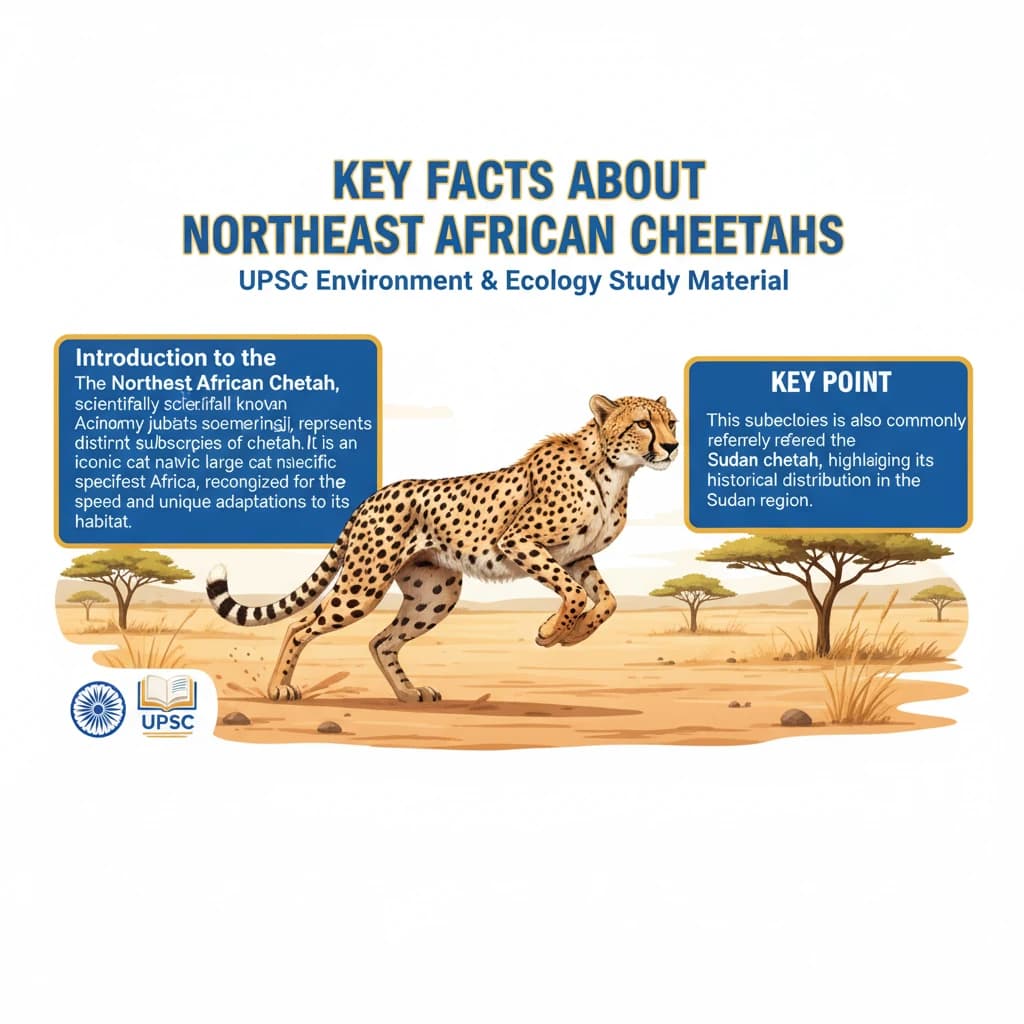
The Northeast African Cheetah, scientifically known as Acinonyx jubatus soemmeringii, represents a distinct subspecies of cheetah. It is an iconic large cat native to specific regions of Northeast Africa, recognized for its speed and unique adaptations to its habitat.
This subspecies is also commonly referred to as the Sudan cheetah, highlighting its historical and geographical association with the region.
Scientific Description and Classification
The Northeast African Cheetah was first scientifically described in 1855 by the Austrian zoologist Leopold Fitzinger. He initially classified it under the scientific name Cynailurus soemmeringii.
- First Description: 1855 by Leopold Fitzinger.
- Original Scientific Name: Cynailurus soemmeringii.
- Basis of Description: A specimen obtained from Sudan's Bayuda Desert.
- Location: The specimen was brought to the Tiergarten Schönbrunn in Vienna.
Genetic studies indicate that the Northeast African cheetah shares a closer genetic lineage with the Southern African cheetah populations. This distinguishes it from the Saharan cheetah populations, suggesting a specific evolutionary pathway.
Geographical Distribution
The primary distribution range of the Northeast African Cheetah encompasses several countries within Northeast Africa. These magnificent predators are found across various open landscapes.
Key Distribution Areas:
- Northeast Africa (broader region)
- Ethiopia
- South Sudan
Preferred Habitat
These cheetahs thrive in environments that offer ample space and abundant prey, essential for their hunting strategy. Their habitats are characterized by open terrain.
Typical Habitats Include:
- Wide open lands
- Extensive grasslands
- Semi-arid areas
- Other open habitats rich in prey
A significant portion of their population resides in the East Sudanian Savanna, which provides ideal conditions for their survival and hunting activities.
UPSC Insight: Questions on species distribution, scientific names, and habitat preferences are common in the Environment & Ecology section. Understanding the specific characteristics of subspecies like the Northeast African Cheetah can be crucial for both Prelims (factual recall) and Mains (conservation essays).
💡 Key Takeaways
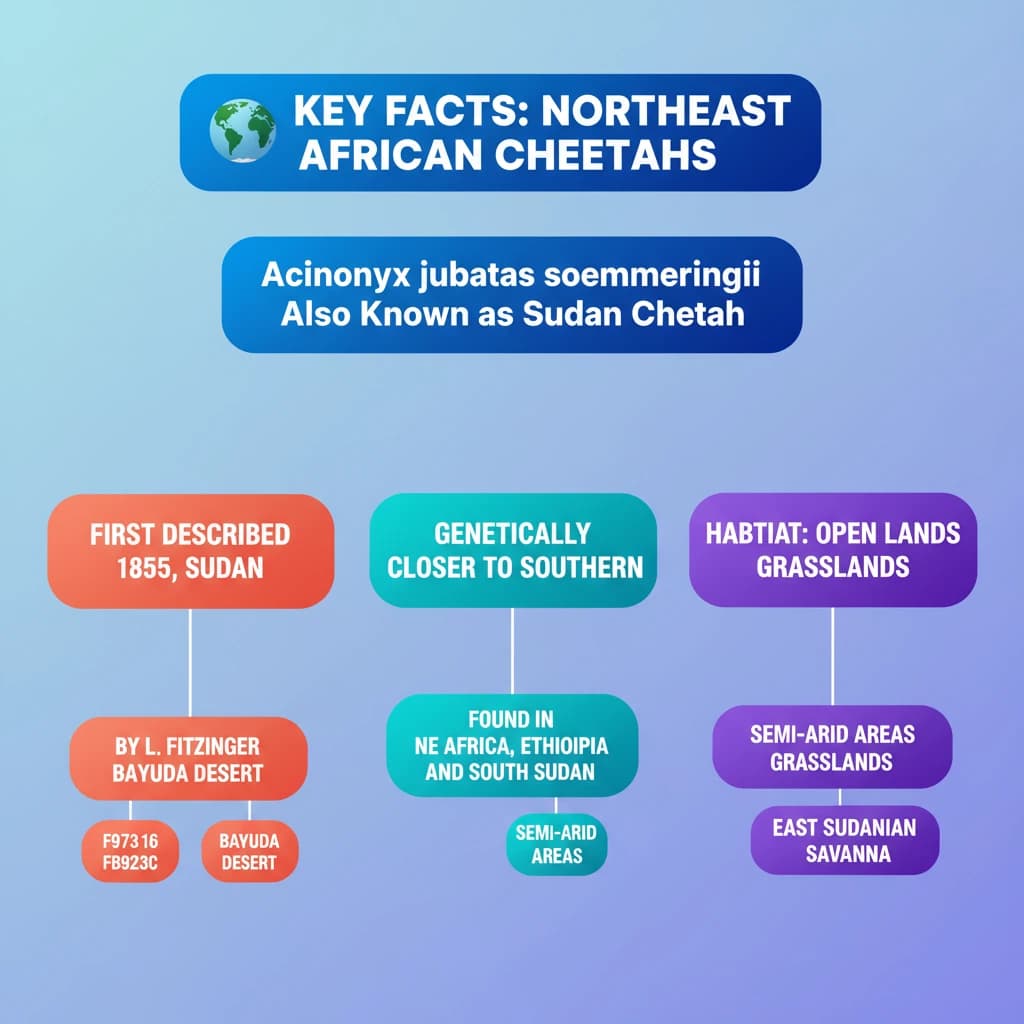
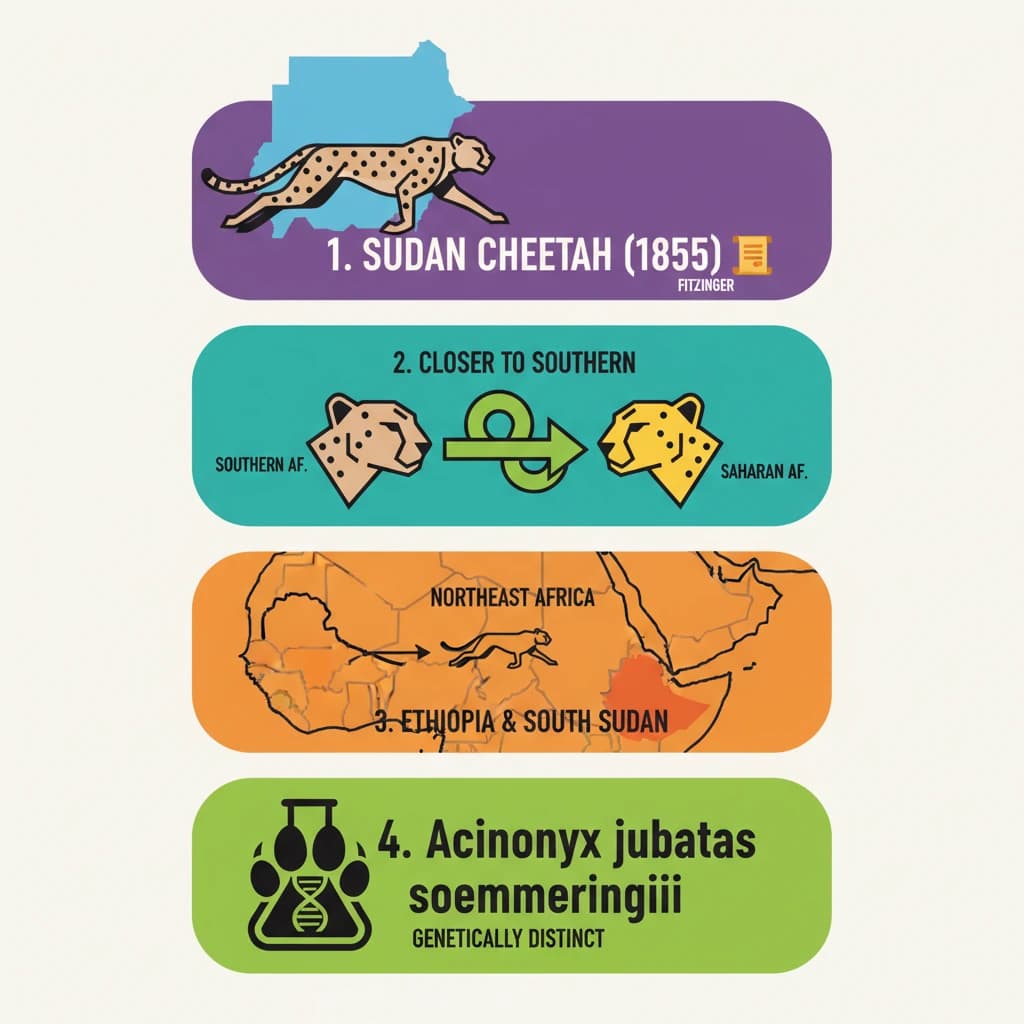
- •Northeast African Cheetah (Acinonyx jubatus soemmeringii) is also known as the Sudan cheetah.
- •First described by Leopold Fitzinger in 1855 from Sudan's Bayuda Desert.
- •Genetically closer to Southern African cheetahs than Saharan cheetahs.
- •Primarily found in Northeast Africa, Ethiopia, and South Sudan.
- •Inhabits open lands, grasslands, semi-arid areas, especially the East Sudanian Savanna.
🧠 Memory Techniques
98% Verified Content
📚 Reference Sources
•IUCN Red List (General Cheetah Species Information)
•Wikipedia (for scientific classification context)