Loading page, please wait…
What are the Key Facts About Sparrow? - UPSC Environment And Ecology
What is What are the Key Facts About Sparrow? in UPSC Environment And Ecology?
What are the Key Facts About Sparrow? is a key topic under Environment And Ecology for UPSC Civil Services Examination. Key points include: Sparrows are vital for biodiversity and plant growth through seed dispersal.. Major threats include habitat degradation, urbanization, and changes in agricultural practices.. Loss of nesting sites, foraging areas, and insect decline are specific causes.. Understanding this topic is essential for both UPSC Prelims and Mains preparation.
Why is What are the Key Facts About Sparrow? important for UPSC exam?
What are the Key Facts About Sparrow? is a Medium-level topic in UPSC Environment And Ecology. It is tested in both Prelims (factual MCQs) and Mains (analytical answer writing). Previous year UPSC questions have frequently covered aspects of What are the Key Facts About Sparrow?, making it essential for comprehensive IAS preparation.
How to prepare What are the Key Facts About Sparrow? for UPSC?
To prepare What are the Key Facts About Sparrow? for UPSC: (1) Study the comprehensive notes covering all key concepts on Vaidra. (2) Practice previous year questions on this topic. (3) Connect it with current affairs using daily updates. (4) Revise using key takeaways and mind maps available for Environment And Ecology. (5) Write practice answers linking What are the Key Facts About Sparrow? to related GS Paper topics.
Key takeaways of What are the Key Facts About Sparrow? for UPSC
- Sparrows are vital for biodiversity and plant growth through seed dispersal.
- Major threats include habitat degradation, urbanization, and changes in agricultural practices.
- Loss of nesting sites, foraging areas, and insect decline are specific causes.
- Sparrow decline leads to increased insect pests and overall biodiversity threats.
- Conservation efforts focus on urban greening and agroecological practices.
- Sparrows act as indicator species, reflecting the health of our immediate environment.

What are the Key Facts About Sparrow?
Medium⏱️ 7 min read
environment and ecology
📖 Introduction
Introduction to Sparrows
Sparrows are small, common passerine birds found across various ecosystems. They are widely recognized for their adaptability and close association with human habitats, particularly the House Sparrow (Passer domesticus).
These birds play a vital role in maintaining ecological balance and are considered an indicator species for environmental health.
Ecological Significance of Sparrows
Sparrows are crucial components of local biodiversity and significantly contribute to plant growth and ecosystem health. Their activities provide essential ecosystem services that benefit various plant species.
Key Ecological Roles:
- Seed Dispersal: Sparrows consume various seeds and then excrete them, effectively dispersing plant seeds across different areas.
- Vegetation Promotion: This natural seed dispersal mechanism aids in the propagation and growth of diverse vegetation, supporting local flora.
Threats to Sparrow Populations
Globally, sparrow populations are facing significant declines, primarily due to rapid environmental changes driven by human activities. These threats are interconnected and exacerbate each other.
Major Threats Identified:
- Habitat Degradation: The destruction and fragmentation of natural and semi-natural habitats crucial for sparrows.
- Urbanization: Expansion of cities leading to loss of green spaces, nesting sites, and foraging areas.
- Changes in Agricultural Practices: Modern farming techniques often reduce insect populations and natural seed availability, impacting sparrow food sources.
Specific Factors Contributing to Decline
Beyond broad threats, several specific factors directly contribute to the dwindling numbers of sparrows. These factors highlight the complex challenges faced by these adaptable birds.
Direct Causes of Decline:
- Loss of Nesting Sites: Modern building designs often lack crevices and suitable ledges for sparrow nests.
- Loss of Foraging Areas: Reduction of gardens, parks, and traditional agricultural fields limits access to food.
- Decline in Insect Populations: Widespread use of pesticides and monoculture farming reduces the availability of insects, a critical food source for sparrow chicks.
Impacts of Sparrow Decline
The decline in sparrow populations has far-reaching consequences that extend beyond the birds themselves, affecting entire ecosystems and potentially human interests. This decline signals broader ecological imbalances.
Wider Ecological Effects:
- Increase in Insect Pests: As sparrows are natural predators of many insects, their decline can lead to an unchecked proliferation of agricultural and garden pests.
- Threats to Biodiversity: The loss of sparrows indicates a general decline in urban and rural biodiversity, impacting the stability of local ecosystems.
Conservation Efforts for Sparrows
Recognizing the ecological importance and threatened status of sparrows, various conservation initiatives are being implemented to reverse their decline and restore suitable habitats.
UPSC Insight: Questions on indicator species and urban biodiversity conservation often feature in GS Paper III (Environment & Ecology). Understanding specific efforts for common birds like sparrows is crucial.
Key Conservation Strategies:
- Urban Greening Projects: Creating and maintaining parks, gardens, and green corridors within cities to provide nesting and foraging opportunities.
- Agroecological Practices: Promoting sustainable farming methods that enhance biodiversity, reduce pesticide use, and ensure natural food sources for sparrows.
- Community Involvement: Encouraging citizens to install bird feeders, bird baths, and nest boxes to support local sparrow populations.
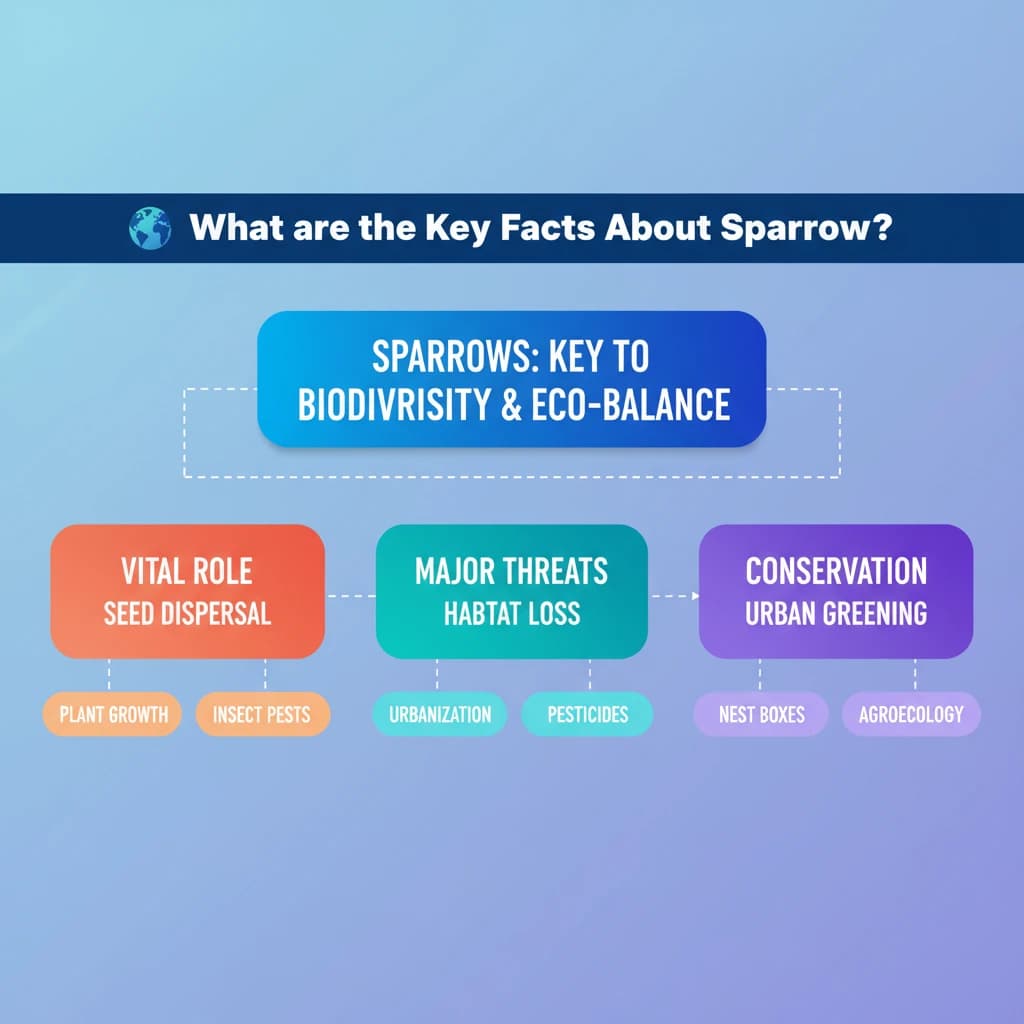
💡 Key Takeaways
- •Sparrows are vital for biodiversity and plant growth through seed dispersal.
- •Major threats include habitat degradation, urbanization, and changes in agricultural practices.
- •Loss of nesting sites, foraging areas, and insect decline are specific causes.
- •Sparrow decline leads to increased insect pests and overall biodiversity threats.
- •Conservation efforts focus on urban greening and agroecological practices.
- •Sparrows act as indicator species, reflecting the health of our immediate environment.
🧠 Memory Techniques

95% Verified Content
📚 Reference Sources
•National Centre for Biological Sciences (NCBS) research on urban birds
•Bombay Natural History Society (BNHS) publications on Indian birds
•Ministry of Environment, Forest and Climate Change (MoEFCC) reports